
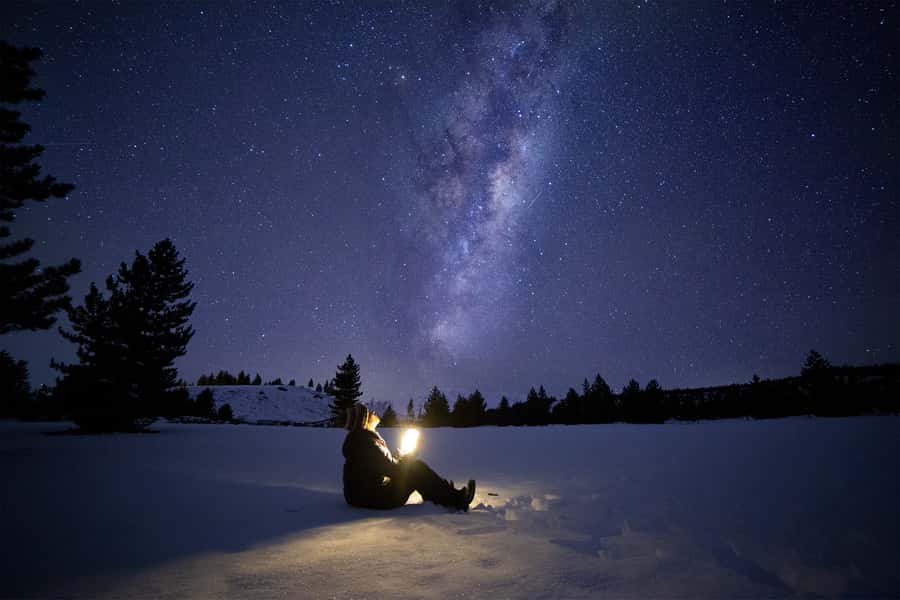
REVIEW · LAKE TEKAPO STARGAZING
Lake Tekapo: Stargazing Experience
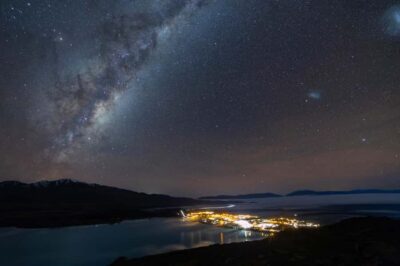
Lake Tekapo’s best show begins after dark. Away from nearly all artificial light, you can look up at a sharp Southern Hemisphere sky, then take turns at a 9.25-inch computerized telescope and a smart telescope to see objects that are little more than pinpricks to the naked eye. Guides such as Estella, Mok, and George turn the sky into a story, mixing science with Greek mythology and Maori legends.
I like the careful comfort details, especially the blankets, outdoor mattresses, pillows, and hot chocolate. I also like that the tour gives you a lasting record: your guide takes an individual night-sky portrait and sends edited images of the objects seen through the telescopes. The main drawback is simple: Tekapo can be bitterly cold, and clouds or wind may limit what you see.
Key points
- Nearly light-free viewing site: The location is a four-minute drive from Lake Tekapo village, beside the Tekapo River.
- Two kinds of telescope viewing: Use a powerful 9.25-inch computerized telescope and a smart telescope for deep-sky objects.
- Stories as well as science: Guides explain constellations, planets, navigation, Greek mythology, and Maori legends.
- Warm touches built in: Blankets, pillows, mattresses, outdoor seating, hot chocolate, and marshmallows are provided.
- Personal photos included: Receive an edited portrait beneath the stars, along with images of the telescope subjects.
- Easy planning: The experience lasts 90 minutes, costs $71 per person, and offers free cancellation up to 24 hours before departure.
Why Lake Tekapo is a fine place to look up
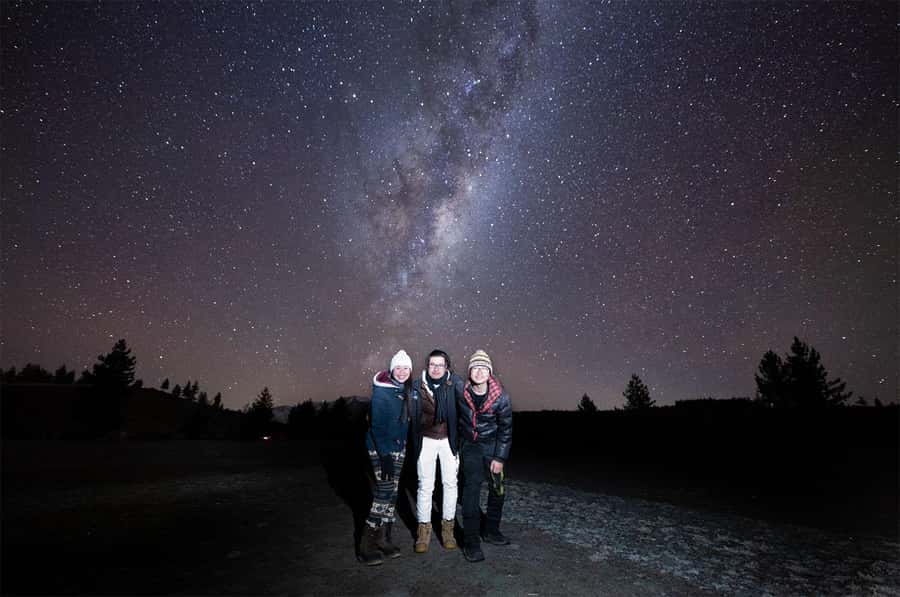
Lake Tekapo sits in New Zealand’s South Island, in an area known for unusually dark skies. For you, that means the night sky is not just a background to the tour. It is the main event, with far less stray light competing with the stars.
The stargazing site is close to town but far enough away to make a real difference. You can drive there in about four minutes, or walk for roughly 20 minutes from the village. That short transfer is useful if you are building the activity into a busy Tekapo stay, but the walk deserves care after dark. Parts of the route can be completely black, so bring a torch or headlamp. A reflective item is also sensible if you walk alone.
This is not a large observatory visit with indoor displays or a formal lecture hall. You are taken outdoors, seated under the sky, and guided through what you can see at that moment. That makes the experience feel direct and personal. It also means you are exposed to the weather, so clothing matters as much as the telescope.
More Stargazing Tours in the world:
- Dubai Red Dunes ATV, Camels, Stargazing & 5* BBQ Al Khayma Camp
★ 5.0 · 21,620 reviews - Sharm El-Sheikh: Ultimate ATV Quad, Stargazing & BBQ Dinner
★ 4.7 · 4,084 reviews - Tenerife: Teide National Park Sunset & Stargazing Tour
★ 4.2 · 3,812 reviews
The first few minutes: getting settled by the Tekapo River
At the meeting point, your guide escorts you to the viewing area beside the Tekapo River. There is no shuttle service, so you need to make your own way there. The location is close enough for most people staying in the village, but give yourself time to find it and arrive in warm clothing.
The setup is more thoughtful than simply placing a telescope in a field. Outdoor seats, pillows, mattresses, and blankets are arranged so you can look upward without standing for the entire 90 minutes. That matters in Tekapo, where a clear night can still be very cold. The blankets help, but they are not a replacement for a proper coat, warm socks, gloves, and extra layers.
A hot chocolate is also included, with lactose-free and gluten-free options available on request. It is a small feature, but it changes the feel of the evening. You can settle into your seat with something warm while listening to the first explanations rather than trying to stay comfortable by moving around.
The experience is wheelchair accessible. Still, because it takes place outdoors, you should confirm that the specific conditions and surfaces suit your needs when booking.
Reading the sky without a telescope
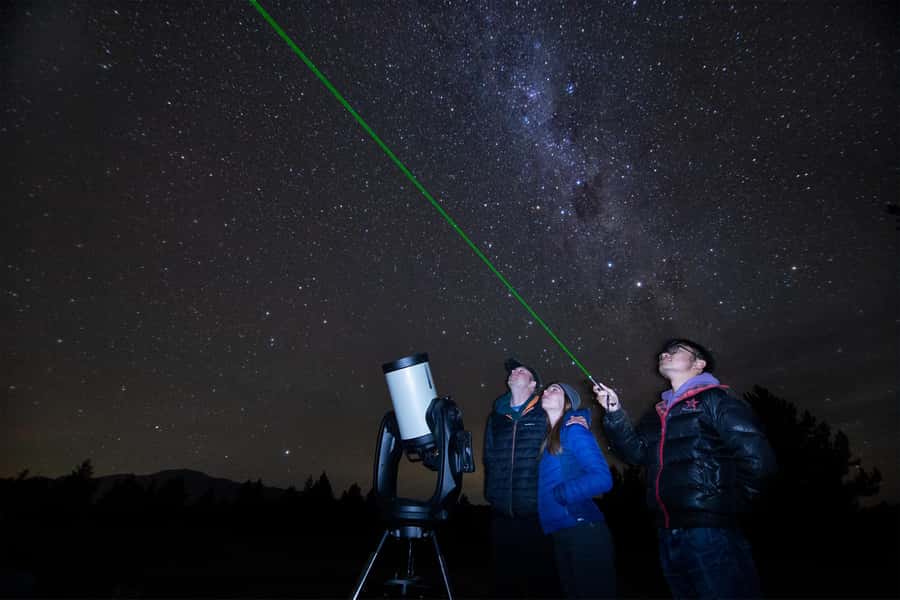
Before the telescope sessions, the guide helps you make sense of the sky above you. A laser pointer may be used to identify stars and constellations, and the talk covers practical astronomy as well as stories.
You might hear about how people use the Southern Hemisphere sky for navigation, along with explanations of constellations, planets, and other objects visible that night. The storytelling also reaches beyond modern astronomy, with Greek mythology and Maori legends adding a cultural layer to the points of light overhead.
This part is valuable even if you know little about astronomy. A dark sky can be overwhelming at first. Without guidance, it is easy to look up, see thousands of stars, and have no idea where to begin. A good explanation gives you a few reference points, so you can continue recognizing the sky after the tour.
The guides are a major part of the experience. Estella is praised for making complex ideas easy to follow, while Mok is noted for her humor and warm interaction. George is also frequently named for clear explanations and an entertaining style. Other guides include Josh, Adrian, and Adria. The exact guide depends on the departure, but the experience is designed around live conversation rather than a recorded script.
The tone appears friendly and accessible. You can ask questions, and the guides make room for them. That is particularly helpful for families and first-time stargazers, who may want basic explanations rather than technical detail.
Two telescopes and the thrill of a real view
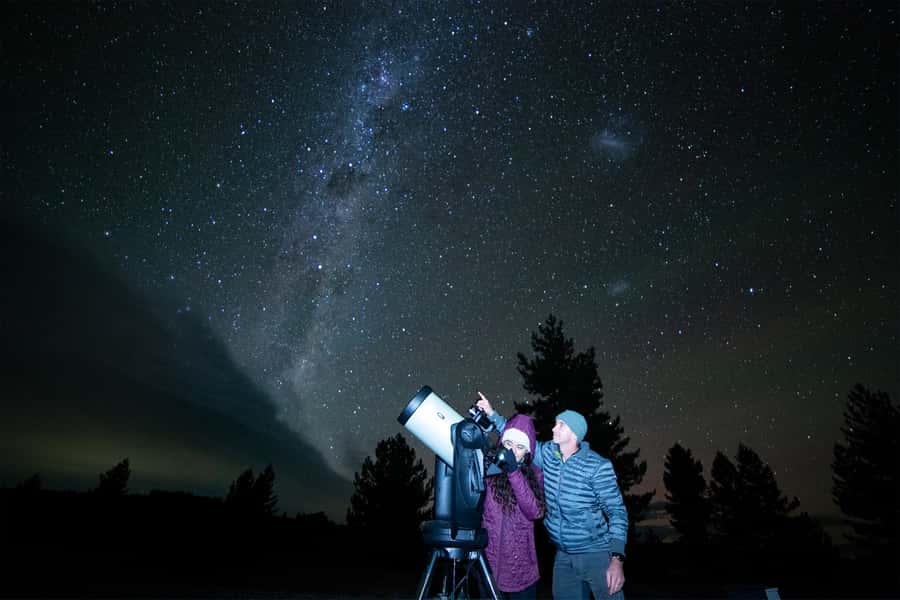
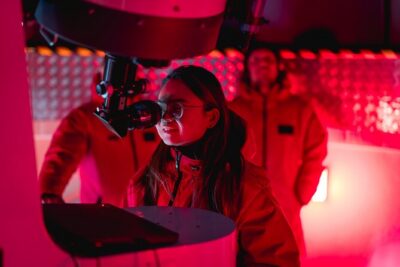
The telescope portion is the heart of the evening. You get access to a 9.25-inch computerized telescope, plus a smart telescope. Using two systems gives you more than one type of view and keeps the session varied.
Through the larger telescope, you might see the moon, planets, stars, nebulae, and other deep-sky objects depending on the conditions and what is visible that night. The telescope is powerful enough to show details that you cannot pick out with your eyes alone. One of the most memorable possibilities is seeing a nebula through the eyepiece, a sight that can make the scale of space feel suddenly real.
The smart telescope adds another way to observe and capture celestial objects. Your guide explains what you are seeing and helps you understand the difference between looking at a point of light overhead and seeing an astronomical object enlarged through optical equipment.
You should expect to take turns. This is a group activity, and the 90-minute duration includes several parts: orientation, naked-eye viewing, telescope time, photographs, and the final fire. The guide works to give everyone a fair opportunity, but you will not spend the whole evening continuously looking through one eyepiece.
That time limit is generally a good fit. It is long enough to cover several objects without becoming a lecture that drags late into the night. If you are passionate about astronomy and want extended telescope time, a specialist observatory session may suit you better. For a first introduction, the mix of explanation, viewing, and comfort is more balanced.
Same sky over the world, a different way to watch it:
- Tenerife: Sunset and Stargazing at Teide National Park
★ 4.7 · 2,826 reviews - Teide National Park Sunset & Stargazing with Dinner (Star Safari)
★ 5.0 · 2,601 reviews - Dubai: Sunset Camel Trek, Al Khayma Camp, Stargazing & BBQ
★ 4.8 · 2,588 reviews - Dubai: Overnight Safari, Dinner, Stargazing & Al Khayma Camp
★ 4.8 · 2,562 reviews
Photos that preserve more than a dark blur
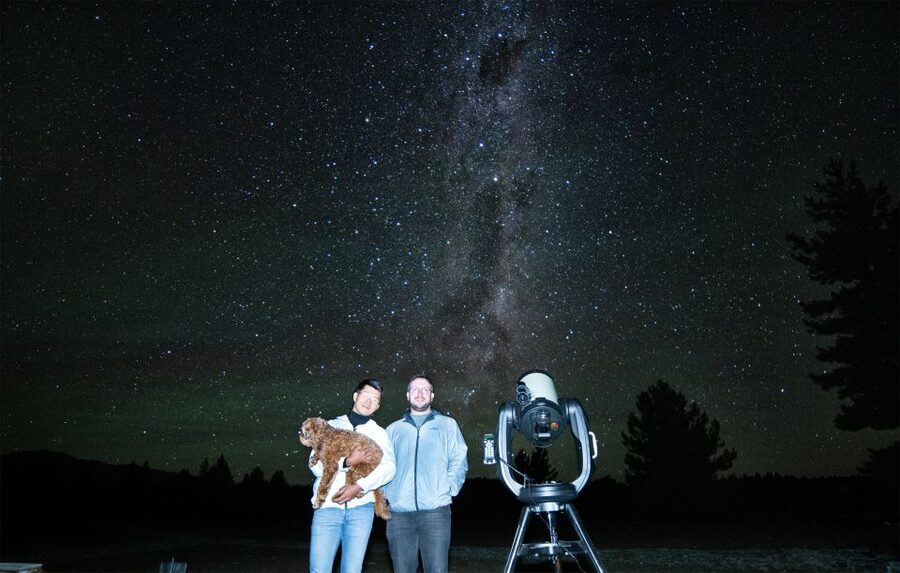
Night photographs are not always easy to take on your own. A phone may show a black sky, a few bright points, and very little of the mood you remember. This experience includes a photography service, so your guide takes an individual photo of you beneath the stars.
Edited photos are sent after the experience, including a portrait and images of objects seen through the telescopes. That is useful because telescope views are difficult to photograph casually, and the resulting images give you a clearer reminder of what you learned.
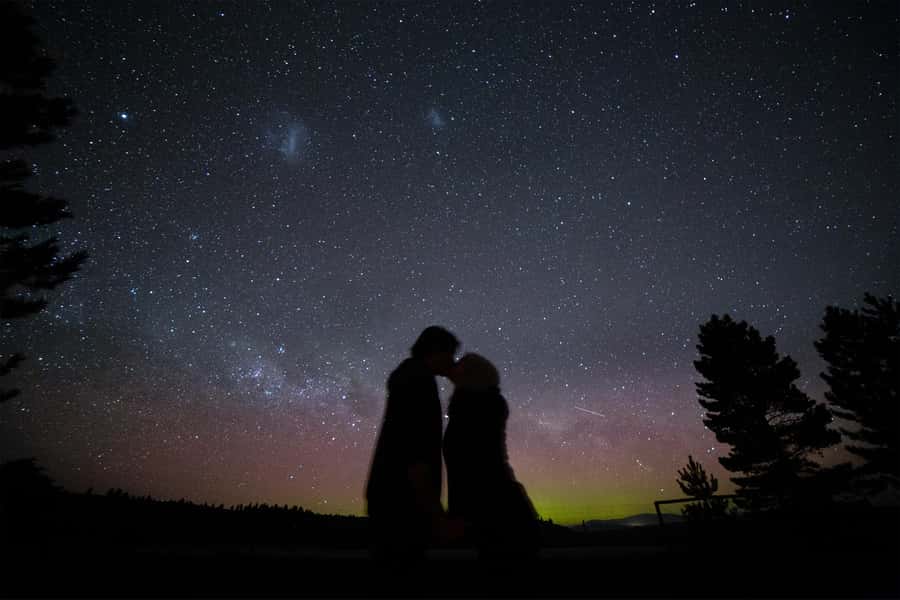
You should not treat the photography as a separate professional photo shoot. It is one part of the evening, and the exact timing depends on the group and the conditions. Still, it adds real value to the $71 price, especially for couples, families, and anyone marking a honeymoon or special trip.
The photos also help connect the experience to later evenings. After learning a few constellations and star patterns, you may find yourself pointing them out again during the rest of your New Zealand trip.
Hot chocolate, blankets, and the small fire at the end
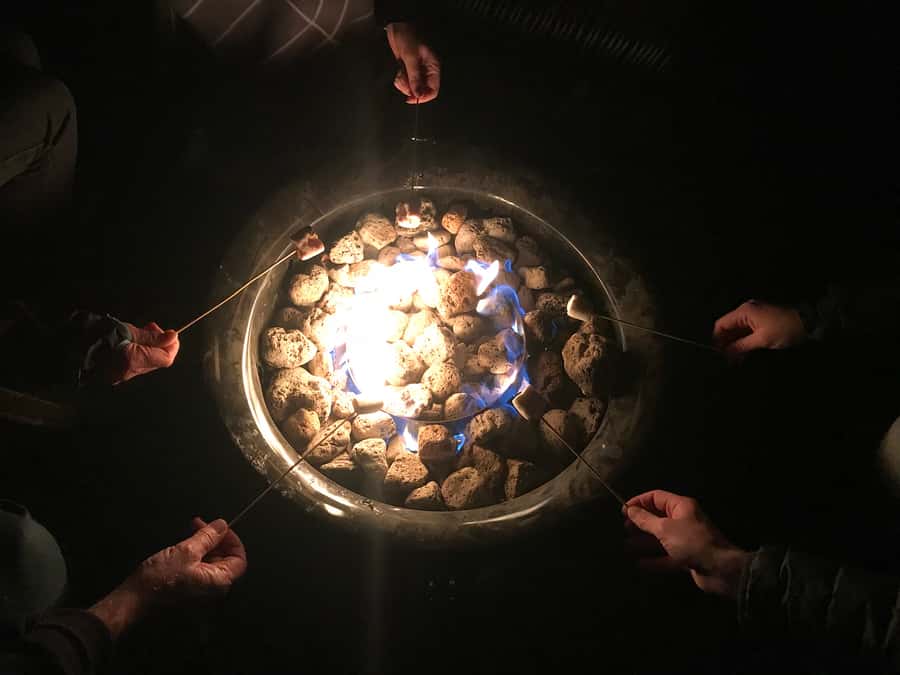
The final part moves away from the telescope and toward a fire bowl. Your guide lights it so you can roast marshmallows with your friends, family, or other people in the group.
This is more than a sweet snack. It gives everyone time to warm up, chat, and ask final questions after the formal astronomy talk. The fire makes a natural ending, and the change of pace keeps the activity from feeling like 90 minutes of standing in one spot.
Some hot chocolate is served in reusable or keepsake cups, adding another small reminder of the night. The cup is not listed as a guaranteed souvenir, so treat it as a possible extra rather than a promise. A small key-chain light has also been provided on some departures, though that is not part of the listed inclusions.
The marshmallow fire will appeal most to families and couples. Solo visitors can enjoy it too, especially if they like meeting people during group activities. If you prefer a quiet, purely scientific session, this social finish may feel a little informal, but it suits the friendly style of the tour.
Cold weather and cloud cover: the two practical limits
The biggest issue is temperature. Tekapo can be cold at night in every season, and wind can make it feel colder still. Wear warm clothing from the start, not just a light jacket over daytime clothes. Comfortable shoes are listed as essential, and extra layers are a good idea.
Clouds are the other variable. The tour depends on the sky, and conditions can change. On a cloudy or windy night, the team may discuss alternatives or offer the option of a refund if the weather prevents a worthwhile session. You should check the status before leaving for the meeting point if conditions look uncertain.
Do not assume a cold night guarantees perfect viewing. Clear, cold air may be excellent, but the actual experience depends on cloud, wind, and the objects visible at that time. The guides can still provide astronomy stories and explanations, but telescope viewing may be reduced.
If you are walking from town, bring a head torch or flashlight. One section of the route can be in complete darkness. The short drive is easier and safer for anyone carrying children, wearing unsuitable shoes, or visiting during a particularly cold evening.
Timing your booking around the Southern Hemisphere sky
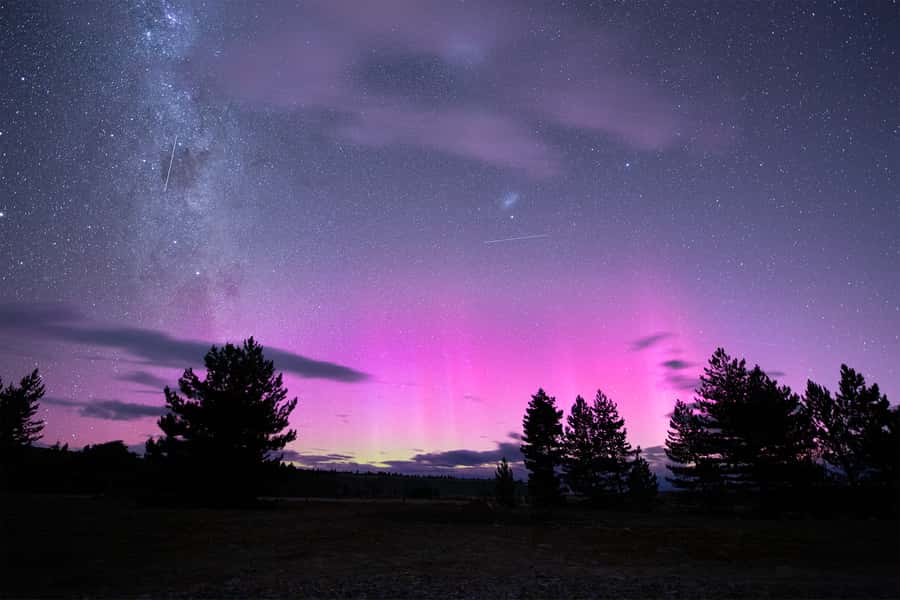
The activity lasts 90 minutes, and start times vary. Check the available departure when you book because sunset and darkness change through the year.
Pay close attention to tours scheduled after midnight. If you stay in Tekapo on December 31 and choose the 12:45 AM departure, that session belongs to January 1 in the booking system. This small date detail can prevent a very late arrival on the wrong night.
The tour is available in English and Chinese. That makes it useful for mixed-language groups, though you should check the specific departure language when choosing a time.
The cancellation terms are flexible: you can cancel up to 24 hours ahead for a full refund, and reserve now while paying later. That is helpful for a weather-dependent activity, since you may want to keep your plans open while watching the forecast.
Is $71 per person good value?
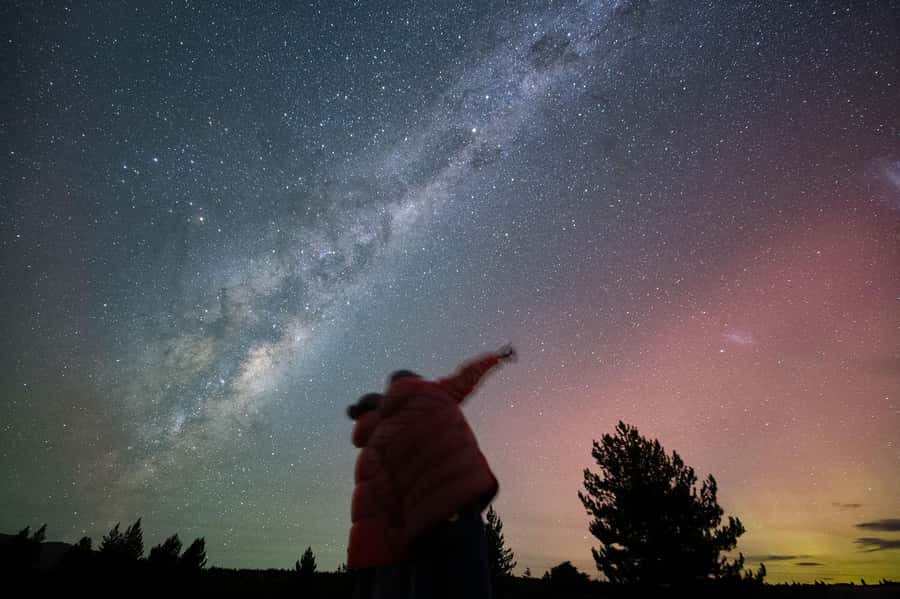
At $71 per person, this is not the cheapest way to look at stars. You can always step outside in Tekapo and admire the sky without paying anything. The value comes from the equipment, the guide, the organized viewing area, the warm drink, the fire, and the photos.
The 9.25-inch telescope and smart telescope give you something you cannot reproduce with your eyes alone. The guide also saves you from spending the first half hour trying to work out which points of light you are seeing. Add the edited images and the 90-minute format, and the price is reasonable for a structured evening activity.
I would especially consider it good value for visitors who have never used a telescope, families who want an easy introduction, and couples who would like a photograph under the Southern Hemisphere sky. Astronomy enthusiasts may prefer a longer or more technical session, but the casual format makes this suitable for a broad range of ages and interests.
The comfort features matter too. A blanket and hot chocolate will not change the weather, but they make it easier to stay outside long enough to enjoy the sky. The marshmallows and fire turn the event into a complete evening rather than a short telescope appointment.
Who should book the Lake Tekapo stargazing experience?
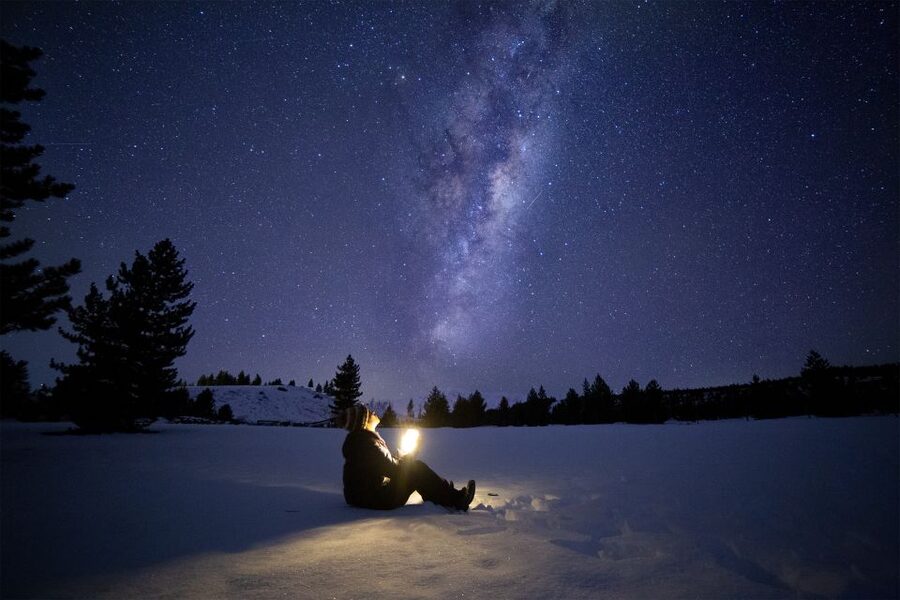
Book it if you want a guided introduction to astronomy, not just a chance to look up. You will get stories, science, telescope viewing, warm refreshments, marshmallows, and photos in one compact activity.
It is a strong choice for couples, families, first-time stargazers, and anyone visiting Tekapo for only a short stay. The location is close to the village, the walking option is manageable with a torch, and wheelchair access is available.
Think twice if you dislike cold outdoor activities, have no suitable warm layers, or want a long specialist astronomy session with extensive telescope time. Cloud and wind can also reduce the viewing quality, so keep your expectations realistic.
For most visitors, I would book it, especially if the forecast looks promising and you pack properly. The most useful tip is also the simplest: treat the clothing as part of the ticket. With warm layers, a head torch, and a little patience, this offers a memorable way to see Lake Tekapo after dark.
FAQ
How much does the Lake Tekapo stargazing experience cost?
The price is $71 per person.
How long does the stargazing tour last?
The experience lasts 90 minutes.
Where does the tour meet?
The stargazing location is beside the Tekapo River, about a four-minute drive from Lake Tekapo village center or a 20-minute walk.
Is transport to the stargazing site provided?
No. You need to make your own way to the meeting point because shuttle service is not provided.
What telescopes are included?
You can use a 9.25-inch computerized telescope and a smart telescope.
What should I wear?
Wear warm clothing and comfortable shoes. Tekapo can be very cold at night in any season, so bring extra warm layers. If you walk to the site, bring a torch or headlamp.
Are photos, hot chocolate, and marshmallows included?
Yes. The experience includes edited photos, hot chocolate, outdoor seating with blankets, a fire bowl, and marshmallows. Lactose-free and gluten-free hot chocolate options are available on request.
Fresh listings near the world
- Cabo de Gata: Guided Night Walk with Stargazing★ 4.7 · 36 reviews
- Brisbane: Glow Worms, Sunset, Star Gazing & BBQ★ 4.4 · 26 reviews
- Cabo de Gata: Stargazing Experience★ 4.5 · 7 reviews
- Antofagasta: Astronomical Tour with a Guide★ 3.7 · 4 reviews
- Boulder: Guided Astronomy Tour★ 4.7 · 11 reviews
- 1-Day Grand Canyon Tour from Las Vegas: Stargazing & Sunrise★ 3.6 · 3 reviews
- Perth: Pinnacles Stargazing, Sandboarding & Beach Kangaroos★ 5.0 · 3 reviews
- Balaton: All-Weather Private Stargazing & Planetarium Tour★ 5.0 · 7 reviews
Lake Tekapo Stargazing, side by side.
Mount John Observatory Stargazing Experience, Tekapo
Read our review →
Silver River Stargazing Experience in Lake Tekapo
Read our review →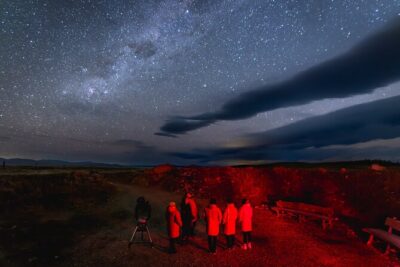
Stargazing Experience at Cowan’s Private Observatory
Read our review →
Dark Sky Indoor Maori Cultural Astronomy Experience
Read our review →Lists this night appears in