
REVIEW · GUIDED
Hanmer Springs: Guided Stargazing Tour
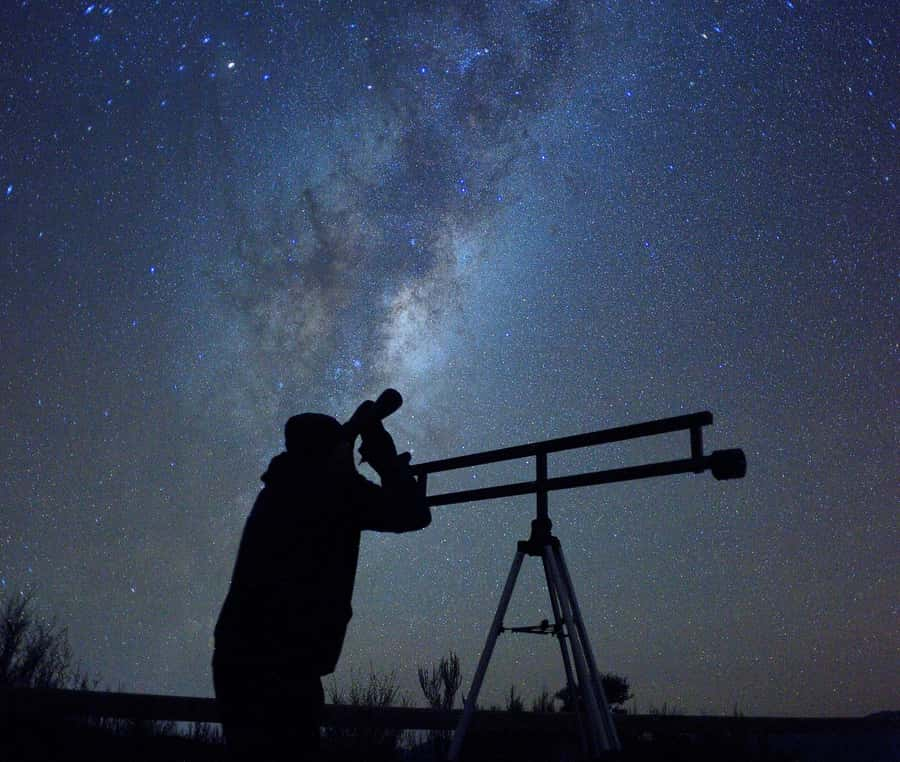
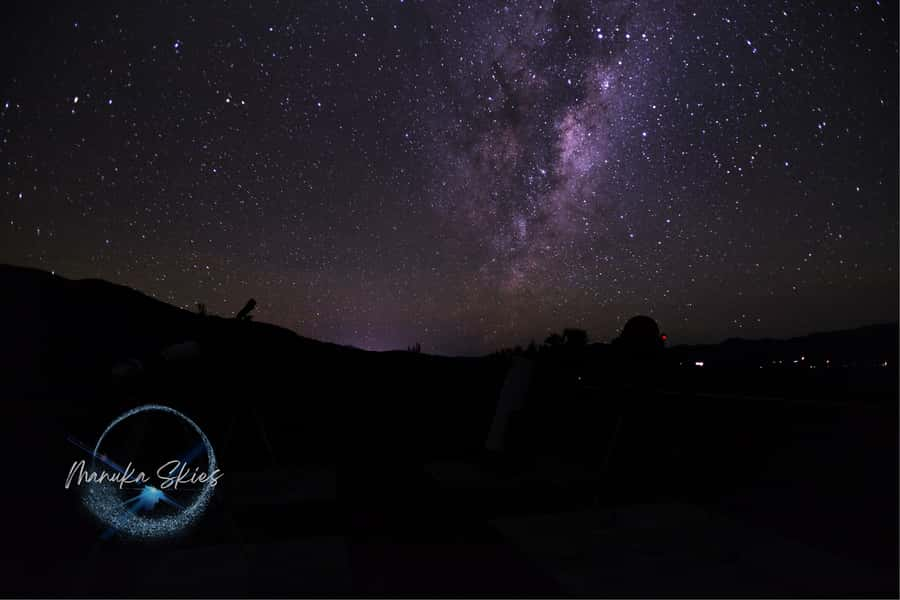
The best part of this Hanmer Springs stargazing tour is the chance to see the southern night sky from a dark location surrounded by native forest. You begin with familiar stars such as the Southern Cross, then move to distant objects such as the Omega Cluster and Sombrero Galaxy through a high-quality telescope.
I like the small group of no more than 10 people, which gives you room to ask questions and use the equipment yourself. I also like the relaxed setup: lounge chairs, blankets, hot drinks, and snacks make the two-hour outing far more comfortable than simply standing outside with a stiff neck.
The main drawback is timing. Winter tours typically start around 7:30 PM, but summer departures can be as late as 10:00 PM. The weather can also cancel the experience, with notice sent about 30 minutes before departure, so keep a little flexibility in your evening.
Key points to know before you book
- Small groups keep the experience hands-on: With up to 10 participants, you get a better chance to handle the equipment and speak with the guides.
- The tour uses several kinds of stargazing gear: You can look through an electronically guided telescope, try manual telescopes, and use astro binoculars from a reclining lounge.
- The Southern Cross anchors the introduction: The guides begin with the naked-eye sky, helping you find your bearings before turning to distant objects.
- Comfort is built into the evening: Hot drinks, snacks, blankets, lounge chairs, and a red light torch are included.
- Seasonal start times matter: Expect around 7:30 PM in winter and around 10:00 PM in summer, subject to availability.
- You need warm, windproof clothing: Bring gloves, a hat, and a jacket even though blankets are supplied.
Starting beside Hanmer Springs Thermal Pools
Your free shuttle leaves from the bus and shuttle stop on Jacks Pass Road, outside the public toilets and directly beside the thermal pools. This is a useful meeting point if you are already spending the day in Hanmer Springs, and parking is available next to the pickup area.
The shuttle pickup and drop-off are included in the $77 price, so you do not need to arrange your own evening transport to the dark-sky site. The total outing lasts about two hours from pickup to return, not two hours plus travel.
That timing matters. You can have dinner before the tour, enjoy the stargazing, and return to the village without turning the evening into a major expedition. In summer, though, the late start may affect plans for children or anyone who prefers an early night.
Once you arrive, the setting changes quickly. The location is surrounded by native forest, giving the experience a feeling of being away from the village lights. The forest is part of the appeal, although it also means you should dress for an outdoor night rather than treating this as a warm indoor planetarium visit.
More Guided Nights Out in New Zealand:
- Lake Tekapo: Alpine Stargazing Experience with a Guide
★ 4.5 · 626 reviews - Twizel Stargazing Experience with a Guide (Carbon Positive)
★ 4.7 · 26 reviews - Twizel Stargazing Experience with a Guide (Carbon Positive)
★ 4.0 · 2 reviews
Beginning with the naked-eye sky
The guides start without telescopes. This is a smart order for the evening because it helps you understand the sky before equipment brings distant objects into view.
You will discuss stars and constellations, including the Southern Cross, and learn simple ways to navigate the night sky. That makes the first part useful even if you know very little about astronomy. You are not expected to arrive knowing star names or celestial directions.
I like this approach because the sky remains impressive without technology. A telescope can show you a galaxy, but learning to recognize a major constellation gives you something you can use again on another clear night.
The guides also bring in myths and stories connected with the stars. The experience is not just a sequence of telescope views. It links what you see overhead with the stories and patterns people have used to make sense of the sky.
The exact objects visible will depend on the season and the night conditions. That is normal for stargazing. The guide may adjust the focus of the evening according to what is above you and what the weather allows.
Using the electronic telescope for distant objects
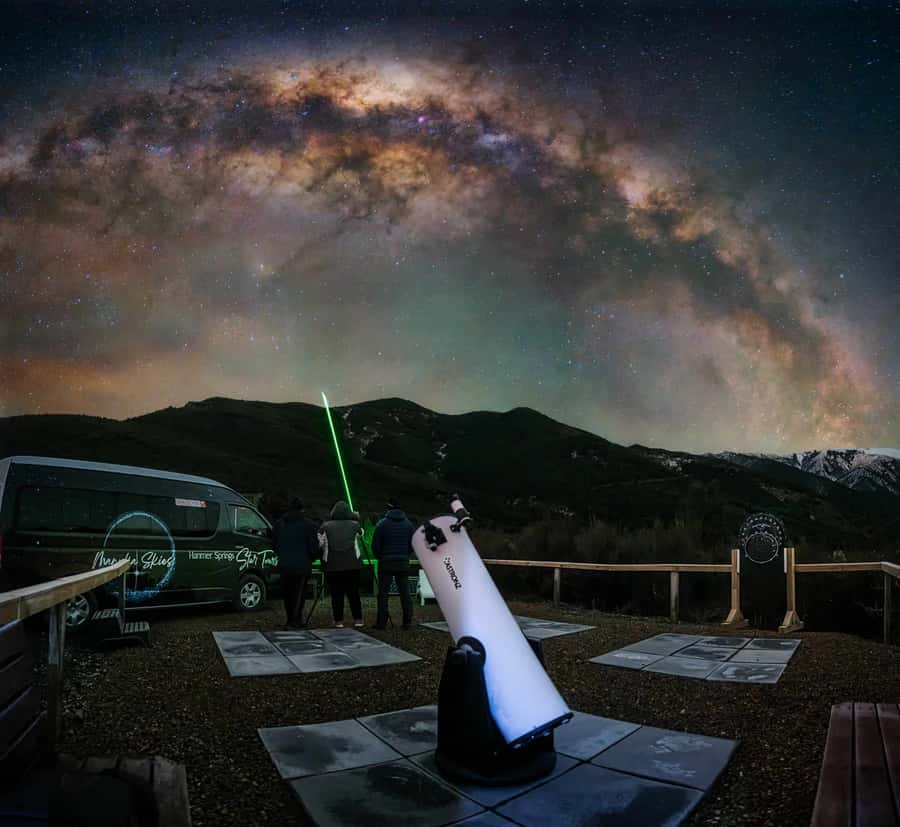
The main telescope is electronically guided and designed to find objects that are not visible to your unaided eye. This is where the outing shifts from learning the sky to looking into it.
Possible targets include the Omega Cluster and the Sombrero Galaxy. These are not objects you should expect to see clearly with your eyes from the lounge chair. The telescope gives you a chance to examine distant parts of the universe that would otherwise remain invisible.
The electronically guided design is helpful for a short tour. The guide can locate an object without spending the whole evening manually searching, leaving more time for you to look and ask questions.
This setup also suits mixed groups. Someone who already knows a little about astronomy can enjoy the equipment and targets, while a beginner can follow the guide without feeling lost. The tour has room for both curiosity levels.
Keep your expectations realistic. Telescope views depend on darkness, cloud, and visibility. You may see a bright point, cluster, or faint shape rather than a photograph-like image. The value is in seeing the object directly through the telescope and understanding what it is.
Trying manual telescopes and astro binoculars
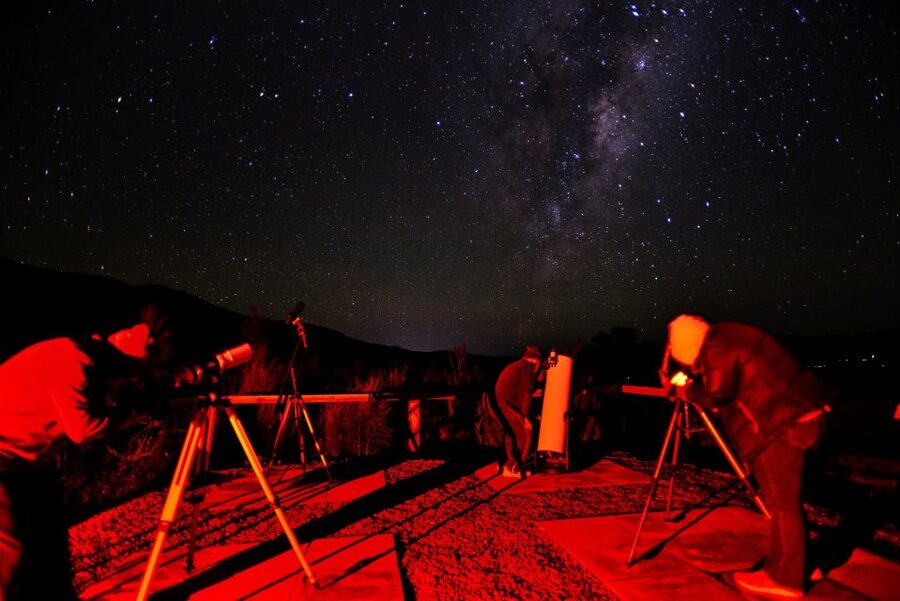
The electronic telescope is only part of the experience. Manual telescopes are available for a free-roam session, giving you more control over what you try to find.
This makes the tour more interactive than a demonstration where everyone waits for a turn at one telescope. You can move between equipment, test different views, and ask the guide for help when you need it.
Astro binoculars add another option. They work especially well from the lounges, where you can recline and look upward without standing for the full session. The combination of binoculars and a broad view of the sky gives you a different experience from the more focused telescope image.
You also receive an interactive star finder. Use it to test your navigation skills and match what you see overhead with the information in front of you. The guides remain available to help, but you are encouraged to do some of the finding yourself.
That balance is one of the strongest parts of the tour. You receive instruction, but you also get time to handle the equipment and make your own discoveries.
More Stargazing Tours in New Zealand:
- Lake Tekapo: Stargazing Experience
★ 4.9 · 607 reviews - Chameleon Stargazing Shared Tour
★ 5.0 · 181 reviews - Lake Tekapo: Mountaintop Stargazing at Mount John Summit
★ 4.5 · 176 reviews - Mount John Observatory Stargazing Experience, Tekapo
★ 4.5 · 160 reviews
Getting comfortable under the southern stars
Stargazing can sound peaceful until you remember that you may be outside for two hours after dark. Hanmer Springs can be cold, and the weather can change, so clothing is not a minor detail.
Bring warm layers, a windproof jacket, gloves, and a hat. Blankets are supplied, but they work best as an extra layer rather than your only protection from the cold. The organizers also provide lounge chairs, which make it easier to stay comfortable while using the binoculars or looking at the sky.
Hot drinks and snacks are included. This is a small feature, but it matters during a night activity. A warm cup gives you a break between telescope sessions and makes the setting feel more welcoming.
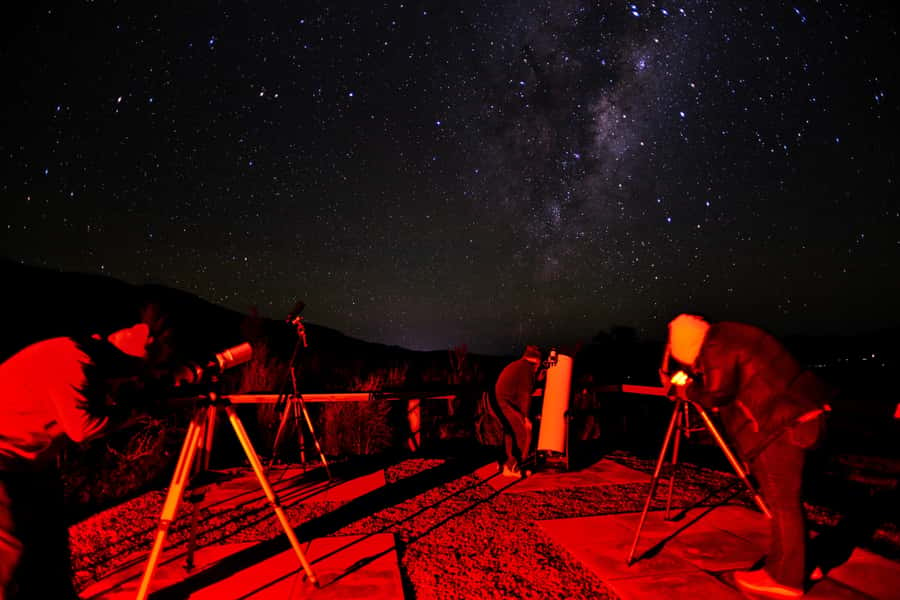
A complimentary red light torch is also provided. Red light helps you move around without making your eyes readjust as badly as they would under a bright white beam. You can keep using your night vision while handling equipment or finding your seat.
The setting beside native forest adds atmosphere, though you should not mistake atmosphere for shelter. If you strongly dislike cold evenings or sitting outside in uncertain weather, this may not be the right activity for you.
Why the small group makes a difference
The tour is limited to 10 participants. That number is small enough to make the equipment practical, especially when the group is using an electronic telescope, manual scopes, binoculars, and the star finder.
In a larger group, you might spend much of the night waiting for your turn. Here, you have a better chance to ask for help with the star finder or request another look through a telescope.
The guides are also central to the experience. Strong feedback highlights their passion for the stars and their ability to explain both astronomy and history in an interesting way. You should expect an English-language tour with plenty of room for questions, rather than a silent equipment session.
No individual guide names are provided, so do not book this expecting a particular person. What is clear is the focus on explanation, practical help, and participation.
The small group is particularly useful for first-time stargazers, families with older children, couples, and anyone who wants more than a quick look through a telescope. It is less suited to someone who wants a private tour or a guaranteed list of specific celestial objects.
Is $77 good value for two hours?
At $77 per person, the price covers more than telescope access. You receive return shuttle transport from Hanmer Springs Village, all stargazing equipment, hot drinks, snacks, blankets, lounge chairs, a red light torch, and an information brochure covering what you learned.
That package makes the price reasonable for visitors who would otherwise need to arrange transport and source their own equipment. The small group also adds value because you get active time with the gear rather than simply watching a guide operate one telescope.
The value is strongest if you are curious about astronomy but do not own binoculars or a telescope. You can try several types of equipment and learn basic sky navigation without buying anything.
The value is weaker if you mainly want a casual view of the stars and already have your own gear. Weather also affects the calculation. A cloudy night can prevent the tour from going ahead, although you will be notified about 30 minutes before departure if conditions are unsuitable.
Free cancellation up to 24 hours before the tour and the option to reserve now and pay later make it easier to fit into a changing South Island itinerary. These policies do not remove the weather risk, but they reduce the cost of changing your plans in advance.
Timing, weather, and practical limits
Start times change with the season. Winter tours typically begin at 7:30 PM, while summer outings usually start around 10:00 PM. Check the available departure time before booking, especially if you are traveling with children or have an early start the next morning.
The late summer start has one advantage: it places you outside when the sky is properly dark. The tradeoff is that the outing may finish late in the evening.
Weather is the biggest unknown. If the tour cannot operate, you should receive notice 30 minutes before departure. Keep your phone available and avoid scheduling something time-sensitive immediately afterward.
Alcohol and drugs are not allowed. Wheelchair users should also note that the experience is not suitable for them.
The tour operates in English. You receive an information brochure at the end, which is useful for remembering the stars and objects discussed after you return to the village.
Who will enjoy Manuka Skies most?
I would recommend this experience to you if you want a guided introduction to astronomy with real equipment and a relaxed pace. It works well for beginners because the tour starts with easy-to-follow constellations before moving on to more distant objects.
It also suits people who enjoy practical activities. You do not simply sit and listen. You can use the manual telescopes, handle astro binoculars, work with the star finder, and ask the guides for help.
Families should consider the seasonal start time and the cold. Older children who can stay awake and dress warmly may enjoy the hands-on approach, but the late summer departure will not suit every family.
The tour is less suitable if you need guaranteed clear skies, a private setting, indoor comfort, or wheelchair access. It is also not ideal if you want a long astronomy session, since the complete outing lasts about two hours.
Should you book this Hanmer Springs stargazing tour?
Book it if you want a friendly, small-group introduction to the southern sky, with practical use of telescopes and binoculars rather than a simple talk. The mix of Southern Cross navigation, distant galaxies, lounge chairs, hot drinks, and hands-on equipment gives the evening plenty of variety.
Before booking, check the departure time and plan for cold weather. Bring a windproof jacket, gloves, and a hat, even though blankets are supplied. If the forecast looks uncertain, keep your evening flexible.
For $77, Manuka Skies offers solid value to anyone who wants to learn while looking. You should choose this tour for the guides, equipment, and personal involvement, not for a promise of perfect weather or a fixed list of stars. If that sounds like the kind of evening you want in Hanmer Springs, it is a sensible addition to your South Island plans.
FAQ
Where does the Hanmer Springs stargazing tour meet?
The shuttle departs from the bus and shuttle stop on Jacks Pass Road, outside the public toilets and beside the Hanmer Springs Thermal Pools. Car parking is available next to the pickup point.
How long does the experience last?
The complete outing takes about two hours, including shuttle pickup and drop-off from Hanmer Springs Village.
What time does the tour start?
Start times vary by season and availability. Tours typically start around 7:30 PM in winter and around 10:00 PM in summer.
What equipment is included?
The tour includes an electronically guided telescope, manual telescopes, astro binoculars, an interactive star finder, and a complimentary red light torch.
Are drinks and warm items provided?
Yes. Hot drinks, snacks, blankets, and lounge chairs are included. You should still bring warm clothing, including a windproof jacket, gloves, and a hat.
What happens if the weather is poor?
If the tour cannot proceed because of poor weather, you will be notified about 30 minutes before departure.
Is the tour suitable for wheelchair users?
No. The experience is not suitable for wheelchair users.
Fresh listings near New Zealand
- Twizel: Stargazing Tour with an Astronomer and Telescope★ 4.9 · 36 reviews
- Twizel Stargazing Experience with a Guide (Carbon Positive)★ 4.7 · 26 reviews
- Private Stargazing at Star Safari near Martinborough★ 5.0 · 3 reviews
- Star Safari Stargazing Experience, Martinborough★ 5.0 · 6 reviews
- Twizel Stargazing Experience with a Guide (Carbon Positive)★ 4.0 · 2 reviews
- Lake Tekapo Ultimate Stargazing Experience★ 5.0 · 3 reviews
- Virtual Stargazing & Astronomy Experience in Lake Tekapo★ 3.0 · 2 reviews
- Southern Skies Stargazing Tour in Dunedin★ 5.0 · 62 reviews
Guided, side by side.
Teide: Guided Sunset & Stargazing Tour by Night with Dinner
Read our review →
Griffith Observatory Hike: Guided Tour through Griffith Park
Read our review →
Teide National Park: Guided Large Telescope Stargazing Tour
Read our review →
Northern Lights and Stargazing Small-Group Tour with Local Guide
Read our review →
Lists this night appears in