
REVIEW · TELESCOPE STARGAZING
Uluru: National Park Astronomy Tour with Telescope and Photo
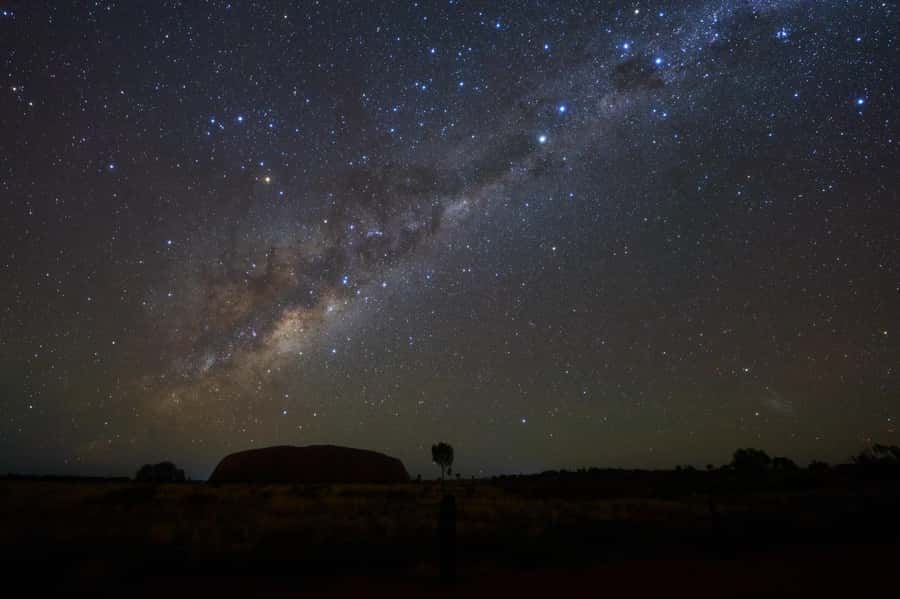
The best part of this Uluru tour happens above your head. Away from the resort lights, the Milky Way spreads across the desert sky, and powerful telescopes bring planets, nebulae, star clusters, and other distant objects into view. The dark outback sky is the real star of the evening.
I like the mix of astronomy and Indigenous sky stories, plus the practical help with phone photography. I also like that the professional photo is included, rather than offered as an extra at the end. The main drawback is group size: on busy nights, several coaches and only a few telescopes can mean waiting.
Key points
- A truly dark-sky setting: Travel into the national park, away from the stronger lights around the resort.
- Telescopes and binoculars included: You may see Saturn, the Moon, nebulae, star clusters, Alpha Centauri, or other objects visible that night.
- Stories with the science: Guides explain constellations, planets, current astronomy, and Indigenous uses of the night sky.
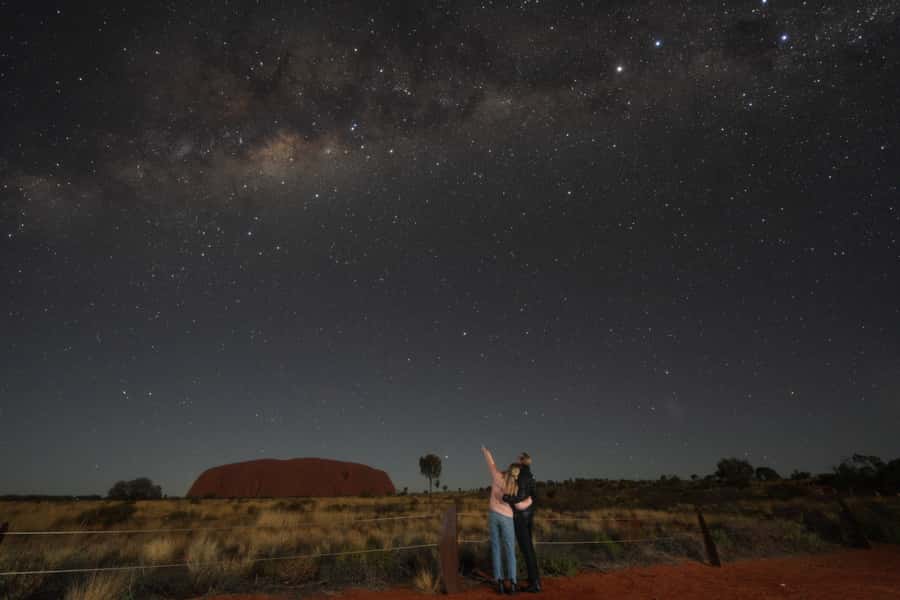
- Professional Uluru portrait: Each person receives a digital long-exposure photo with the stars and Uluru behind them.
- Blankets and stools provided: Temperatures can drop sharply after sunset, especially from April through September.
- A 150-minute evening outing: Pickup and return are included, with English and Chinese guide options.
Why Uluru is a fine place to study the stars
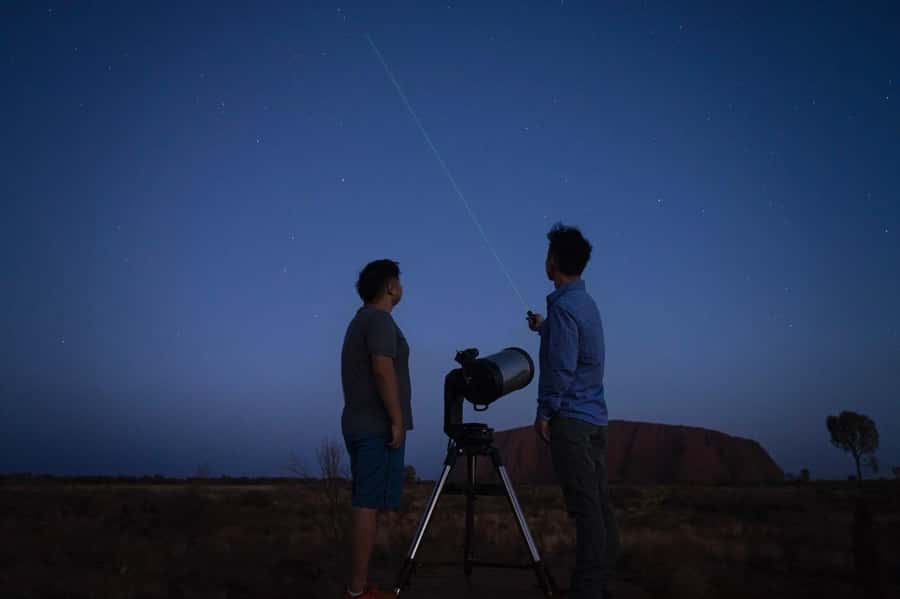
Uluru is famous by daylight, but the rock takes on a different character after dark. The red monolith becomes a dark outline, while the sky takes over. At a remote viewing spot in Uluru and Kata Tjuta National Park, you get much less artificial light than around the resort.
That matters more than fancy equipment. A dark sky lets you see far more stars with your own eyes, including the broad pale band of the Milky Way when conditions are right. Several people also spotted shooting stars, and one evening produced a meteor that crossed the sky for about six seconds.
You cannot control the clouds, the Moon, or the exact position of the Milky Way. A bright first-quarter or full Moon can wash out fainter stars, even if it makes the Moon itself excellent through a telescope. For the darkest view, a night near the new Moon is generally preferable, though the tour runs according to its available schedule rather than promising a particular lunar phase.
More Telescope Stargazing in Australia:
- Teide by Night: Sunset & Stargazing with Telescopes Experience
★ 4.5 · 1,492 reviews - Teide National Park: Guided Large Telescope Stargazing Tour
★ 4.9 · 319 reviews - Levi: Northern Lights Tour and Stargazing by Telescope
★ 4.6 · 183 reviews
Pickup and the short ride into the park
Pickup from your accommodation is included. Look for the Atrip bus, and check your email for the confirmed pickup time on the day of the tour. One description of the outing puts the drive at roughly 20 minutes from the resort, though the exact timing depends on the pickup route and viewing location.
The ride is useful because it takes you away from the brightest nearby lights without asking you to arrange a separate transfer. You do not need to bring your own National Park pass for this activity.
The bus itself has received good marks for comfort, but the walking area around the viewing site is dark. Bring closed-toe shoes, and use care when moving between the coach, stools, and telescope stations. One practical suggestion is that a little more lighting along the walking route would help, though too much light would work against the purpose of the outing.
Settling into the outback night
At the viewing site, the team sets out folding stools and blankets. This simple preparation makes a big difference. You spend long stretches looking upward, so having somewhere to sit is much better than standing in the sand or leaning against a vehicle.
Bring warm layers even if the afternoon was hot. The temperature can feel close to 10 degrees Celsius in May, and winter evenings can feel colder still. In summer, the evening may remain warm, so you do not need to carry a heavy winter coat. The safe approach is layers, since the desert can change quickly after sunset.
A reusable water bottle is also recommended. Closed-toe shoes are sensible for the outdoor setting. There is no need to bring a National Park pass, and the tour supplies the telescope equipment and one digital photo.
The guide talk: science, stories, and the southern sky
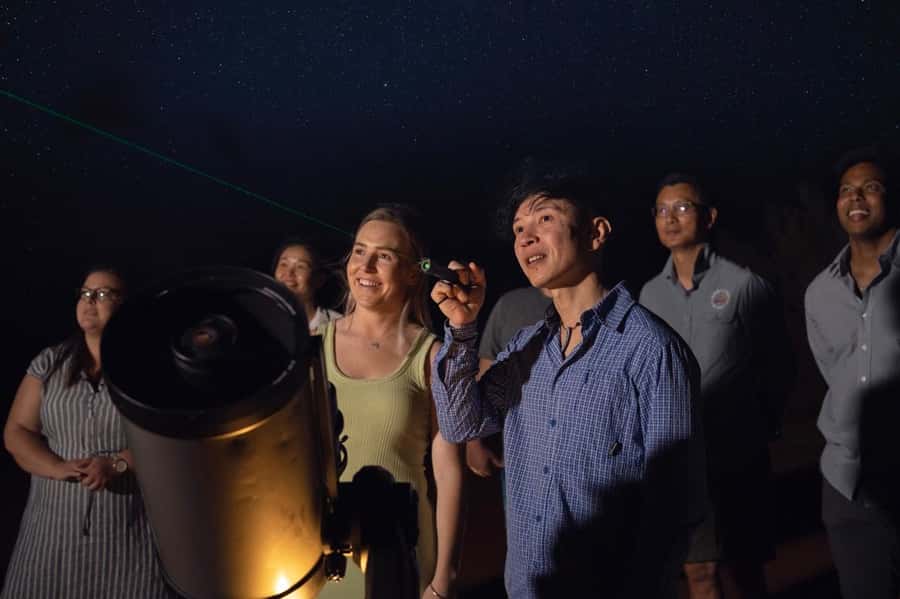
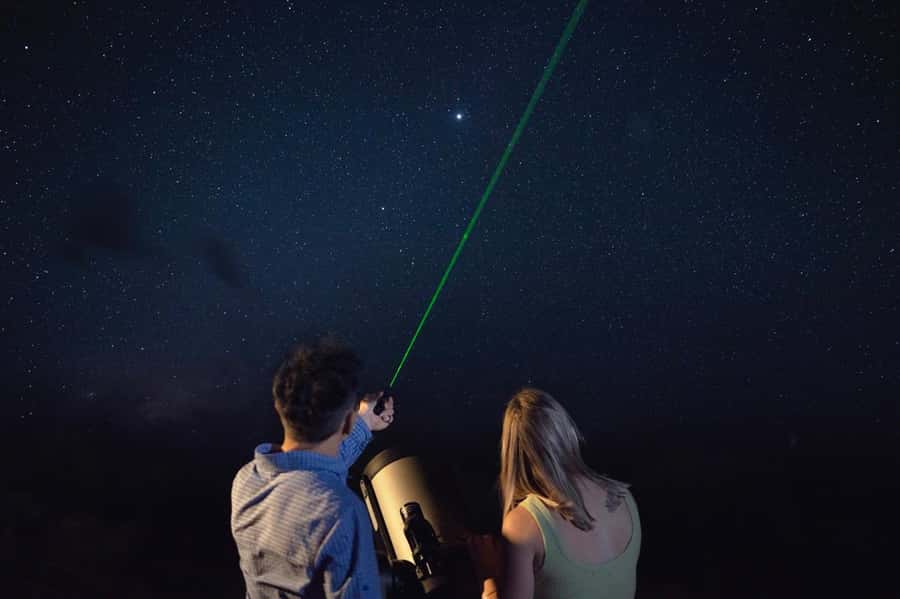
The guide uses a laser to point out stars and constellations, then explains what you are seeing. This is far more useful than simply being told to look at a bright patch in the sky. You learn how to find the main points of interest and how different cultures have read the heavens.
The talk combines basic science with Indigenous astronomy. You may hear about the practical uses of the night sky, along with stories connected to stars and constellations. Guides such as Neil and Lucy have been especially well received for clear explanations and easy conversation, while Zack has helped visitors with both astronomy and photography.
The tone is generally friendly and relaxed. Beginners should not feel out of place. The material can reach beyond a first-time stargazer, but you can ask questions and decide how much science you want to follow. If you want a lecture packed with technical detail, some of the storytelling may feel light. If you want a clear introduction to the southern sky with cultural context, the balance works well.
One small issue is sound. With a large group, nearby conversations can make it hard to hear every word. A microphone would help on busy evenings. Try to sit close to the guide if the group is large.
More National Park Stargazing in Australia:
- Tenerife: Teide National Park Sunset & Stargazing Tour
★ 4.2 · 3,812 reviews - Tenerife: Sunset and Stargazing at Teide National Park
★ 4.7 · 2,826 reviews - Teide National Park Sunset & Stargazing with Dinner (Star Safari)
★ 5.0 · 2,601 reviews - Teide National Park: Sunset & Stargazing Safari with Dinner
★ 4.6 · 2,115 reviews
What you can see through the telescopes
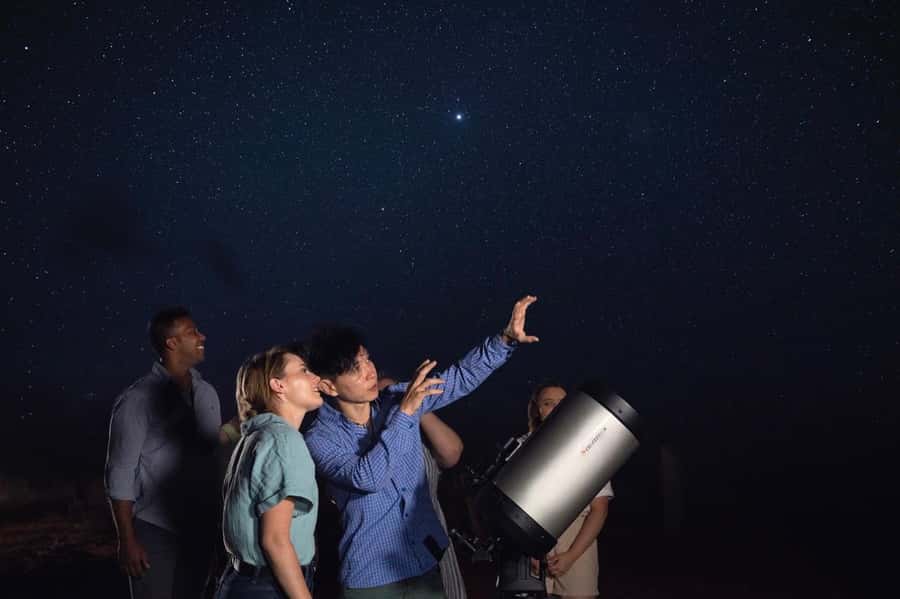
The telescopes are the other major reason to book. With the naked eye, you see the overall sky. Through the equipment, you get a closer look at specific planets and deep-sky objects.
Depending on the night, the viewing list can include Saturn and its rings, the Moon, nebulae, star clusters, Alpha Centauri, the Pleiades, and other distant objects. One viewing even included Pluto, although you should treat such sightings as dependent on conditions, equipment, and the guide’s choices for that night.
The telescopes are powerful enough to make the session worthwhile, but this is not a private observatory visit. On a busy evening, two full buses and three telescopes created long queues. Another evening had a wait of roughly 45 to 60 minutes for the portrait station. The operator may have more than one telescope in use, but the supplied experience does not promise a particular number.
That means your time is divided between telescope viewing, the guide talk, sitting under the stars, and photography. If you expect constant telescope access, you may be disappointed. If you see the equipment as one part of a wider night-sky experience, the arrangement makes more sense.
The Moon is a good example of this balance. A bright Moon can reduce the number of visible stars, yet it may look spectacular through the telescope. Saturn, when visible, is often the highlight because its rings give you an immediately recognizable target. Clouds may also delay or limit certain views, so keep your expectations flexible.
The professional photo with Uluru behind you
The included portrait is a smart feature. The photographer uses a long exposure to capture you with the night sky and Uluru in the background, producing a keepsake that is difficult to make on your own.
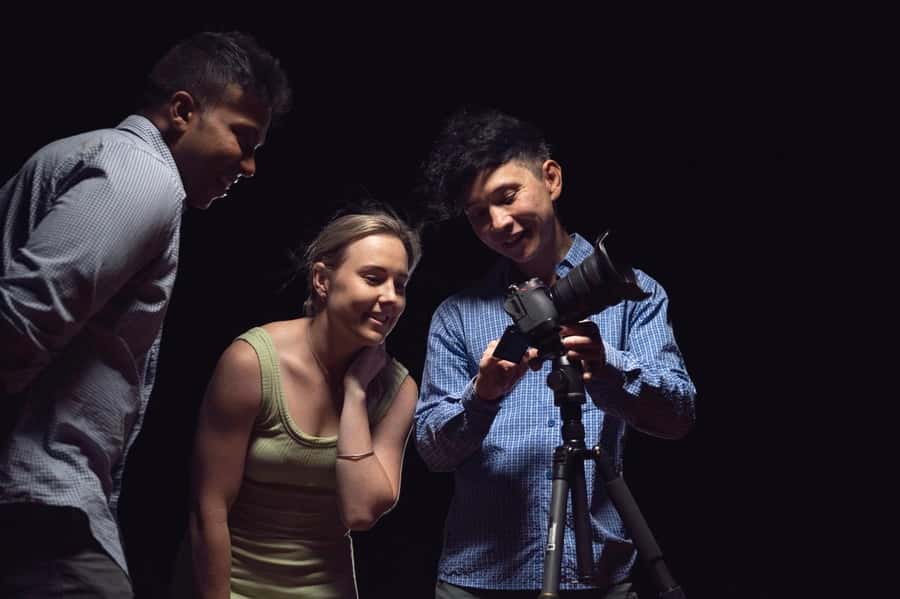
The photo is delivered digitally for download later. It is one photo per person, and you may be grouped with family or friends if you arrange that at the station. Because long-exposure photography takes time, the queue can build up. Decide before your turn who should appear in the image, and do not wait until the camera is ready to sort out the group.
I like that the photo gives the evening a clear souvenir without turning the tour into a sales pitch. You also have time to make your own images. Bring a camera and tripod if you enjoy astro-photography. Guides can help with phone settings, and some have assisted visitors in getting better night-sky images with their smartphones.
Do not expect your handheld phone photo to match the professional shot without preparation. The guides can offer useful help, but you will get better results if you know how to access your phone’s night mode before arriving.
Group size, queues, and the pace of the evening
The tour lasts 150 minutes, including transport and the outdoor program. That is long enough to hear the guide talk, use the equipment, take the professional photo, and spend quiet time looking up. At the same time, several people wished the experience lasted longer, especially when telescope or photo queues reduced their personal viewing time.
Group size is the main practical weakness. A full coach can be fine during the general talk, but less convenient when everyone wants a turn at the same telescope. People chatting during explanations can also affect the experience.
I would book this for the setting and the quality of the guide presentation, not for uninterrupted telescope access. If smaller groups are important to you, ask about the expected numbers before booking. The supplied details do not promise a small-group format.
Is the $91 price good value?
At $91 per person, the tour sits above a simple resort-area stargazing talk, but it includes several useful pieces: return transport, the national park setting, a live guide, telescope use, binoculars, blankets, stools, and a professional digital photo.
The biggest value comes from transport to a darker location. You could look at stars near the resort for less, but nearby artificial light would weaken the view. The included portrait also saves you from paying separately for a night-sky photograph.
I think the price is fair if you want a guided introduction and do not own astronomy equipment. It is less compelling for an experienced amateur astronomer carrying a good telescope and camera, especially if you prefer a private session. For most people visiting Uluru for only a few nights, the combination of access, equipment, and setting makes the cost reasonable.
The free cancellation available up to 24 hours before the start, plus the reserve-now-and-pay-later option, gives you some flexibility when planning. Starting times vary, so check availability for your date.
Who will enjoy this most?
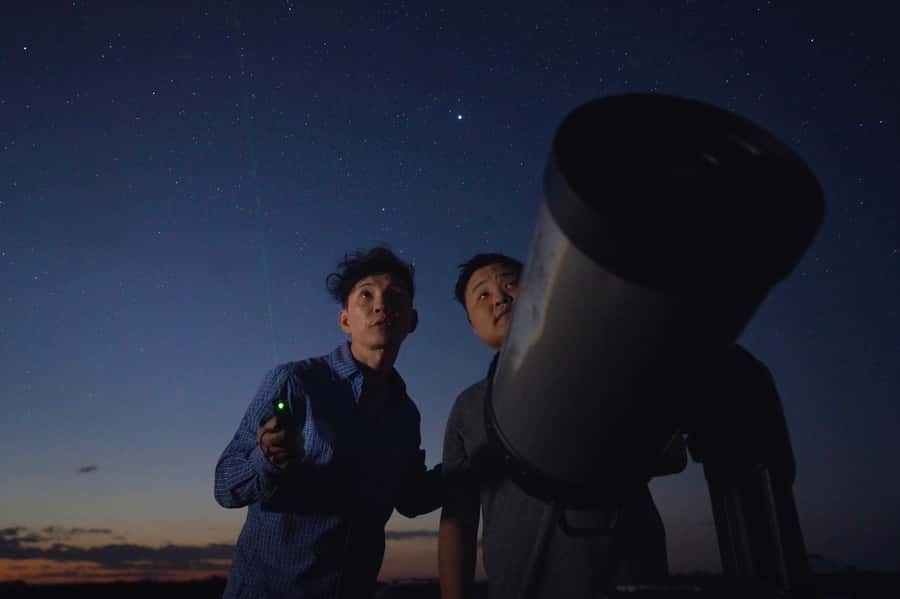
This is a strong choice for first-time stargazers, couples, families, and anyone who wants a quieter evening after a busy day of sightseeing. Children and teenagers can follow the laser-guided constellations and enjoy the telescope targets without needing prior astronomy knowledge.
It also suits people who want to connect the science of the sky with Indigenous stories and practical cultural knowledge. The guides keep the material approachable, though some sections may be more technical than expected for a complete beginner.
You may want to skip it if you dislike waiting, prefer private tours, or need guaranteed clear skies. A bright Moon or cloud cover can change the view. The professional photo, guide talk, and equipment remain useful, but no stargazing tour can promise the Milky Way at its most dramatic every night.
What to bring and how to prepare
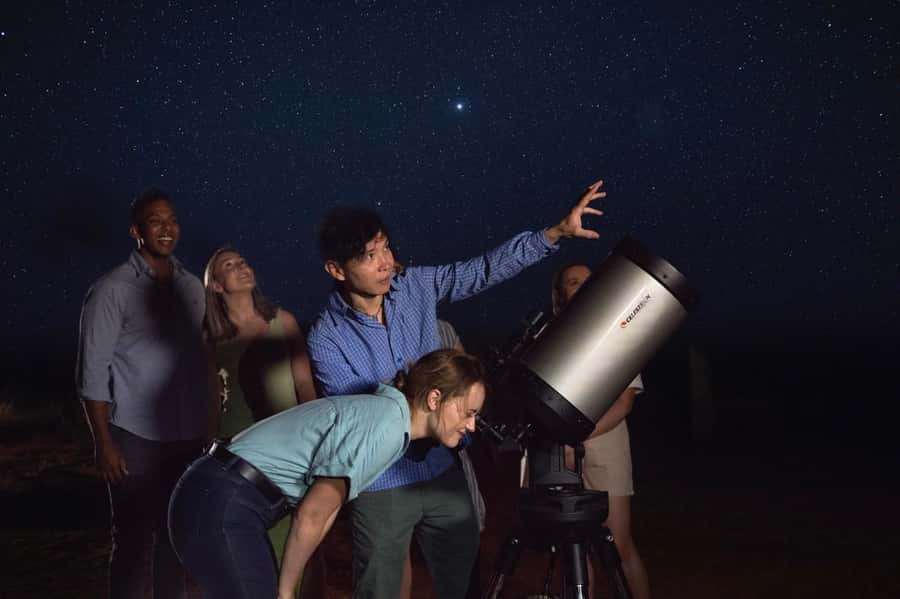
Pack warm layers, a reusable water bottle, and closed-toe shoes. In cooler months, bring more clothing than you think you need, since sitting still under an open sky feels colder than walking.
If photography matters to you, bring a tripod and camera. Charge your phone and learn where its night mode or long-exposure controls are before pickup. Decide in advance who should be included in the professional portrait, since the slow exposure can make the photo line longer.
Arrive ready to listen as well as look. The most rewarding parts are not always the telescope targets. The guide’s laser, stories, explanations of the southern sky, and the sudden view of the Milky Way all work together.
Should you book the Uluru Astronomy Tour?
I would book it if you want an easy, well-organized night under a genuinely dark sky, especially if you have never seen the Milky Way clearly or used an astronomy telescope. The included Uluru portrait, blankets, transport, and help with phone photography add real value.
Go in knowing that this is a shared group outing, not a private observatory visit. Telescope queues may occur, the Moon can reduce the number of visible stars, and the guide may be competing with group conversation. Book it for the full outback night experience, with the equipment and photo as strong extras. On that basis, it is one of the better evening activities around Uluru.
FAQ
How long does the Uluru astronomy tour last?
The experience lasts 150 minutes, including the evening activity and transport.
Is pickup and drop-off included?
Yes. Pickup and return to your accommodation are included.
What bus should I look for?
Look for the Atrip bus. The provider sends the confirmed pickup schedule by email on the day of the tour.
Which languages are available?
The live tour guide is available in English and Chinese.
Do I need to bring a National Park pass?
No. You do not need to bring your own National Park pass for this tour.
Are telescopes provided?
Yes. Telescope use and binoculars are included in the activity.
Is a photograph included?
Yes. You receive a professional digital photograph taken under the stars, with Uluru in the background.
What should I bring?
Bring warm clothing, closed-toe shoes, and a reusable water bottle. If you want to take your own night-sky photos, bring a camera and tripod.
Fresh listings near Australia
- Brisbane: Glow Worms, Sunset, Star Gazing & BBQ★ 4.4 · 26 reviews
- Perth: Pinnacles Stargazing, Sandboarding & Beach Kangaroos★ 5.0 · 3 reviews
- Kalbarri Skywalk: Sundowner and Stargazing Tour★ 4.9 · 9 reviews
- Kalbarri Stargazing Tour★ 5.0 · 2 reviews
- Kalbarri Skywalk Sundowner and Stargazing Tour★ 5.0 · 6 reviews
- Kalbarri Stargazing Tour★ 5.0 · 7 reviews
- Small-Group River Murray Dark Sky and Sunset Tour with Dinner★ 5.0 · 70 reviews
- Pinnacle Desert Sunset and Night-time Stargazing Tour from Perth★ 4.5 · 120 reviews
Telescope Stargazing, side by side.
Teide by Night: Sunset & Stargazing with Telescopes Experience
Read our review →
Teide National Park: Guided Large Telescope Stargazing Tour
Read our review →
Northern Lights Tour and Stargazing by Telescope
Read our review →
Jasper Planetarium and Telescope Combo Tour Tickets
Read our review →
Cavalleria: Guided Stargazing at the Beach with Telescope
Read our review →
Magic Stargazing & Sunset in Teide with Dinner + Telescopes
Read our review →
Akaroa: Stargazing Tour with 2 Telescopes & Souvenir Photos
Read our review →Lists this night appears in