
REVIEW · AUSTRALIA STARGAZING
Jervis Bay Beach Stargazing Tour with our Astronomer
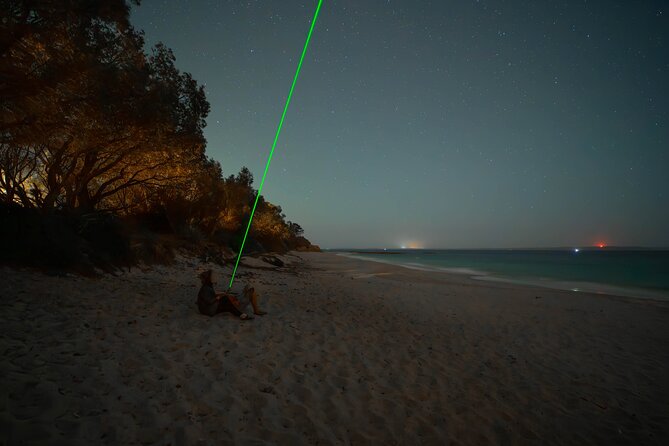
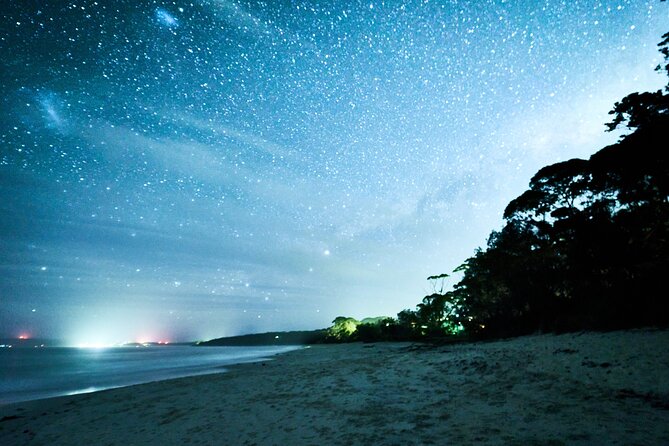
Jervis Bay’s night sky is the main event, but the setting makes this more than a telescope lesson. You begin on Nelsons Beach with the sound of waves, a laser pointer tracing constellations overhead, and a chance to spot bioluminescent plankton glowing in the water. I like that unusual mix of ocean and astronomy, along with the chance to see southern-sky objects that are difficult or impossible to view from northern latitudes.
I also like the way the session moves from easy naked-eye stargazing to a telescope and then to questions with an astronomer. Dimitri, the advertised guide, is a PhD astrophysicist with experience at Sydney Observatory and Mount John Observatory in New Zealand. The main drawback is simple: clear skies are essential, so clouds can cancel the evening and force you to reschedule.
Key points to know before you book
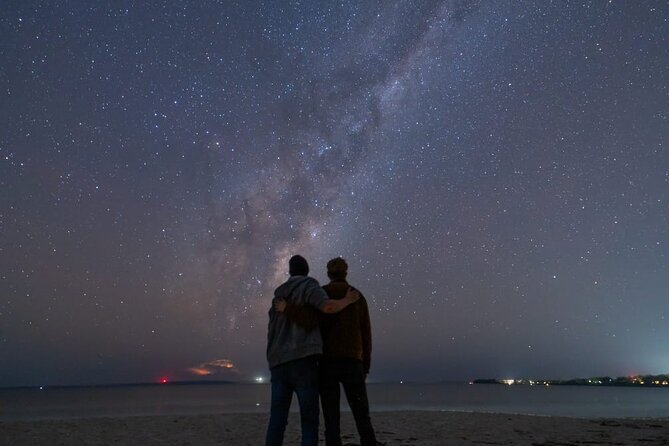
- Nelsons Beach adds an ocean soundtrack: You stargaze beside the water rather than in a silent field, with waves and possible glowing plankton as part of the setting.
- Dimitri brings serious astronomy experience: He is a PhD astrophysicist, TEDx speaker, and cultural astronomer with more than 10 years in the field.
- The tour starts without a telescope: You first learn stars, constellations, and navigation by eye with laser guidance.
- The telescope targets change with the season: You might see the Moon, planets, the Orion Nebula, star clusters, deep-sky objects, or the Milky Way.
- Groups are limited to 20 people: That keeps the session reasonably small, though telescope viewing can still take patience.
- Weather controls the schedule: An overcast evening can cancel the tour, with a rescheduled date or refund option available under the stated conditions.
Why Jervis Bay works so well after dark
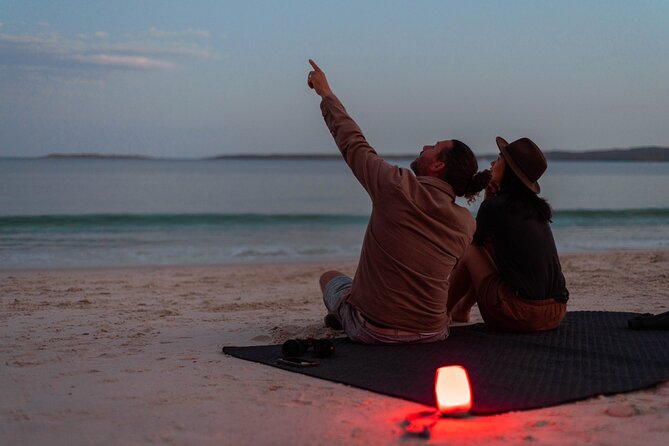
The best reason to book this experience is the location. Jervis Bay is far from the city lights that wash out faint stars, so the sky can reveal much more than the handful of bright points visible above Sydney or another large urban area.
That matters most when you look away from the obvious stars. The Milky Way becomes easier to pick out, star clusters have more shape, and faint objects have a better chance of showing through the darkness. The exact view still depends on cloud, moonlight, season, and the quality of the night, so you should not expect a fixed list of sights every time.
The beach setting gives the session a second layer. Instead of standing in a car park or enclosed observatory, you hear surf while looking up. That will appeal to couples and families who want an evening out, not just a technical astronomy class.
There is also a chance to check the water for bioluminescence. Glowing plankton is not guaranteed, and it should be treated as a possible bonus rather than a promised feature. Still, the opportunity makes the opening beach session feel distinctive.
More Stargazing Tours in Australia:
- Pinnacles Desert: Sunset BBQ & Stargazing Tour +Sandboarding
★ 4.8 · 1,555 reviews - Pinnacles Desert Sunset Dinner and Stargazing Tour
★ 5.0 · 1,034 reviews - From Perth: Pinnacles Sunset and Stargazing Tour with Dinner
★ 4.7 · 803 reviews
Starting at Moona Moona Beach Playground
The meeting point is Moona Moona Beach Playground, 7 Tapalla Avenue, Huskisson. The activity ends back at the meeting point, so you do not need to arrange a second pickup location.
From there, the experience moves into the beach setting at Nelsons Beach. The supplied timing is about 90 minutes, which is long enough to cover basic sky orientation, telescope viewing, and questions without turning the night into a full lecture.
You should arrive ready for an outdoor session. The information provided does not specify seating or equipment for every date, but one booking included chairs and blankets, so those may be available. I would still dress for a cool evening and bring anything you need to stay comfortable beside the water. Darkness and changing conditions are part of the experience, not signs that something has gone wrong.
The group limit is 20 people. That is a useful middle ground. You get a shared activity rather than a private lesson, but the number is still small enough for questions and guided viewing to feel possible. If the group is full, you may need to wait your turn at the telescope, especially when a popular object is visible.
Learning the sky without a telescope
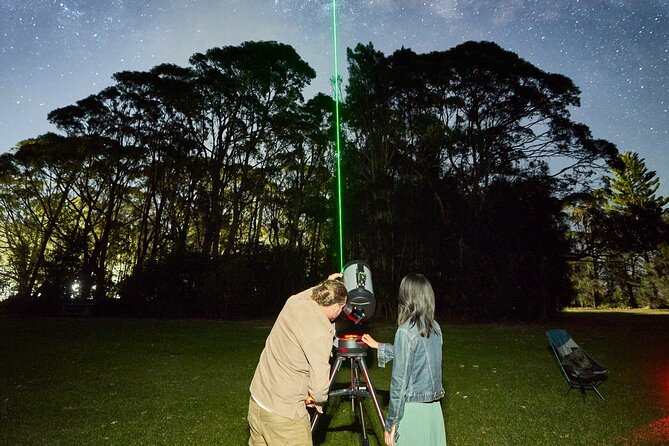
The first astronomy section uses the naked eye and a laser pointer. This is one of the most useful parts for beginners because it teaches you how to find things for yourself later.
Your guide covers stars and constellations, along with simple navigation tips. Constellation stories add a human side to the science, while the practical guidance helps you get your bearings when you look up on your own during the rest of your stay in Jervis Bay.
I prefer this order to starting with a telescope. A telescope can show a striking object, but without some basic orientation, the sky remains a collection of bright dots. The laser-guided section gives those dots a pattern and a place in the wider sky.
The beach also changes the pace. You can listen to the waves, look for shooting stars, and watch the horizon as the evening settles. Sunset views are included in the setting, depending on the timing of the session, so this is not strictly a late-night activity from start to finish.
For children, this opening section may be easier to follow than a long explanation indoors. For adults, the navigation tips and constellation stories give the evening more lasting value than a quick telescope glance.
Telescope targets change with the season
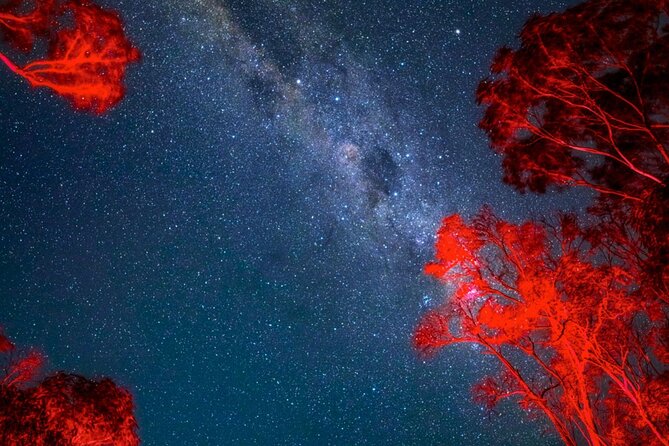
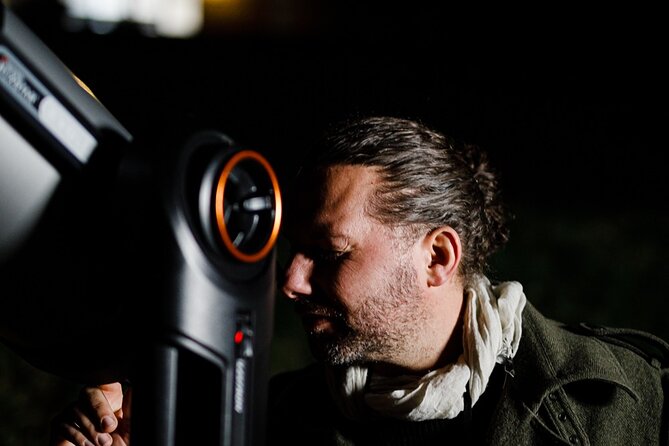
After the naked-eye introduction, the group uses a modern telescope to view celestial objects. The exact targets depend on the time of year and the conditions that night.
Possible sights include:
- The Moon
- Planets
- The Orion Nebula
- Star clusters
- Deep-sky objects
- The Milky Way
The Moon is often an easy starting point when it is visible. Its surface details can make an immediate impression, especially for first-time telescope viewers. Planets, if available, can offer a very different kind of view, though their visibility and appearance depend on the date and equipment.
The Orion Nebula is a notable possibility. It is a cloud of gas and dust where stars form, and it is one of the better-known deep-sky targets. You should read the object list as a guide to what might appear, not a guarantee that every item will be shown during your session.
Star clusters can be rewarding because they often look like compact groups of bright points. Deep-sky objects are more demanding. Some may appear faint or less colorful than photographs suggest, since professional images use long exposures and processing. A good guide helps you understand what you are actually seeing rather than promising a picture-perfect view.
The Milky Way is best appreciated with your eyes as well as the telescope. In a dark Jervis Bay sky, it may look like a broad, pale band rather than a sharp photographic image. Give your eyes time to adjust and avoid expecting instant results from the first glance.
Same sky over Australia, a different way to watch it:
- Pinnacles Sunset Stargazing Dinner Experience Small Group Tour
★ 4.5 · 396 reviews - Uluru: National Park Astronomy Tour with Telescope and Photo
★ 4.4 · 357 reviews - Stargazing with an Astronomer in the Blue Mountains
★ 5.0 · 243 reviews - Perth: Pinnacles Desert Sunset & Stargazing with Dinner
★ 4.3 · 215 reviews
An astronomer who can handle real questions
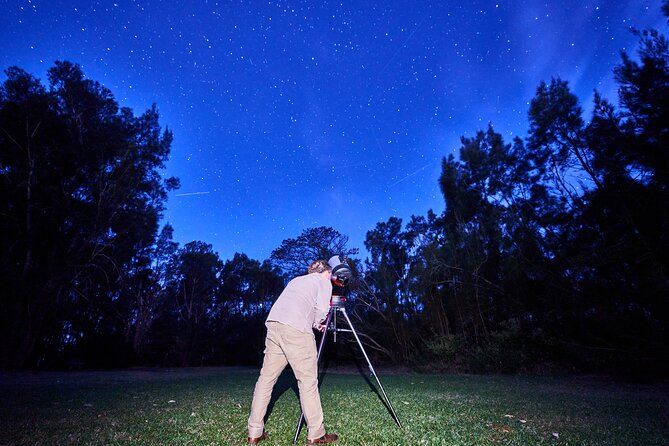
Dimitri is described as a PhD astrophysicist with more than a decade of experience. His background includes Sydney Observatory, Mount John Observatory at Lake Tekapo in New Zealand, and Emirates One and Only Wolgan Valley. He is also a TEDx speaker and cultural astronomer.
That range matters because this session is aimed at ordinary visitors, not only serious astronomy fans. You can ask about the objects in the telescope, the meaning of constellations, or how navigation works. The evening ends with a question-and-answer period, so you have a clear chance to raise something that was not covered earlier.
One session was led by Tom, who was described as well informed and able to answer questions. That suggests the exact guide may vary, so do not assume Dimitri will personally lead every date. The important point is that the experience is built around an astronomer or trained stargazing guide, not a self-guided telescope setup.
The cultural astronomy angle may also add context to the stars. The supplied information does not list specific cultural traditions or stories, so you should not expect a particular program of Indigenous astronomy unless the guide introduces it on your date.
What the $60.97 price delivers
At $60.97 per person, this sits in the moderate range for a guided evening activity. You are paying for more than telescope access. The price covers a 90-minute session, a dark-sky beach location, guided naked-eye astronomy, telescope viewing, and a final question period with an astronomer.
The value is strongest if you are new to astronomy or want a structured night out. You do not need to research constellations in advance, choose equipment, or work out which objects are visible. The guide shapes the evening around the conditions available that night.
The value is less certain if you already own good astronomy equipment or only want guaranteed views of a particular planet. The tour cannot control cloud cover, and its target list changes with the season. In that case, check the date carefully and decide if the guided setting is worth the cost.
The awards from the NSW Tourism Awards in 2022 and 2023 add useful context, but they do not change the main buying decision. The real question is whether you want an expert-led outdoor experience and can accept the limits of weather and natural darkness.
Weather, cancellations, and the small print
Cloud is the key practical risk. If the sky is overcast, a cancellation email is sent at 3 pm on the day of the tour. You can then reschedule using a credit valid for three years in Jervis Bay or the Blue Mountains, or request a refund subject to the stated 5 percent non-refundable merchant and service fees.
The general cancellation policy says the experience is non-refundable and cannot be changed if you cancel or request an amendment. That means you should not book casually if your own plans may change.
If the minimum number of participants is not reached, the activity can also be canceled. In that case, you are offered another date or experience, or a full refund. The weather policy and the general cancellation terms are not identical, so read the conditions at checkout and pay attention to the day-of-tour email.
The long credit period is useful if you are staying in the region again, and the credit can be transferred to another person as a gift card. Still, a refund caused by bad weather may not return every dollar because of the stated fee deduction.
Who will enjoy this beach stargazing session
I would recommend this to couples looking for a calm date-night activity, families with children who can manage a 90-minute outdoor session, and groups wanting something different from a standard evening meal.
It also suits locals. You do not need to make a major trip of it, and the session can give you a better understanding of the sky you see from home. Beginners are especially well served by the laser-guided opening and the final questions.
The experience may be less suitable for anyone who needs a guaranteed indoor activity or a fixed list of telescope targets. It is also not the best choice if you dislike waiting your turn in a shared group or feel uncomfortable outdoors at night.
The maximum group size of 20 keeps the activity from becoming a huge gathering, but it is not private. If you want one-to-one instruction, ask the provider about private options rather than assuming the standard session will offer that level of attention.
Practical tips for a better night
Dress for the beach, even if the afternoon was warm. You will be outdoors after sunset, and the water can make the evening feel cooler.
Keep your expectations realistic. The Moon, planets, Orion Nebula, star clusters, deep-sky objects, and Milky Way are all possible targets, but the sky decides what is available. Shooting stars are possible too, but nobody can schedule one for you.
Give the naked-eye section your full attention. It is tempting to wait for the telescope, but the early constellation and navigation lesson is what helps you understand the whole sky.
If you are booking for children, explain that not every object looks like a colorful space photograph. The reward is learning to recognize real celestial objects in a dark sky, with the guide explaining what the telescope reveals.
Check your email on the day of the tour. The cancellation notice is sent at 3 pm if clouds make the session impractical.
Should you book Jervis Bay Beach Stargazing?
Book it if you want a friendly, expert-led night beside the sea and you can accept that nature sets the schedule. The combination of dark Jervis Bay skies, telescope viewing, constellations, waves, and possible glowing plankton gives the evening a clear sense of place.
Skip it if your plans cannot bend around a weather cancellation or if you need a guaranteed view of one specific planet or nebula. At $60.97, the experience offers solid value for first-time stargazers, families, couples, and curious locals, especially when the sky is clear and the group stays engaged.
FAQ
Where does the Jervis Bay stargazing tour begin?
The meeting point is Moona Moona Beach Playground, 7 Tapalla Avenue, Huskisson, NSW 2540. The activity ends back at the meeting point.
How long does the tour last?
The tour lasts approximately 1 hour and 30 minutes.
Who leads the astronomy session?
The advertised guide is Dimitri, a PhD astrophysicist with more than 10 years of experience. His background includes Sydney Observatory, Mount John Observatory, Emirates One and Only Wolgan Valley, and TEDx speaking. One session was led by Tom.
What can you see through the telescope?
Depending on the season and conditions, you might see the Moon, planets, the Orion Nebula, star clusters, deep-sky objects, and the Milky Way.
Is bioluminescence guaranteed?
No. The beach session includes an opportunity to check whether glowing plankton can be seen in the sea, but it is a natural event and is not guaranteed.
What happens if the weather is cloudy?
If overcast conditions make the session unsuitable, a cancellation email is sent at 3 pm on the day. You can reschedule with a credit valid for three years in Jervis Bay or the Blue Mountains, or request a refund subject to the stated 5 percent non-refundable merchant and service fees.
How many people can join the tour?
The maximum group size is 20 people. Most participants can take part, according to the activity information.
Fresh listings near Australia
- Vincentia: Jervis Bay Beach Stargazing with an Expert★ 4.9 · 19 reviews
- Blue Mountains: Stargazing with a Telescope and Astronomer★ 4.4 · 21 reviews
- Gold Coast: Glow Worms, Sunset & Stargazing with BBQ dinner★ 4.5 · 3 reviews
- Pinnacles Desert Sunset Stargazing Adventure Tour from Perth★ 5.0 · 25 reviews
- Brisbane: Glow Worms, Sunset, Telescope Stargazing & Dinner★ 4.0 · 15 reviews
- Esperance: Astronomy Night Experience★ 5.0 · 5 reviews
- Exmouth: Summer Sunset Turtle Watching and Stargazing Tour★ 5.0 · 2 reviews
- Brisbane: Glow Worms, Sunset, Star Gazing & BBQ★ 4.4 · 26 reviews
Australia Stargazing, side by side.
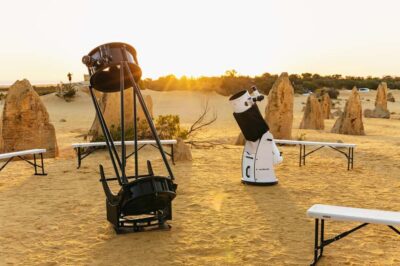
Pinnacles Desert: Sunset BBQ & Stargazing Tour +Sandboarding
Read our review →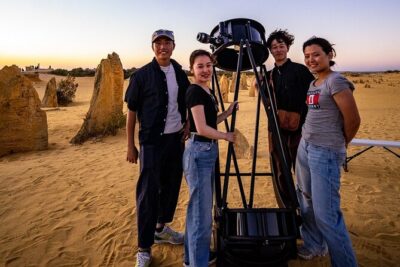
Pinnacles Desert Sunset Dinner and Stargazing Tour
Read our review →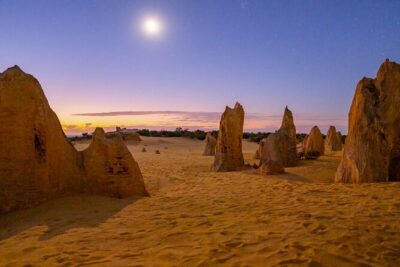
Pinnacles Sunset Stargazing Dinner Experience Small Group Tour
Read our review →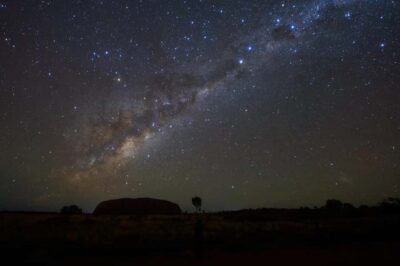
National Park Astronomy Tour with Telescope and Photo
Read our review →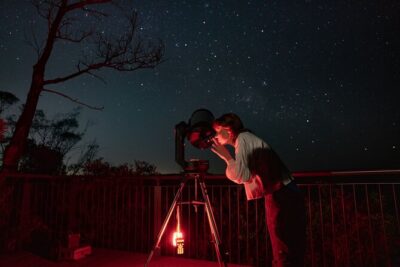
Stargazing with an Astronomer in the Blue Mountains
Read our review →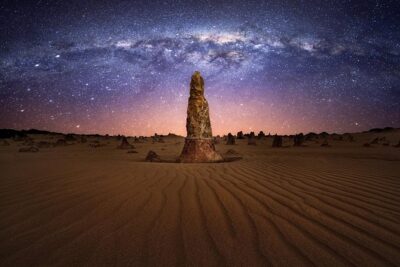
Pinnacle Desert Sunset and Night-time Stargazing Tour from Perth
Read our review →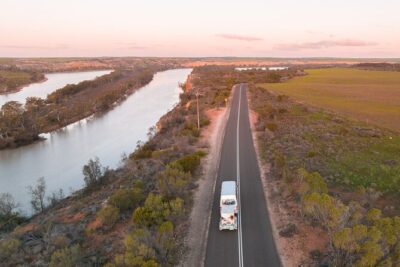
Small-Group River Murray Dark Sky and Sunset Tour with Dinner
Read our review →
Brisbane: Glow Worms, Sunset, Star Gazing & BBQ
Read our review →Lists this night appears in