
REVIEW · TELESCOPE STARGAZING
Blue Mountains: Stargazing with a Telescope and Astronomer
The best part of this Blue Mountains outing is the chance to see the night sky from a proper dark-sky lookout, then understand what you are seeing. An astronomer guides you from simple naked-eye star spotting to a computerized professional-grade telescope, with possible views of Saturn’s rings, Jupiter’s moons, the Moon’s craters, Mars, Venus, and the Orion Nebula.
I like the small, focused 90-minute format and the simple comforts: hot chocolate and winter blankets. I also like that the guide explains both the stars above you and the human and natural story of the Blue Mountains. Guide Tim, a local with broad knowledge, has received particular praise for making the setting feel like more than a quick telescope stop.
The main drawback is the weather. Clouds can cancel the outdoor session, and the policy offers a voucher or an indoor Leura planetarium tour rather than a refund for bad weather. Also, one telescope can feel stretched when the group is large, so set your expectations around a shared experience, not private viewing time.
Key points to know before booking
- Saturn may be the night’s star: Its rings are among the most memorable possible sights through the telescope.
- Start with your own eyes: You learn practical ways to identify stars and constellations without equipment.
- Wentworth Falls is easy to reach by car: The meeting point is about 10 minutes from Katoomba, followed by a five-minute walk from the car park.
- Hot chocolate and blankets are included: Bring warm clothes anyway, especially in winter.
- Cloud cover has a firm policy: You can accept a transferable three-year voucher or attend a 90-minute indoor planetarium session in Leura, but poor weather does not trigger a refund from the operator.
- The telescope is shared: Group size and viewing conditions affect how many objects you see and how long you look at each one.
Starting beneath the Wentworth Falls stars
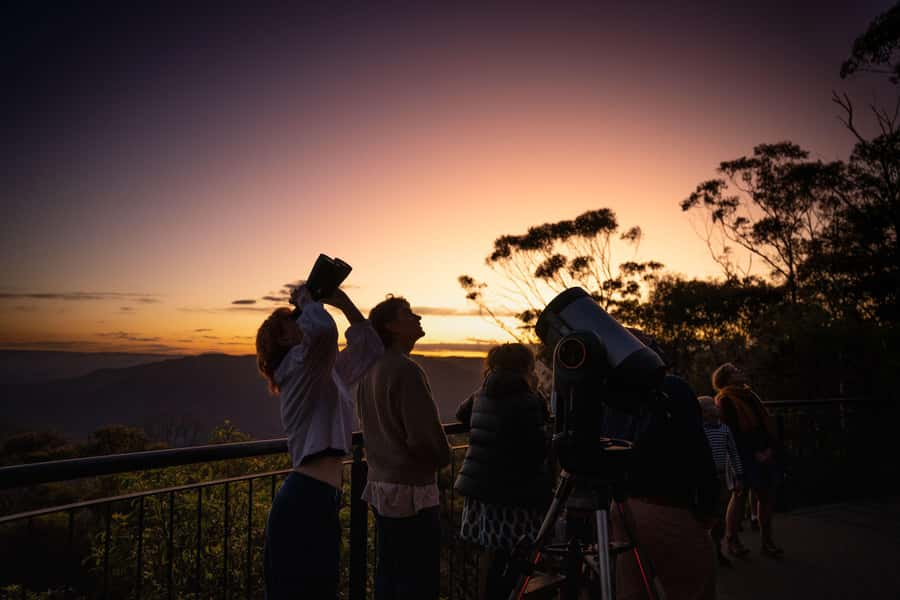
The tour begins at the Wentworth Falls Picnic Area, at the Wentworth Falls lookout. You meet the Blue Mountains Stargazing guide there, then walk about five minutes from the car park. The location is roughly a 10-minute drive from Katoomba, so you need to arrange your own transport. Transportation is not included.
Your guide begins with an introduction to the Blue Mountains through time. This gives the session a useful sense of place before attention turns upward. You are not simply arriving at a random field to peer through a lens. You first get some context about the country around you, then shift from the ground beneath your feet to the sky overhead.
The lookout is a strong setting for this kind of activity because the point of the evening is to get away from bright city lights. Still, keep the practical side in mind: the walk from the car park means comfortable shoes help, and you should arrive ready for an outdoor session rather than a heated indoor attraction.
More Telescope Stargazing in Australia:
- Uluru: National Park Astronomy Tour with Telescope and Photo
★ 4.4 · 357 reviews - Brisbane: Glow Worms, Sunset, Telescope Stargazing & Dinner
★ 4.0 · 15 reviews - Teide by Night: Sunset & Stargazing with Telescopes Experience
★ 4.5 · 1,492 reviews
Learning the sky without a telescope
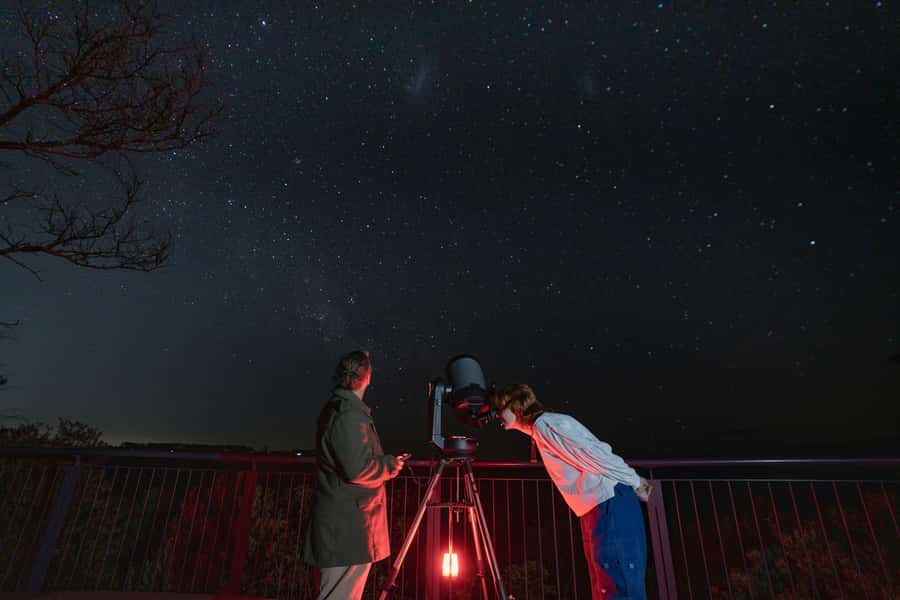
The first astronomy lesson uses only your eyes. This is an important part of the experience, because a telescope can show you a planet, but it cannot teach you how to find your way around the sky.
Your guide points out stars and constellations and gives you tips for recognizing them. You hear stories connected with the constellations, too. The result is more useful than a string of scientific facts. You leave with a better chance of looking up later and knowing where to start.
The guide also explains why stars appear in different colors. That detail became a highlight for one participant, and it is the kind of question that turns a pretty night sky into something you can read. You learn that the points above you are not all alike, even when they seem equally bright at first glance.
This part suits beginners especially well. You do not need to know the names of stars in advance, and you do not need special equipment. If you already enjoy astronomy, the naked-eye section may feel basic, but it still sets up the telescope viewing and helps you follow the guide’s explanations.
From planets to satellites and the Moon
The next stage looks at the motion of objects in space. Your guide introduces the celestial dance of planets and satellites, giving you a simple way to understand why some objects appear in certain parts of the sky and why the view changes from night to night.
The Moon is often one of the easiest objects to appreciate through the telescope. You may see its craters and seas in far more detail than you can with your eyes alone. The Moon can also be so bright that it affects the view of fainter objects, so the quality and timing of the session matter.
Possible telescope targets include Mars and Venus, along with Saturn and its rings. Saturn is a particularly strong reason to book this outing. Seeing an image of Saturn in a book or on a screen is one thing. Seeing its ring system through a telescope gives the planet a clear shape and scale in your mind, even though the actual view remains small.
Jupiter can offer another memorable sight. Depending on conditions, you may see some of its moons. The guide explains what you are looking at rather than leaving you with a quick glance and a planet name. That explanation is where the $65 price begins to make sense.
The professional telescope and shared viewing time
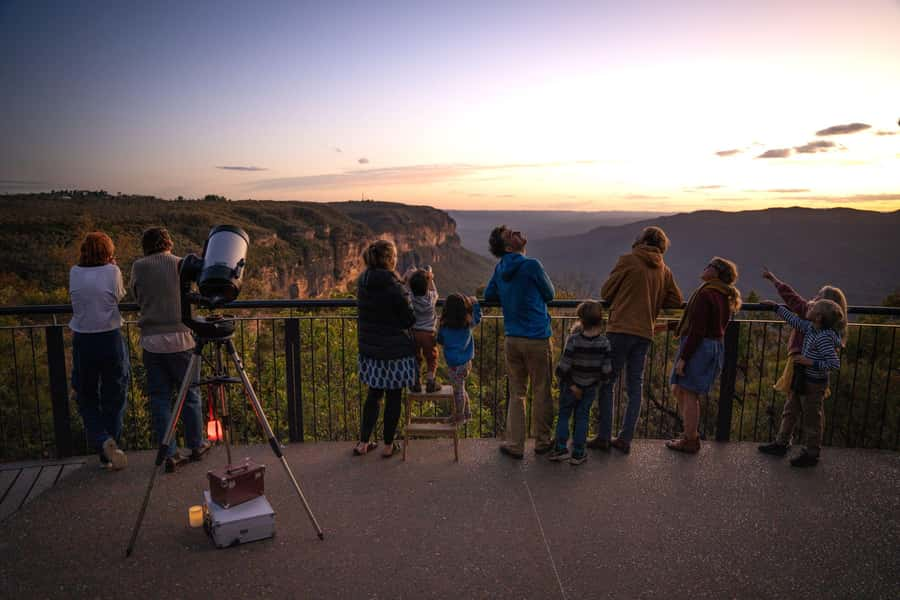
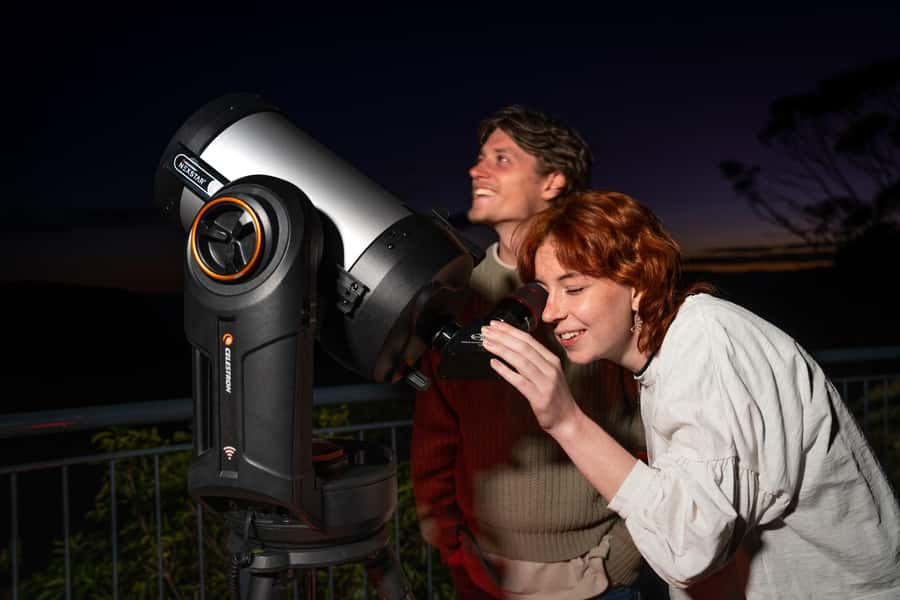
The tour uses a computerized telescope, plus binoculars. The telescope helps locate objects that would be difficult to find on your own, while binoculars can give you another way to scan the sky and keep more people involved between telescope turns.
The equipment is professional grade and regularly sanitized between uses. That is a practical detail, particularly when many hands are sharing the same viewing tools. You are not expected to bring your own telescope or know how to operate one.
There is a limit, though. The main telescope is shared, and one session can feel crowded if the group is large. A three-star experience from one participant specifically pointed to too many people for one telescope and a need for more binoculars. That is fair criticism. A shared telescope works best when the guide keeps the line moving and uses the binoculars well.
You should think of this as a guided introduction to astronomy, not a private observatory appointment. The goal is a mix of explanation, naked-eye viewing, binoculars, and telescope time. How many objects you see depends on the sky, the group, and what is visible that night.
More Stargazing Tours in Australia:
- Pinnacles Desert: Sunset BBQ & Stargazing Tour +Sandboarding
★ 4.8 · 1,555 reviews - Pinnacles Desert Sunset Dinner and Stargazing Tour
★ 5.0 · 1,034 reviews - From Perth: Pinnacles Sunset and Stargazing Tour with Dinner
★ 4.7 · 803 reviews - Pinnacles Sunset Stargazing Dinner Experience Small Group Tour
★ 4.5 · 396 reviews
Nebulae, star clusters, and far-off objects
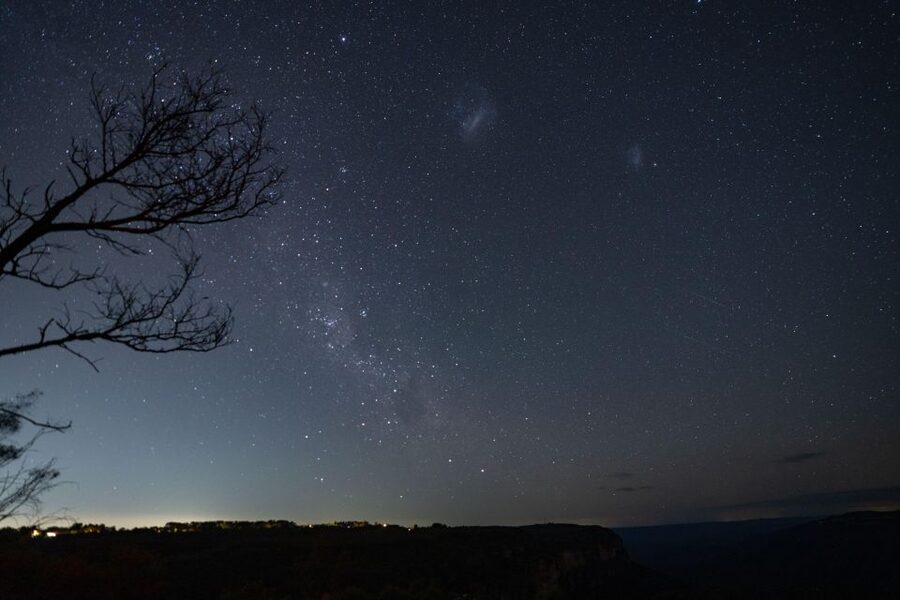
On a good night, the telescope may turn toward the Orion Nebula, star clusters, double and triple stars, shooting stars, and galaxies. These targets give the evening more range than a planet-only program.
The Orion Nebula is especially helpful for beginners because it looks different from a star. Instead of a sharp point of light, you may see a cloudy area where stars are forming. Star clusters show how many stars can gather in one region, while double and triple stars give the telescope a chance to reveal patterns your eyes might miss.
Galaxies are more difficult. You may see a faint mark rather than a bold, colorful image. That is not a flaw in the tour. It is a useful reminder that astronomy is often about detecting distant light, not seeing a space photograph in full detail.
The guide answers questions about each object you view. This makes the session flexible. You can ask about a planet, a constellation, or the reason stars have different colors, instead of being locked into a set script that ignores what catches your attention.
Hot chocolate, blankets, and the cold factor
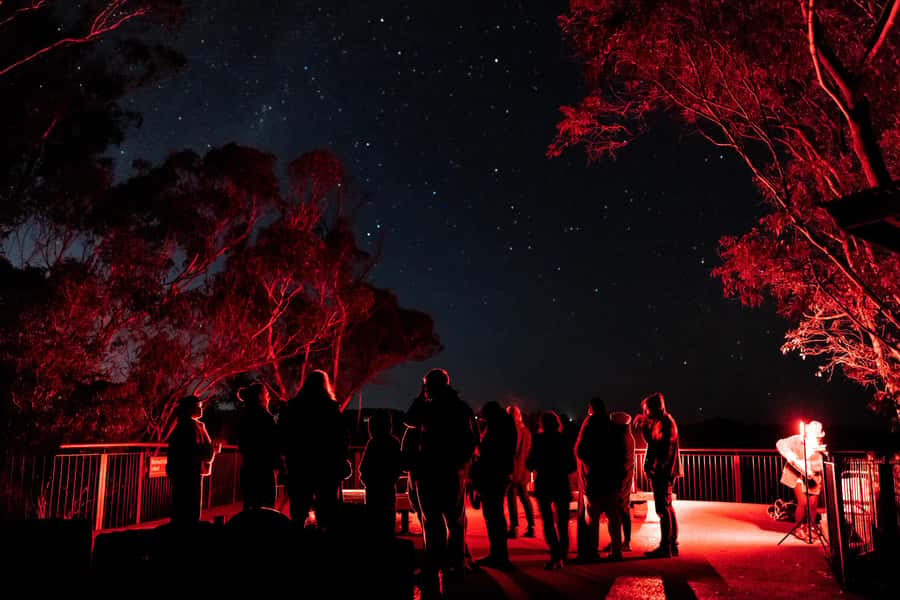
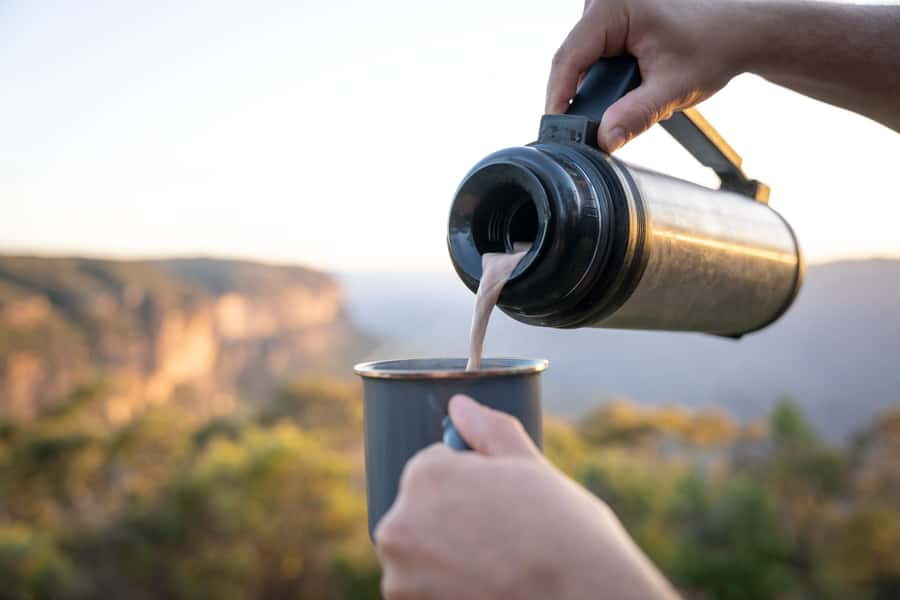
Night air in the Blue Mountains can feel cold even when the daytime weather is mild. Winter blankets are supplied, and hot chocolate is part of the experience. The drink is made with Barista Oat milk, which is dairy-free, nut-free, and soy-free.
That cup matters more than it may sound. It gives you something warm to hold while you wait for a telescope turn, and it makes the session feel relaxed rather than technical. You should still bring warm clothing. Do not rely on the drink or blanket as your only protection from the cold.
Wear layers, a warm outer coat, and comfortable shoes. The activity takes place outdoors, and you may be standing or moving between viewing points. The tour is listed as wheelchair accessible, but you should still consider your own comfort with the walk from the car park and the outdoor setting.
Children under six are not permitted. Older children can take part, but the late timing, cold air, and quiet pace may suit older children and adults best.
Weather planning and the indoor Leura backup
Cloud is the biggest variable. You receive an email by 1:00 pm on the day of the tour if the sky is expected to be overcast. Check your messages before setting out, especially if you are staying outside Katoomba.
If poor weather cancels the outdoor session, you can choose a transferable voucher valid for three years or attend an alternative 90-minute indoor Planetarium Astronomy tour in Leura. The indoor option is led by an astrophysicist inside a dome with a powerful projector, so it keeps the astronomy theme alive even when the sky will not cooperate.
The important catch is the cancellation policy. If the operator cancels because of bad weather, you do not receive a refund. You choose the voucher or the Leura planetarium alternative. If you cancel for your own reason, free cancellation is available up to 24 hours in advance, with a full refund.
That distinction matters if you have only one night in the Blue Mountains. If you are visiting from overseas or have a tight schedule, check the forecast and ask about the next one to three possible nights before booking. A flexible plan gives you a better chance of seeing the sky outdoors. The three-year voucher is transferable, which is useful if you cannot return but someone else can use it.
Is $65 good value for 90 minutes?
At $65 per person, this is not the cheapest evening activity, but the price includes the astronomer, computerized telescope, binoculars, blankets in winter, and Blue Mountains National Park fees. You are paying for interpretation as much as equipment.
The value is strongest if you want to learn. A quick look through a telescope can be satisfying, but the guide’s explanation of stars, planets, constellations, and distant objects gives the evening more substance. The local setting and the opening discussion about the Blue Mountains add another layer.
The value is weaker if you mainly want guaranteed views of Saturn or the Moon. Astronomy is controlled by weather and visibility, and the shared telescope limits personal viewing time when the group is busy. The indoor planetarium option protects you from losing the whole astronomy theme, but it is not the same as standing under the real sky.
The 4.4 rating from 21 bookings fits that balance. Strong praise centers on the setting, the teaching, the local guide Tim, and memorable sights such as Saturn. Lower scores focus on cloud cover, communication about alternate dates, and crowding around the telescope. Those are not minor details, so include them in your decision.
Who will enjoy Blue Mountains Stargazing?
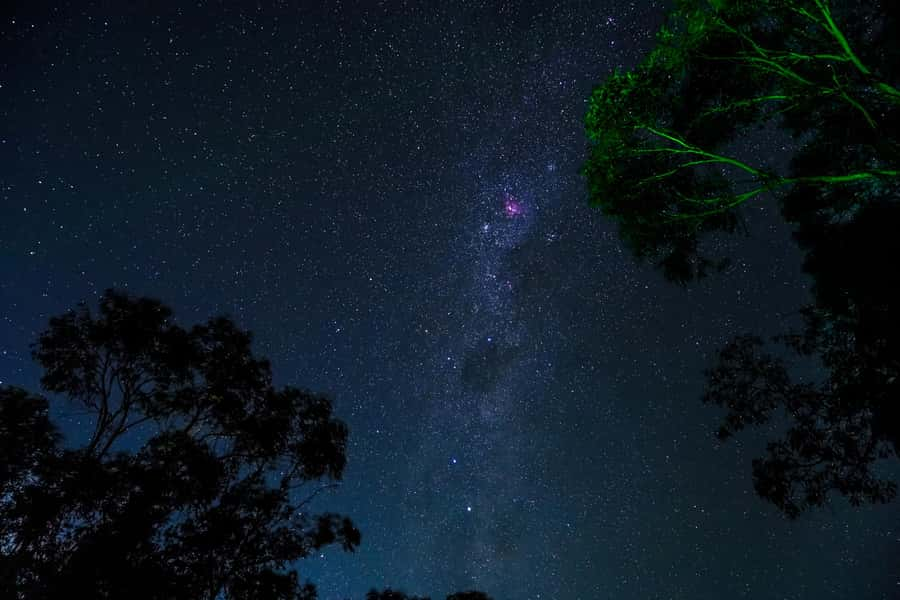
I would choose this for a first astronomy experience, a quiet evening after a day in the national park, or a couple who want something different from another lookout at sunset. It also suits anyone who likes asking questions and learning the reason behind what they see.
The tour is a good match for visitors staying in Katoomba or nearby who have a car and can keep their evening flexible. It is less convenient if you need included transport or must return at a fixed time. One person had to find a sympathetic couple for a ride back, so arrange your return before the tour rather than hoping for an informal lift.
Families with children over six can consider it, especially if the children already show interest in space. Very young children are excluded, and the late outdoor setting may not suit every family.
Should you book this stargazing tour?
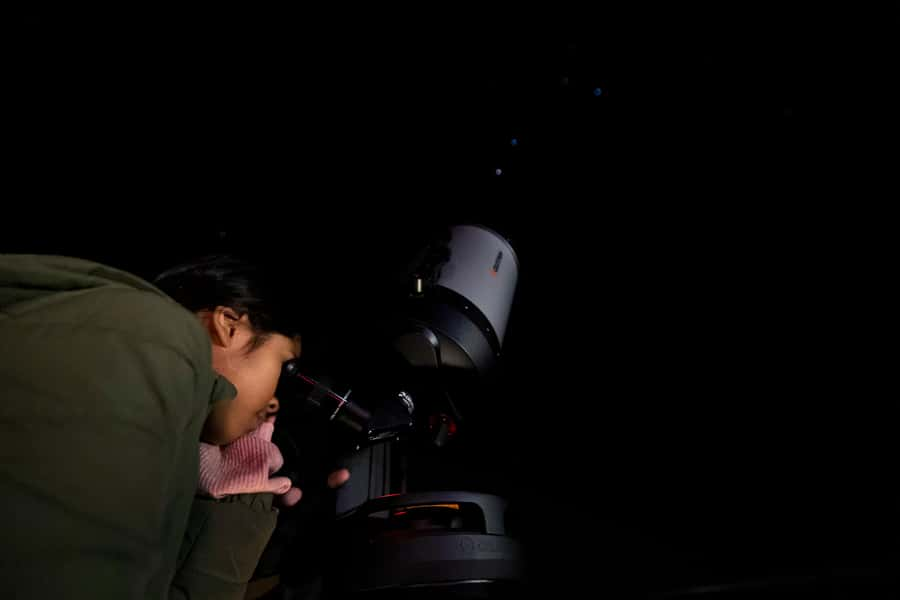
Book it if you want more than a telescope glance. The strongest reasons are the clear beginner-friendly teaching, the chance to see Saturn’s rings and other objects, the Wentworth Falls setting, and the cozy hot chocolate and blanket setup.
Skip it if a cloudy night would ruin your plans or if you need a refund when weather cancels the outdoor session. If you do book, keep the next few nights flexible, bring serious warm clothing, arrange your own transport, and treat the telescope as shared equipment. With those expectations, this is a thoughtful and well-priced way to meet the Blue Mountains after dark.
FAQ
How long is the Blue Mountains stargazing tour?
The outdoor stargazing tour lasts 90 minutes.
Where does the tour meet?
Meet the Blue Mountains Stargazing guide at the Wentworth Falls Picnic Area at Wentworth Falls lookout. It is the second lookout after Jamison Lookout, about a five-minute walk from the car park.
How far is the meeting point from Katoomba?
The Wentworth Falls meeting point is about a 10-minute drive from Katoomba.
Is transportation included?
No. You need to arrange your own transportation to and from the meeting point.
What can I see through the telescope?
Depending on viewing conditions, you may see the Moon and its craters and seas, Saturn’s rings, Jupiter’s moons, Mars, Venus, the Orion Nebula, star clusters, double and triple stars, shooting stars, and galaxies.
What happens if the weather is cloudy?
You receive an email by 1:00 pm on the day if overcast skies are expected. If poor weather cancels the outdoor tour, you can choose a transferable voucher valid for three years or attend an alternative 90-minute indoor planetarium tour in Leura. The bad-weather cancellation policy does not provide a refund.
What should I bring?
Bring warm clothing. Winter blankets and hot chocolate are supplied, but the activity takes place outdoors and can feel cold.
Fresh listings near Australia
- Vincentia: Jervis Bay Beach Stargazing with an Expert★ 4.9 · 19 reviews
- Gold Coast: Glow Worms, Sunset & Stargazing with BBQ dinner★ 4.5 · 3 reviews
- Pinnacles Desert Sunset Stargazing Adventure Tour from Perth★ 5.0 · 25 reviews
- Jervis Bay Beach Stargazing Tour with our Astronomer★ 5.0 · 35 reviews
- Brisbane: Glow Worms, Sunset, Telescope Stargazing & Dinner★ 4.0 · 15 reviews
- Esperance: Astronomy Night Experience★ 5.0 · 5 reviews
- Exmouth: Summer Sunset Turtle Watching and Stargazing Tour★ 5.0 · 2 reviews
- Brisbane: Glow Worms, Sunset, Star Gazing & BBQ★ 4.4 · 26 reviews
Telescope Stargazing, side by side.
Teide by Night: Sunset & Stargazing with Telescopes Experience
Read our review →
National Park Astronomy Tour with Telescope and Photo
Read our review →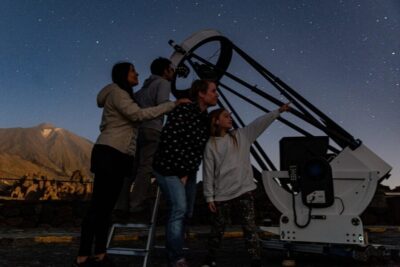
Teide National Park: Guided Large Telescope Stargazing Tour
Read our review →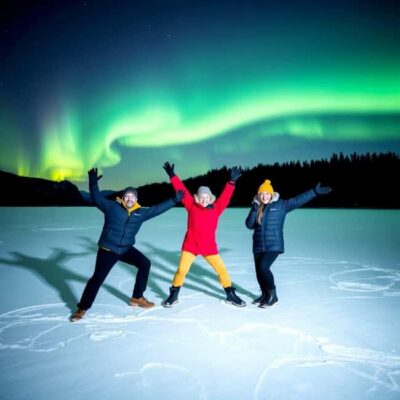
Northern Lights Tour and Stargazing by Telescope
Read our review →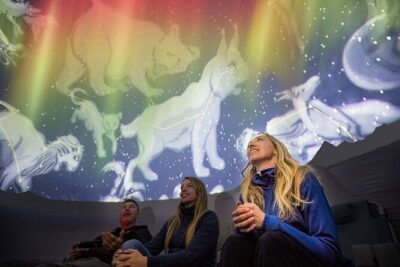
Jasper Planetarium and Telescope Combo Tour Tickets
Read our review →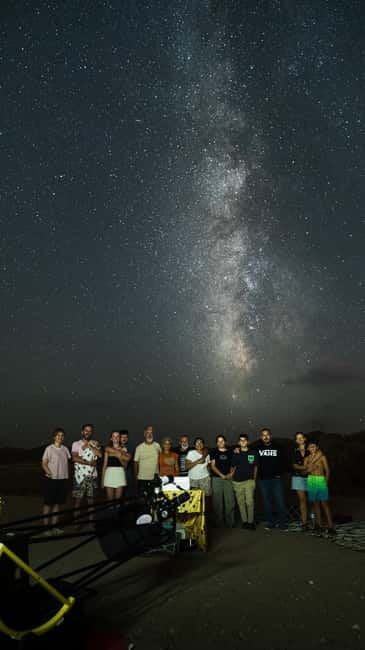
Cavalleria: Guided Stargazing at the Beach with Telescope
Read our review →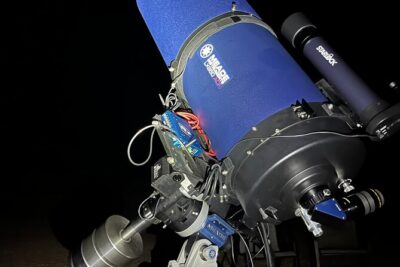
Stargazing Tour with Telescopes and Video Astronomy in Sedona
Read our review →Lists this night appears in