
REVIEW · OBSERVATORY VISITS
Tenerife: Mount Teide Observatory Astronomical Tour
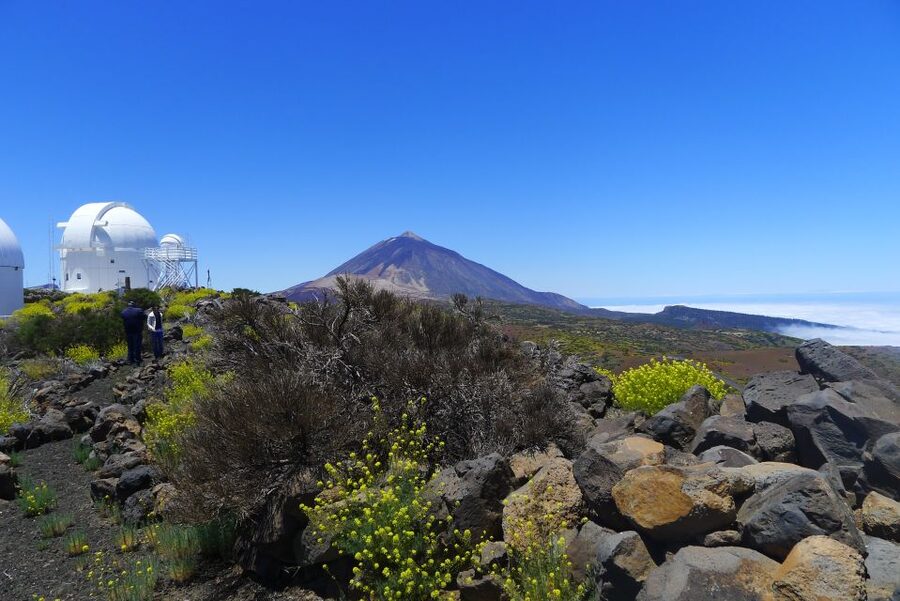
Mount Teide turns into a science lesson after dark. This eight-hour trip combines a guided visit to the world’s largest solar observatory with sunset views and night-time stargazing through powerful telescopes. I like that the tour gives astronomy real context, from solar flares and telescope design to the life cycle of stars.
I also like the small-group transport and the quality of the guides. Lucas, Micaela, and other astronomy specialists are praised for making technical subjects easy to follow. The main drawback is the cold: Tenerife may be warm at the coast, but the mountain can be windy and around 7 degrees Celsius near the cable-car station. If you arrive in shorts or sandals, you may not be allowed to join.
Key points
- Two different kinds of astronomy: See solar equipment in the afternoon, then study stars and the moon after sunset.
- Expert-led observatory visit: A guide explains how the solar telescopes work and may show you solar activity in real time.
- Small-group transport: Pickup is available from selected hotels in north Tenerife, with a guide on board.
- Mountain cold is serious: Bring long trousers, warm layers, and closed shoes, even if it is hot at your hotel.
- Eight hours well spent: The trip includes transport, the observatory, sunset, and night-sky viewing.
- Weather backup plans: If clouds block the stars, the guides use audio visual equipment for a virtual night-sky session.
A full day built around the sky
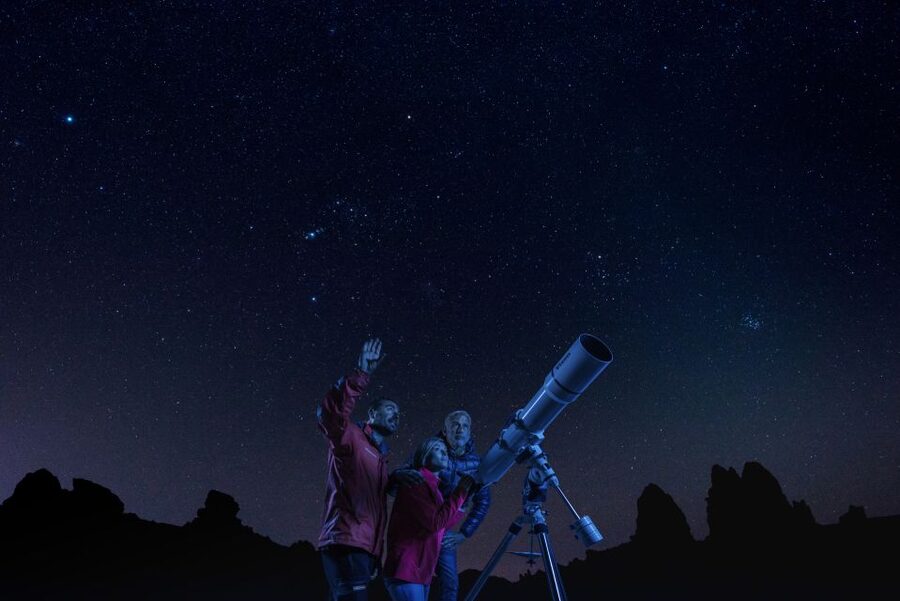
This is not a quick sunset stop with a few stars added at the end. You leave in the afternoon and spend much of the day moving through Tenerife’s volcanic interior before the main event begins after dark.
The tour lasts about eight hours, though the exact pickup time changes with the season and sunset. That matters because the schedule needs to fit several pieces together: the drive up the mountain, the observatory visit, sunset, and night-time telescope viewing.
I like this structure because it gives you two separate experiences. In daylight, you learn how scientists study the sun. At night, you use the same high, clear mountain setting to look outward at stars and constellations.
The small-group format also helps. You are transported by minibus rather than joining a large coach outing, and the guide can explain the volcanic scenery along the way. One particularly good excursion included views of the Los Gigantes cliffs on the west coast before the climb inland.
More Observatory Visits in Tenerife:
- Tenerife: Mount Teide Observatory Guided Tour
★ 4.6 · 818 reviews - Royal Observatory Greenwich & Prime Meridian Entrance Ticket
★ 4.5 · 1,095 reviews - Griffith Observatory Hike: Guided Tour through Griffith Park
★ 5.0 · 1,020 reviews
The drive up Mount Teide
Pickup is offered from selected hotels in north Tenerife, including Parque San Antonio, GF Noelia, Hotel Magec, Hotel Concordia, Tucán, Coral Teide Mar, Riu Garoé, CC La Cúpula, and Kiosko Paragüitas.
The exact pickup time depends on the season. The route itself is part of the experience, not simply a transfer. As you climb, the scenery changes from the developed coast to open volcanic country. Guides may point out local nature along the way, giving you more to notice than the road ahead.
The tradeoff is time. Hotel pickup from several locations can add extra minutes, and an older account of the trip found that a central meeting point might have shortened the journey. Still, pickup is useful if you are staying in the north and do not want to drive mountain roads after a long evening outdoors.
The route can also be scenic. One reported itinerary went along the west coast, with a view toward Los Gigantes before heading up. You should think of the drive as part of an eight-hour outing, not a direct taxi ride to the observatory.
Inside the world’s largest solar observatory
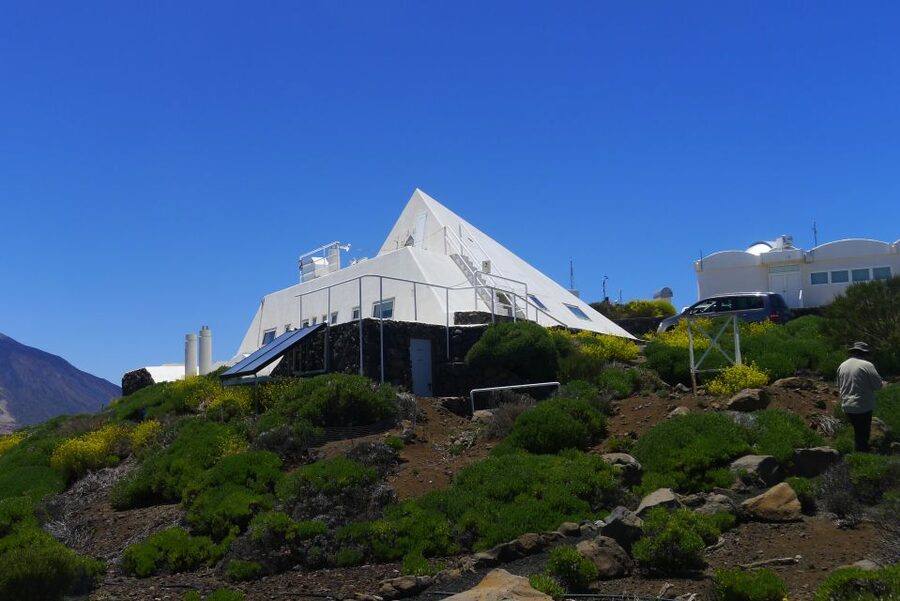
The observatory visit is the tour’s most unusual feature. Many Mount Teide excursions focus on scenery, cable-car views, or stars. This one includes a guided look at the scientific work carried out on the mountain during the afternoon.
The observatory guide explains the design and operation of the telescopes. You may have the chance to look inside one, and the visit can include live views of solar flares. That direct look at the sun gives the first half of the tour a clear purpose.
You are not only waiting for darkness. You are learning why the mountain is useful for astronomy and how researchers examine our nearest star. The guides also explain the equipment in plain terms, which helps if you are interested in science but do not have a technical background.
One important point is that the solar telescope used on the day may be smaller than the large instrument shown in promotional images. The visit is still about the observatory as a working scientific center, but you should not expect to tour every major telescope or enter every restricted area.
The guided visit is especially good for people who enjoy asking questions. Guides such as Lucas and Micaela have been singled out for clear explanations, patience, and real enthusiasm for astronomy. That makes a difference here because a telescope building can otherwise feel like a collection of unfamiliar machinery.
Sunset among Tenerife’s volcanic peaks
After the observatory, the schedule allows time for sunset from a viewpoint in the Teide area. This is one of the tour’s simplest pleasures. The volcanic terrain changes color as the light fades, and you get a visual pause before the astronomy talk moves from the sun to the night sky.
Bring a layer even if the afternoon begins warmly. The mountain temperature can be far lower than at your hotel, and wind can make the viewpoint feel colder still. One useful comparison from the trip is 30 degrees Celsius at the hotel and about 7 degrees at the cable-car station, with strong wind.
This is also a good moment to eat something if you have brought food. Food and drinks are not included, and there is a cafe in the area, but its supplies are not guaranteed. It may be busy, and you should not plan the whole day around buying a proper meal on the mountain.
A packed snack and water are sensible, provided you follow any instructions from the guide. The supplied information specifically excludes food and drinks, so the $121 price covers the tour services rather than meals.
More Stargazing Tours in Tenerife:
- Tenerife: Teide National Park Sunset & Stargazing Tour
★ 4.2 · 3,812 reviews - Tenerife: Sunset and Stargazing at Teide National Park
★ 4.7 · 2,826 reviews - Teide National Park Sunset & Stargazing with Dinner (Star Safari)
★ 5.0 · 2,601 reviews - Teide National Park: Sunset & Stargazing Safari with Dinner
★ 4.6 · 2,115 reviews
Night-time stargazing with the unaided eye
Once darkness settles, the guide helps you look at the sky first without a telescope. This part is easy to overlook, but it gives you a better sense of scale. You learn how to locate constellations and understand what you are seeing before moving to the instruments.
The guide may explain how to navigate by the stars, how stars are formed, and how elements are identified in distant stars and planets. Those subjects can sound heavy in a classroom, but they become easier to grasp when you are standing outside and looking upward.
The guides also identify prominent objects and explain what the telescopes can reveal. The quality of the commentary is a major part of the value. This is not simply a queue where you look through a lens for a few seconds and move on.
You need patience, though. Night observation is affected by weather and visibility. Even at a high mountain site, clouds can interfere. The tour has a useful backup: if stars cannot be seen, the guides use audio visual equipment to give a virtual tour of the constellations and notable objects that would have been visible.
That plan protects the educational side of the excursion, but it cannot fully replace a clear sky. If seeing stars is your main reason for booking, accept that weather remains outside anyone’s control.
What you see through the telescopes
The final observation uses a long-range telescope, and some itineraries have included several large telescopes and views of the moon and other night-sky objects. The precise sights will change with the conditions and the date, so you should not book expecting one guaranteed planet or constellation.
A clear night can be remarkable. The high location and low light pollution create a much stronger view than you usually get from a resort town. On one especially fortunate outing, the group saw a comet and shooting stars.
The best guides make the equipment understandable. They explain what the telescope is doing, why certain objects are selected, and how astronomers interpret light from faraway stars. This turns the viewing into a lesson rather than a quick photo opportunity.
You should also keep expectations realistic. The telescope does not make every object look like a bright space photograph. What you see depends on atmospheric conditions, the object being observed, and the instrument in use. The value comes from seeing real objects with guidance, in a place chosen for astronomy, rather than from a promise of a dramatic view every time.
How much value do you get for $121?
At $121 per person, this is not the cheapest Mount Teide outing. The price makes more sense if you want the observatory visit and night astronomy in one trip.
Your fare includes small-group transportation, a guide, the guided observatory visit, and astronomical observation through a long-range telescope. It also covers a full eight-hour program, which is longer and more specialized than a basic evening stargazing session.
I see the strongest value in the combination. A daytime observatory visit alone would appeal to science fans, while a night-time telescope session alone might suit someone who simply wants to see stars. Here, you get both, along with the drive and sunset.
The price is less convincing if you mainly want a short scenic trip or a guaranteed view through a telescope. You also need to budget for food and drinks, since those are not included. The trip can run eight hours or longer, so a snack is not a minor detail.
The small group and specialist guides also matter. Several guides have been praised for answering questions, explaining ideas clearly, and bringing humor to the subject. For an astronomy enthusiast, that personal explanation may be worth more than a cheaper coach trip with a basic commentary.
Clothing rules are part of the booking decision
Take the clothing rules seriously. You need warm clothing, a long-sleeved shirt, long trousers, and closed-toe shoes. Sandals, flip flops, shorts, short skirts, and sleeveless shirts are not allowed.
This is not a fussy dress code. The mountain can be cold and windy, and much of the stargazing takes place outdoors after sunset. The clothing requirement protects your comfort as well as the operation of the trip.
Do not rely on the weather at the coast. A warm beach afternoon tells you little about conditions at the cable-car station. Pack layers that you can add as the light fades.
Children must confirm their age with a passport or identity card. The tour is not recommended for children under eight, and people with health conditions should consult a doctor before taking part. It is also not suitable for people with mobility impairments.
Who will enjoy this most?
This is a strong choice for adults and older children who already like astronomy, science, or photography of the night sky. You do not need specialist training, but curiosity helps. The guides cover subjects such as telescope design, solar activity, constellations, and star formation, so there is plenty to hold your attention.
It also suits anyone who wants more than a scenic mountain drive. The observatory gives the trip a scientific focus, while the sunset and volcanic views keep it appealing to people who are not full-time astronomy fans.
It may not suit young children who struggle with a long day, late hours, cold temperatures, or waiting for telescope turns. It is also a poor fit if you need step-free access or have mobility limitations.
English and Spanish are available. If you want a detailed explanation of how telescopes work, the guide’s skill will shape the experience. The named guides Lucas and Micaela have been especially effective at making complicated topics clear, but guide assignments can change.
Weather, cancellations, and backup plans
The tour allows free cancellation up to 24 hours before departure, and you can reserve now and pay later. Those terms are useful because mountain weather can change and your Tenerife schedule may shift.
The weather policy is also practical. If conditions prevent proper visibility through the planned solar telescope, the staff may visit two night-time telescopes instead of one. If stars cannot be seen, the guide uses audio visual material for a virtual tour of the night sky.
That means the day is not automatically wasted by cloud. Still, the backup is educational rather than identical to standing beneath a clear sky. I would book this tour when you value the observatory and the teaching as much as the chance to see stars.
Should you book the Mount Teide astronomy tour?
Book it if you want a serious, well-structured astronomy outing rather than a quick night excursion. The strongest reasons are the guided observatory access, expert explanations, small-group transport, sunset, and the chance to use long-range telescopes in a noted stargazing location.
The tour is especially good value for astronomy fans who will ask questions and stay engaged through the full eight hours. Guides such as Lucas and Micaela can make the science accessible, while a clear night may bring memorable sights such as the moon, a comet, or shooting stars.
Skip it if you dislike cold evenings, long outings, uncertain weather, or strict clothing rules. Bring warm layers, long trousers, closed shoes, and food, and you will be much better prepared to enjoy what is an unusually thoughtful way to experience Mount Teide.
FAQ
How long does the Mount Teide Observatory tour last?
The tour lasts about eight hours. Pickup time changes during the year because the schedule is linked to sunset.
What languages are available?
The live guide is available in English and Spanish.
Is hotel pickup included?
Pickup is available from selected hotels in north Tenerife, including Parque San Antonio, GF Noelia, Hotel Magec, Hotel Concordia, Tucán, Coral Teide Mar, Riu Garoé, CC La Cúpula, and Kiosko Paragüitas.
What should I wear?
Bring warm clothing, a long-sleeved shirt, long trousers, and closed-toe shoes. Sandals, flip flops, shorts, short skirts, and sleeveless shirts are not permitted.
What happens if clouds block the stars?
The guides use audio visual equipment to provide a virtual tour of the night sky, constellations, and prominent objects that might otherwise have been seen. Depending on conditions, the tour may also visit two night-time telescopes instead of one solar telescope.
Is the tour suitable for young children or people with mobility impairments?
It is not recommended for children under eight and is not suitable for people with mobility impairments. Children must confirm their age with a passport or identity card.
Fresh listings near Tenerife
- Magic Stargazing & Sunset in Teide with Dinner + Telescopes★ 3.5 · 20 reviews
- Private astronomy tour with sunset toast, picnic, and astrophotography★ 4.8 · 83 reviews
- Tenerife: Stargazing at Mt. Teide★ 4.2 · 72 reviews
- Mount Teide Night Tour: Stargazing, Dinner and Hotel Pick up★ 3.5 · 86 reviews
- Tenerife: Teide Stargazing with an Astrophysicist★ 4.9 · 74 reviews
- Tenerife: Teide National Park Sunset Picnic and Stargazing★ 4.6 · 117 reviews
- Teide National Park: Stargazing Experience★ 5.0 · 118 reviews
- Mount Teide Stargazing with Dinner★ 4.5 · 164 reviews
Observatory Visits, side by side.
Royal Observatory Greenwich & Prime Meridian Entrance Ticket
Read our review →
Griffith Observatory Hike: Guided Tour through Griffith Park
Read our review →
Royal Observatory Greenwich & Prime Meridian Entry Ticket London
Read our review →
Private Getty Center to Griffith Observatory Guided Tour
Read our review →
Mount John Observatory Stargazing Experience, Tekapo
Read our review →Lists this night appears in