
REVIEW · OBSERVATORY VISITS
Skip the Line: Teide Observatory Entrance Ticket
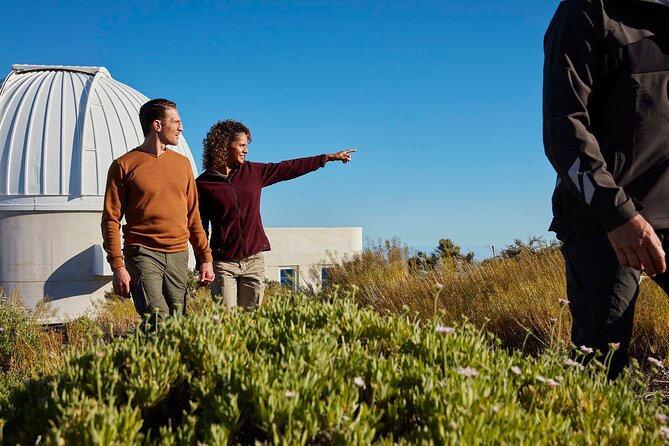
The best part of this visit is the chance to see astronomy in action, not just read about it. At 2,400 meters, you can look at sunspots and solar flares through working solar telescopes, then step inside a nocturnal telescope to understand how it operates.
I like the clear mix of science and scenery. You get a guided explanation of the Canary Islands Institute of Astrophysics, plus broad views across Teide National Park. I also like that the workshop makes the subject approachable for families. The main drawback is the altitude and the outdoor walking on gravel paths, along with a real risk of cancellation if weather or telescope conditions turn bad.
Key points to know before you book
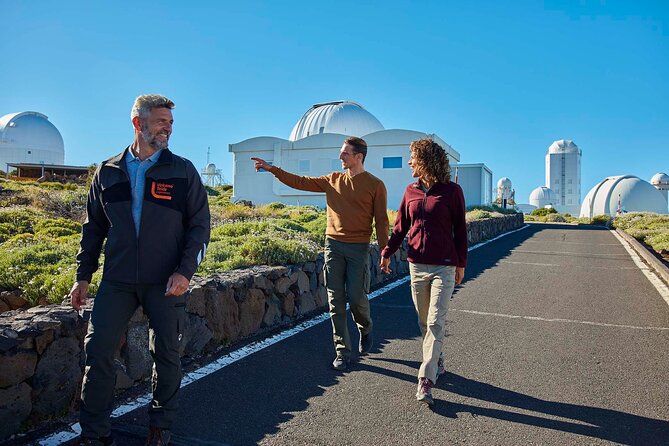
- Sunspots and solar flares: You use solar telescopes during the visit, with guidance from an astronomer.
- Inside a nocturnal telescope: You see how one of the observatory’s night-sky instruments works.
- A short but active visit: Allow about 2 hours in total, including the early meeting time and the 1.5-hour guided program.
- High-altitude setting: The observatory sits at about 2,400 meters, where thinner air, strong sun, and quick weather changes matter.
- Language-specific tours: Visits operate only in the language selected at booking: English, German, French, or Spanish.
- Weather-sensitive plans: Poor weather, road conditions, or telescope problems can lead to cancellation or a changed date.
Why Teide Observatory is worth your time
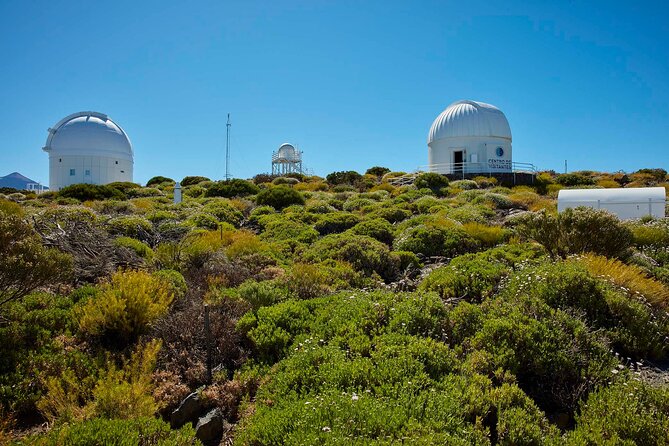
Teide Observatory is not simply a viewpoint with a few displays. It is a working solar observatory, managed by the Canary Islands Institute of Astrophysics, and the tour gives you a look at both solar and night-sky research.
That distinction matters. You are not only hearing broad facts about planets and stars. You are introduced to the daily work carried out by researchers, the reason the Canary Islands are valued for observing the sky, and the projects linked to the observatory.
The setting helps make the science memorable. The Izaña area sits high above Tenerife at roughly 2,400 meters, inside Teide National Park. The air is often dry, the sun can feel strong, and the views are wide. You get a sense of why astronomers care about high, clear locations.
The experience is especially useful if you want more than a cable-car ride or a scenic drive through the park. It gives your time in the Teide area a clear purpose. You leave with some understanding of how scientists observe the Sun and the night sky, rather than simply taking photographs beside a telescope building.
More Observatory Visits in Tenerife:
- Tenerife: Mount Teide Observatory Guided Tour
★ 4.6 · 818 reviews - Tenerife: Mount Teide Observatory Astronomical Tour
★ 4.4 · 126 reviews - Astronomic Small-Group Tour on Tenerife Teide Observatory
★ 4.0 · 34 reviews
The 1.5-hour route through the observatory
The visit begins at the observatory parking area. If you are driving yourself, arrive at least 30 minutes before the scheduled start. That early arrival is not a minor detail. The entrance is high in the mountains, roads can take longer than expected, and arriving late may mean missing the start of a timed guided visit.
Your guide is an expert astronomer, and the program is offered only in your selected language. Choose carefully between English, German, French, and Spanish when booking. A previous language change caused serious confusion for one party, so do not assume another language will be available on the day.
The first part introduces the importance of the sky in the Canary Islands. You learn about the observatory telescopes and the work of the Canary Islands Institute of Astrophysics, the organization that manages the site.
This opening gives useful context before you see the equipment. Without it, a large telescope can look like an impressive piece of machinery without much meaning. With the explanation, you begin to understand what the instruments measure and why this location is useful for research.
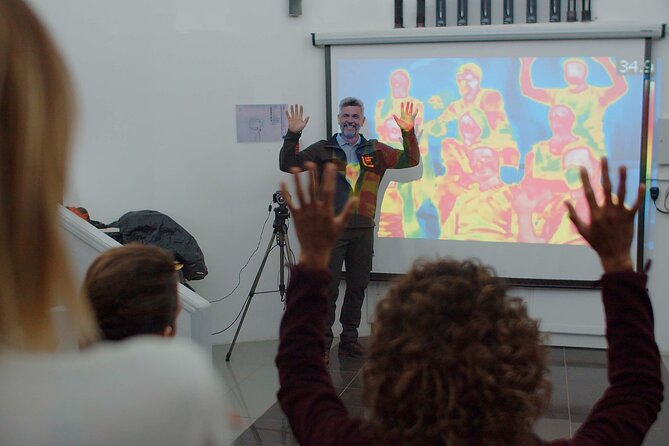
Next comes an astrophysics workshop in the visitor center. The guide explains what astrophysics is and how astrophysicists work. The workshop is a good feature for families because it turns a difficult subject into a guided lesson instead of a long technical talk.
The tone can vary with the guide and the group, but the strongest part of the program is its direct approach. You are encouraged to think like a scientist for a short time. That makes the visit more active than simply following a path and reading signs.
Looking at the Sun through working telescopes
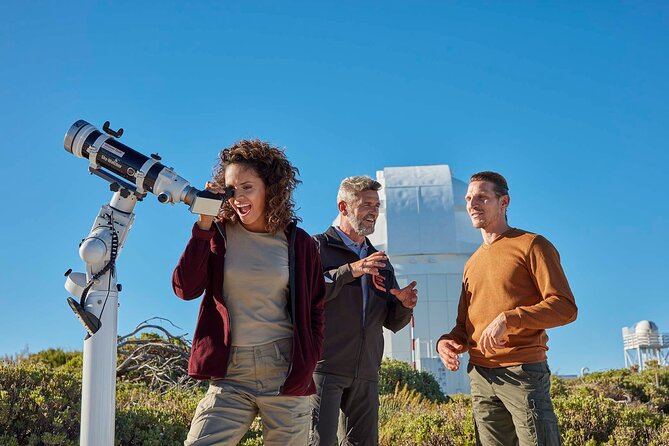
The solar telescope section is the practical heart of the tour. You have the chance to observe sunspots and solar flares through the equipment, with the guide explaining what you are seeing.
This is more memorable than a standard astronomy presentation because the Sun becomes an object you can study directly. The guide can point out features and explain how solar activity is monitored. The experience also helps you understand that the Sun is not a plain, featureless disk.
Conditions matter here. The observatory states that visits and telescope use depend on the weather and the operating status of the instruments. A cloudy or otherwise unsuitable day may limit what you can see, and the entire visit may be canceled if conditions are poor.
That uncertainty is worth accepting if you want a genuine observatory experience. The tour cannot promise a particular solar feature on a particular day. It can provide access to the instruments and the scientific setting, but nature still controls the final result.
The strongest accounts of the visit praise the guide’s explanations, the chance to view the Sun, and the combination of science with mountain scenery. Those are the parts I would treat as the main reasons to book. If you only want a guaranteed scenic stop, this may feel like too much planning for a weather-sensitive activity.
Stepping inside a nocturnal telescope
The next major feature is a look inside a nocturnal telescope. You learn how the instrument functions and hear about its development and history.
This is a useful counterpoint to the solar telescope. The Sun is close, bright, and visible during the day, while nocturnal telescopes are built to gather faint light from objects far beyond Earth. Seeing the inside of the instrument helps explain the physical scale and care involved in night-sky research.
The tour does not turn you into an astronomer in 90 minutes, nor should it. Its value is that it gives you a working picture of the process. You hear how researchers use the equipment and why the observatory contains different types of telescopes for different jobs.
You should bring a warm layer for this part. The interior of the telescopes can feel cold, and mountain weather may change quickly. Comfortable clothes and proper footwear are also important because the group moves along gravel paths. Sandals are a poor choice.
Same sky over Tenerife, a different way to watch it:
- Tenerife: Teide National Park Sunset & Stargazing Tour
★ 4.2 · 3,812 reviews - Tenerife: Sunset and Stargazing at Teide National Park
★ 4.7 · 2,826 reviews - Teide National Park Sunset & Stargazing with Dinner (Star Safari)
★ 5.0 · 2,601 reviews - Teide National Park: Sunset & Stargazing Safari with Dinner
★ 4.6 · 2,115 reviews
The high-altitude setting at Izaña
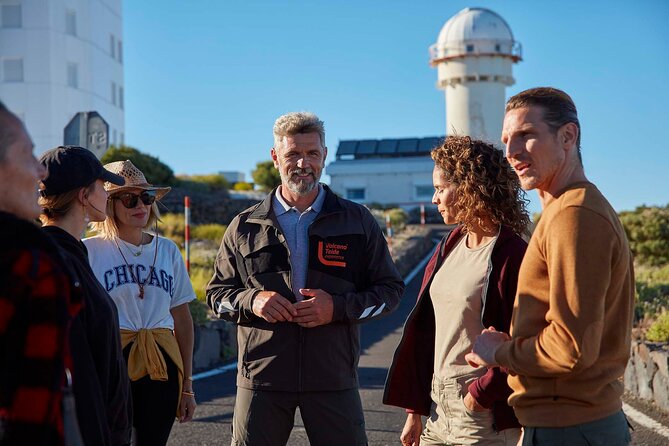
The observatory’s altitude is both its attraction and its main practical challenge. At about 2,400 meters, oxygen levels are lower than at the coast. Some people may notice dizziness, nausea, shortness of breath, ringing in the ears, blocked ears, or a headache.
Tell your guide immediately if any of these symptoms appear. The observatory has no medical assistance on site, and the nearest hospital is about 1.5 hours away by car. The activity is not recommended for people with general physical problems, anemia, heart conditions, or respiratory problems unless a doctor confirms that the visit is suitable.
You should also protect yourself from the sun. Wear a hat and sunglasses, apply sunscreen, and bring enough water or juice. The low humidity can contribute to dehydration, even when the air feels cool.
This is not a difficult mountain hike, but it does require a moderate level of fitness. The walking takes place on gravel paths, and you may spend time outdoors. If you have just arrived from sea level or know that altitude affects you, consider how your body usually responds before booking.
The payoff is the mountain setting. From the Izaña area, you get striking views over Teide National Park, and the surroundings make the observatory feel separate from ordinary city life. Still, do not treat the visit as a casual stop in shorts and sandals. The altitude deserves respect.
Is the $25.31 price good value?
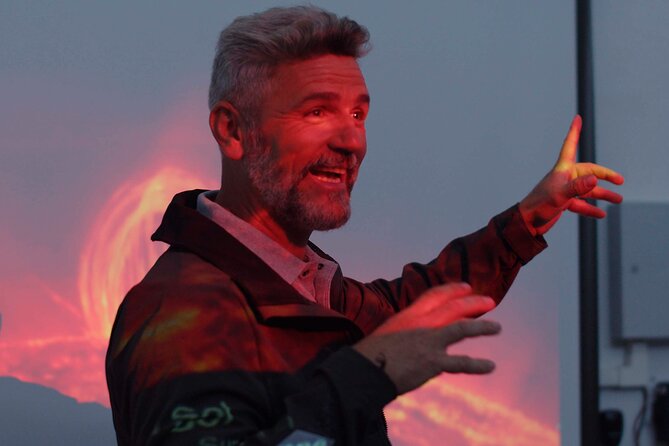
At about $25.31 per person, this is a fairly modest price for a guided visit to a major research observatory. The admission includes the guided observatory visit and an astronomer guide. Food and drinks are not included, so bring your own water and snacks if needed.
I think the price works best for people who already plan to spend time in the Teide area. You are paying for access to working telescopes, an organized explanation, the astrophysics workshop, and a guided look inside a nocturnal telescope. That is more useful than paying only for a viewpoint if science interests you.
The value is less clear if you expect a long, flexible attraction with many rooms and exhibits. The guided portion lasts about 1.5 hours, and the overall experience takes roughly 2 hours. The visit is focused and timed rather than open-ended.
There is also no guarantee that every telescope activity will operate. Weather and technical conditions can affect the program. For that reason, I would view the price as payment for access to a specialized place and a guided explanation, not as a promise of a particular astronomical sight.
The average booking time is about 25 days ahead. That suggests you should plan early, especially if you need a certain language or have limited time in Tenerife. The small price does not remove the need to check the date, language, meeting time, and meeting point closely.
Planning the meeting point and timing
The meeting time is 30 minutes before the booked tour time at the parking area. If you are making your own way to Izaña, build in extra road time. The observatory is not at the coast, and a wrong address can be costly when the tour has a fixed start.
A serious logistical problem has occurred when visitors followed an incorrect address and could not reach the observatory in time. Check the exact meeting instructions before setting off, rather than relying on a general Tenerife map pin.
The mobile ticket is useful, but it does not replace preparation. Keep the booking confirmation easy to access, confirm the selected language, and arrive early. The tour is not designed for casual late arrival.
The experience provider is Volcano Teide Experience. If the weather is poor or the observatory cannot operate safely, the visit may be canceled. In that case, you can be offered another date or a full refund. You can also cancel for a full refund up to 24 hours before the scheduled start, while cancellations or changes inside that period are not refunded.
Families, children, and the right kind of curiosity
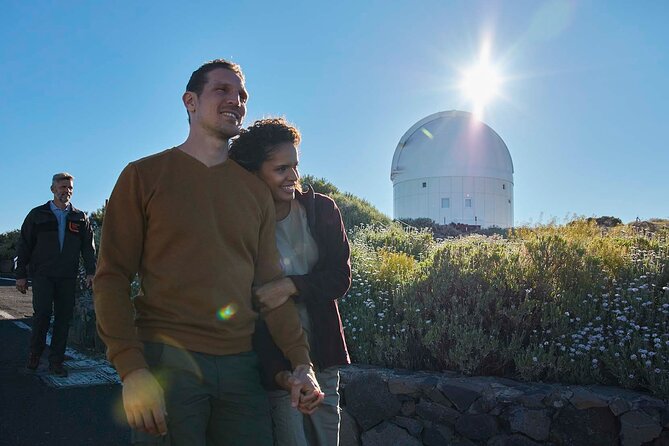
The program can work well for families because it includes a workshop, real telescopes, and simple visual results such as sunspots. Children can connect the science lesson to something they actually see through the instrument.
However, children under 8 are not accepted. Older children should be comfortable listening to a guide, walking on gravel, and coping with high-altitude conditions. The observatory is not an indoor entertainment center where you can wander at your own pace.
Adults who enjoy science, photography, national parks, or unusual sights will find plenty to hold their attention. It is also a good choice if you want to understand why Tenerife is important to astronomy rather than simply admire Teide from the road.
People with heart, respiratory, or other general physical concerns should ask a doctor first. The altitude warning is direct, and the lack of medical help inside the facility makes it important.
What can go wrong, and how to reduce the risk
The mixed score of 3.2 from 33 ratings reflects a real split in the experience. When the guide, weather, telescope operation, and meeting details all line up, the visit can be fascinating. When the address is unclear, a language arrangement changes, or the observatory is closed, the same booking can become a major disappointment.
You can reduce the risk by taking four simple steps:
- Confirm the exact observatory address and parking meeting point.
- Select the correct tour language and check it again before departure.
- Arrive 30 minutes early.
- Bring water, sun protection, warm layers, and solid shoes.
Also keep the cancellation terms in mind. Free cancellation applies up to 24 hours before the start time. If bad weather cancels the activity, you are offered a different date or a full refund, but an unexpected closure can still disrupt your day in Tenerife.
I would not book this as the only major activity on a tightly packed schedule. Give yourself room for a cancellation or a change in mountain conditions. The observatory is high and weather-sensitive, so flexibility makes the experience easier to enjoy.
Should you book Teide Observatory?
Book this visit if you want a focused introduction to astronomy, enjoy guided science, and are prepared for a high mountain setting. The solar telescope viewing and the chance to enter a nocturnal telescope are the strongest reasons to go, while the guide’s explanation gives the equipment a clear purpose.
I would especially recommend it to families with children aged 8 and older, science fans, and anyone already planning a Teide National Park day. At $25.31, the price is reasonable for access to a working observatory and a structured 1.5-hour program.
Skip it if you need a fully reliable, weather-proof attraction, have difficulty with altitude, or dislike timed visits and gravel paths. Check the address and language carefully, arrive early, and expect the sky and the telescopes to have the final say.
FAQ
How long does the Teide Observatory visit last?
The guided visit lasts about 1.5 hours, and the full experience takes approximately 2 hours.
Where does the tour take place?
It takes place at Teide Observatory in the Izaña area of Tenerife, at an altitude of about 2,400 meters.
What languages are available?
Tours are offered only in the language selected at booking: English, German, French, or Spanish.
How early should I arrive?
You should arrive at the parking area 30 minutes before the scheduled tour time.
What will I see during the visit?
You will learn about the observatory and the Canary Islands Institute of Astrophysics, join an astrophysics workshop, view sunspots and solar flares through solar telescopes, and explore the inside of a nocturnal telescope.
Are children under 8 allowed?
No. Children under 8 years old are not included in the activity.
What should I bring?
Bring water or juice, sunscreen, a hat, sunglasses, warm clothing, comfortable clothes, and suitable footwear. Sandals are not recommended.
Can high altitude affect me during the tour?
Yes. The observatory is at about 2,400 meters, where oxygen levels are lower. Dizziness, nausea, shortness of breath, ringing ears, blocked ears, or a headache can occur. Tell your guide immediately if you feel unwell.
Can the tour be canceled because of weather?
Yes. Visits depend on weather, road safety, and telescope operating conditions. If poor weather causes cancellation, you can be offered another date or a full refund.
Fresh listings near Tenerife
- Small Group Teide Stargazing Tour with Picnic at Sunset★ 5.0 · 3 reviews
- VIP Sunset & Stargazing experience★ 4.5 · 44 reviews
- Sunset and stargazing from Teide★ 3.5 · 51 reviews
- Tenerife Exclusive & Private Gastronomic, Sunset-Stargazing★ 5.0 · 3 reviews
- “Stargate” Tenerife stargazing★ 5.0 · 13 reviews
- Stargazing Tour in Tenerife★ 3.0 · 2 reviews
- Sunset & Stargazing Experience from Teide★ 4.0 · 31 reviews
- TEIDE NIGHT Astronomy Stargazing Bus Tour, Meal & Drinks included!★ 4.0 · 15 reviews
Observatory Visits, side by side.
Royal Observatory Greenwich & Prime Meridian Entrance Ticket
Read our review →
Griffith Observatory Hike: Guided Tour through Griffith Park
Read our review →
Royal Observatory Greenwich & Prime Meridian Entry Ticket London
Read our review →
Private Getty Center to Griffith Observatory Guided Tour
Read our review →
Mount John Observatory Stargazing Experience, Tekapo
Read our review →Lists this night appears in