
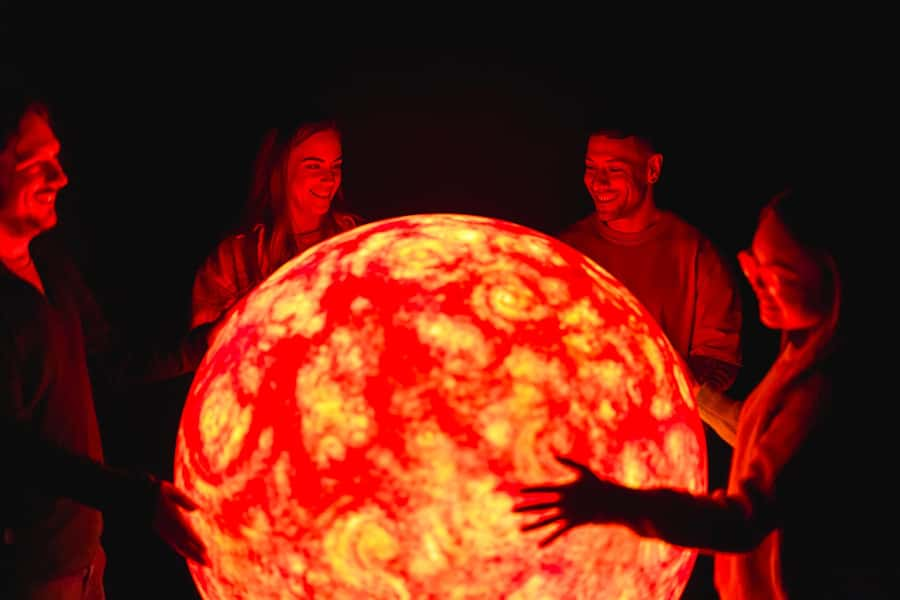
REVIEW · LAKE TEKAPO STARGAZING
Lake Tekapo: Indoor Māori Cultural Astronomy Experience
The most interesting part of this Lake Tekapo experience is that you do not need a clear night, warm clothes, or a late bedtime to learn how Māori people read the sky. Inside four interactive zones, Māori astronomy and modern science meet through storytelling, lighting, sound, and hands-on displays.
I like two things straight away: the tour gives the night sky a cultural meaning rather than treating it as a list of stars, and you get to see the restored 125-year-old Brashear telescope, a fine Victorian instrument. The main caution is sound. Young children can make the guide hard to hear, and a strong accent may also require extra concentration for some English speakers.
- Four indoor zones: Follow Māori ideas about stars, ocean currents, navigation, and the origins of living things.
- Daytime friendly: You can enjoy astronomy even when clouds, rain, or daylight rule out outdoor stargazing.
- Historic Brashear telescope: See a restored Victorian-era telescope up close.
- Theatrical presentation: Lighting and sound give the 45-minute tour a staged, story-driven feel.
- Easy Lake Tekapo location: The meeting point is about 100 metres from Four Square Supermarket.
- English and Chinese tours: Live guides are available in both languages, with wheelchair access throughout the experience.
A Different Way to Read the Lake Tekapo Sky
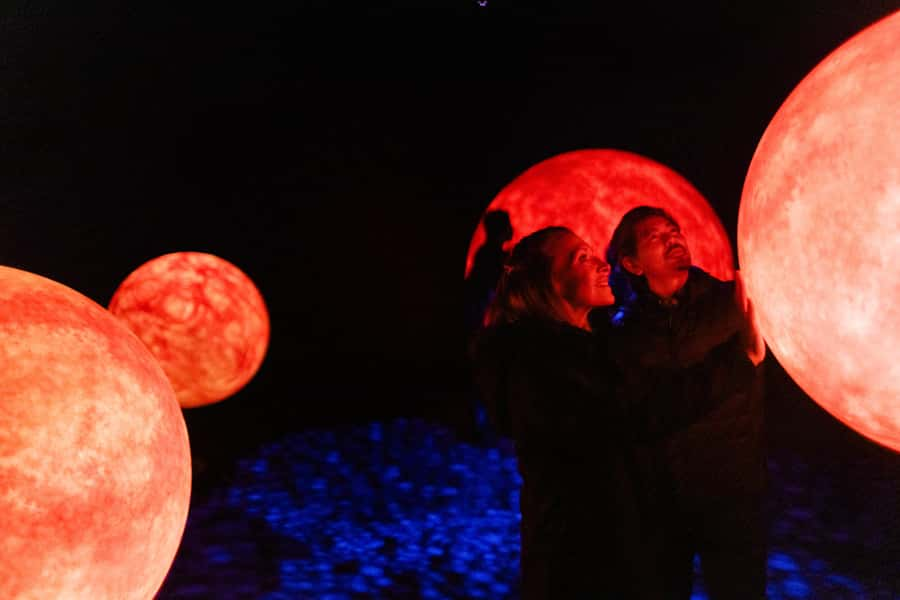
Lake Tekapo is famous for its dark skies, but this tour begins before sunset and stays indoors. That makes it a useful choice when the weather is poor, your schedule is tight, or you are touring with children who will not enjoy standing outside late at night.
The Dark Sky Project presents astronomy through Māori culture. You learn that the sky is not simply a collection of distant objects. It can also act as a guide, a calendar, a source of stories, and a way to understand the relationship between people, oceans, land, and living things.
I appreciate that approach. A conventional astronomy talk may explain how stars form or how galaxies work. This experience adds another question: how did people use what they saw above them? That change in viewpoint is the tour’s real value.
The experience lasts 45 minutes. That is long enough to build a clear story, but short enough to fit around a day of sightseeing in the Mackenzie Basin. It is not a full night-sky observation session, and you should not book it expecting to spend the evening looking through a telescope at planets or galaxies. Think of it as a guided cultural and scientific presentation, with the Brashear telescope as a key historic object.
Four Zones, Four Ways to Understand the Stars
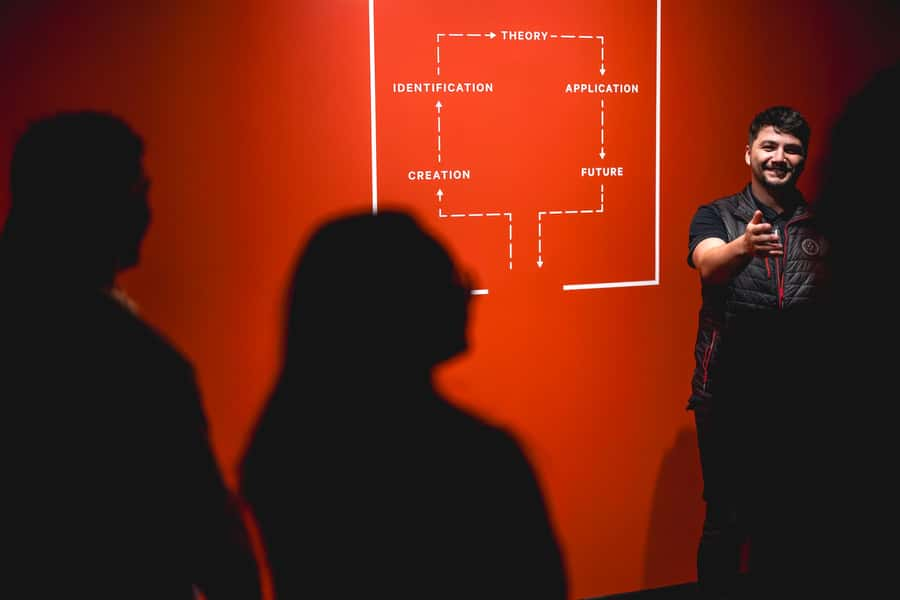
The exact order and presentation can vary with the guide, but the experience is built around four interactive zones. Each one adds a different piece to the story.
More Stargazing Tours in Lake Tekapo:
- Lake Tekapo: Alpine Stargazing Experience with a Guide
★ 4.5 · 626 reviews - Lake Tekapo: Stargazing Experience
★ 4.9 · 607 reviews - Chameleon Stargazing Shared Tour
★ 5.0 · 181 reviews
Māori navigation by stars and ocean currents
One of the most useful sections explains how Māori navigators connected the sky with the sea. Constellations helped guide journeys, while ocean currents offered another layer of information. The important point is that navigation was not based on one clue alone. The sky and ocean worked together.
For you, this turns an abstract topic into a practical one. Instead of hearing only that Māori people had a strong relationship with the stars, you see how that relationship helped people travel across the Pacific. The presentation gives context to navigation as a skilled reading of nature, not a simple matter of following a single bright star.
The interactive format should help children and adults stay involved. You are not sitting through a long lecture in a dark room with nothing to do. The lighting and sound create a theatrical setting, while the guide carries the explanation.
Star clusters and their meaning
Another zone looks at star clusters and their importance in Māori culture. You learn that groups of stars can carry meaning beyond their scientific identity. They may help mark seasons, support navigation, or connect people with stories handed down through generations.
This is where the cultural focus becomes most important. The tour does not treat Māori knowledge as a decorative add-on to astronomy. It places Māori observation and storytelling at the center of the experience, then connects those ideas with scientific explanations.
I would pay close attention here if you enjoy learning how different cultures organize knowledge. The tour is brief, so it cannot explain every star group in great detail. Its strength is showing you how to look at the sky with a wider frame of reference.
Mythology among the stars
The mythology section uses the stars as a setting for stories. The theatrical lighting and sound are especially useful here because they make the presentation feel more like a guided performance than a classroom lesson.
You can expect the guide to explain how stories give structure to the sky. Familiar patterns become easier to remember when they are linked to people, events, and ideas. This is also likely to be the most accessible part for families, since storytelling tends to hold attention better than a sequence of technical facts.
The tone is educational and entertaining, but it is still worth remembering that this is a scheduled guided experience. You do not control the pace or choose which stories receive the most attention. If you prefer quiet, self-guided museum displays, the presentation may feel more directed than you want.
Same sky over Lake Tekapo, a different way to watch it:
- Lake Tekapo: Mountaintop Stargazing at Mount John Summit
★ 4.5 · 176 reviews - Mount John Observatory Stargazing Experience, Tekapo
★ 4.5 · 160 reviews - Tekapo Star Gazing Tour – Soak in the Stars
★ 4.5 · 109 reviews - Silver River Stargazing Experience in Lake Tekapo
★ 4.5 · 106 reviews
Life, the Milky Way, and scientific discovery
The final themes connect Māori ideas about how living beings came to be with the science of the universe. You also travel outward into the Milky Way, moving from local cultural knowledge to questions about stars, galaxies, and life.
That combination gives the tour a satisfying shape. It starts with what people see above them, explains how the sky has been used, and then widens the view to the universe itself. You are encouraged to think about both cultural knowledge and scientific discovery without being forced to choose one over the other.
The scientific material is presented as part of a story rather than as a technical astronomy lesson. If you already know a great deal about astrophysics, you may find the science introductory. For most visitors, that is a sensible choice. The tour is designed to be understood by families and first-time astronomy learners.
The Brashear Telescope Is More Than a Photo Stop
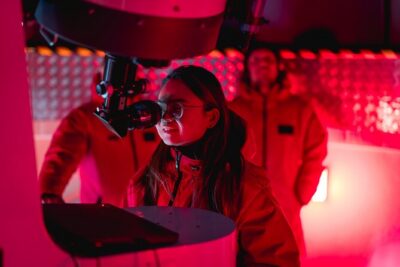
The restored Brashear telescope is one of the experience’s strongest features. This Victorian-era instrument is around 125 years old, and you can view it up close as part of the tour.
A historic telescope adds a physical link to the history of astronomy. Screens can show distant galaxies, but an old instrument lets you see how earlier generations tried to bring the heavens closer. Its presence also balances the Māori cultural material with a different strand of astronomical history.
Do not expect this part to operate like an outdoor observing session. The information provided describes a viewing of the telescope, not a promise that you will use it to see particular objects in the sky. I would treat it as an important historic exhibit within the guided experience.
That distinction matters when you compare this tour with a nighttime stargazing booking. If your main goal is to use a telescope after dark, check the details of a separate observation experience. If you want to understand the ideas and tools behind astronomy, the Brashear display fits very well.
Theatrical Lighting Helps, but Sound Matters
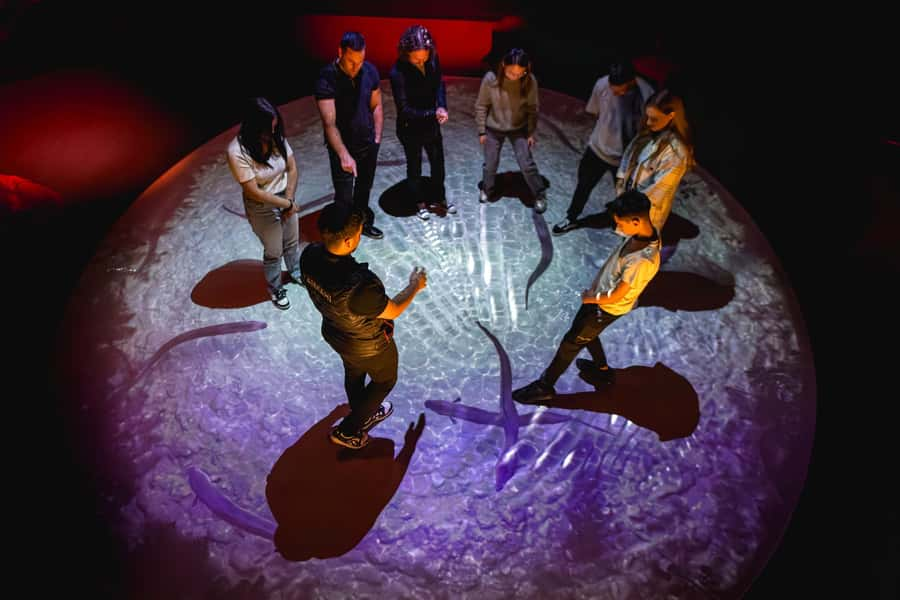
The indoor setting uses theatrical lighting and sound to create a sense of movement through the four zones. This is a smart choice for a daytime experience. It helps suggest the night sky even when the sun is shining outside, and it gives the guide a visual setting for stories about stars and navigation.
I like the fact that the experience is not dependent on a projection of a perfect night. You receive a guided narrative that can work in rain, cloud, or daylight. That reliability is useful in Lake Tekapo, where an outdoor sky plan can be spoiled by weather.
Sound is the main practical concern. If two young children are noisy, it may become difficult to hear the guide, particularly during the story-led sections. One account also found a guide’s heavy accent difficult to follow, despite the guide speaking good English.
That does not make the tour unsuitable, but you should choose your position carefully if possible and keep children close during the presentation. If you are not fully confident in spoken English, check whether a Chinese-language departure suits your schedule. The tour is offered with live guides in English and Chinese.
Is $35 a Fair Price for 45 Minutes?
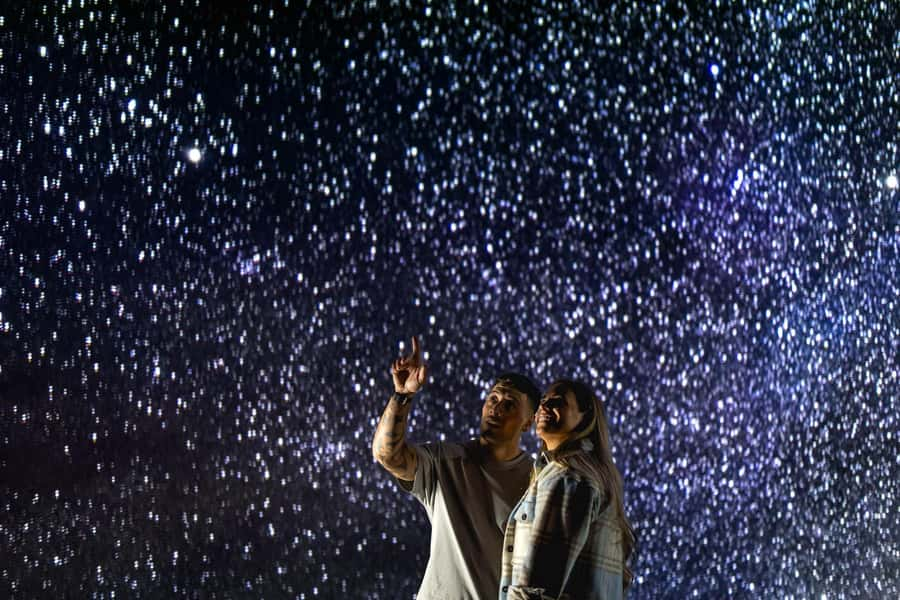
At $35 per person, this is not a major splurge, but it is also not a throwaway attraction. The value depends on what you want from Lake Tekapo.
I think the price is reasonable if you want a short, weather-proof cultural experience with a clear theme. You receive a fully guided presentation, four interactive zones, the Māori astronomy material, science content, theatrical production, and access to the historic Brashear telescope. That is more substantial than a simple exhibit you walk through in ten minutes.
The value is also stronger if you are already visiting the Dark Sky Project or are interested in both Māori culture and astronomy. The experience gives you background that can change how you view the night sky later, even if you do not attend an outdoor observation session.
The calculation is less favorable if you want only telescope viewing or a long astronomy session. Forty-five minutes passes quickly, and the tour is designed for general audiences rather than advanced students of astronomy. You are paying for interpretation, storytelling, and presentation as much as for the telescope itself.
The published rating is 4.5 from 43 reviews, which fits the experience’s strengths: people value the information, the guide’s friendly manner, and the unusual mix of Māori culture with astronomy. The lower marks point to a clear issue rather than a problem with the subject itself: hearing and understanding the guide can suffer when young children are noisy or when an accent is difficult for you to follow.
Who Will Get the Most From This Experience?
I would recommend the tour most strongly to families, first-time astronomy visitors, and anyone who wants cultural context before looking at the stars outdoors. The indoor format also suits you if you have limited time in Lake Tekapo or need an activity that does not depend on the weather.
It is a good fit for:
- Adults who want Māori perspectives included in their astronomy experience
- Families seeking a short, educational activity
- Visitors who cannot manage a late-night outdoor tour
- People interested in historic scientific instruments
- Anyone visiting Lake Tekapo on a cloudy or rainy day
- Wheelchair users looking for an accessible indoor activity
You may want something else if your priority is silent observation, detailed astrophysics, or a long session under the actual night sky. This tour explains and interprets the heavens. It does not replace outdoor stargazing.
Because the experience is family-friendly, you should expect children to be part of the atmosphere. That is a benefit for many families, but it can affect how clearly you hear every word. If the cultural stories matter greatly to you, a quieter departure and a suitable language option may improve the experience.
Location, Timing, and Practical Details

The meeting point is at 1 Motuariki Lane in Lake Tekapo, about 100 metres from the Four Square Supermarket. You can easily combine it with time in the central village area, and you do not need hotel pickup or drop-off because transport is not included.
Allow the full 45 minutes for the guided experience. Starting times vary, so check availability for the day you want. The daytime format gives you useful flexibility: you can schedule this around walks, scenic stops, meals, or a separate evening sky activity.
No food or drinks are included. That is hardly a problem for such a short visit, but plan to eat before or after rather than expecting refreshments as part of the experience.
The tour operates indoors in a purpose-built experience zone and runs in all weather conditions. It is wheelchair accessible, which makes it one of the easier astronomy-related activities to plan for visitors with mobility needs.
You can cancel up to 24 hours before the start for a full refund, and a reserve-now, pay-later option is available. Those terms are useful if your South Island route depends on weather or if you are still adjusting your Lake Tekapo schedule.
Should You Book the Māori Astronomy Experience?
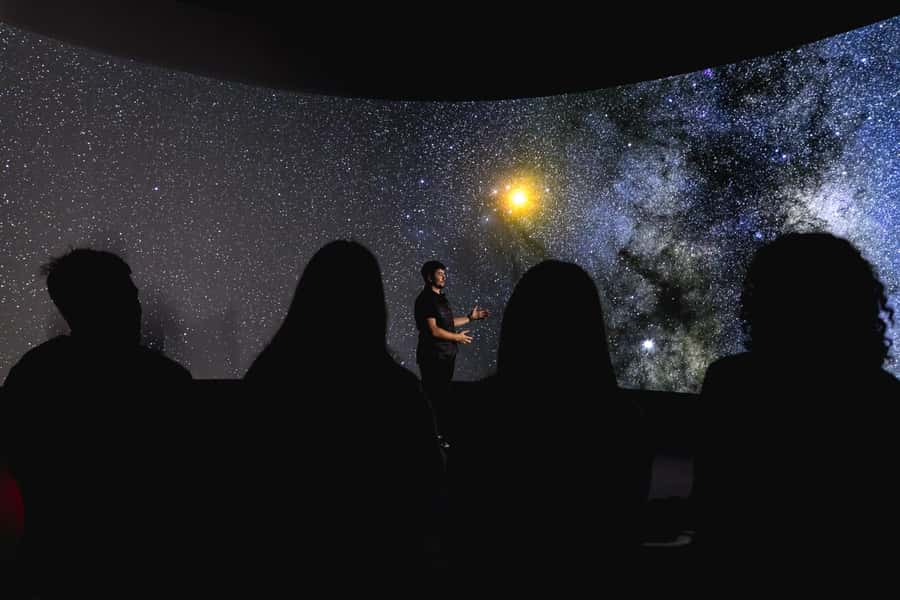
Book it if you want a short, accessible introduction to Māori astronomy that works in daylight and bad weather. The four-zone format, practical navigation stories, theatrical presentation, and historic Brashear telescope give you plenty to think about in 45 minutes.
I would be especially happy to recommend it before a separate night-sky outing. After hearing how Māori navigators used stars and ocean currents, you may look upward with more purpose. You will not simply see points of light. You will have a better sense of how people have used the sky to travel, tell stories, mark time, and ask scientific questions.
Skip it only if you are seeking hands-on nighttime telescope viewing or a highly technical astronomy lecture. For everyone else, $35 is a fair price for a thoughtful, family-friendly activity that gives Lake Tekapo’s famous sky a cultural meaning.
FAQ
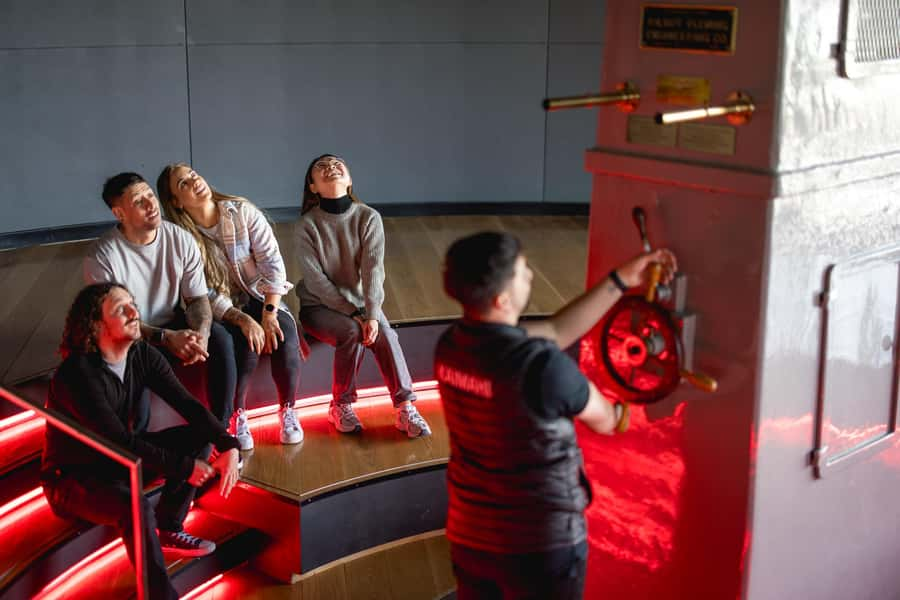
Where does the Lake Tekapo Māori astronomy experience take place?
It takes place at 1 Motuariki Lane, Lake Tekapo 7999, New Zealand. The location is approximately 100 metres from the Four Square Supermarket.
How long does the experience last?
The guided experience lasts 45 minutes.
Is the astronomy tour indoors?
Yes. It takes place in a purpose-built indoor experience zone and operates in all weather conditions.
What languages are available?
Live guides are available in English and Chinese.
Is the experience wheelchair accessible?
Yes, the experience is wheelchair accessible.
Is nighttime stargazing included?
The experience is a daytime indoor astronomy tour. It includes cultural and scientific explanations and a viewing of the historic Brashear telescope, but the provided information does not describe a separate nighttime observing session.
What is included in the $35 price?
The price includes the 45-minute guided tour through four zones, the interactive Māori astronomy presentation, the science-based story about life and the Milky Way, and viewing of the restored Brashear telescope. Food, drinks, hotel pickup, and hotel drop-off are not included.
Fresh listings near Lake Tekapo
- Twizel Stargazing Experience with a Guide (Carbon Positive)★ 4.7 · 26 reviews
- Lake Tekapo Ultimate Stargazing Experience★ 5.0 · 3 reviews
- Virtual Stargazing & Astronomy Experience in Lake Tekapo★ 3.0 · 2 reviews
- Mount Cook, Lake Pukaki: Billion Star Dining★ 4.8 · 6 reviews
- Lake Tekapo: Virtual Stargazing and Astronomy Experience★ 4.5 · 8 reviews
- Lake Tekapo: Stargazing Experience at Cowan’s Observatory★ 4.7 · 52 reviews
- Lake Tekapo: 1.5-Hour Hot Pools & Stargazing Experience★ 4.0 · 45 reviews
- Lake Tekapo: Ultimate Stargazing Experience★ 4.3 · 12 reviews
Lake Tekapo Stargazing, side by side.
Mount John Observatory Stargazing Experience, Tekapo
Read our review →
Silver River Stargazing Experience in Lake Tekapo
Read our review →
Stargazing Experience at Cowan’s Private Observatory
Read our review →Lists this night appears in