REVIEW · NATIONAL PARK STARGAZING
Tenerife: Teide National Park Sunset Picnic and Stargazing
At 2,100 meters above sea level, Teide National Park feels almost lunar, with twisted lava rock, dark volcanic ground, and views reaching above the clouds. This tour takes you through that strange scenery in the late afternoon, then settles you at Mirador de Samara for sunset, food, and a look at the stars.
I like the small group of up to eight people, which gives guides such as Stalin, Andrei, Federico, Larisa, and Tom room to explain the volcano and point out good photo spots. I also like the useful rhythm of the day: short walks and viewpoints first, then an 80-minute picnic and sunset stop before the sky turns dark.
The main caution is the mountain weather. It can be cold and windy even when the coast is warm, and clouds can block the stars or force a cancellation. Pickup has also been delayed for some people, so keep your phone on and allow a little patience at the start.
Key points to know before booking
- Roque García gives you the classic volcanic formations: Tall lava shapes and rugged rock make this one of the best photo stops.
- Paseo Lunar feels like a walk on the moon: Expect an otherworldly trail rather than a long hike.
- Mirador de Samara is the main event: The picnic, sunset, and stargazing all happen here, with about 80 minutes at the viewpoint.
- The food is simple but substantial: Cheese, tortilla, hummus, ham, baguette, snacks, and drinks are provided.
- The sky is not guaranteed: Clear conditions can reveal constellations, planets, and the Milky Way, but clouds may limit the view.
- Warm clothing matters: Bring layers, a jacket, and comfortable shoes, even in summer.
Why this Teide sunset tour works so well
I like this experience because it combines three things that are often sold separately: volcanic scenery, sunset views, and astronomy. You are not spending the whole afternoon in a van, but you also do not need to arrange a park visit, picnic, and nighttime drive on your own.
The setting does much of the work. Teide is Spain’s highest peak, and the national park around it has a stark volcanic character. You move from pine forest and winding mountain roads into open areas filled with lava formations and pale, dry ground. By sunset, you are high enough to look over the cloud layer that often sits below the mountain.
The advertised outing can last from three to six hours, but the stated pickup is at 3:00 p.m., with drop-off around 8:30 p.m. The exact duration depends on the day and pickup arrangements. The route includes roughly one hour of driving to the park, short transfers between stops, and about 80 minutes at Mirador de Samara.
That makes this a good choice if you want a full mountain experience without committing an entire day. It is also a sensible option if you are staying around Los Cristianos, Playa de las Américas, or Puerto de la Cruz and prefer not to drive unfamiliar mountain roads after dark.
More National Park Stargazing in Spain
- Tenerife: Teide National Park Sunset & Stargazing Tour
★ 4.2 · 3,812 reviews - Tenerife: Sunset and Stargazing at Teide National Park
★ 4.7 · 2,826 reviews - Teide National Park Sunset & Stargazing with Dinner (Star Safari)
★ 5.0 · 2,601 reviews
Starting in Los Cristianos and heading uphill
The standard meeting point is Pistacho Coffee Brunch in Los Cristianos. You are asked to be ready at 3:00 p.m., and showing your booking there gives you a 10 percent discount at the café. Drop-off options include Pistacho Coffee Brunch in Los Cristianos, Puerto de la Cruz, and Playa de las Américas.
Transport is in a white Nissan van. With a maximum of eight people, the ride should feel more personal than a large coach excursion, and the guide can usually answer questions as the road climbs. The small vehicle also suits this route, since the appeal is in reaching several viewpoints rather than staying at one major visitor site.
I would confirm the exact pickup details shortly before departure. One person had a 30-minute delay and trouble reaching the listed contact number, although another phone call eventually solved the problem. That appears to be an exception rather than the normal pattern, but clear communication matters when you are waiting for a van in an unfamiliar place.
The drive to Teide takes about an hour. The change in scenery is part of the experience. Tenerife’s coast can feel bright and warm, while the mountain is cooler, windier, and far more exposed. Bring your jacket from the start instead of leaving it in your hotel room.
Roque García and the park’s volcanic stage
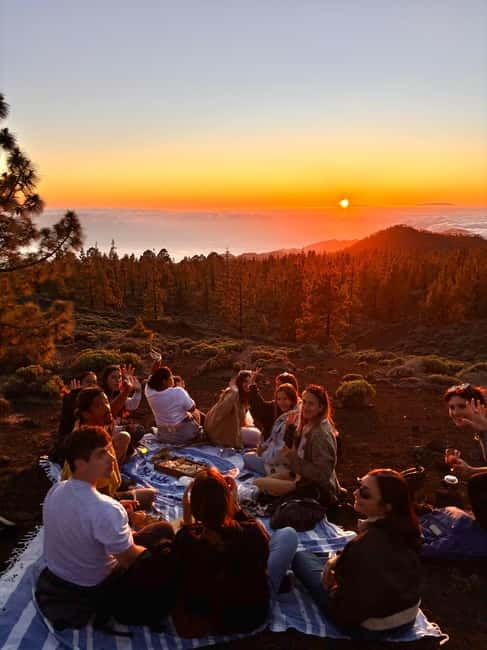
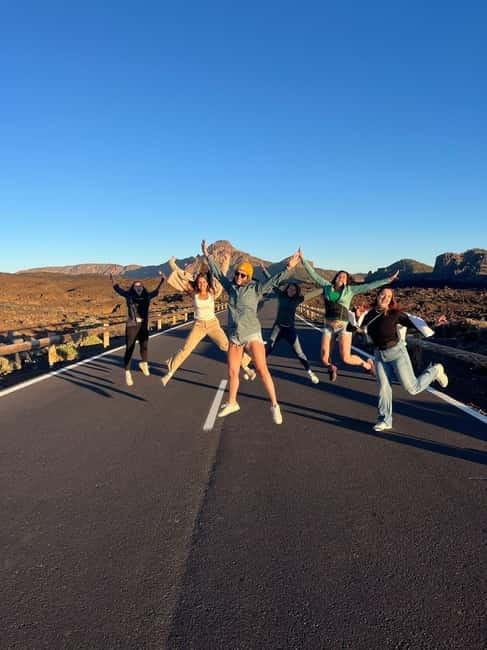
The first main stop is Roque García, a striking group of lava rock formations in Teide National Park. The shapes are the result of ancient volcanic activity, and the rocks rise sharply from the open ground.
This is an excellent place to get your first sense of Teide’s scale. The formations give you strong foreground subjects for photographs, while the open mountain setting provides wide views behind them. Guides stop to explain the volcanic scenery and allow time for pictures, rather than rushing everyone back into the van.
The walking here is focused on viewing rather than a strenuous hike. You should still wear comfortable shoes because the ground around volcanic rock can be uneven. If you have limited walking ability, ask the guide how much ground the group will cover at each stop, since the available information does not give a detailed accessibility description.
Roque García is also a useful contrast with the sunset stop later. In daylight, you can see the textures and colors of the rock clearly. At Mirador de Samara, the focus shifts to the horizon, changing light, food, and the sky.
Paseo Lunar and the moon-like trail
The route continues to Paseo Lunar, described as an otherworldly, moon-like trail. This is the stop for unusual volcanic scenery rather than a single famous rock formation.
I would expect a short guided visit, since the listed timing gives about 30 minutes for this park stop. That is enough to walk a little, take photographs, and hear the guide explain how the volcanic terrain formed. It is not presented as a long trek, so you should book this tour for scenery and interpretation, not for a full-day hike.
This part of the route helps you understand why Teide can feel so different from the rest of Tenerife. The ground is dark, dry, and heavily shaped by lava. The sparse setting gives photographs a clean, dramatic look, especially when the sun is lower in the sky.
Guides have been praised for making the information easy to follow. Stalin, Andrei, Federico, Larisa, and others have led groups in an informal style, mixing facts about the volcano and island with time for questions. The tour operates in English and Spanish, so check that one of those languages suits you before booking.
More National Park Stargazing in Tenerife
- Teide National Park: Sunset & Stargazing Safari with Dinner
★ 4.6 · 2,115 reviews - Teide National Park: Guided Large Telescope Stargazing Tour
★ 4.9 · 319 reviews - Tenerife. Stargazing in Teide National Park
★ 4.9 · 319 reviews - Teide National Park: Stargazing Experience
★ 4.7 · 220 reviews
Mirador de Samara for the picnic and sunset
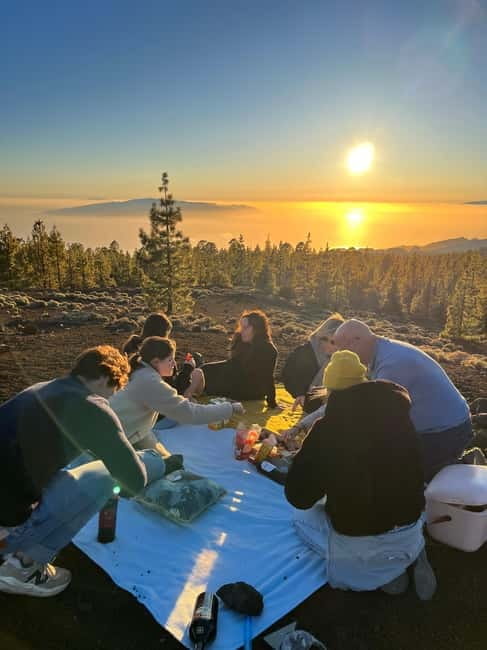
Mirador de Samara is the heart of the outing. The schedule allows about 80 minutes here, covering the picnic, sunset, and the transition into stargazing.
The food includes cheese, tortilla, hummus, ham, baguette, snacks, and drinks. It is more than a token snack box, and one guide prepared enough food for the group to feel that the picnic was close to a full dinner. Still, the portions may not suit every appetite, and one useful tip is to bring a little extra food if you tend to get hungry or have a limited diet.
The picnic is appealing because it gives you time to stop looking at the clock. You can eat while watching the light change across the volcanic scenery, rather than trying to squeeze food into a short roadside break. A blanket may be provided, but do not rely on it as your only protection from the cold.
Sunset above the clouds is the visual high point. The exact colors depend on the day, but the altitude and open views create a broad horizon with the volcanic peak and surrounding scenery. Your guide will usually point out the best places for photographs and leave time for you to take them.
Bring your own camera or phone with enough battery. The tour is deliberately built around several photo stops, and the low light at sunset can use more power than expected. You will not want to spend the final part of the trip searching for a charger.
Stargazing on a high, dark mountain
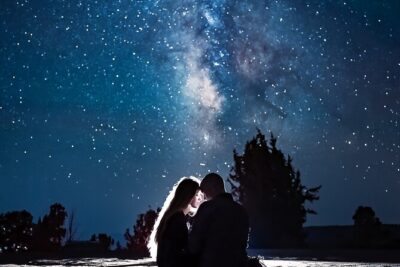
After sunset, the guide introduces you to the night sky. Teide and the surrounding park are described as one of the world’s top three stargazing locations, alongside Mauna Kea in Hawaii and Chile’s Atacama Desert.
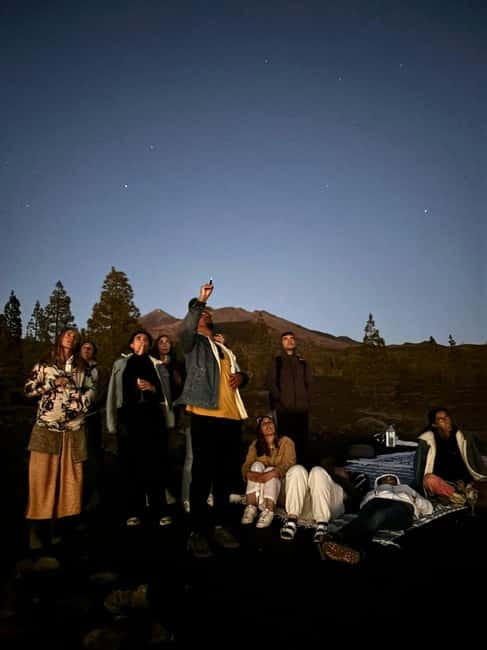
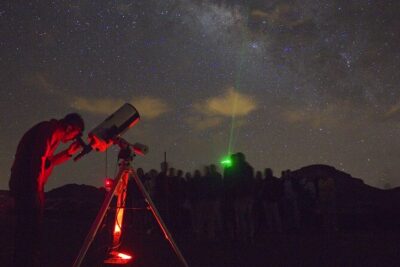
That claim sets high expectations, so it is worth understanding what the tour actually provides. This is an introduction to the stars, not a visit to a professional observatory. The guide may point out constellations, planets, zodiac signs, and the Milky Way, and explain how people once used stars for navigation.
This simple explanation is one of the strongest parts of the experience. A dark sky is impressive on its own, but learning what you are looking at makes the moment more useful. Guides such as Stalin have been especially good at making astronomy understandable, even for people who do not know the difference between a planet and a constellation.
Clouds are the big variable. Clear conditions can produce a memorable view of the stars, but cloud cover may hide much of the sky. On one outing, the moon was full but the sky remained clear enough to see a good amount. On another, clouds prevented the stargazing, though the guide still explained the stars and shared related facts.
The tour may also be cancelled because of poor weather. One booking was moved to the following day, but conditions still did not improve. That is frustrating, yet it is better than taking a mountain trip when the views and roads are unsafe. If stargazing is the main reason you are booking, avoid placing this tour on the final possible night of your holiday.
The cold is the practical issue people underestimate
Tenerife’s coastal reputation can fool you. At around 2,100 meters, the temperature drops, and wind makes it feel colder once you stop moving. This is especially noticeable during the picnic and stargazing, when you are sitting or standing in one place.
Bring:
- A warm jacket
- Several layers
- Comfortable shoes
- Extra warm clothing if you get cold easily
Winter visitors should take the advice particularly seriously. One person wore extra jackets and still felt cold during the stargazing. Blankets have been supplied on some trips, but I would treat those as a bonus rather than a replacement for proper clothing.
Comfort changes the whole evening. If you are shivering, you will pay less attention to the guide and spend less time looking at the sky. A fleece, hat, and scarf can make the difference between enjoying the final hour and wishing the van would return.
How much value do you get for $74?
At $74 per person, the price is reasonable if you want transport, a guide, food, sunset, and a nighttime visit to Teide in one outing. You are paying for convenience as well as access to the scenery. A self-drive visit might cost less in direct terms, but it would leave you to arrange the route, find the viewpoints, prepare food, and drive back after dark.
The small group improves the value. With up to eight people, the guide can keep the explanations personal and help the group stay together at each stop. You are also less likely to feel like one face in a large crowd.
The picnic adds practical value, though I would not choose the tour solely for the food. The meal is simple, with familiar items such as tortilla, cheese, ham, hummus, and bread. Its real strength is the setting and the time allowed to eat while the sun goes down.
The value is weaker if clouds cover the sunset and stars, though the volcanic stops still remain. The weather risk is part of any mountain outing, so flexible cancellation up to 24 hours before departure is useful. You can also reserve and pay later, which helps if your plans are still shifting.
Who will enjoy this experience most?
I would recommend it to first-time visitors who want to see Teide without planning a complicated route. It suits couples, solo visitors, and small groups who care about scenery, photography, and a relaxed evening outdoors.
It is also a good fit for anyone who wants a gentle introduction to astronomy. You do not need prior knowledge. The guide explains the sky in plain terms and points out features you can continue spotting after the tour.
Families with older children may enjoy the volcanic formations and stars, though the late finish, cold, and mountain travel may not suit very young children. The activity details do not specify an age range, so check before booking if you are travelling with children.
I would hesitate if you dislike winding roads, cold temperatures, or weather-dependent plans. You should also consider another activity if your main goal is a long hike, cable-car ride, or summit visit, since none of those are part of this route.
Should you book the Teide sunset and stargazing tour?
I would book this tour if you want the broadest Teide experience in a single afternoon and evening. The combination of Roque García, Paseo Lunar, a sunset picnic, and a star talk gives you more variety than a simple viewpoint transfer.
Book it with realistic expectations. The sky may be cloudy, the mountain may be very cold, and pickup may not run exactly to the minute. But if the weather cooperates, you get a memorable sequence: volcanic rock in daylight, a meal above the clouds, sunset over Tenerife, and constellations appearing in the dark.
For $74, the small group, transport, guide, picnic, and timing make good sense. Bring warm layers, confirm the pickup details, and keep another evening available if stargazing is essential. Guides such as Stalin, Andrei, Federico, and Larisa have helped make the experience personal and informative, which is exactly what this unusual corner of Tenerife needs.
FAQ
Where does the tour start?
The stated meeting point is Pistacho Coffee Brunch in Los Cristianos. You should be ready at 3:00 p.m. Some options may have different pickup arrangements, so check the selected option when booking.
Where can I be dropped off?
The listed drop-off locations are Pistacho Coffee Brunch in Los Cristianos, Puerto de la Cruz, and Playa de las Américas.
How long does the experience last?
The activity is listed as lasting from three to six hours. The stated schedule runs from a 3:00 p.m. pickup to an approximate 8:30 p.m. drop-off.
What language is the tour in?
The live tour guide operates in English and Spanish. Guides named in the information include Andrei, Stalin, Federico, Larisa, Tom, and others.
How large is the group?
The group is limited to eight participants. Some departures have had six people, which allows plenty of time for questions and photo stops.
What food is included?
The picnic includes cheese, tortilla, hummus, ham, baguette, snacks, and drinks. If you expect to need more food, you can bring an extra snack.
What should I wear?
Wear comfortable shoes, warm clothing, and a jacket. The mountain can be cold and windy, particularly during the picnic and stargazing.
Is stargazing guaranteed?
No. Clouds and poor weather can block the stars, and the tour may be cancelled or rescheduled if conditions are unsuitable. On partly affected evenings, the guide may still explain constellations and other facts about the night sky.
Can I cancel the booking?
You can cancel up to 24 hours in advance for a full refund. The reserve-now, pay-later option lets you keep your plans flexible without paying at the time of booking.
More Sunset and Stargazing Tours in Tenerife
- Teide: Small Group Sunset Adventure with Picnic & Stargazing
★ 4.6 · 231 reviews - Self Drive Sunset & Stargazing in Teide National Park – No Dinner
★ 5.0 · 151 reviews - Private astronomy tour with sunset toast, picnic, and astrophotography
★ 4.8 · 83 reviews - Magic Stargazing & Sunset in Teide with Dinner + Telescopes
★ 3.5 · 20 reviews
More Sunset and Stargazing Tours in Spain
- Teide by Night: Sunset & Stargazing with Telescopes Experience
★ 4.5 · 1,492 reviews - Teide: Guided Sunset & Stargazing Tour by Night with Dinner
★ 4.7 · 1,339 reviews - Sunset & Stargazing Experience From Teide
★ 4.5 · 1,129 reviews - Tenerife: Sunset Night Tour and Stargazing at Teide + Dinner
★ 3.8 · 316 reviews
Fresh listings near Tenerife
- Magic Stargazing & Sunset in Teide with Dinner + Telescopes★ 3.5 · 20 reviews
- Private astronomy tour with sunset toast, picnic, and astrophotography★ 4.8 · 83 reviews
- Tenerife: Stargazing at Mt. Teide★ 4.2 · 72 reviews
- Mount Teide Night Tour: Stargazing, Dinner and Hotel Pick up★ 3.5 · 86 reviews
- Tenerife: Teide Stargazing with an Astrophysicist★ 4.9 · 74 reviews
- Teide National Park: Stargazing Experience★ 5.0 · 118 reviews
- Tenerife: Mount Teide Observatory Astronomical Tour★ 4.4 · 126 reviews
- Self Drive Sunset & Stargazing in Teide National Park – No Dinner★ 5.0 · 151 reviews
National Park Stargazing, side by side.
Teide National Park Sunset & Stargazing with Dinner (Star Safari)
Read our review →
National Park Astronomy Tour with Telescope and Photo
Read our review →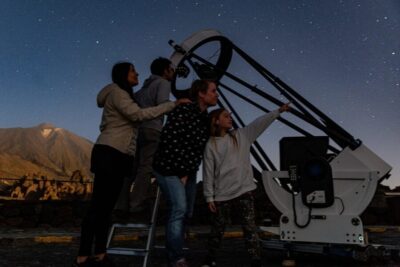
Teide National Park: Guided Large Telescope Stargazing Tour
Read our review →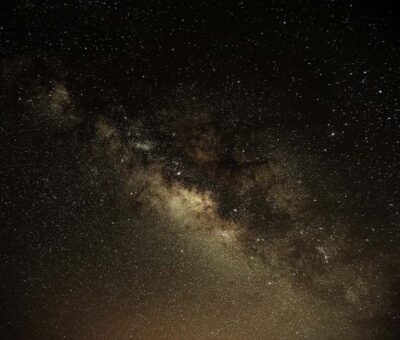
Self Drive Sunset & Stargazing in Teide National Park – No Dinner
Read our review →