
REVIEW · TELESCOPE STARGAZING
Tabernas Desert: Stargazing with Telescopes
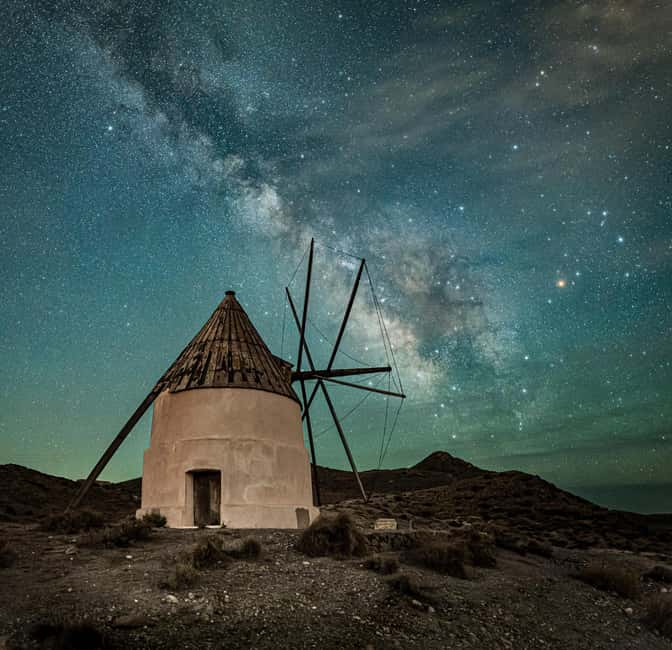
The best part of this Tabernas Desert evening is the chance to see the night sky far from city lights, with two serious telescopes rather than a quick look through a small visitor-center scope. A certified astronomy guide leads you from familiar constellations to planets, clusters, binary stars, and nebulae.
I especially like the clear 45-minutes-after-sunset timing, which gives the sky a chance to darken, and the way the guide mixes science with stories about our old habit of reading meaning into the stars. The group photo is a thoughtful finishing touch. The main catch is weather: wind can make telescope viewing tricky, and cold desert air calls for proper layers.
- 305 mm telescope: See brighter and more detailed views of the Moon, planets, clusters, and other night-sky targets.
- Seestar S50 Smart Telescope: A second professional instrument adds flexibility during the observation session.
- Guide Gonzo: Expect lively explanations, practical help finding constellations, and stories that work well for children and adults.
- Five-minute desert walk: The meeting point is followed by a short walk to the observation area.
- Warm clothing matters: Blankets are supplied, but chairs are not normally provided.
- A starry group portrait: You receive a photo with the night sky behind you as a keepsake.
Why the Tabernas Desert works for stargazing
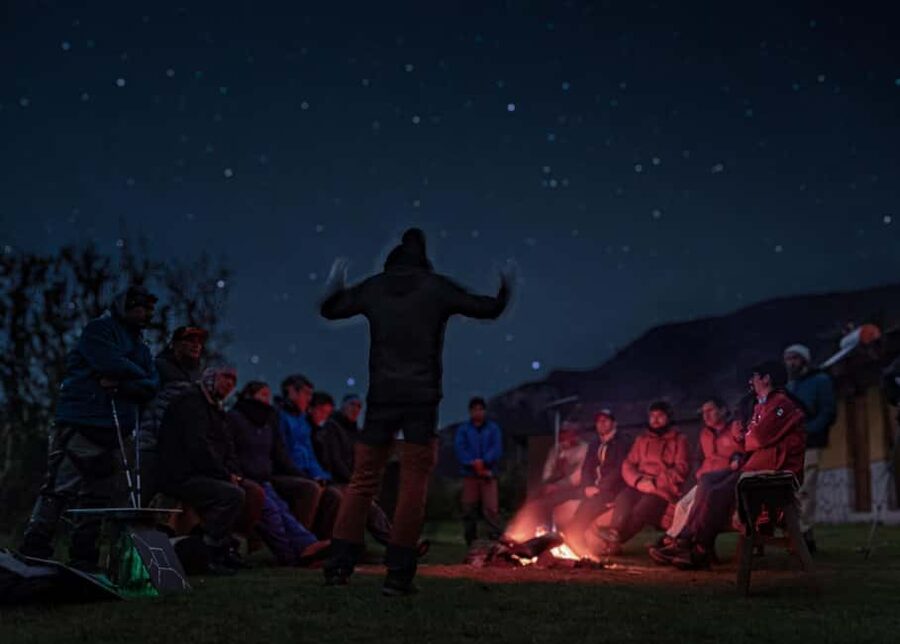
The Tabernas Desert gives this activity a setting that feels different from an ordinary evening tour. The point is not only that you are outside. You are away from the bright signs, streetlamps, and general glow that wash out faint stars in a town or city.
That darker setting helps you notice more of the sky with your own eyes before you even look through a telescope. The Milky Way is not guaranteed to appear at the same strength on every night, since moonlight and weather affect what you can see, but the location gives the guide a better chance to show you a broad range of stars.
I like that the session is not presented as a silent exercise in pointing at objects. You learn the main constellations visible on the night of your visit, along with basic positional astronomy. That means you are not simply told what to look at. You get a simple framework for finding your way around the sky.
The guide also connects astronomy with human culture. People have always used the stars for stories, calendars, direction, and a sense of place. That human side makes the science easier to remember, particularly if you arrive with children or teenagers who may not yet know much about astronomy.
The five-minute walk into the observation area
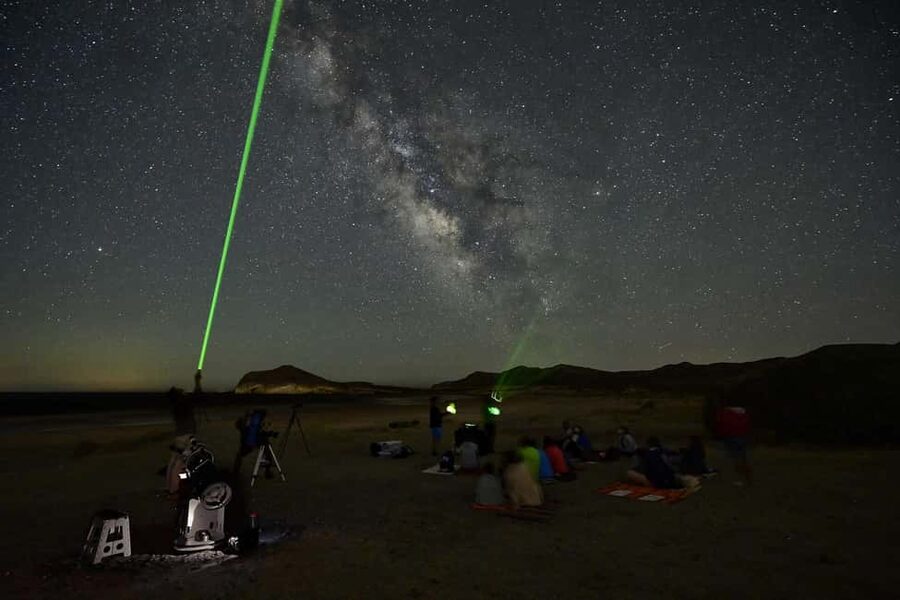
The listed route begins at one of three possible meeting locations in the Tabernas area, shown as map codes beginning with 2H9F+QM. Your exact starting point depends on the option you book, so check the final instructions rather than assuming every group meets at the same spot.
From there, allow about five minutes for the walk into the desert observation area. It is a short distance, but darkness changes the practical feel of even an easy walk. Wear shoes you are comfortable walking in, and keep a small light available if needed, while avoiding bright phone screens once the session begins.
This is not a long hike or a strenuous outing. Still, the experience takes place outdoors on the ground, with blankets provided for sitting or lying down. If you have a back problem and need a chair, contact the provider in advance. They may be able to bring one, but a chair is not part of the standard equipment.
The setting is simple by design. You are not entering an observatory building with fixed seating and indoor facilities. That keeps the experience close to the desert night, but it also means you should arrive ready for an outdoor activity.
More Telescope Stargazing in Spain
- Teide by Night: Sunset & Stargazing with Telescopes Experience
★ 4.5 · 1,492 reviews - Teide National Park: Guided Large Telescope Stargazing Tour
★ 4.9 · 319 reviews - Cavalleria: Guided Stargazing at the Beach with Telescope
★ 4.9 · 87 reviews
Why the session begins 45 minutes after sunset
The start time changes with the season because the session begins 45 minutes after sunset. You do not need to guess the time far in advance. The team contacts you two days before the activity to check the weather and confirm the exact meeting time.
That timing has a practical benefit. Immediately after sunset, the sky is still too bright for many faint objects. By waiting, the guide can work with darker conditions and move from the last light of dusk toward proper night viewing.
The first part of the evening is likely to feel more conversational as the guide explains how to look at the sky and points out objects visible without magnification. As the darkness settles, the telescopes become more useful.
You should plan your evening around the full two hours, not just the telescope portion. The activity includes a five-minute walk, about 105 minutes of guided astronomy, and roughly 10 minutes for the photo stop. The pacing gives the guide room to explain what you are seeing instead of rushing everyone from one object to the next.
Looking through the 305 mm Explore Scientific telescope
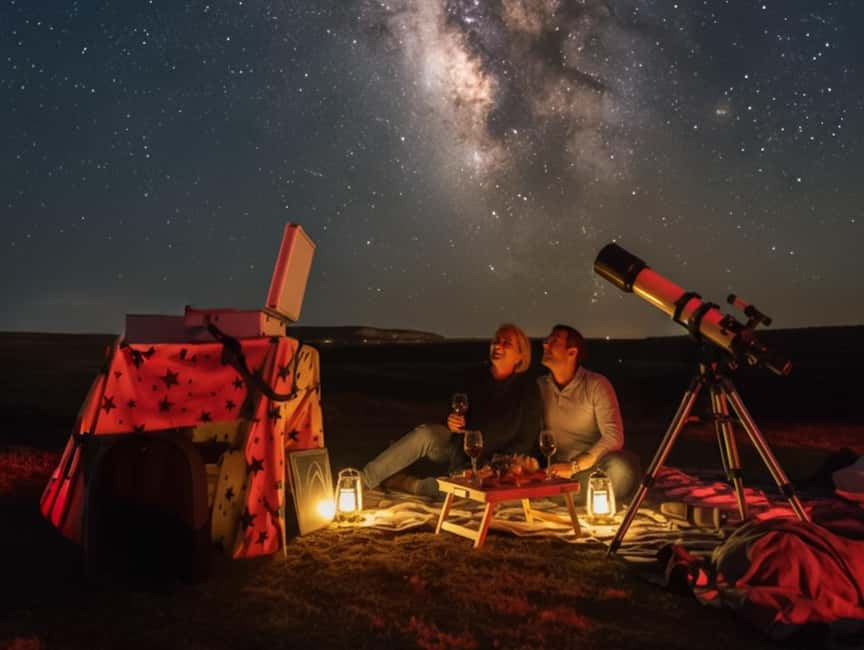
The larger telescope is an Explore Scientific 305, a professional instrument intended to collect much more light than your eyes can gather alone. That matters most when the guide turns from bright planets and the Moon toward fainter targets.
If the Moon is visible during your session, you may see craters in clear detail. The guide explains how those features formed over time, turning the Moon from a bright disk into a world with a physical story written across its surface.
Planet viewing depends on the date and the conditions. The supplied experience has included Jupiter, Saturn, and several moons, but no particular planet can be promised on every night. The guide chooses targets based on what is above the horizon and how clearly the atmosphere allows you to see them.
You might also view open clusters, globular clusters, binary stars, and nebulae. These objects offer different kinds of sights. An open cluster can look like a loose scattering of stars, while a globular cluster is a denser, rounded group. Binary stars show how two stars can appear together, and a nebula gives you a glimpse of a cloud of gas and dust far beyond our own solar system.
The telescope does not remove all limits. You will take turns, and the view can be affected by wind, atmospheric movement, and the brightness of the Moon. One recent session had stronger wind that made observing harder, though planets and constellations could still be seen clearly. That is useful context: this is a real outdoor astronomy session, not a guaranteed slideshow of perfect images.
What the Seestar S50 adds
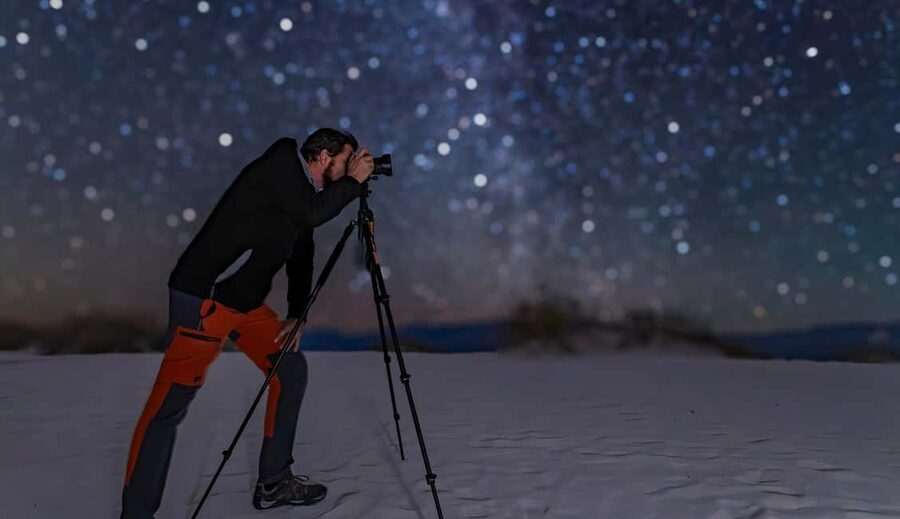
The second instrument is a Seestar S50 Smart Telescope. Having both the 305 mm telescope and a smart telescope gives the guide more than one way to present the sky.
The larger telescope is suited to direct viewing through an eyepiece. The Seestar S50 can support observation of sky objects through its smart system, giving the guide another tool when conditions or group size make a target easier to share in a different way.
For you, the practical advantage is variety. The evening is not built around waiting for one telescope while the guide handles everything else. The two instruments help create a fuller program, though the exact order and targets will change with the night.
The most memorable moments may not always be the faintest object. Seeing lunar craters, Jupiter with its moons, or Saturn and the shadow of its rings can make an immediate impression. Then a cluster or nebula shows you that the sky is not made only of bright points, but also of large, distant structures.
Same sky over Spain, a different way to watch it:
- Tenerife: Teide National Park Sunset & Stargazing Tour
★ 4.2 · 3,812 reviews - Tenerife: Sunset and Stargazing at Teide National Park
★ 4.7 · 2,826 reviews - Teide National Park Sunset & Stargazing with Dinner (Star Safari)
★ 5.0 · 2,601 reviews - Teide National Park: Sunset & Stargazing Safari with Dinner
★ 4.6 · 2,115 reviews
Learning constellations and finding the North Star
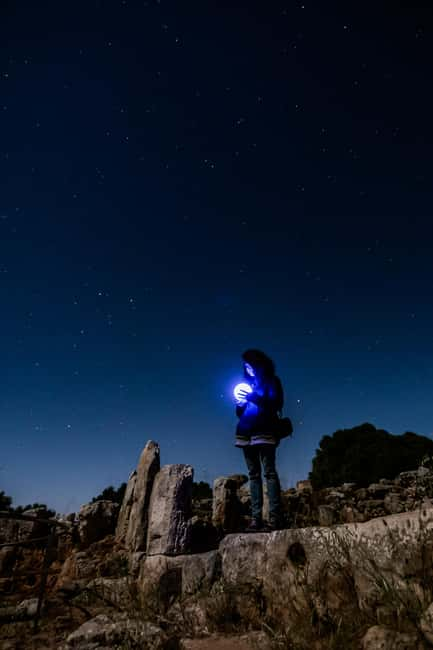
A good stargazing tour should leave you able to recognize something later, and this one includes basic positional astronomy for that reason. You learn how to locate major constellations visible on your particular night and how to use them to orient yourself.
The guide also explains the North Star and why it appears fixed in the sky. That is a small lesson with a useful payoff. Instead of treating the stars as a random scattering, you begin to understand their apparent movement and the way people have used them for navigation.
The cultural stories give the lesson a lighter touch. Guide Gonzo has led these sessions with a lively style, using stories and humor alongside the technical explanations. That balance is especially helpful for families. Children can look for shapes and myths, while adults can follow the more precise points about stars, planets, and position.
The session is offered in English and Spanish. Some material may be presented in its original language, so it is worth selecting the language that works best for your group when booking.
Guide Gonzo and the family appeal
Gonzo is the guide named in the supplied experiences, and his approach seems to be one of the strongest reasons this activity works for mixed-age groups. He explains astronomy with energy rather than turning the evening into a lecture.
That matters because a telescope session can become slow if every object is handled as a technical demonstration. Gonzo involves the group, answers questions, and keeps the storytelling moving. Families with younger children and teenagers have found enough variety to stay engaged, from Moon craters and Jupiter to Orion’s Nebula and the Seven Sisters cluster.
You do not need to arrive with astronomy knowledge. The guide starts with things you can recognize, then builds toward less familiar objects. If you already know the main constellations, you can still benefit from the telescope views and the positional astronomy discussion.
The experience is also suitable for couples, friends, and solo visitors who enjoy a quiet outdoor activity with some learning attached. It is less suited to anyone who expects a fast, entertainment-first excursion or an indoor, heated facility.
Cold, wind, blankets, and comfort
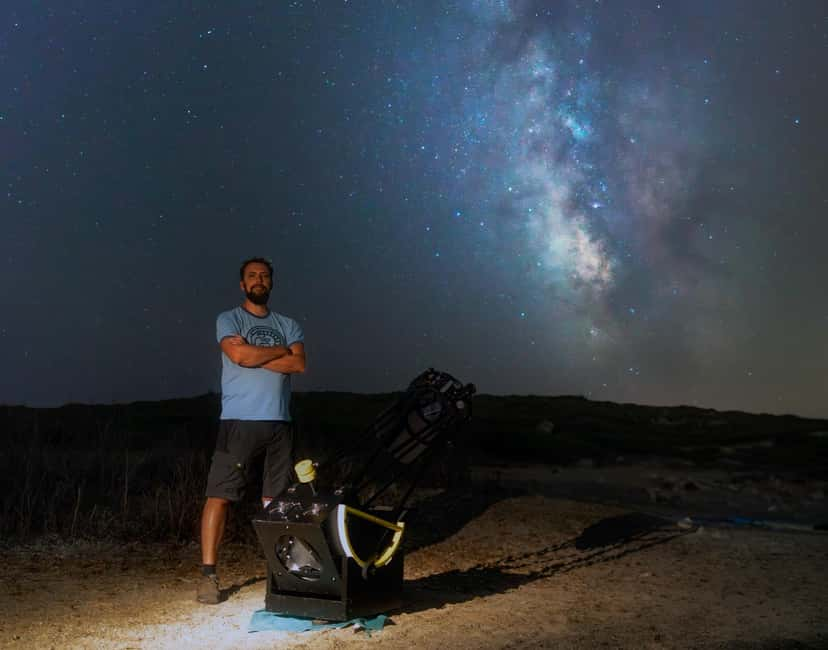
Bring warm clothes. This is the most important practical advice for enjoying the evening. Desert temperatures can drop after sunset, and you may spend periods sitting or lying still while waiting for your turn at the telescope.
Blankets are included for sitting or lying on the ground. They make the arrangement more comfortable, but they do not replace warm clothing. Add a coat and extra layers, especially outside the warmer months.
Chairs are not normally included. If you need one because of a back problem, tell the team ahead of time and they will try to bring one. The activity is not suitable for wheelchair users, so mobility needs should be considered before booking.
Wind is another variable. It may make the telescope shake or make it harder to hold a steady view. The guide can adapt the program, but no outdoor astronomy experience can control the atmosphere. The weather check two days before departure is useful, and you should treat it as part of the planning rather than a minor formality.
Smoking is not allowed during the activity.
Is $41 a fair price?
At $41 per person, the value depends on what you want from an evening outdoors. You are paying for two hours with a certified astronomy guide, use of a 305 mm telescope and Seestar S50, blankets, a group photo, and access to a dark desert setting.
That is a fair price if you would otherwise spend the evening looking at a mostly empty sky without knowing what you were seeing. The guide adds the real value. He helps you identify stars, explains how to orient yourself, and turns faint points of light into objects with scale and meaning.
The price is less compelling if you want guaranteed views of a particular planet or perfect conditions. Targets change with the date, and wind, clouds, or moonlight can affect the program. You are buying access to skilled guidance and equipment under the open sky, not a fixed list of celestial sights.
The free cancellation option up to 24 hours before the activity and reserve-now, pay-later booking also make it easier to fit into a changeable Andalusia itinerary. Check availability for the start time, since it is tied to sunset.
The final group photo
The last 10 minutes are set aside for a photo stop. You pose with the stars as a backdrop, and the group receives a night photo as a souvenir.
This is a small feature, but it gives the evening a clear ending. It also helps preserve the experience in a way your phone probably cannot. Night-sky photography is difficult without the right equipment, and a group image taken by the team gives you something more useful than a dark, blurry snapshot.
In at least one supplied experience, the photos were sent the next morning. That timing is not stated as a guaranteed delivery schedule, so think of the photo as included rather than expecting a specific file-transfer time.
Who should book this stargazing experience?
I would recommend it most strongly to families with children or teenagers, couples who want a calm evening outside, and anyone curious about astronomy but unsure where to start. The mix of stories, constellation finding, telescope viewing, and photography keeps the two hours varied.
It is also a good choice if you want an activity that feels tied to the Tabernas Desert rather than a standard city tour. The setting is part of the experience, and the absence of city light gives the guide more to work with.
You should think twice if you dislike sitting on the ground, get cold easily, need guaranteed accessibility, or want a particular celestial object at a particular time. Wind and weather can change the quality of the viewing, even with strong equipment.
Should you book it?
Book this if you want a friendly, guided introduction to the night sky with proper equipment and a memorable desert setting. Gonzo’s energetic style suits families especially well, while the large telescope and Seestar S50 give adults plenty to appreciate too.
Bring warm layers, accept that the sky makes the final decisions, and confirm the meeting time when the weather check arrives. At $41, this is a worthwhile evening for people who want to look beyond the surface and learn how to find their way among the stars.
FAQ
How long does the Tabernas Desert stargazing activity last?
The experience lasts two hours. The route includes a five-minute walk, about 105 minutes of guided astronomy, and a 10-minute photo stop.
When does the activity start?
The start time is always 45 minutes after sunset. The exact meeting time depends on the season and will be confirmed after a weather check two days before the activity.
Which telescopes are used?
The activity uses an Explore Scientific 305 telescope and a Seestar S50 Smart Telescope.
Is the activity available in English?
Yes. The live guide is available in English and Spanish. Some content may be presented in its original language.
What should I bring?
Bring warm clothing. Blankets are supplied for sitting or lying on the ground. Chairs are not included, though the team will try to bring one if you request it because of a back problem.
Is the experience suitable for wheelchair users?
No. The activity is not suitable for wheelchair users.
More Desert Stargazing Safaris in Spain
- Stargazing Night in the Tabernas Desert
★ 5.0 · 18 reviews - Dubai Red Dunes ATV, Camels, Stargazing & 5* BBQ Al Khayma Camp
★ 5.0 · 21,620 reviews - Dubai: Sunset Camel Trek, Al Khayma Camp, Stargazing & BBQ
★ 4.8 · 2,588 reviews - Dubai: Overnight Safari, Dinner, Stargazing & Al Khayma Camp
★ 4.8 · 2,562 reviews
Fresh listings near Spain
- Small Group Teide Stargazing Tour with Picnic at Sunset★ 5.0 · 3 reviews
- VIP Sunset & Stargazing experience★ 4.5 · 44 reviews
- Sunset and stargazing from Teide★ 3.5 · 51 reviews
- Tenerife Exclusive & Private Gastronomic, Sunset-Stargazing★ 5.0 · 3 reviews
- “Stargate” Tenerife stargazing★ 5.0 · 13 reviews
- Skip the Line: Teide Observatory Entrance Ticket★ 3.0 · 33 reviews
- Sunset & Stargazing Experience from Teide★ 4.0 · 31 reviews
- TEIDE NIGHT Astronomy Stargazing Bus Tour, Meal & Drinks included!★ 4.0 · 15 reviews
Telescope Stargazing, side by side.
Teide by Night: Sunset & Stargazing with Telescopes Experience
Read our review →
National Park Astronomy Tour with Telescope and Photo
Read our review →
Teide National Park: Guided Large Telescope Stargazing Tour
Read our review →
Northern Lights Tour and Stargazing by Telescope
Read our review →
Jasper Planetarium and Telescope Combo Tour Tickets
Read our review →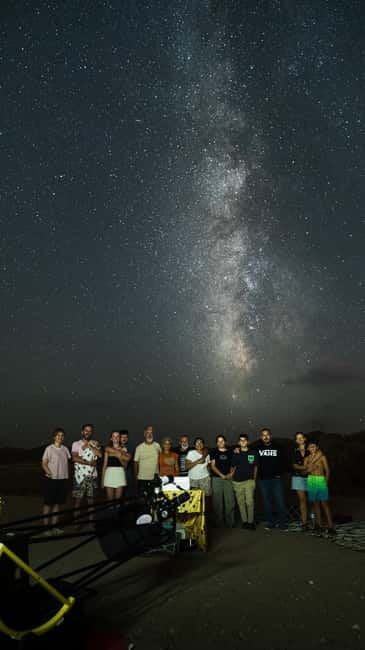
Cavalleria: Guided Stargazing at the Beach with Telescope
Read our review →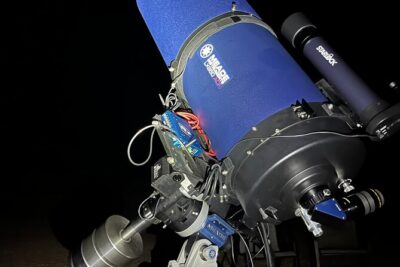
Stargazing Tour with Telescopes and Video Astronomy in Sedona
Read our review →Lists this night appears in