
REVIEW · TELESCOPE STARGAZING
Menorca Astronomical Observation with Telescopes, Night Sky
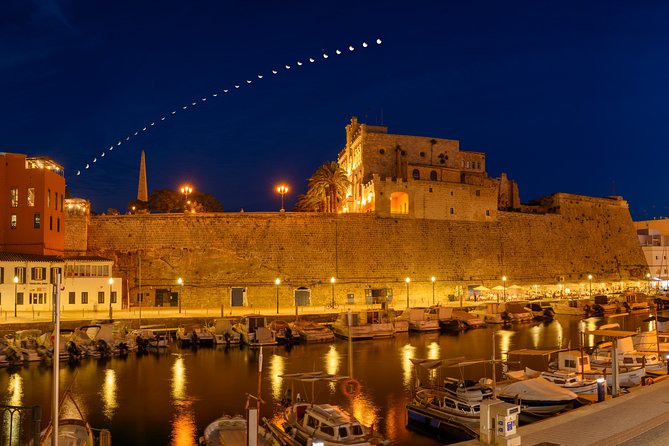
Menorca’s best night show is above your head. At La Vall, Polaris Menorca uses telescopes, astronomical binoculars, and a laser pointer to help you make sense of the dark sky, from the Milky Way to planets, stars, nebulae, and galaxies. The session also connects constellations with their old myths and with Menorca’s work as a protected biosphere reserve.
I like two things in particular. The guides make astronomy easy to follow, with Edu praised for his simple, engaging explanations and Javier noted for his warm, professional approach. I also like the practical setting: tables, chairs, a terrace, and a bathroom mean you are not simply left standing in a field for two hours.
The main consideration is weather. This is an outdoor astronomy experience, so cloud or poor conditions can cancel the evening. Transport is not included, and you must make your own way to the La Vall parking area near Ciutadella.
Key points to know before booking
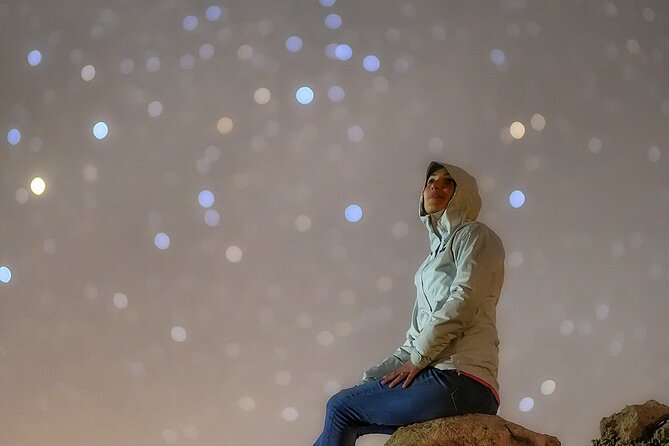
- Menorca’s protected night sky: The session explains what it means for the island to be a Starlight territory, reserve, and destination.
- A compact two-hour format: You get an introduction, a guided sky tour, and telescope viewing without giving up an entire evening.
- Several ways to observe: Expect a laser pointer, astronomical binoculars, and modern telescopes, each useful for a different kind of viewing.
- Guides with a clear teaching style: Edu and Javier lead the activity, combining science, mythology, and stories about Menorca’s sky.
- A small maximum group of 15: This keeps the session more personal than a large coach-style outing.
- Flexible weather policy: If poor conditions cancel the activity, you can choose another date or receive a full refund.
Why Menorca is a good place to look up
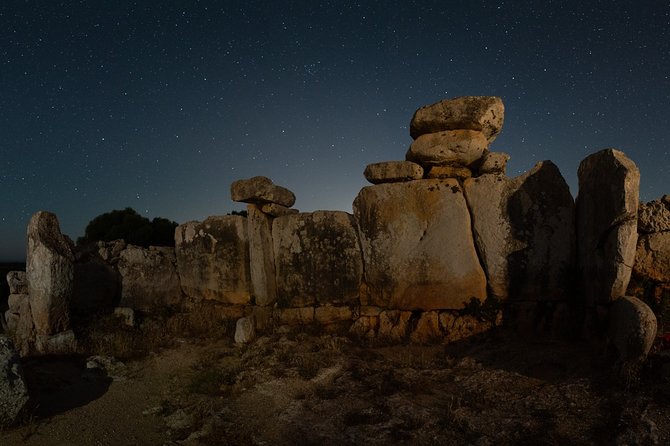
Menorca is not just an island with attractive beaches and historic towns. It also has a night sky that remains unusually visible for a European and Mediterranean destination. At the right observation point, light pollution does not wash out the Milky Way and countless stars.
That matters because astronomy depends on darkness. A bright town can erase faint stars, blur the Milky Way, and make distant objects impossible to pick out. Menorca’s protected night sky gives this activity something more substantial than a telescope set up in an ordinary urban park.
The evening begins with context. You learn about Menorca’s commitment to sustainability and what it means for the island to be recognized as a Starlight territory, reserve, and destination. This is useful rather than decorative information. It helps you understand why the place where you are standing can still offer a clear view of the heavens.
I also appreciate the connection between the sky and the island itself. The guides do not treat astronomy as a detached science lesson. They explain the natural setting around you and connect the constellations to mythology and local stories about Menorca’s sky. That gives the session a human side, especially if you are new to stargazing.
More Telescope Stargazing in Spain
- Teide by Night: Sunset & Stargazing with Telescopes Experience
★ 4.5 · 1,492 reviews - Teide National Park: Guided Large Telescope Stargazing Tour
★ 4.9 · 319 reviews - Cavalleria: Guided Stargazing at the Beach with Telescope
★ 4.9 · 87 reviews
La Vall: the meeting point and outdoor base
You meet at the La Vall parking area, listed at 07769 Ciutadella de Menorca. The activity starts and finishes at this same meeting point, so you do not need to arrange a separate return transfer after the observation.
The local base has a bathroom, terrace, tables, and chairs. That is a small detail, but it makes a difference during a night activity. You have somewhere practical to gather before the observation and a proper facility nearby instead of relying on a remote, bare roadside stop.
Transport is not provided. You will need to reach La Vall independently, and the meeting point should be checked carefully before setting out. Since the experience takes place at night, allow enough time to arrive without rushing. The supplied details do not specify a hotel pickup, shuttle, or public transport connection, so do not assume any of those are included.
The group size is capped at 15 people. That is large enough to create a pleasant shared experience but small enough for the guides to keep the session focused. Astronomy works best when everyone can hear the explanation and take a turn looking through the equipment. A group of 15 is still a group, but it is far more manageable than a mass evening outing.
The opening: Menorca, sustainability, and Starlight status
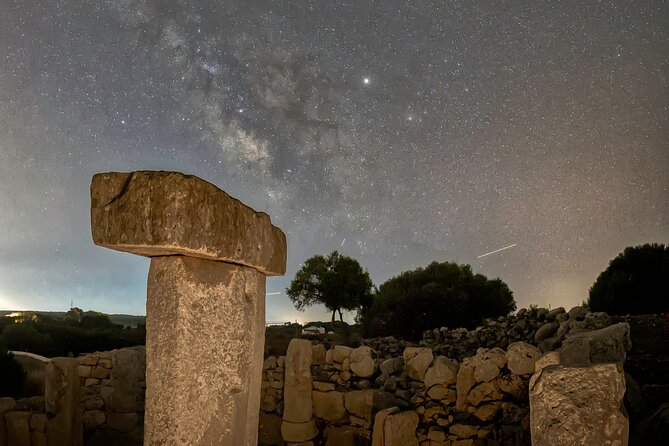
The first part is a short introduction to Menorca and its protected night sky. The guides explain the island’s biosphere reserve commitment and then introduce the Starlight idea.
For you, this section gives the rest of the evening a clear purpose. You are not simply being shown random bright points in the sky. You are learning why darkness is worth protecting and how light pollution affects what you can see. In many places, the stars are present but hidden behind artificial light. Here, the darkness is part of the experience.
The introduction also helps if you know little about astronomy. Terms such as constellations, galaxies, and nebulae can sound technical when they are presented without a frame of reference. A short explanation at the start makes the later viewing easier to follow.
This is also where the guides set a friendly tone. Edu is known for explaining ideas in a simple way and making the subject interesting without turning it into a formal lecture. Javier brings a professional and approachable manner, and his ability to adapt to the conditions matters when the sky does not cooperate perfectly.
Following the constellations with a laser pointer
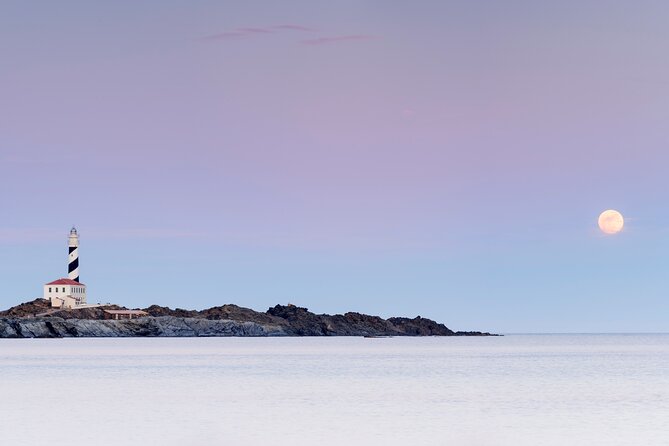
The guided tour of the sky is the bridge between the introduction and the telescope work. A laser pointer lets the guide indicate stars and constellations clearly, so you can follow the explanation instead of trying to guess which small point of light is being discussed.
The mythology adds another layer. Constellations are not just patterns used by astronomers. They are also characters and stories passed down through different cultures. Hearing those stories gives you a way to remember what you are looking at, especially if you do not already know the night sky.
I like this part because it makes the activity accessible to mixed groups. One person may want facts about planets and galaxies, while another may be more interested in the old myths. The session is designed to include both. The information is described as scientific, playful, and cultural, which is a useful balance for a family, couple, or group of friends with different interests.
Do not expect the laser pointer to replace the telescope. It is a guide. It shows you where to look and helps you build a basic map of the sky before you use the optical equipment. That preparation makes the later viewing more meaningful.
Same sky over Spain, a different way to watch it:
- Tenerife: Teide National Park Sunset & Stargazing Tour
★ 4.2 · 3,812 reviews - Tenerife: Sunset and Stargazing at Teide National Park
★ 4.7 · 2,826 reviews - Teide National Park Sunset & Stargazing with Dinner (Star Safari)
★ 5.0 · 2,601 reviews - Teide National Park: Sunset & Stargazing Safari with Dinner
★ 4.6 · 2,115 reviews
Telescopes and binoculars: what you will see
The main part of the evening uses astronomical binoculars and modern telescopes. The equipment gives you different ways to examine the night sky. Binoculars can help you take in a wider area, while a telescope is suited to closer views of selected objects.
The stated focus includes the Milky Way, planets, stars, nebulae, and galaxies. What you actually observe on the night can vary with conditions, visibility, and the position of objects in the sky. It would be wrong to treat the list as a guarantee that every object will be visible during every session.
That flexibility is normal in astronomy. The sky changes, and the weather can limit what a guide can show. One session described in the supplied information was moved to a different date because of the forecast. On the night itself, Javier made the most of the conditions and continued with a mix of scientific, playful, and cultural explanation. That tells you something important about the format: it is not only about ticking off a list of objects.
The strongest part of the telescope work is likely the sense of scale. A star you first see as a pinprick becomes part of a larger explanation. A hazy patch may be identified as a nebula or galaxy. The Milky Way becomes more than a familiar name. With the guide directing your attention, the sky becomes easier to read.
Because the group can include up to 15 people, you may need to wait briefly for your turn at the equipment. That is a reasonable tradeoff for the price and the small-group limit. The guide’s explanation remains important during those pauses, so you are not left with nothing to do while someone else is looking.
Edu and Javier: the human side of the evening
The guides are central to the value of this activity. Astronomy equipment alone does not guarantee a good experience. A telescope can show you something impressive, but a clear explanation helps you understand why it matters.
Edu’s style is described as simple and interesting, which is exactly what a first-time stargazer needs. You do not need a technical background to follow the session. The aim is to make complex ideas understandable without stripping away the wonder.
Javier is also praised for professionalism and kindness. His ability to work within changing weather conditions is a practical strength. If the sky is not perfect, a good guide can still point out what is visible, explain the science, and keep the evening enjoyable.
The tone appears to be friendly rather than solemn. There is room for humor, mythology, and stories alongside the astronomy. That makes this a better fit for people who want a memorable night out, not an advanced observatory course.
Is $35.57 a fair price?
At $35.57 per person, this is reasonably priced for a two-hour guided activity with specialist equipment and a maximum group of 15. You are paying for the guide’s preparation, the use of astronomical binoculars and telescopes, the interpretation of the sky, and access to a private base with basic facilities.
The value is strongest if you would not know where to start on your own. You could look at the stars without a guide, but you might not know which constellation you are seeing or how to find a planet, nebula, or galaxy. The laser pointer and telescope work turn a dark sky into a structured experience.
The price also works well for a short evening plan. You do not have to commit to a full-night excursion, and the meeting point remains the same at the end. For a couple, family, or small group, the cost is easier to justify when you see it as both an activity and a short lesson in the island’s natural character.
There are limits. Transport is extra, and the sky may not show every object listed in the description. If you are already an experienced amateur astronomer with your own equipment, you may want a more technical session. For most holiday visitors, though, the combination of guidance, equipment, mythology, and protected darkness gives the price solid value.
Who will enjoy this most
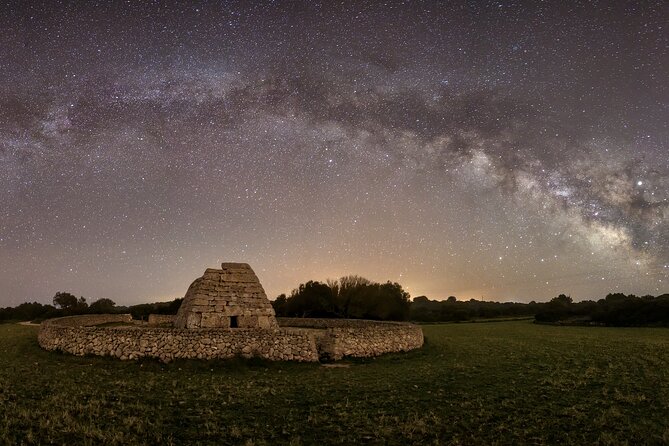
I would recommend the activity to first-time stargazers, families with older children, couples looking for a quiet evening, and anyone interested in Menorca beyond daytime sightseeing. You do not need prior astronomy knowledge, and the mix of science and stories keeps the subject approachable.
It is also a good choice if you want a small-group experience rather than a large organized outing. The cap of 15 people helps preserve the personal feel, although you should still expect to share the telescopes.
The main audience it may not suit is someone seeking a guaranteed list of celestial objects or a highly technical observatory session. The equipment is modern, but the evening is designed as a guided introduction. Weather can also change the plan, so you should be comfortable with a little uncertainty.
Service animals are allowed, and most people can participate. The supplied details do not give specific information about ground conditions, seating during every part of the session, or other accessibility needs, so contact Polaris Menorca if you need answers beyond that.
Timing, weather, and cancellation
The experience lasts about two hours. Confirmation is sent within 48 hours of booking, subject to availability. Since this is a night-sky activity, weather is the most important practical factor.
If poor weather forces a cancellation, you are offered another date or a full refund. The same applies if the minimum number of participants is not reached. That policy reduces the risk of paying for an observation that cannot reasonably take place.
You can cancel for a full refund up to 24 hours before the local start time. Changes or cancellations made inside that 24-hour window are not accepted for a refund. Keep the weather policy in mind when planning the rest of your evening, since the final schedule depends on conditions.
Should you book the La Vall sky observation?
Book it if you want an affordable, guided introduction to Menorca’s stars and prefer learning through both science and stories. The protected darkness, modern telescopes, laser-guided explanations, and small group make this more than a simple look at the sky.
I would be especially happy to recommend it to someone who has never used a telescope. Edu and Javier bring the kind of clear, friendly instruction that can make unfamiliar astronomy feel manageable. The bathroom, terrace, tables, and chairs also make the private base more comfortable than a completely undeveloped roadside viewpoint.
Think twice if you need transport, guaranteed clear skies, or a highly specialized astronomy lesson. Otherwise, $35.57 is a fair spend for two focused hours under Menorca’s night sky, with the added benefit of learning why that darkness is protected.
FAQ
Where does the astronomy activity start?
It starts at the La Vall parking area, 07769 Ciutadella de Menorca, Balearic Islands, Spain.
Where does the activity finish?
The activity finishes back at the same meeting point.
How long does the experience last?
The observation lasts approximately two hours.
Is transport included?
No. Transport is not included, so you must reach the La Vall meeting point independently.
What equipment is used?
The session uses laser pointers, astronomical binoculars, and modern telescopes.
What can I expect to observe?
The activity includes observation of the Milky Way, planets, stars, nebulae, and galaxies, depending on the conditions and what is visible that night.
Who leads the experience?
The guides include Edu and Javier from Polaris Menorca.
Is the activity suitable for most people?
Yes. Most people can participate, and service animals are allowed. The maximum group size is 15.
What happens if the weather is poor?
If poor weather causes a cancellation, you are offered a different date or a full refund.
More Observation Decks in Spain
- Madrid: Night sky observation with an expert astronomer
★ 4.5 · 3 reviews - Night Sky observation and photography (Small Group)
★ 5.0 · 2 reviews
Fresh listings near Spain
- Small Group Teide Stargazing Tour with Picnic at Sunset★ 5.0 · 3 reviews
- VIP Sunset & Stargazing experience★ 4.5 · 44 reviews
- Sunset and stargazing from Teide★ 3.5 · 51 reviews
- Tenerife Exclusive & Private Gastronomic, Sunset-Stargazing★ 5.0 · 3 reviews
- “Stargate” Tenerife stargazing★ 5.0 · 13 reviews
- Skip the Line: Teide Observatory Entrance Ticket★ 3.0 · 33 reviews
- Stargazing Tour in Tenerife★ 3.0 · 2 reviews
- Sunset & Stargazing Experience from Teide★ 4.0 · 31 reviews
Telescope Stargazing, side by side.
Teide by Night: Sunset & Stargazing with Telescopes Experience
Read our review →
National Park Astronomy Tour with Telescope and Photo
Read our review →
Teide National Park: Guided Large Telescope Stargazing Tour
Read our review →
Northern Lights Tour and Stargazing by Telescope
Read our review →
Jasper Planetarium and Telescope Combo Tour Tickets
Read our review →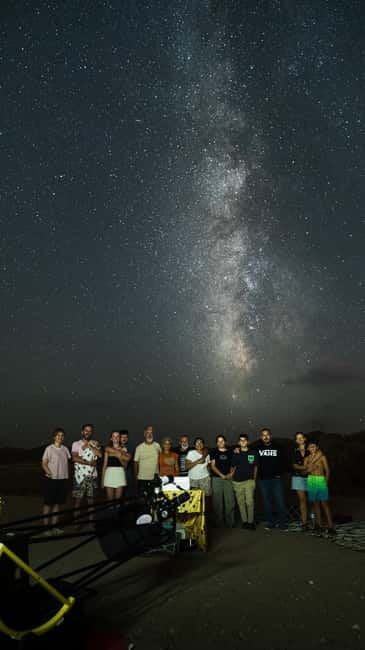
Cavalleria: Guided Stargazing at the Beach with Telescope
Read our review →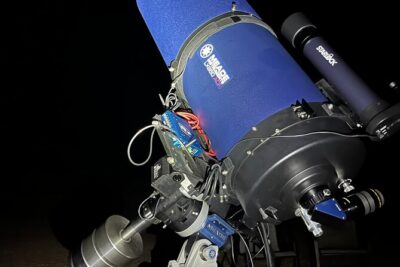
Stargazing Tour with Telescopes and Video Astronomy in Sedona
Read our review →Lists this night appears in