
REVIEW · TELESCOPE STARGAZING
Ioannina Astronomy: Telescope Stargaze Greece’s night sky
The best part of this Ioannina night tour is the chance to see far more than a pretty sky. From the dark Acropolis of Kastritsa, an astronomer uses sophisticated telescopes to show you nebulae, star clusters, and distant galaxies, including some that are colliding. A green laser then links familiar constellations to the myths that shaped ancient Greek culture.
I like the mix of clear science and good storytelling, especially the chance to ask what stars are made of and how red giants differ from white dwarfs. I also like that you can save images of the cosmos to your phone, while the views of Lake Pamvotis and Ioannina give you something beautiful to enjoy before the sky gets fully dark.
The main drawback is simple: this is an outdoor activity, and clouds can cancel the session, sometimes on the same day. You also need warm clothes, warm shoes, and patience with a late start in summer.
Key points at a glance
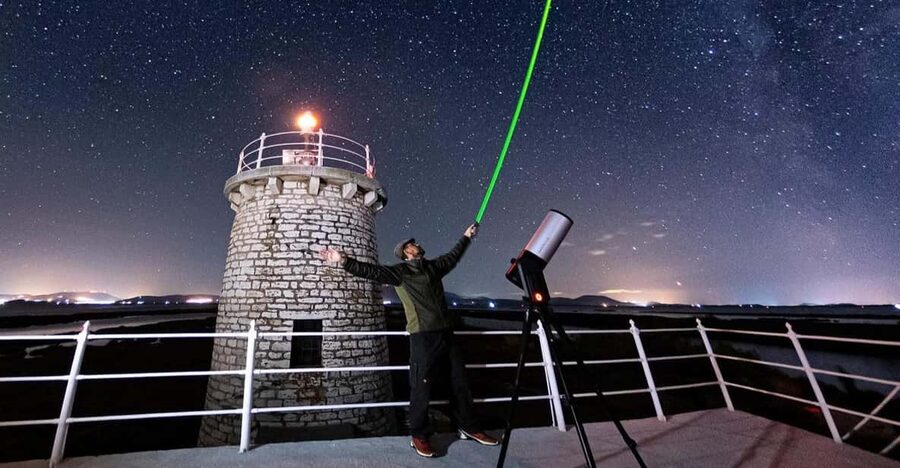
- See galaxies with an Unistellar eVscope: The telescope can bring distant galaxies, nebulae, and star clusters into view.
- Follow Greek mythology across the sky: A green laser tour connects constellations with ancient stories.
- Meet at Kastritsa Acropolis: This archaeological site offers a dark setting and wide views over Ioannina and Lake Pamvotis.
- Choose your season carefully: Start times range from 18:30 in winter to 21:30 in summer.
- Good for first-time stargazers: The explanations suit beginners, with children aged six and above welcome.
- Bring serious winter clothing: Even a summer night can feel cold at the elevated stargazing point.
Why the Kastritsa Acropolis is a strong stargazing base
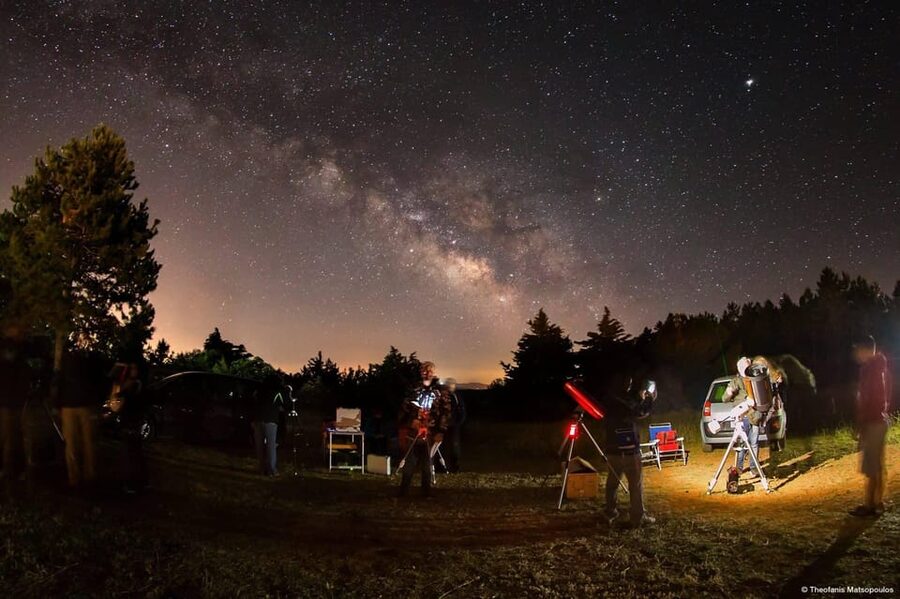
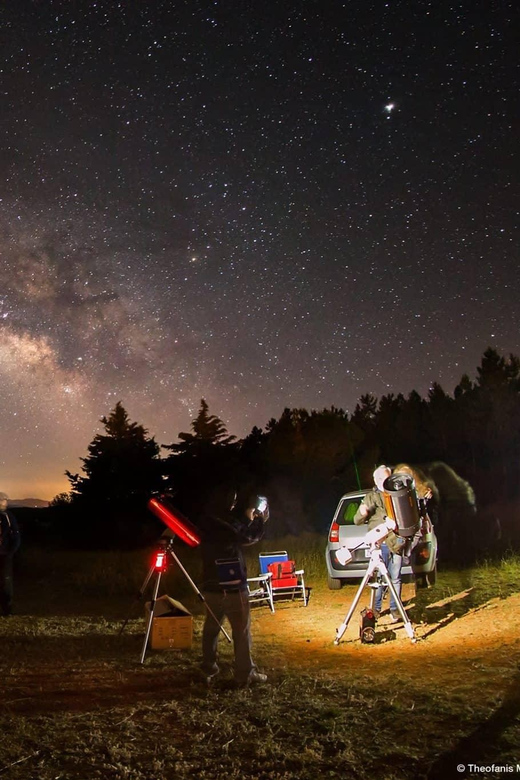
The meeting point is the Acropolis of Kastritsa, just outside Ioannina. It is an archaeological site and one of the darkest places available near the city, which matters more than any fancy telescope. Streetlights wash out faint stars, while a darker site lets you see the Milky Way and more delicate details in the telescope.
You can visit the acropolis whenever you like because entry is free and the site is open. That gives you a useful option before or after the tour: arrive early for the views, then stay for the astronomy session. From here, you look across Ioannina and Lake Pamvotis, so the setting has value even before the first constellation appears.
The site is not described as having a café, toilet, or nearby dinner option. Plan around that. Eat beforehand, use facilities before leaving Ioannina, and bring everything you need for the evening. This is a dark-sky meeting point, not a developed visitor center.
The exact meeting time is sent by WhatsApp on the day of the tour, after 10:00. That timing changes through the year because sunset shifts. Check your messages before setting out, rather than relying only on the broad seasonal times.
More Telescope Stargazing in the world:
- Teide by Night: Sunset & Stargazing with Telescopes Experience
★ 4.5 · 1,492 reviews - Uluru: National Park Astronomy Tour with Telescope and Photo
★ 4.4 · 357 reviews - Teide National Park: Guided Large Telescope Stargazing Tour
★ 4.9 · 319 reviews
What happens during the two-hour session
The experience lasts about two hours, though one past booking ran for three hours. The pace can change with the sky, the questions, and how much there is to see. You should think of it as a guided night-sky session rather than a rigid show with a fixed sequence.
In summer, the listed start is 21:30. In spring and autumn, it is 20:00, and in winter, 18:30. These times help the session begin after enough darkness arrives. The later summer start may be tiring for younger children, while the early winter start can work well for families.
The astronomer begins with the objects that are visible on that particular night. If the Moon or planets are in the sky, you may observe them through the 8-inch telescope. Since celestial objects move in and out of view across the year, no single visit promises the same lineup.
That changing program is part of the appeal, but it also means you should not book with only one object in mind. If you want a particular planet, ask about its visibility when you receive the final time. The supplied details promise observation of the Moon and planets when they are present, not a guaranteed target.
From bright stars to red giants
The first sights may be the bright stars overhead. The guide points out star colors and explains what those colors tell you about the stars themselves. For a beginner, this turns a scattered field of lights into something you can read.
You will also hear about what stars are made of, along with red giants and white dwarfs. Those topics give the session useful shape. Instead of simply looking through an eyepiece, you start to understand that stars change over time and that different colors and types have a physical reason.
I like this part because it works for mixed groups. A child can enjoy the visual difference between stars, while an adult can follow the science behind their color and life cycle. The session is designed for beginners, so you do not need prior astronomy knowledge or a working grasp of the night sky.
English is the teaching language. If you are comfortable following an English explanation, the format should be accessible. If you need another language, this experience does not list one.
The green laser and Greece’s old sky stories
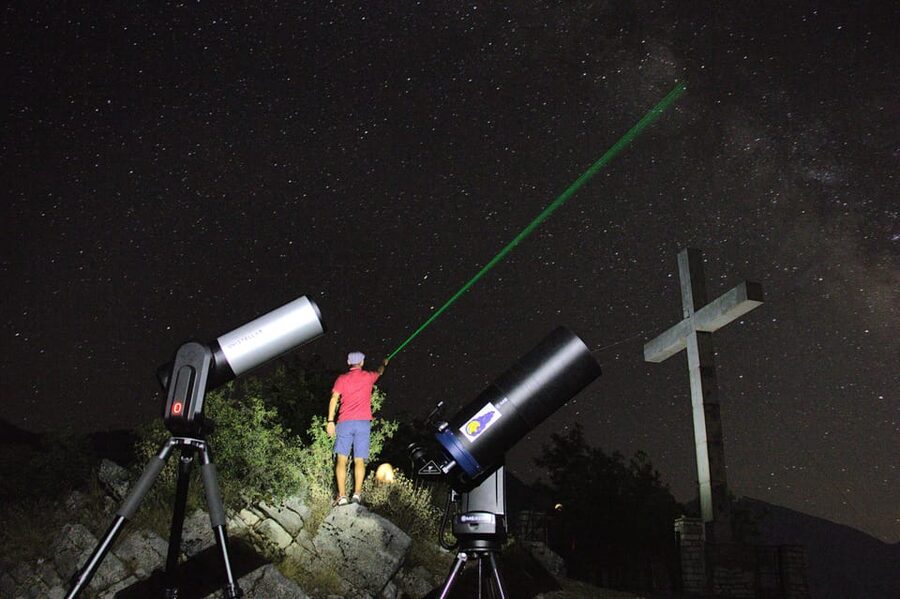
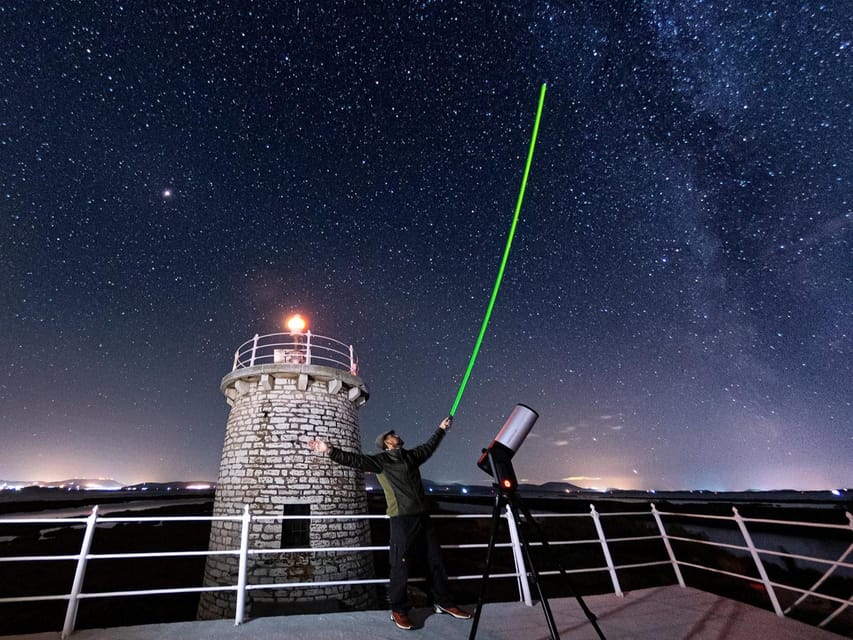
The green laser constellation tour adds a local touch that a standard telescope session might miss. The guide traces patterns in the sky and connects them with Greek mythology, showing how people gave names and stories to the stars.
This is more than a quick list of constellation names. The myths give you a way to remember what you are seeing, and they connect the modern science lesson with the culture of the region. At Kastritsa, that link feels especially fitting: you are looking at the same sky above an archaeological site in Greece.
The laser pointer also helps when several people are trying to follow the guide’s explanation. You can look up, see the line in the sky, and then return to the telescope with a better sense of where each object sits. On a dark night, even a familiar constellation can be hard to pick out without help.
More Stargazing Tours in the world:
- Dubai Red Dunes ATV, Camels, Stargazing & 5* BBQ Al Khayma Camp
★ 5.0 · 21,620 reviews - Sharm El-Sheikh: Ultimate ATV Quad, Stargazing & BBQ Dinner
★ 4.7 · 4,084 reviews - Tenerife: Teide National Park Sunset & Stargazing Tour
★ 4.2 · 3,812 reviews - Tenerife: Sunset and Stargazing at Teide National Park
★ 4.7 · 2,826 reviews
The Milky Way without a telescope
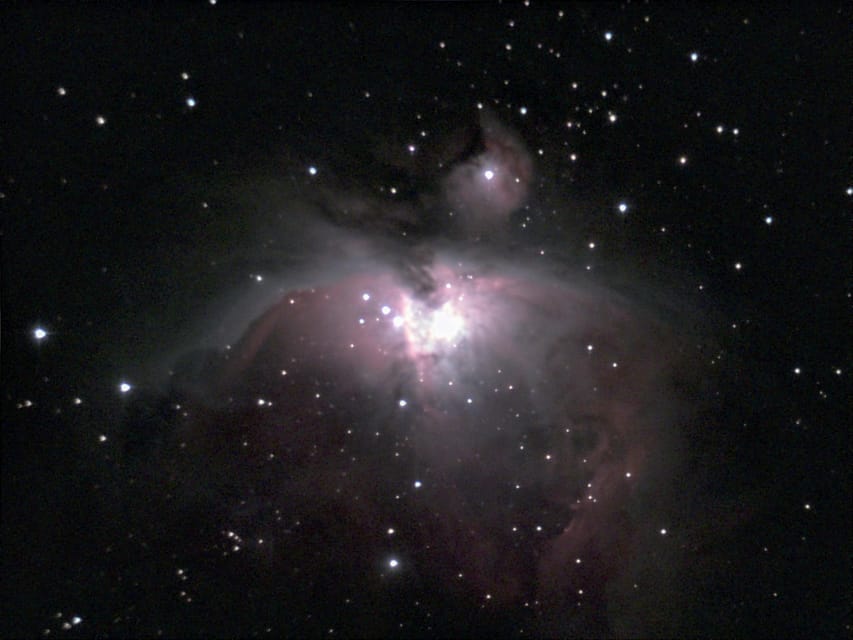
One of the most rewarding moments may be the Milky Way viewed with the naked eye. You do not need an instrument to appreciate it, but you do need a dark enough site and a clear sky. Kastritsa is chosen for that reason.
The Milky Way can be more impressive than a single telescope target because it fills your whole view. It also gives you a better sense of scale. After looking at one galaxy through the eVscope, you can step back and see the wider band of stars running across the sky.
Cloud, moonlight, and nearby artificial light can affect what you see. A bright Moon can be wonderful through the telescope but can make faint Milky Way details harder to spot. That is another reason to keep expectations flexible. The guide works with the conditions available that night.
Deep-sky objects through the eVscope
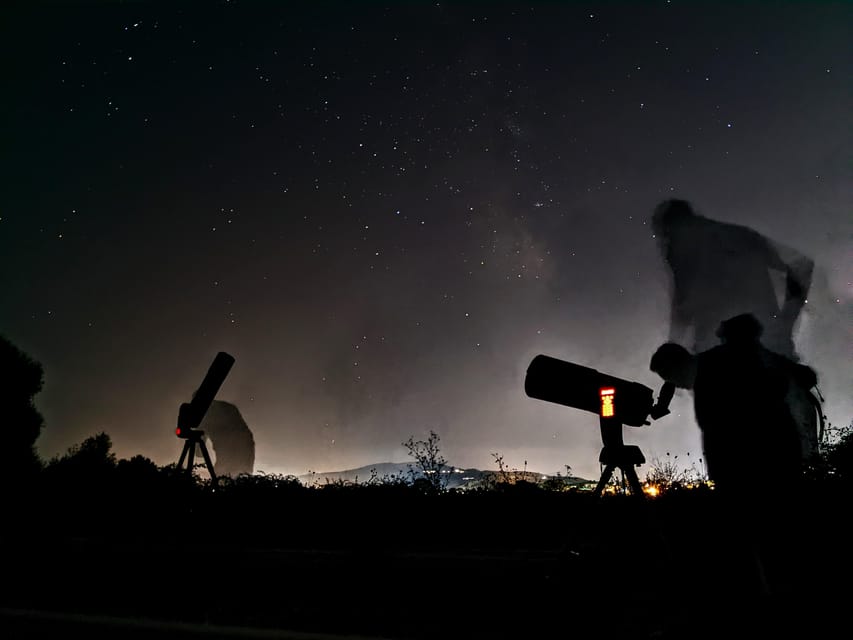
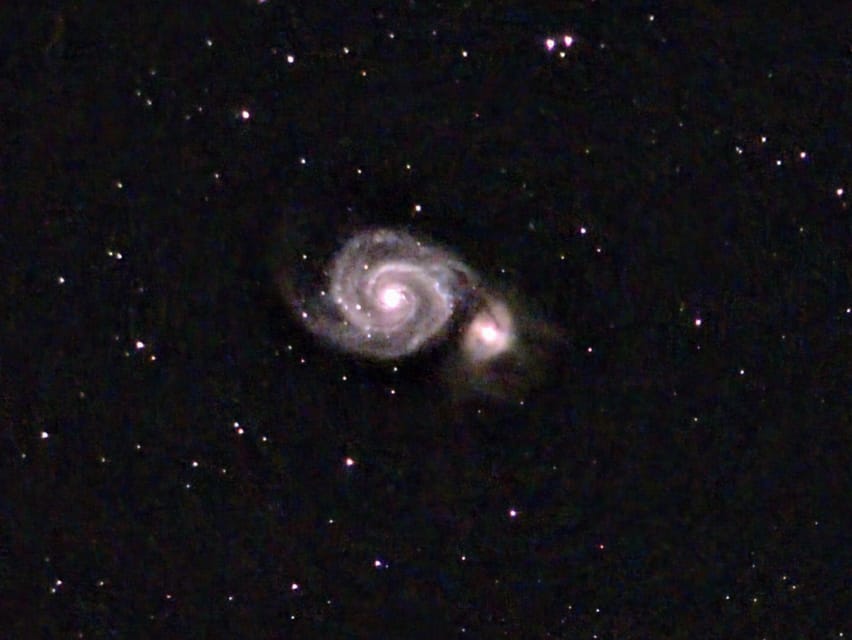
The Unistellar eVscope is the main technical reason this session can show more than a casual look at the stars. It is used to observe deep-sky objects, including star clusters, nebulae, and distant galaxies. Some galaxies may even be colliding, and each can contain hundreds of billions of stars.
A telescope cannot make every object look like a polished space-agency photograph. What it can do is collect enough light to reveal objects that are too faint for your eyes alone. The reward is not just a bright dot. You get a direct sense that you are looking at a structure far outside our own galaxy.
The exact objects depend on the date, visibility, and weather. That is normal in astronomy. You might see a cluster packed with stars, a hazy nebula, or a galaxy that appears as a faint shape. The guide’s role is important here because an experienced explanation helps you understand what you are seeing rather than dismissing it as a blur.
The session also includes the option to save images of the cosmos directly to your mobile phone. That is a useful extra. You can leave with a record of the objects you observed, though you should treat these as personal souvenirs rather than professional astrophotography.
The 8-inch telescope and phone images
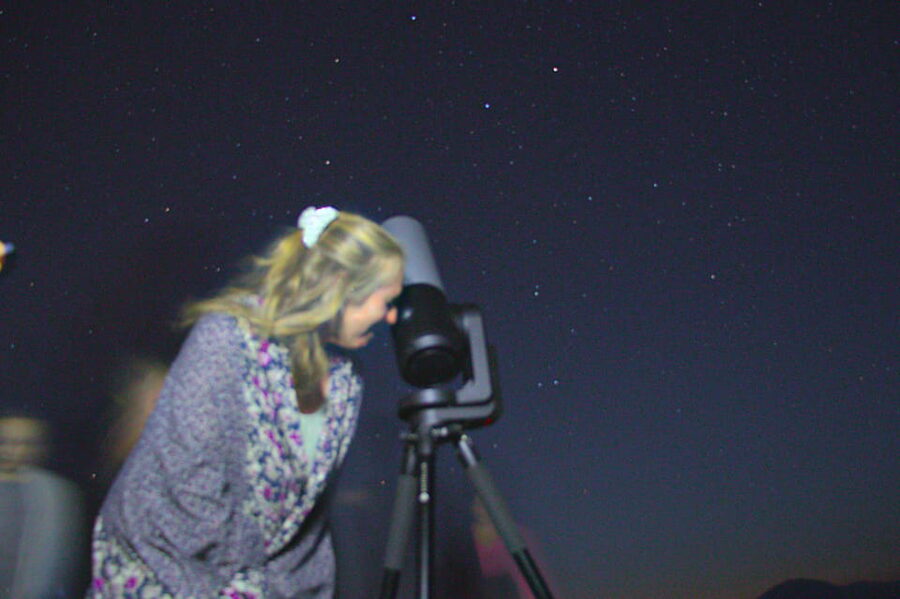
The 8-inch telescope is used when the Moon or planets are available. These brighter objects are often easier for a beginner to appreciate through an eyepiece because they can show recognizable details.
The eVscope serves a different purpose, helping with faint deep-sky targets. Having both instruments gives the session a wider range. One can handle bright nearby objects, while the other helps reveal clusters, nebulae, and galaxies at much greater distances.
The phone image option may appeal to families and anyone who likes keeping a visual record. Ask how the image-saving process works during the session, since the supplied information confirms the feature but does not specify the phone connection or file format. Bring a charged phone if you want to use it.
Chairs are provided, which is a small but meaningful comfort. Two hours of looking upward can put strain on your neck and legs, especially on uneven ground. You should still wear shoes suited to an outdoor archaeological site and bring an extra layer even in July or August.
What the guide adds to the experience
Sotiris is the named guide associated with the session. His approach combines astronomy, stories, and plain explanations, and the experience can stretch beyond the listed two hours when the sky and discussion allow.
That human element matters. A telescope gives you access to an object, but the guide explains why it matters, what you are seeing, and where it fits in the larger story of the universe. The session is not just equipment pointed upward.
The strongest praise has focused on Sotiris’s enthusiasm, stories, and ability to explain clearly. That is especially useful if your group includes people with different levels of interest. Someone who already knows a little astronomy can ask about stars and galaxies, while a first-time observer can follow the basic ideas.
The tour is in English, so listen for the balance between scientific terms and everyday explanation. If the conversation grows, you may spend more time on a particular object than expected. That flexibility is a benefit for curious people, but it may feel less predictable if you want a tightly timed program.
Price, timing, and practical value
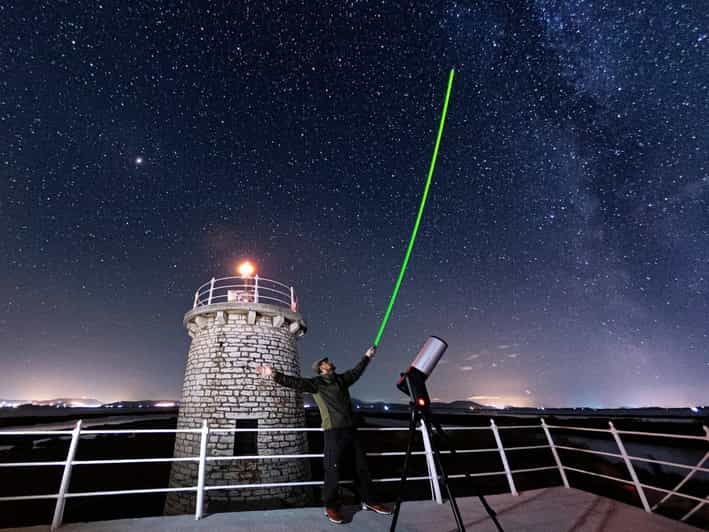
At $47 per person, this is priced above a simple free night of looking at the stars, but the comparison is not quite fair. You are paying for an astronomer, two telescopes, instruction, a constellation tour, seating, and access to a dark site near Ioannina.
I consider it good value if you are interested in learning as well as looking. The eVscope and 8-inch telescope give you access to targets you may not find on your own, while the guide saves you from guessing which star or galaxy is in front of you.
The value is less certain if you only want a quick view of the Moon. The session lasts around two hours and may include long periods of explanation, waiting for darkness, or adjusting to the available targets. It works best when you enjoy the process, not just a single dramatic view.
You do not need to pay at the time of booking if you use the reserve-now, pay-later option. Cancellation is free up to 24 hours before the experience. Weather can still disrupt plans, since poor conditions may lead to cancellation as late as 10:00 on the day itself.
Weather, clothing, and comfort
Take the warning about cold seriously. Summer nights can feel chilly at the stargazing point, and the site is at higher ground than the city. Wear warm clothes, warm shoes, and perhaps more layers than you think you need.
There are no toilets or cafés close to the stargazing point. Have dinner first and bring water if needed, but do not assume you can buy supplies after arriving. A charged phone is sensible for the meeting message and for saving telescope images.
Clouds are the biggest risk. Clear skies are essential for both naked-eye stargazing and telescope work. The operator can cancel because of poor weather on the same day, so keep your schedule flexible and check WhatsApp after 10:00.
The experience is not suitable for children under six or for people with visual impairments. Children aged six and above can join, but parents should consider the late summer start, cold temperatures, and the need to sit quietly while the guide explains the sky.
Who should book the Ioannina stargazing tour?
I would choose this for a first astronomy experience, a family with older children, or anyone spending several nights in Ioannina who wants something beyond another meal and viewpoint. It also suits you if Greek mythology interests you as much as science.
You should book it if you like asking questions, standing or sitting outdoors in the cold, and letting the guide shape the night around the objects that are visible. The mix of stories and telescope work gives the session more character than a silent observation stop.
I would think twice if you need guaranteed weather, a nearby café, a short activity, or a fixed list of planets. The schedule and targets change with the season and sky. You also need to arrange your own way to the Acropolis of Kastritsa, since transport is not listed as included.
Should you book it?
Book this experience if you want a thoughtful introduction to astronomy near Ioannina, especially with clear weather in the forecast. The dark Kastritsa setting, Sotiris’s storytelling, Greek mythology connections, and access to an eVscope make the $47 price reasonable for an active two-hour lesson under the stars.
Skip it if you are not prepared for cold, darkness, and possible weather changes. Check the meeting message on the day, eat before you go, dress warmly, and arrive ready to look at whatever the universe offers that night.
FAQ
Where does the stargazing tour take place?
The tour meets at the Acropolis of Kastritsa, just outside Ioannina in Epirus, Greece. The site is an archaeological area with views over Ioannina and Lake Pamvotis.
How long does the experience last?
The stated duration is two hours, though the session can run for one to two hours and may last longer depending on the evening and the discussion.
What time does the tour start?
The listed start time is 21:30 in summer, 20:00 in spring and autumn, and 18:30 in winter. The exact meeting time is sent by WhatsApp on the day after 10:00 because sunset times change.
Is the tour offered in English?
Yes. The instructor and tour language are English.
What can I see through the telescopes?
Depending on what is visible, you may observe the Moon and planets, bright stars, star clusters, nebulae, and distant galaxies. Some galaxies may be colliding.
Which telescopes are included?
The experience includes use of an Unistellar eVscope and an 8-inch telescope when planets or the Moon are in the sky.
Can I take images home?
Yes. The tour includes the option to save images of the cosmos directly to your mobile phone.
What should I bring?
Bring warm clothing and warm shoes. Even summer nights can feel cold at the stargazing point.
Can children join the tour?
Children aged six and above can join. The experience is not suitable for children under six or for visually impaired people.
Fresh listings near the world
- Cabo de Gata: Guided Night Walk with Stargazing★ 4.7 · 36 reviews
- Brisbane: Glow Worms, Sunset, Star Gazing & BBQ★ 4.4 · 26 reviews
- Cabo de Gata: Stargazing Experience★ 4.5 · 7 reviews
- Antofagasta: Astronomical Tour with a Guide★ 3.7 · 4 reviews
- Boulder: Guided Astronomy Tour★ 4.7 · 11 reviews
- 1-Day Grand Canyon Tour from Las Vegas: Stargazing & Sunrise★ 3.6 · 3 reviews
- Astronomical Tour: San Pedro de Atacama – Chile★ 4.5 · 3 reviews
- Perth: Pinnacles Stargazing, Sandboarding & Beach Kangaroos★ 5.0 · 3 reviews
Telescope Stargazing, side by side.
Teide by Night: Sunset & Stargazing with Telescopes Experience
Read our review →
National Park Astronomy Tour with Telescope and Photo
Read our review →
Teide National Park: Guided Large Telescope Stargazing Tour
Read our review →
Northern Lights Tour and Stargazing by Telescope
Read our review →
Jasper Planetarium and Telescope Combo Tour Tickets
Read our review →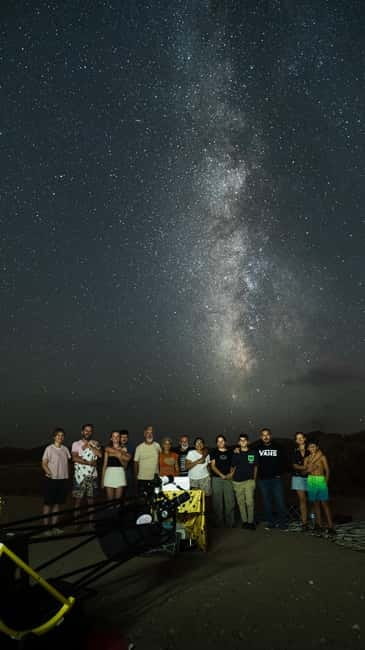
Cavalleria: Guided Stargazing at the Beach with Telescope
Read our review →
Magic Stargazing & Sunset in Teide with Dinner + Telescopes
Read our review →Lists this night appears in