
REVIEW · NEW ZEALAND STARGAZING
Star Safari Stargazing Experience, Martinborough
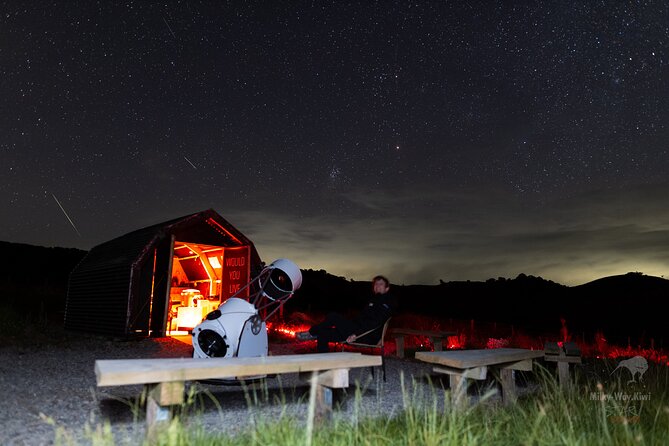
The best part of Star Safari is its setting under the Wairarapa International Dark Sky Reserve, one of New Zealand’s darkest and clearest night skies. Sam, an astrophysicist, and Hari, an astrobiologist, guide you through planets, star clusters, nebulae, galaxies, and other sights in the southern sky.
I like the small group limit of 10 and the chance to use two powerful manual 16-inch telescopes. I also like the weather backup: cloudy skies do not automatically mean a wasted evening, thanks to planetarium software and virtual reality.
The main catch is simple: this is an outdoor night activity, and it can get very cold. Clouds can also prevent telescope viewing, so bring proper warm clothing and keep your expectations flexible.
Key points to know before booking
- Two science-led guides: Sam brings an astrophysicist’s view, while Hari focuses on astrobiology and the search for life beyond Earth.
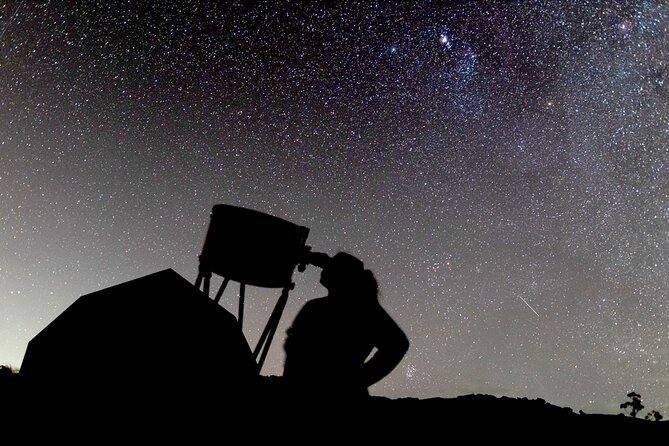
- Strong telescope setup: Two 16-inch manual telescopes, additional telescopes, and astronomy binoculars provide plenty of chances to look closely.
- Small groups: The maximum group size is 10, with three to four telescopes available during the viewing session.
- A useful cloudy-night plan: Planetarium software, virtual reality, and New Zealand rock specimens fill in when clouds block the stars.
- Southern-sky highlights: You may see the Milky Way, planets, star clusters, nebulae, satellites, the ISS, and shooting stars.
- Hot drink included: A complimentary drink follows the viewing, a welcome touch after time outside in the cold.
Why Martinborough is a fine place for stargazing
Star Safari operates near Ponatahi, in the Martinborough area of the Wairarapa. The meeting point is about 80 kilometres from Wellington Airport, making this possible as part of a wider Wellington or Wairarapa trip, though you will need to arrange your own way to the meeting point because no transport is listed.
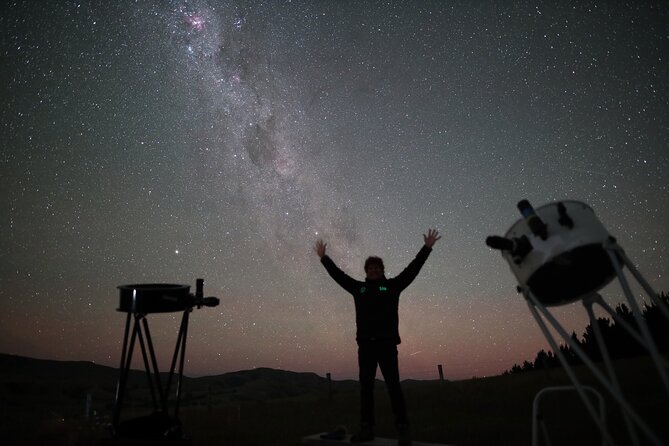
The reason to come here is the sky itself. The Wairarapa International Dark Sky Reserve offers far less artificial light than a city, which matters more than fancy equipment alone. Dark skies let you see the Milky Way as a broad band rather than a faint smudge, and they make small clusters of stars easier to pick out.
The experience begins after sunset, when the first stars appear. The change is gradual. You arrive while there is still enough light to get settled, then move toward the telescope area as darkness takes over. That slow shift helps you notice how quickly the sky changes once city lights are no longer competing for attention.
More Stargazing Tours in New Zealand:
- Lake Tekapo: Alpine Stargazing Experience with a Guide
★ 4.5 · 626 reviews - Lake Tekapo: Stargazing Experience
★ 4.9 · 607 reviews - Chameleon Stargazing Shared Tour
★ 5.0 · 181 reviews
The Moon Garden viewing area
On arrival, you meet Hari and Sam and can collect a blanket or jacket through the reception area. The telescope viewing area is about 25 metres away, inside their Moon Garden.
That short walk matters because the evening is not set up as a large observatory show with long transfers between stations. You stay close to the guides and equipment, which makes it easier to ask questions and move between telescopes.
The viewing period lasts about 60 to 90 minutes, within the overall 90-minute activity. Timing can depend on what is visible and how much there is to discuss. You are not simply sent from one telescope to the next. Sam and Hari operate manual telescopes, explain what you are looking at, and help you learn how to orient yourself under the stars.
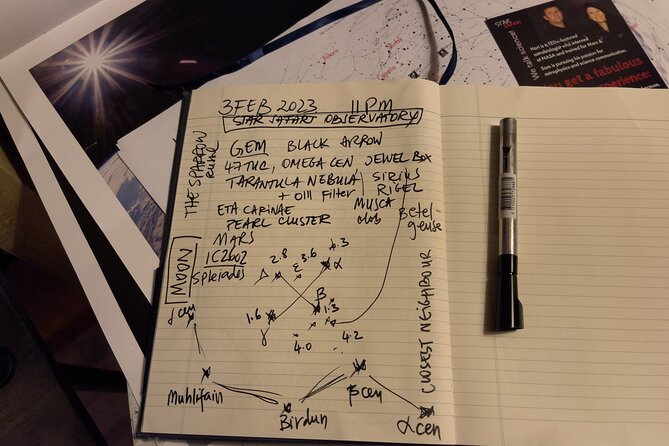
That manual approach is especially useful for beginners. You can learn where to start, how to find your bearings, and how astronomers move from familiar stars to less obvious targets. If you already use an observing list, you can bring it and ask about particular objects.
What you may see through the telescopes
The exact viewing list changes with the season, the time of night, and the weather. The program focuses on the southern sky, with possible views of planets, galaxies, nebulae, star clusters, and red and blue stars.
Saturn is one of the most memorable possible sights. Through a strong telescope, its rings can become a clear shape instead of a point of light, and you may also see some of its moons. The experience has also featured Herschel’s Little Jewel Box, a star cluster known for its mix of bright colors.
The Milky Way is another major attraction. Under a dark sky, it can stretch across the sky in a way that is difficult to grasp from Wellington or another bright city. You might also catch a shooting star, a satellite, or the International Space Station if one passes overhead during your session.
Three or four telescopes are available, including two 16-inch instruments. This setup helps reduce waiting and gives you more than one view of the sky. Astronomy binoculars add another option, especially for larger star fields that are too broad for a narrow telescope view.
You should remember that stargazing is not a fixed show. A clear night does not guarantee every planet, cluster, or galaxy will be visible. The guides can work with the conditions, but the sky decides what appears.
Learning with Sam and Hari
The strongest feature here is the access to the guides. You can ask questions throughout the evening rather than waiting for a short explanation at the start or end.
Sam brings astrophysics into the session, while Hari brings astrobiology and the question of life beyond Earth. Their different fields give the experience a useful range. One moment you may be looking at a distant object through a telescope, and the next you may be discussing what scientists look for when asking if life could exist elsewhere.
I like this format because it turns stargazing into a conversation. You do not need a science background. Beginners can ask basic questions without feeling out of place, while experienced stargazers can bring an observing list and ask for specific targets.
Both guides are licensed to operate a laser pointer. That makes it easier to follow explanations across the sky, especially when a constellation or object is hard to locate by eye. The goal is not just to show you a bright object once. By the end, you should have a better idea of what is overhead and how to find your way around the stars.
Same sky over New Zealand, a different way to watch it:
- Lake Tekapo: Mountaintop Stargazing at Mount John Summit
★ 4.5 · 176 reviews - Mount John Observatory Stargazing Experience, Tekapo
★ 4.5 · 160 reviews - Tekapo Star Gazing Tour – Soak in the Stars
★ 4.5 · 109 reviews - Silver River Stargazing Experience in Lake Tekapo
★ 4.5 · 106 reviews
When clouds take over the evening
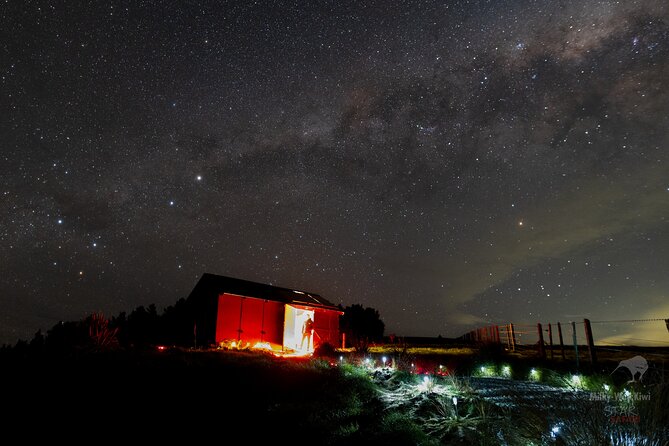
Cloud cover is the biggest uncertainty, and it is worth treating the backup program as an important part of the experience rather than a minor consolation.
If the sky is unsuitable, Star Safari switches to an e-astronomy session. You use planetarium software to tour the Universe and explore the Solar System in virtual reality. There is also a collection of astrobiology-related rocks from across New Zealand, linked to the search for life on Mars.
This option gives the evening a clear educational focus, but it is not identical to standing under a dark sky and looking through a telescope. If your main goal is to see Saturn, the Milky Way, or a particular deep-sky object, clouds will still be disappointing.
Virtual reality can also be a mixed experience. One person described some 3D sickness, so you may want to mention that before taking part if you are sensitive to virtual reality. Still, the cloudy-night program means you can learn about space rather than simply losing the booking to bad weather.
If poor weather forces cancellation, you are offered another date or a full refund. That is a sensible policy for an activity controlled by the sky.
Staying warm after sunset
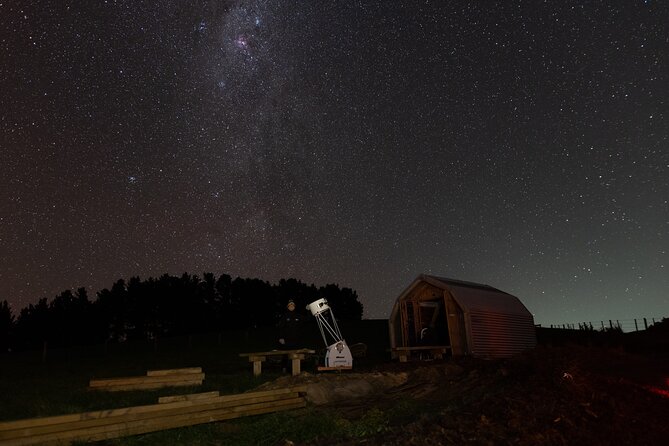
Take the clothing advice seriously. You should dress as if you were going hiking at night, with warm layers and suitable outerwear. It gets very cold outside, and you may be standing still for long periods while waiting for your turn at a telescope.
A blanket or jacket is available through the reception area, but you should not rely on that alone. Wear warm shoes and bring enough insulation for the conditions. The 25-metre walk to the Moon Garden is short, yet the viewing itself keeps you outdoors for much longer.
The complimentary hot drink is a small but welcome detail. It follows the viewing and gives you a chance to warm up while continuing the conversation. Hot chocolate has been served, which should appeal to families and anyone whose fingers have gone numb around the telescope.
Is the $62.06 price good value?
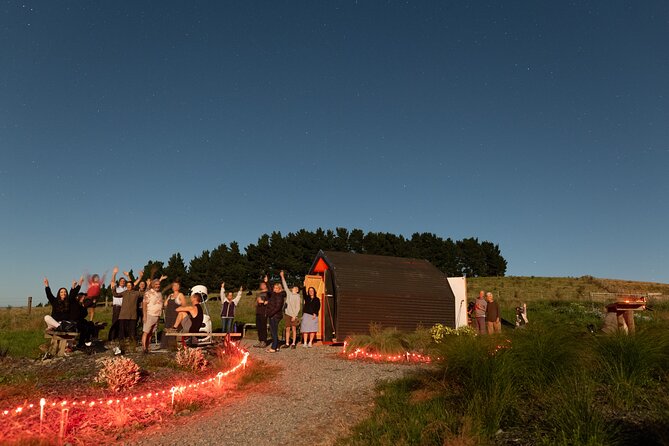
At $62.06 per person, Star Safari is priced as a small, specialist science experience rather than a simple walk outside to look at stars.
The value comes from several elements working together: expert-led instruction, a maximum of 10 people, powerful telescopes, multiple viewing stations, astronomy binoculars, and a cloudy-night alternative. You are paying for access to equipment that would be impractical to use on your own, along with guides who can explain what you are seeing.
The small group size also matters. With up to 10 people and three or four telescopes, you should get more personal attention than at a large public observatory event. You can ask questions as they arise, and advanced stargazers have room to request particular targets.
The price may feel less worthwhile if you are booking only to see one specific object. Weather, season, and visibility are outside anyone’s control. I would book this for the guided learning and the chance to see a range of southern-sky objects, not as a guaranteed viewing of one planet or galaxy.
Families should check the final price for children before booking. A family group with children aged 6 and 2 found the experience suitable, and children were free in that booking, but the supplied details do not give a general child-pricing policy.
Who will enjoy Star Safari most?
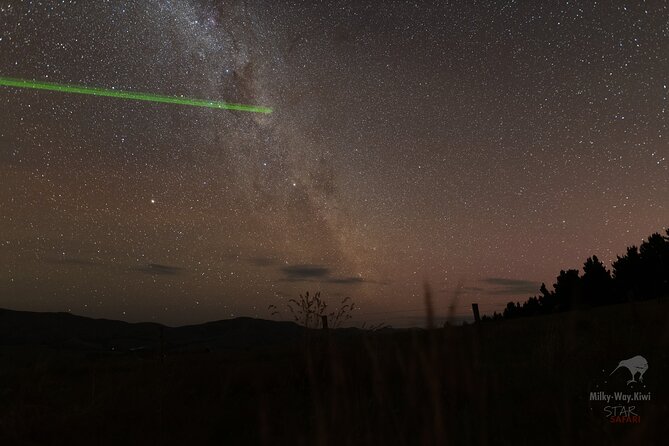
I would recommend this to first-time stargazers who want help making sense of the night sky. You do not need to know constellations in advance, and the guides can show you where to begin.
It also suits people with a stronger interest in astronomy. You can bring an observing list, ask detailed questions, and use the equipment to look at objects you may not be able to see from home.
Families can enjoy it too, particularly older children and teenagers who like space science. Younger children may have a harder time staying warm and still during a late outdoor session, so think about your group’s patience and bedtime before booking.
This is less suitable if you want a fast, highly visual attraction with guaranteed results. The sky may be cloudy, the air may be cold, and some of the appeal comes from listening, asking questions, and waiting for your eyes and the equipment to adjust.
Booking details that matter
The activity lasts about 1 hour and 30 minutes and ends back at the meeting point. You receive confirmation when booking, and mobile tickets are accepted.
Service animals are allowed, and most people can take part. If you have particular accessibility questions, contact the provider before booking. The information supplied does not describe the surface of the viewing area or specific mobility arrangements, so it is worth asking in advance if those details matter to you.
Free cancellation is available up to 24 hours before the start time for a full refund. Changes or cancellations inside that 24-hour window are not accepted for a refund. The cut-off uses local time.
The group limit is 10 people. That is small enough to keep the experience personal, but you should still expect to share telescope time with the rest of the group.
Should you book Star Safari?
Book it if you want a friendly, science-focused introduction to the southern sky, especially if you like asking questions and learning how to find objects for yourself. The mix of Sam’s astrophysics, Hari’s astrobiology, manual 16-inch telescopes, and a small group makes this more useful than a quick star talk.
I would be especially happy to book it on a clear night during a stay in Martinborough or the Wairarapa. Just bring serious warm clothing and accept that clouds can change the plan. If you need a guaranteed telescope session, this is not the right choice. If you can treat the night as a guided exploration of space, with virtual reality and planetarium software as a backup, Star Safari offers good value at $62.06.
FAQ
Where does Star Safari meet?
The meeting point is at VG48+C6 Ponatahi, in the Wellington Region of New Zealand. The activity ends back at the same meeting point.
How long does the experience last?
The experience lasts approximately 1 hour and 30 minutes. The telescope viewing portion usually takes about 60 to 90 minutes when conditions allow.
What happens if the weather is cloudy?
If the weather is unsuitable for telescope viewing, the session changes to an e-astronomy program. This includes planetarium software, Solar System exploration in virtual reality, and a collection of astrobiology-related rocks from New Zealand.
How many people can join?
The maximum group size is 10 travelers. Three or four telescopes are available, including two manual 16-inch telescopes.
What should I wear?
Dress warmly, as if you were going hiking at night. The viewing area is outdoors, and the experience information warns that it gets very cold. A blanket or jacket is available through the reception area, and a complimentary hot drink is provided.
Can I cancel for a refund?
Yes. You can cancel at least 24 hours before the start time for a full refund. If poor weather causes the provider to cancel the activity, you are offered another date or a full refund.
Fresh listings near New Zealand
- Twizel: Stargazing Tour with an Astronomer and Telescope★ 4.9 · 36 reviews
- Twizel Stargazing Experience with a Guide (Carbon Positive)★ 4.7 · 26 reviews
- Private Stargazing at Star Safari near Martinborough★ 5.0 · 3 reviews
- Twizel Stargazing Experience with a Guide (Carbon Positive)★ 4.0 · 2 reviews
- Lake Tekapo Ultimate Stargazing Experience★ 5.0 · 3 reviews
- Virtual Stargazing & Astronomy Experience in Lake Tekapo★ 3.0 · 2 reviews
- Southern Skies Stargazing Tour in Dunedin★ 5.0 · 62 reviews
- Lake Tekapo Stargazing & Mount Cook 2-Day Tour from Christchurch★ 5.0 · 4 reviews
New Zealand Stargazing, side by side.
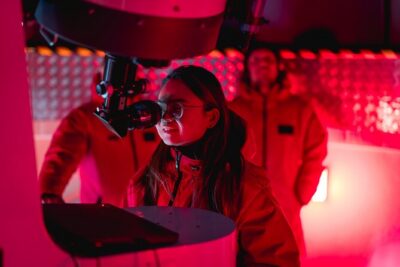
Mount John Observatory Stargazing Experience, Tekapo
Read our review →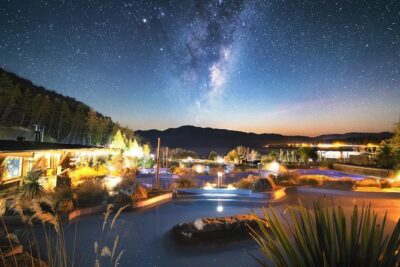
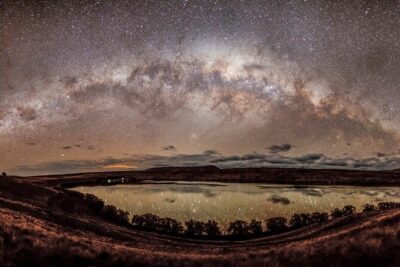
Silver River Stargazing Experience in Lake Tekapo
Read our review →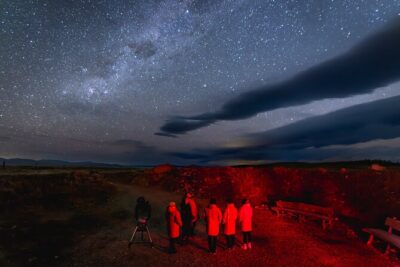
Stargazing Experience at Cowan’s Private Observatory
Read our review →Lists this night appears in