REVIEW · NATIONAL PARK STARGAZING
Teide National Park: Stargazing Experience
Teide National Park gives you one of Tenerife’s most striking night scenes: black volcanic ground below and a huge sky above. The tour begins with an astronomer guide pointing out stars, constellations, the Milky Way, and useful bits of sky lore before the telescopes come out.
I like the clear, beginner-friendly explanations and the chance to see objects such as Saturn, Jupiter, the Moon, nebulae, and the Andromeda Galaxy through serious equipment. I also like the astrophotographic telescope, which can turn the view into striking images rather than leaving you with only a quick look through an eyepiece.
The main catch is the cold. Teide sits high above the coast, and several people found the night much colder than expected. You also need to arrange your own transport to Mines of San Jose, and planets or other objects cannot be guaranteed because the view depends on the date and weather.
Key points before you book
- The meeting point is high in Teide National Park: You meet at Mines of San Jose at 7:30 pm, not at your hotel or a coastal resort.
- The session lasts about 80 minutes: The guide first explains the sky without equipment, then moves to telescope viewing.
- The telescopes are the main event: You may view planets, the Moon, star clusters, nebulae, galaxies, and other seasonal targets.
- The group is limited to 20 people: That keeps the presentation more manageable than a large coach-style event.
- Bring proper warm clothing: A sweatshirt may not be enough once the sun goes down at altitude.
- The tour suits beginners and families: Children can join with an adult, and no prior astronomy knowledge is needed.
Why Teide is such a strong place for stargazing
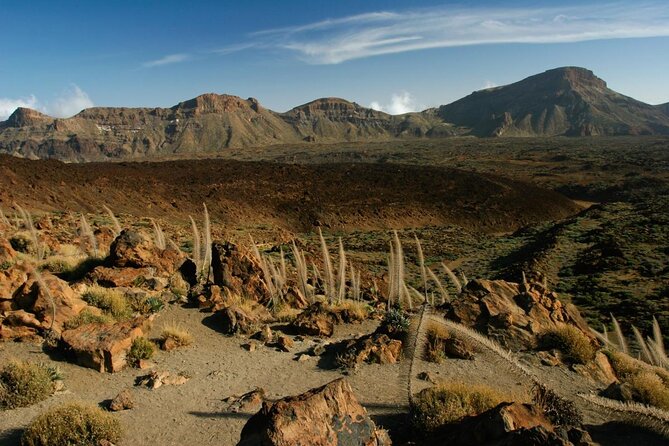
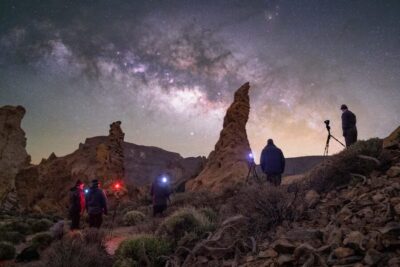
Tenerife is famous for its beaches and resort life, but Teide National Park offers a very different evening. Away from the island’s coastal lights, the sky can become remarkably clear. The volcanic setting adds to the effect: you are not looking at stars from an ordinary town square, but from a high, open area beneath Mount Teide.
The setting matters because astronomy depends on darkness. Streetlights, hotel signs, traffic, and even bright nearby buildings can wash out faint stars. At Teide, the darker sky gives the Milky Way a better chance to show itself to the naked eye.
You should keep your expectations sensible. This is not a private observatory visit with a guaranteed list of planets. The objects available depend on the time of year, the Moon, cloud cover, and the position of the planets. One person may see Saturn and Jupiter, while another date offers a better look at star clusters or a galaxy.
That variation is part of real stargazing. The guide works with what the sky offers that night. The experience is strongest when you see it as a guided introduction to the heavens, not as a fixed show with identical sights every evening.
More National Park Stargazing in Spain
- Tenerife: Teide National Park Sunset & Stargazing Tour
★ 4.2 · 3,812 reviews - Tenerife: Sunset and Stargazing at Teide National Park
★ 4.7 · 2,826 reviews - Teide National Park Sunset & Stargazing with Dinner (Star Safari)
★ 5.0 · 2,601 reviews
Meeting at Mines of San Jose at 7:30 pm
The tour begins at Mines of San Jose, at 7:30 pm. This is an important detail when planning your day. Transport is not included, so you must make your own way to the meeting point and return from it after the session.
The supplied address is Mines of San Jose, 38300, Santa Cruz de Tenerife, Spain. Since no hotel pickup is provided, allow time to reach the park and avoid cutting it close. The exact appearance of the sky at 7:30 pm will change with the season, so you may arrive in fading daylight or after dark.
The drive through Teide National Park is part of the appeal, even though it is not included as a separate tour feature. Several comments describe the approach as breathtaking, and the volcanic scenery feels especially different from Tenerife’s developed coast.
Plan your evening around the meeting point rather than assuming you can simply walk over from a nearby resort. If you are renting a car or arranging a taxi, check the return plan before setting off. The activity ends back at the same meeting point.
The first part: learning the sky without a telescope
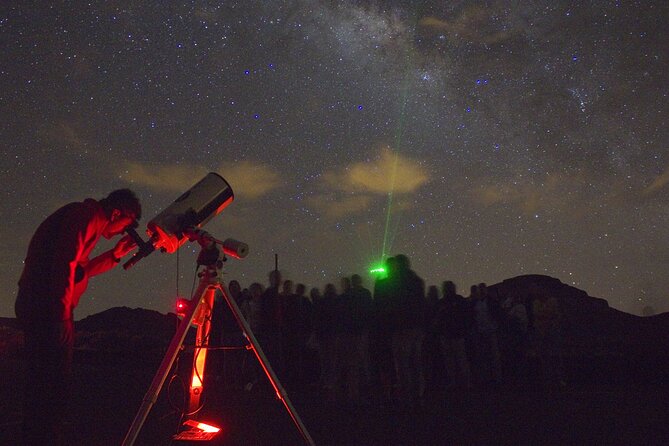
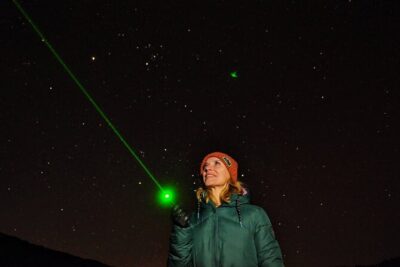
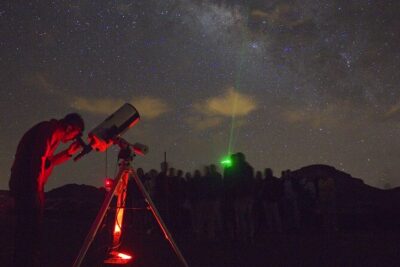
The guide begins with a naked-eye explanation. Using a laser, the astronomer identifies stars and constellations and helps you understand what you are seeing. You may also hear about planets, the Milky Way, galaxies, and basic astronomy in clear, accessible terms.
This opening is more important than it may sound. A telescope can show you a bright object, but a guide gives that object a place in the larger sky. You begin to understand why certain stars form a constellation, how planets differ from stars, and where to look when you step outside on your own later.
Guides named in the feedback include Oscar, Miguel, Adri, and Adrian. The exact guide for your date may differ, but the activity is led by a professional Starlight Guide with an astronomy focus. Oscar receives particular praise for explaining the sights clearly, while Miguel and Adri are noted for making a first stargazing session friendly and easy to follow.
The tone is aimed at curious beginners. You do not need to know the names of stars or understand technical astronomy before arriving. Children can follow the explanations too, provided they are accompanied by an adult.
For an experienced amateur astronomer, this part may feel basic. That is a fair point. The value for you then lies less in learning introductory facts and more in using a good observation site with proper equipment.
The telescope session: planets, galaxies, and changing targets
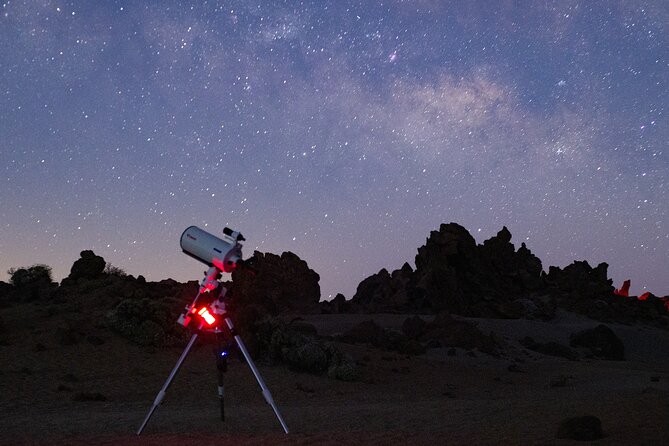
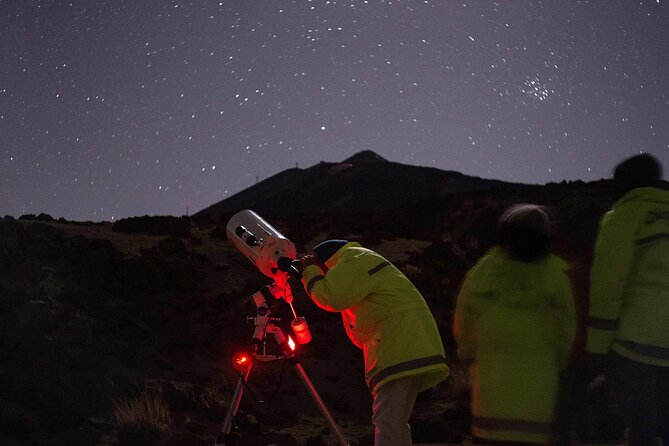
After the sky talk, you move on to telescope observation. The equipment may be aimed at planets, the Moon, star clusters, nebulae, or galaxies, depending on the conditions and the guide’s choices that evening.
The Moon and bright planets are often the easiest targets to appreciate through a telescope. Saturn can be especially memorable, and several comments single out Saturn as a highlight. Jupiter and the Moon have also been viewed to good effect on suitable nights.
Other nights can bring a different kind of reward. The guide may show a nebula, a star cluster, or the Andromeda Galaxy. These objects are not always as immediately dramatic as a bright planet, but they help you grasp the size and variety of space.
Do not treat the telescope list as a promise for your particular date. The tour description names several possible targets, not guaranteed stops. A planet may be below the horizon, hidden by clouds, or simply not well placed for observation. The guide’s job is to find the best available targets rather than force a fixed program.
The astrophotographic telescope adds a useful touch. Instead of only looking through an eyepiece, you can see the telescope produce detailed images of the object being observed. This is helpful if you struggle to hold your eye in the right position or if you want a stronger sense of the object’s shape and color.
More National Park Stargazing in Tenerife
- Teide National Park: Sunset & Stargazing Safari with Dinner
★ 4.6 · 2,115 reviews - Tenerife. Stargazing in Teide National Park
★ 4.9 · 319 reviews - Teide National Park: Guided Large Telescope Stargazing Tour
★ 4.9 · 319 reviews - Teide National Park: Stargazing Experience
★ 4.7 · 220 reviews
What the 80-minute format feels like
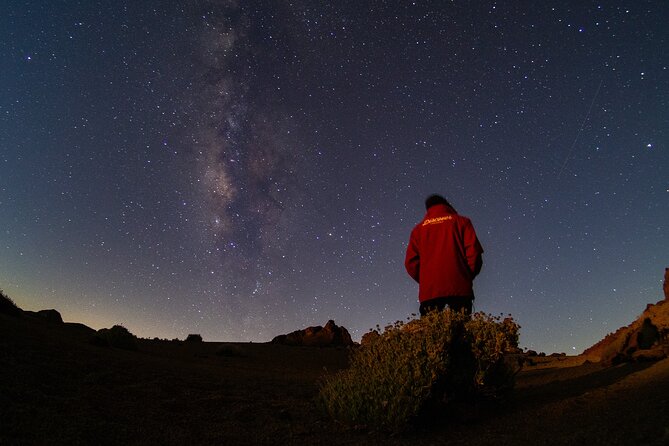
At about one hour and 20 minutes, the session is long enough to cover the basics without turning into an exhausting late-night program. You get an introduction, a guided look at the sky, and time with the telescopes.
The pace also suits families. Children do not need to sit through a long lecture, and the telescope portion gives them something concrete to anticipate. Parents should still dress children carefully, since the cold may be harder on younger participants than the astronomy itself.
The group limit is 20 people. That is not a private tour, but it is small enough for the guide to keep the session focused. Telescope viewing naturally takes turns, so you may spend some time waiting for your look. The group size keeps that wait more reasonable than it would be in a much larger crowd.
The short format has one limitation: you will not study every object in detail. If you want a full astronomy course or extended observing time, this is not designed for that. It is a compact introduction built around the best sights available that night.
The cold is the one practical warning to take seriously
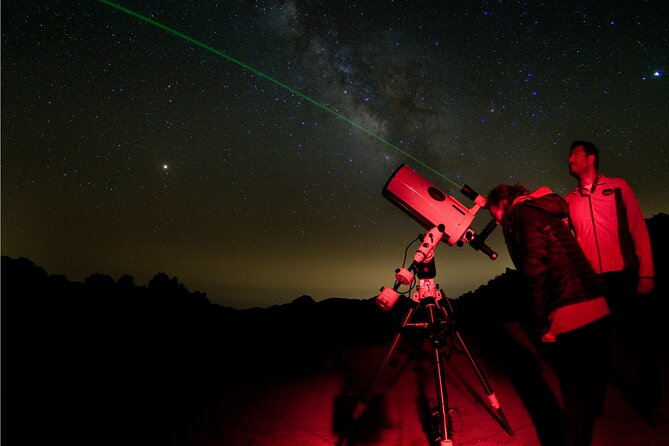
Nearly every practical note points to the same issue: bring warm clothing. Teide can feel cold after sunset, even if the coast was warm when you left your hotel.
Bring a proper warm jacket, long trousers, and closed shoes. A sweatshirt alone may leave you uncomfortable during the explanation, when you are standing still and looking upward. One person said a jacket made the cold tolerable, but others stressed that very warm clothes were needed.
If you forget, the operator says it has warm clothing available, but you should not depend on that as your main plan. Pack your own layers and consider adding a hat or scarf. The goal is to keep your attention on the sky rather than on your fingers.
The cold is not a flaw in the astronomy. It is simply the price of observing from a high, dark site. Still, it can make or break the evening, so I would treat clothing as part of the ticket rather than an afterthought.
Is $42.33 a fair price?
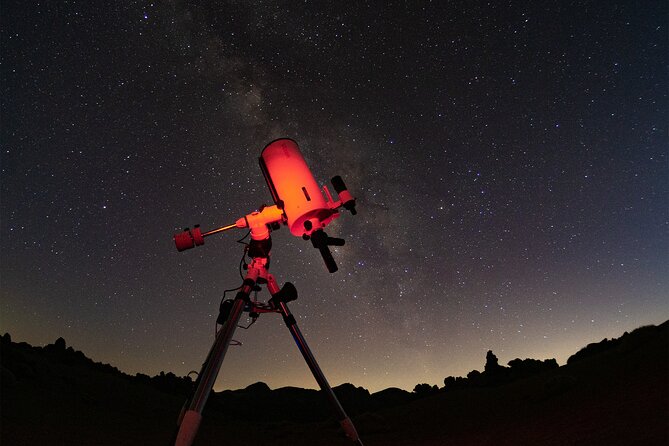
At $42.33 per person, the price is reasonable if you want a guided introduction with professional equipment and do not own a telescope. You are paying for the astronomer, the explanation, the organized observation, the equipment, and insurance during the activity.
The value is strongest for first-time stargazers. You do not have to identify constellations, choose targets, or work out how to use a telescope. The guide does that work and gives you a way to understand what appears above you.
The price is less compelling if you already have strong astronomy skills and access to good equipment. The naked-eye talk may be too simple, and the 80-minute session may feel brief. Even then, Teide’s dark setting can justify the cost if you are already in the national park and want a structured evening observation.
Remember to add your transport costs. Dinner is not included either, so plan food separately if you need it before or after the session. The tour itself is short enough to combine with other plans, but the drive to the meeting point makes it more than a quick stop from the coast.
Who will enjoy this most
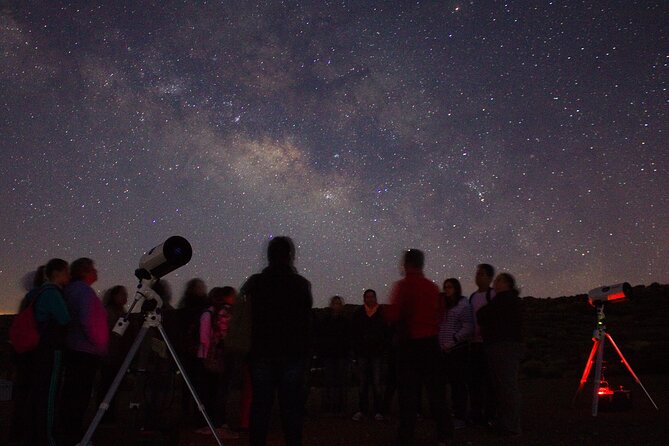
This experience fits you well if you are curious about space but do not know much astronomy. The guide explains the sky in plain terms, and the telescope gives you a direct look at objects you may otherwise only see in photographs.
It also works for families with older children and teenagers. Several children have enjoyed seeing the Moon and planets, and the activity can turn a normal holiday evening into a shared experience. Children must be accompanied by an adult.
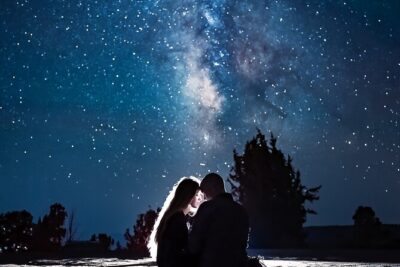
Couples may like the atmosphere, especially if the sky is clear and the Milky Way is visible. The setting is quiet and unusual, with the volcanic surroundings adding a sense of occasion without requiring a hike or strenuous activity.
I would be more cautious about booking it for someone who dislikes standing outside in the cold or expects guaranteed views of Saturn, Jupiter, or a specific galaxy. Astronomy is controlled by nature, and the best guide in the world cannot move clouds or change a planet’s position.
Weather, cancellation, and simple planning details
The activity requires good weather. If poor weather forces a cancellation, you are offered a different date or a full refund. You can also cancel for a full refund if you do so at least 24 hours before the start time.
Cancellations or changes made less than 24 hours before the activity are not accepted for a refund. The cut-off follows local time in Tenerife.
Confirmation arrives when you book, and the experience is offered in English. Children need an accompanying adult, and most people can participate. The group maximum is 20 people.
Because the tour is weather-dependent, keep your schedule flexible if possible. A cloudy afternoon does not always tell you what the night will bring, but conditions can still change. If the operator cancels, you have the option of another date or your money back.
Should you book the Teide stargazing experience?
I would book this if you want a clear, friendly introduction to the night sky from one of Tenerife’s best observation settings. The guides explain the basics well, the telescopes add real value, and the chance to see Saturn, Jupiter, the Moon, a nebula, or a galaxy gives the evening a sense of discovery.
The strongest reasons to go are the dark volcanic setting, the small group of up to 20, and the professional astronomy equipment. The strongest reasons to hesitate are the cold, the lack of included transport, and the fact that the exact sights depend on weather and timing.
Bring more warm clothing than you think you need, arrange your own route to Mines of San Jose, and arrive ready to see whatever the sky offers. If you do that, this is a good-value evening for beginners, families, couples, and anyone who wants to look up from Tenerife’s beaches and see the island from a completely different angle.
FAQ
Where does the stargazing tour begin?
It begins at Mines of San Jose, 38300, Santa Cruz de Tenerife, Spain.
What time does the experience start?
The stated start time is 7:30 pm.
How long does the activity last?
The stargazing session lasts approximately one hour and 20 minutes.
Is transport included?
No. You must arrange your own transport to and from the meeting point.
Is dinner included?
No. Dinner is not included in the activity.
What language is the tour offered in?
The experience is offered in English. Spanish may also be possible with some guides, but English is the stated tour language.
What can I see through the telescopes?
Depending on the date and conditions, you may observe planets, the Moon, star clusters, nebulae, or galaxies.
Do I need astronomy experience?
No. The activity is suitable for all knowledge levels, including people who are completely new to astronomy.
Can children participate?
Yes. Children can participate, but they must be accompanied by an adult.
What happens if the weather is poor?
The activity requires good weather. If it is canceled because of poor conditions, you can choose another date or receive a full refund.
Fresh listings near Tenerife
- Magic Stargazing & Sunset in Teide with Dinner + Telescopes★ 3.5 · 20 reviews
- Private astronomy tour with sunset toast, picnic, and astrophotography★ 4.8 · 83 reviews
- Mount Teide Night Tour: Stargazing, Dinner and Hotel Pick up★ 3.5 · 86 reviews
- Tenerife: Teide Stargazing with an Astrophysicist★ 4.9 · 74 reviews
- Tenerife: Stargazing at Mt. Teide★ 4.2 · 72 reviews
- Tenerife: Teide National Park Sunset Picnic and Stargazing★ 4.6 · 117 reviews
- Tenerife: Mount Teide Observatory Astronomical Tour★ 4.4 · 126 reviews
- Self Drive Sunset & Stargazing in Teide National Park – No Dinner★ 5.0 · 151 reviews
National Park Stargazing, side by side.
Teide National Park Sunset & Stargazing with Dinner (Star Safari)
Read our review →
National Park Astronomy Tour with Telescope and Photo
Read our review →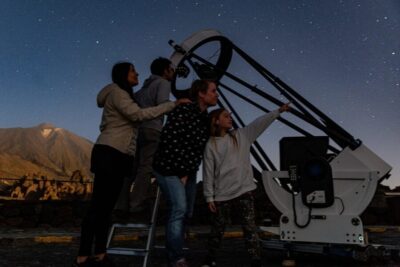
Teide National Park: Guided Large Telescope Stargazing Tour
Read our review →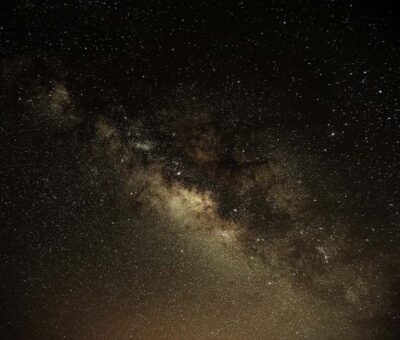
Self Drive Sunset & Stargazing in Teide National Park – No Dinner
Read our review →