REVIEW · NATIONAL PARK STARGAZING
Teide National Park: Stargazing Experience
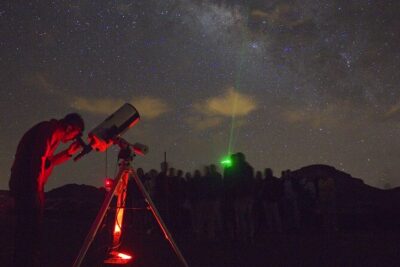
Teide’s high, dark skies make ordinary stars look startlingly bright. This 80-minute stargazing tour begins with the naked eye, then brings planets, star clusters, and galaxies closer through high-grade telescopes. Guides such as Miguel, Luke, and Manuel have made the science clear and entertaining, with plenty of mythology along the way.
I like the simple progression: first you learn where to look, then you use the telescope. I also like the chance to receive astrophoto images of objects seen during the session. The main drawback is the cold. At this altitude, summer clothes that feel fine by the coast may be hopeless after sunset.
Key points before you book
- Start with the naked eye: Learn major stars, constellations, Polaris, the celestial north pole, and the ecliptic before looking through a telescope.
- See more than stars: Depending on the season and conditions, you might view planets, moons, star clusters, galaxies, the Milky Way, or Orion’s Nebula.
- Guides add real value: Miguel, Luke, and Manuel have led sessions praised for clear explanations, humor, and strong command of astronomy.
- The mountain gets cold: Warm clothing and warm shoes are essential, even when Tenerife feels hot at sea level.
- Meet at Minas de San José: There is no hotel pickup, so you need to reach the parking area in Teide National Park yourself.
- Moon phase matters: A bright moon can change the view, so check the lunar cycle before choosing your date.
Why Teide is such a good place to stargaze
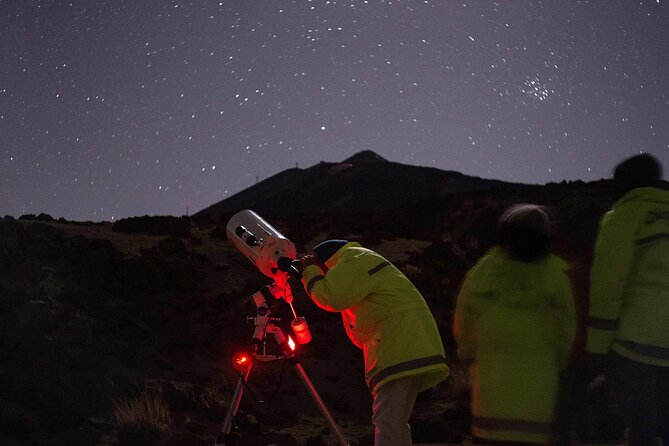
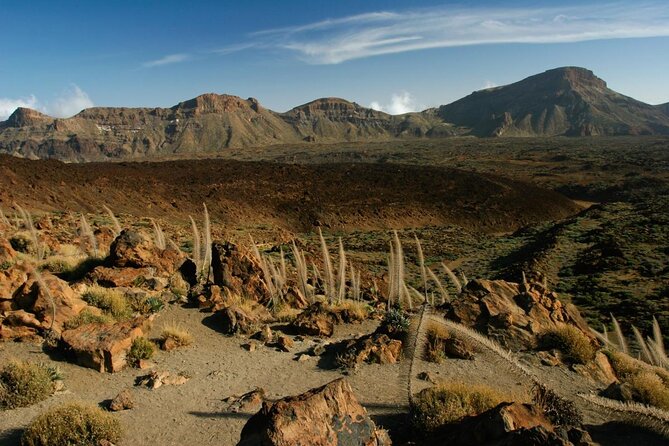
Teide National Park offers something that city skies cannot: darkness. Away from town lights, the faint points of the Milky Way become easier to see, and the sky has enough contrast for a telescope to show much more than a casual look upward.
You do not need a background in astronomy. The tour is designed to start with basic orientation. Your guide points out the main stars and constellations, then explains how their positions change across the sky. That order matters. A telescope is more useful when you understand what you are looking at.
The setting also gives the evening a strong sense of place. You are not visiting a planetarium or watching a recorded presentation. You are outside in a national park, looking up from a high mountain area with very little artificial light. The trade-off is comfort. Teide can be cold and windy after dark, even when the coast is warm.
More National Park Stargazing in Spain
- Tenerife: Teide National Park Sunset & Stargazing Tour
★ 4.2 · 3,812 reviews - Tenerife: Sunset and Stargazing at Teide National Park
★ 4.7 · 2,826 reviews - Teide National Park Sunset & Stargazing with Dinner (Star Safari)
★ 5.0 · 2,601 reviews
Meeting at Minas de San José
The meeting point is the parking area directly in front of the natural environment of Minas de San José. If you approach from the south, it is the second car park on the right. From the north, it is the first car park on the left.
This is an important detail because the tour does not include hotel pickup or drop-off. You need to arrange your own transport to the park and allow enough time to find the correct parking area. The provider confirms the start time through WhatsApp or email, especially if you book months ahead.
The exact starting time can shift with the sunset and seasonal conditions. Check your messages after booking rather than relying only on the time shown months in advance. The tour is offered in Spanish and English, so select the language that lets you follow technical explanations comfortably.
The first lesson begins without a telescope
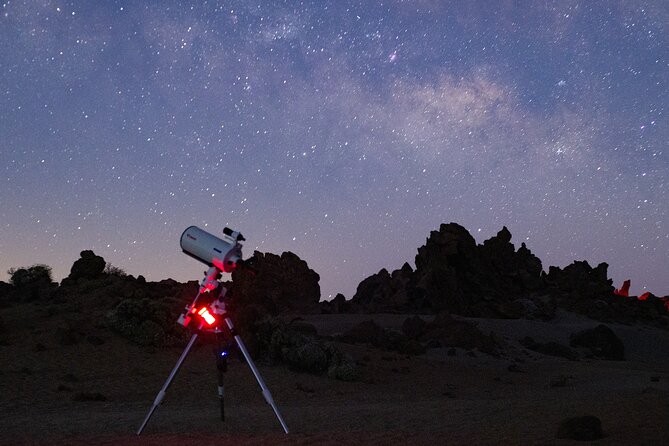
After sunset, your guide starts with the sky as it appears to the naked eye. This is one of the strongest parts of the activity because it gives you a way to make sense of the darkness.
You learn to identify important stars and major constellations. The guide also points out Polaris and explains the position of the celestial north pole. This is not just a list of names. It helps you understand how the sky is arranged and how people have used stars for orientation.
Next comes the ecliptic, the apparent path followed by the Sun across the sky, along with the zodiac line. The guide connects these ideas to the planets and to the constellations associated with the zodiac. If you have always recognized zodiac signs by name but never knew where they sit in the night sky, this makes the subject more concrete.
Greek mythology adds a lighter thread to the science. Your guide explains the shapes and positions of constellations through old stories, giving you memorable links between groups of stars. Guides including Miguel have been praised for mixing clear explanations with humor, which helps keep the talk lively in the cold.
What the telescope adds
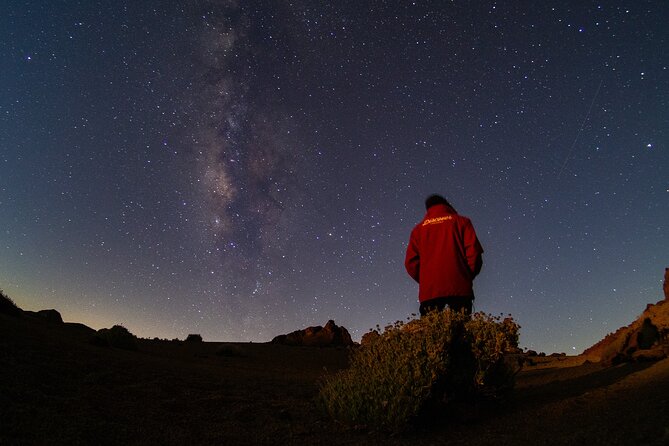
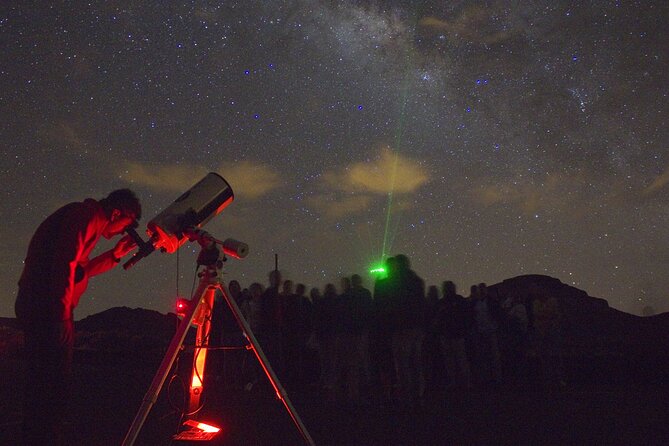
Once you know the basic layout, the group moves on to telescopic observation. The appeal here is the change in scale. With the naked eye, a galaxy or star cluster may look like a faint mark, if you can see it at all. Through a good telescope, its shape and structure become easier to appreciate.
The objects available depend on the date, weather, and visibility. Sessions have included Jupiter and its moons, Saturn, Mars, the Moon, Orion’s Nebula, Andromeda, star clusters, and the Milky Way. You should not expect every object on that list in one evening. The sky changes through the year, and cloud or haze can limit what the guide can show.
The telescope portion is not simply a queue for quick glances. The guide explains what you are seeing and places it in context. On some evenings, the main attraction may be a planet and its moons. On another, a star cluster or galaxy may receive more attention.
The tour also uses an astrophoto telescope. Images of at least some observed objects may be sent after the session. This is a useful extra because a faint object seen briefly at the eyepiece can be hard to remember later. A photograph gives you a clearer record of the evening, though it should not replace the experience of seeing the object in the telescope yourself.
More National Park Stargazing in Tenerife
- Teide National Park: Sunset & Stargazing Safari with Dinner
★ 4.6 · 2,115 reviews - Tenerife. Stargazing in Teide National Park
★ 4.9 · 319 reviews - Teide National Park: Guided Large Telescope Stargazing Tour
★ 4.9 · 319 reviews - Self Drive Sunset & Stargazing in Teide National Park – No Dinner
★ 5.0 · 151 reviews
The best sights depend on the season
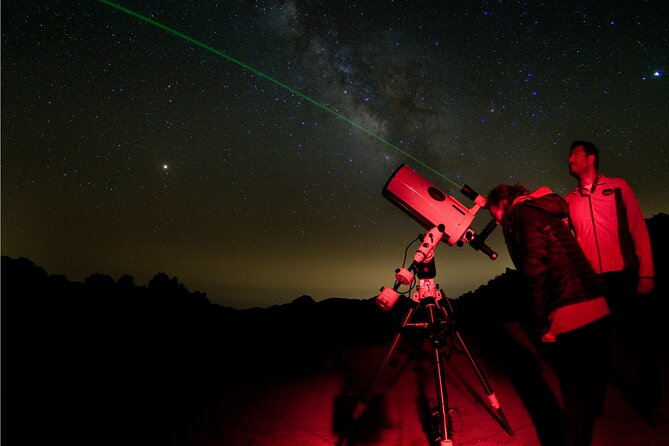
The night sky is not a fixed display. The visible constellations and planets change throughout the year, so your date affects the program.
In winter, Orion’s Nebula and the surrounding stars can make a strong impression. A January session has included Orion, Andromeda, Mars, Jupiter, and its moons, along with explanations of the major constellations. In other seasons, Jupiter and Saturn may be the headline sights when they are well placed.
The Moon also matters. A bright full moon can wash out faint stars and reduce the contrast of the Milky Way. A darker moon phase usually offers better conditions for seeing many faint objects, although the Moon itself can be an excellent telescope target. Check the moon’s cycle before booking if your main goal is a dark, star-filled sky.
The provider cannot guarantee a particular planet or galaxy. That is not a flaw in the tour. It is simply how outdoor astronomy works. A good guide adapts to what is visible, and the park’s dark sky remains the central attraction.
How much $41 is worth
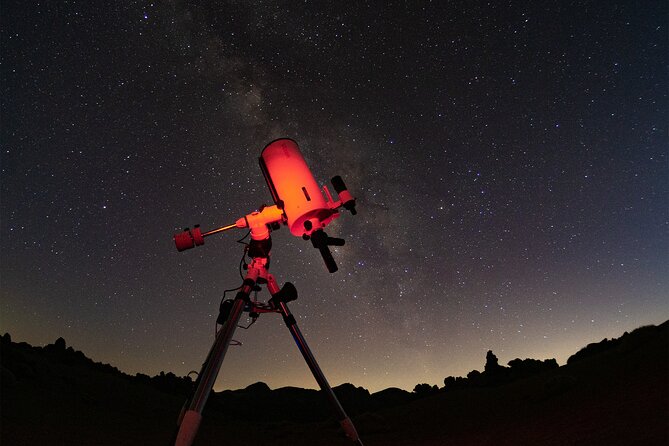
At $41 per person, this is a reasonable price for a guided astronomy session if you want more than a pretty view. The fee includes the naked-eye explanation, telescope observation, a professional astronomical guide, and insurance during the tour.
The value depends on how you use the guide. If you already know the constellations and own access to serious astronomy equipment, the tour may feel brief. For most visitors, though, the equipment and instruction make the price easier to justify. A high-grade telescope can show you objects that are difficult to find or interpret alone.
The advertised duration is 80 minutes. That is enough time for a focused introduction and several telescope targets, but it is not a full-night observatory program. One visitor felt the price could be slightly lower for the time spent, so keep your expectations in proportion. You are paying for a compact, guided outdoor activity, not a several-hour astronomy course.
The possibility of receiving images after the tour adds some value, but it should be treated as a bonus rather than the reason to book. The real benefit is learning how to read the sky and then seeing selected objects through the telescope.
Cold-weather planning is not optional
The most repeated practical warning is simple: dress very warmly. Teide sits high above the coast, and temperatures drop after sunset. Wind makes the cold sharper.
Bring:
- Several warm layers
- A proper warm jacket
- Long trousers
- Warm shoes
- Comfortable footwear for standing outdoors
Do not judge your clothing by the temperature at your hotel or on the beach. One August session was described as roughly 14 degrees Celsius with strong wind while it was 25 degrees lower down the mountain. Autumn and winter require even more care.
You will likely spend much of the session standing outside. Comfortable shoes matter, and warm shoes matter just as much. A thin sweater and trainers may be fine for a daytime park visit but inadequate once the sun disappears.
The cold can distract you from the guide and shorten your patience at the telescope. Dress as if you are preparing for a cool mountain night, not a warm Canary Islands evening.
Who will enjoy this most
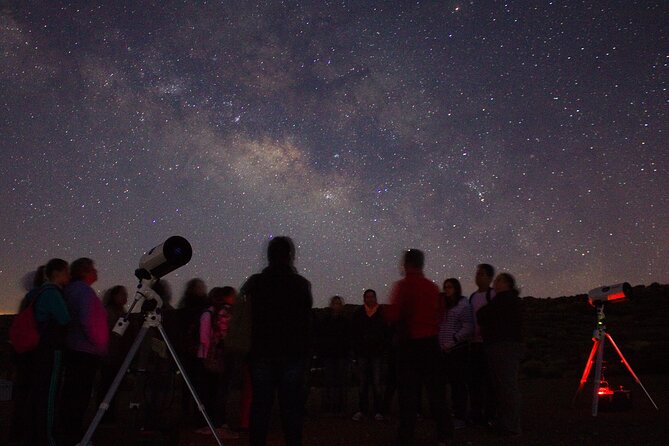
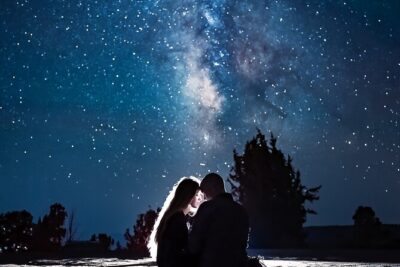
This tour suits first-time stargazers, couples looking for a quiet evening activity, and families with children who can stay outside and follow instructions. Several sessions have worked well for people with no astronomy background because the guide begins with simple visual landmarks.
It is also a good choice for anyone who wants a more meaningful look at the sky. Instead of pointing randomly at bright stars, you learn how Polaris, the celestial north pole, the ecliptic, and the constellations fit together.
You should reconsider it if you dislike cold, cannot spend time outdoors at night, or want a guaranteed list of specific planets. Outdoor conditions control the program. The activity is also not suitable for people with heart problems, respiratory issues, or anyone who has gone diving within the previous 24 hours.
Unaccompanied minors are not allowed, and pets cannot join the tour. If you are booking for a family, make sure a responsible adult accompanies every child.
The guides make the science easier to follow
The guide matters greatly on a short astronomy tour. A telescope can show you a bright planet, but a good explanation helps you understand why it matters.
Miguel has led English-language sessions with a clear, funny approach, explaining constellations, planets, and mythology without making the material feel like a school lecture. Luke has also guided English sessions that covered stars, planets, and the Moon in an encouraging way. Manuel has been praised for making the Moon, constellations, and mythology easy to follow.
These names may not indicate who leads your particular date. The provider offers Spanish and English guides, and staffing can change. Still, the past sessions show what to look for: a guide who can explain the basics plainly, keep the group oriented, and adjust the discussion to the objects visible that night.
WhatsApp and email communication are useful here. The provider sends reminders and confirms schedule details, which matters when the starting time changes with the season.
Booking details that affect your evening
You can reserve now and pay later, which is useful if you are still arranging your Tenerife plans. Free cancellation is available up to 24 hours before the activity for a full refund.
Do not treat the listed start time as permanent if you book far ahead. The provider may contact you later to confirm the schedule. Check your email and WhatsApp messages before setting out.
There is no dinner included. Plan to eat before or after the tour, and remember that the meeting point is in the national park rather than at a hotel or restaurant area.
Because the activity starts after sunset, you should also plan your return journey before leaving. The supplied details do not include transport, so you are responsible for reaching the meeting point and getting back afterward.
My call: book it if the stars matter to you
I would book this tour if I wanted a short, well-organized introduction to the night sky in a genuinely dark setting. The strongest features are the move from naked-eye orientation to telescope viewing, the guides’ use of mythology and practical explanation, and the chance to see objects such as Jupiter, Saturn, Orion’s Nebula, Andromeda, or star clusters.
I would not book it expecting a long observatory visit or guaranteed views of a particular planet. The session lasts 80 minutes, weather controls the sights, and the mountain cold is serious.
Bring proper winter clothing, check the moon phase, watch for the provider’s schedule confirmation, and arrive at the correct Minas de San José car park. If you can handle the cold, $41 buys a memorable look at a sky that most city residents rarely see.
FAQ
Where does the Teide stargazing tour meet?
Meet in the parking area directly in front of the natural environment of Minas de San José. Coming from the south, use the second car park on the right. Coming from the north, use the first car park on the left.
How long does the stargazing activity last?
The stated duration is 80 minutes. The starting time depends on availability and may be confirmed later by the activity provider.
What languages are available?
The live tour guide is available in Spanish and English.
Does the tour include hotel pickup and dinner?
No. Hotel pickup, drop-off, and dinner are not included. You need to reach the meeting point yourself.
What should I bring?
Bring comfortable shoes, warm clothing, and warm shoes. Temperatures are low after sunset, including during autumn and winter.
Can I cancel the booking?
You can cancel up to 24 hours in advance for a full refund. You can also reserve now and pay later.
Fresh listings near Tenerife
- Magic Stargazing & Sunset in Teide with Dinner + Telescopes★ 3.5 · 20 reviews
- Private astronomy tour with sunset toast, picnic, and astrophotography★ 4.8 · 83 reviews
- Mount Teide Night Tour: Stargazing, Dinner and Hotel Pick up★ 3.5 · 86 reviews
- Tenerife: Teide Stargazing with an Astrophysicist★ 4.9 · 74 reviews
- Tenerife: Stargazing at Mt. Teide★ 4.2 · 72 reviews
- Teide National Park: Stargazing Experience★ 5.0 · 118 reviews
- Tenerife: Teide National Park Sunset Picnic and Stargazing★ 4.6 · 117 reviews
- Tenerife: Mount Teide Observatory Astronomical Tour★ 4.4 · 126 reviews
National Park Stargazing, side by side.
Teide National Park Sunset & Stargazing with Dinner (Star Safari)
Read our review →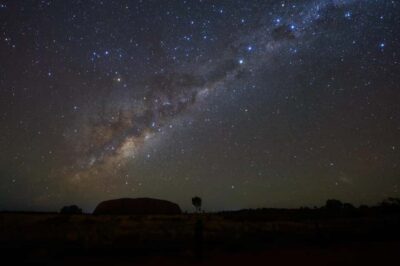
National Park Astronomy Tour with Telescope and Photo
Read our review →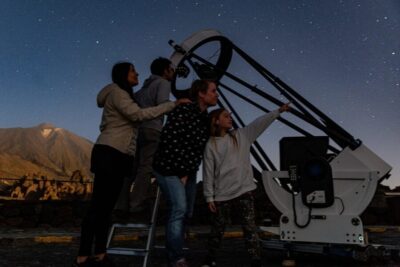
Teide National Park: Guided Large Telescope Stargazing Tour
Read our review →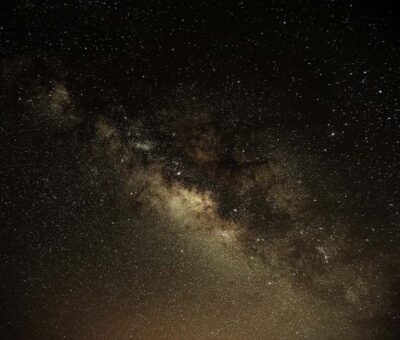
Self Drive Sunset & Stargazing in Teide National Park – No Dinner
Read our review →