
REVIEW · TELESCOPE STARGAZING
Cavalleria: Guided Stargazing at the Beach with Telescope
At Cala Viola de Ponent, the sea becomes your horizon and the night sky becomes the main event. This two-hour session takes place in a Starlight Reserve, away from city glare, with a certified Spanish-speaking guide and two professional telescopes. You’ll learn to spot constellations, hear the stories behind them, and look toward objects far beyond the Moon.
I like the mix of mythology and practical sky skills, especially the star-leaping method used to find your way from one constellation to another. I also like the quiet coastal setting and the simple comfort of mattresses for lying back. The main thing to consider is telescope time: one participant wished for more direct observation through the eyepiece, so ask the guide at the start how viewing will be shared.
Key points before you book
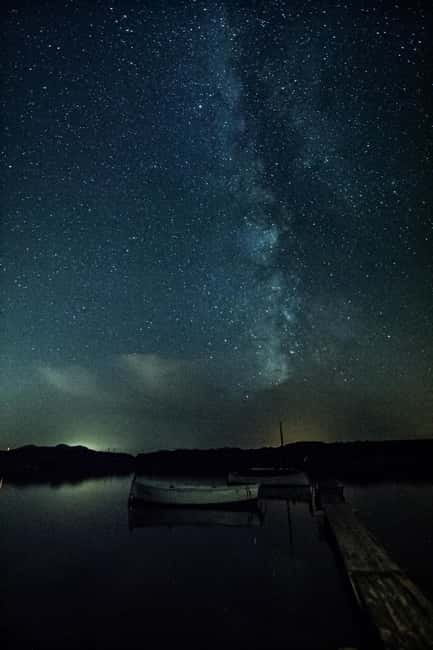
- Cala Viola after dark: Meet at the beach parking lot, with no hotel pickup included.
- Two professional telescopes: Look for objects such as open clusters, globular clusters, binary stars, and nebulae.
- Gonzo leads the session: The guide explains the sky in Spanish, with an audioguide option available in English or French.
- Myths with a purpose: Hercules, Andromeda, Cassiopeia, and Draco help you remember where constellations sit.
- The Moon gets special treatment: On moonlit nights, you can study its craters and learn how they formed.
- Bring your own phone: Audioguide files must play on each participant’s phone, and headphones are useful if you have them.
Why Menorca’s dark coast matters
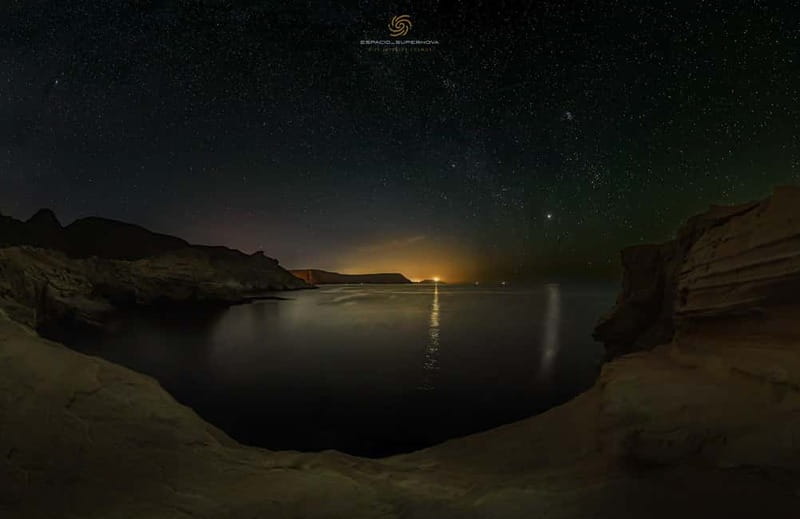
The best part of this experience is not simply owning access to a telescope. It is getting away from artificial light.
At a city beach, the brightest stars can disappear into the glow of streetlamps, hotels, and roads. At Cala Viola de Ponent, the activity takes place in a certified Starlight Reserve, a location selected for its night-sky conditions. That gives the guide a better canvas for explaining the main constellations and pointing out objects that are hard to see from an urban area.
You do not need a background in astronomy. The session begins with orientation, helping you understand where you are looking and how the sky is arranged. The guide uses positional astronomy to show you how one recognizable star or constellation can lead you to another. Think of it as learning a few useful signposts rather than memorizing a chart.
The coastal setting adds a pleasant sense of space, but this is still an astronomy activity first. You are not signing up for a beach party, a meal, or a sunset cruise. Food and drinks are not included, and the meeting point is the parking lot by the beach.
More Telescope Stargazing in Spain
- Teide by Night: Sunset & Stargazing with Telescopes Experience
★ 4.5 · 1,492 reviews - Teide National Park: Guided Large Telescope Stargazing Tour
★ 4.9 · 319 reviews - Magic Stargazing & Sunset in Teide with Dinner + Telescopes
★ 3.5 · 20 reviews
A two-hour trip through the night sky
The experience is built around several connected parts rather than a long transfer or a series of sightseeing stops. You meet at the parking lot at Cala Viola de Ponent Beach, then settle in for the session. Mattresses are provided so you can look upward without standing for the entire two hours.
The guide first helps you identify the principal constellations visible that night. The exact view changes with the season, weather, and time of the session, so you should not expect the same sky every time. This changing element is part of the appeal, although it also means the advertised subjects are not guaranteed on every evening.
Next comes the storytelling. Constellations are easier to remember when they have a human story attached to them, and the guide brings in figures such as Hercules, Andromeda, Cassiopeia, and Draco. These myths give shape to what might otherwise feel like a random scatter of stars.
I especially like this approach for families and first-time stargazers. A child may remember a dragon or a hero long after forgetting a technical explanation. Adults get a cultural side trip into the old stories people used to explain the heavens before modern astronomy.
The session also introduces star leaps. You start with a visible point in the sky and use it to locate another, then another. This is a practical skill, not just a lecture. You may not become an expert navigator in one evening, but you should leave with a better sense of how observers move around the sky.
What you may see through the telescopes
The two professional telescopes are used to look beyond the most familiar stars. The program includes deep-space objects such as open clusters, globular clusters, binary stars, and nebulae. Each type offers something different.
An open cluster is a group of stars that can appear scattered but related. A globular cluster is denser and more rounded. Binary stars are pairs that orbit one another, while nebulae are broad clouds of gas and dust. The point is not to collect a checklist of objects. It is to help you understand that the night sky contains different kinds of structures, not just individual points of light.
The Moon gets its own focus when it is visible. You can look at its craters and learn how they were formed. This part may be especially satisfying for children because the Moon is familiar, bright, and easy to connect with what the telescope reveals.
There is one practical detail worth handling carefully. The activity description includes observation through telescopes, but a recent participant specifically wished for more direct viewing through the telescope. That suggests the balance between explanation, group viewing, and personal eyepiece time may vary. If seeing a magnified object yourself is your main reason for booking, ask Gonzo early how the telescopes will be shared and how much direct viewing each person can expect.
The equipment is a real benefit at this price, but a shared telescope session is not the same as having a private observatory appointment. With a group, you may need patience while the guide adjusts equipment and others take their turn.
Gonzo’s teaching style and language options
Gonzo is the guide name connected with the experience, and the strongest praise focuses on the way he explains the sky. His presentation is described as engaging enough to surprise people who did not expect to learn so much, with appeal for both adults and children.
The live guide language is Spanish. That is important to know before you reserve. If you do not understand Spanish, an English or French audioguide option may be available, but it works differently from a live translation service.
You must bring your own phone to play the audioguide files. Your phone should be fully charged, and headphones are worth packing if you have them. The files play on each participant’s own phone, so do not assume that one device will cover the whole group.
If you speak Spanish, the live format should make it easier to ask questions and follow the guide’s pointing and explanations. If you rely on the audioguide, you may need to divide your attention between listening to the phone and watching the sky. That is manageable, but it is less spontaneous than having a guide explain everything directly in your language.
Same sky over Spain, a different way to watch it:
- Tenerife: Teide National Park Sunset & Stargazing Tour
★ 4.2 · 3,812 reviews - Tenerife: Sunset and Stargazing at Teide National Park
★ 4.7 · 2,826 reviews - Teide National Park Sunset & Stargazing with Dinner (Star Safari)
★ 5.0 · 2,601 reviews - Teide National Park: Sunset & Stargazing Safari with Dinner
★ 4.6 · 2,115 reviews
Mattresses, photos, and the feel of the evening
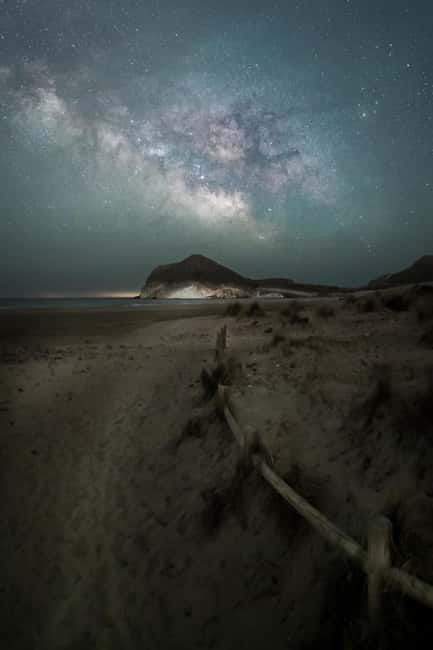
The mattresses are a small but useful touch. Looking up for two hours while standing can become tiring, especially if you are trying to follow several parts of the sky. Lying back also makes the experience feel less like a formal lesson and more like an evening outdoors.
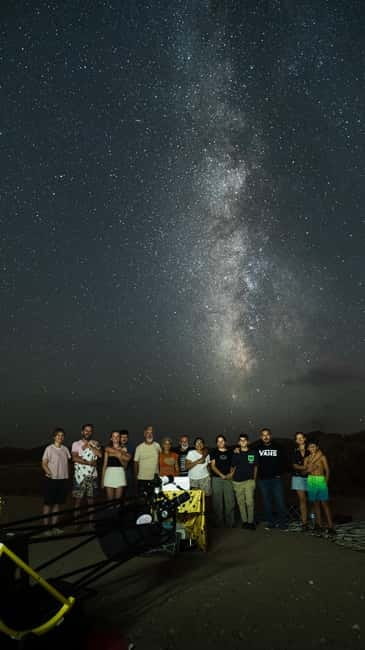
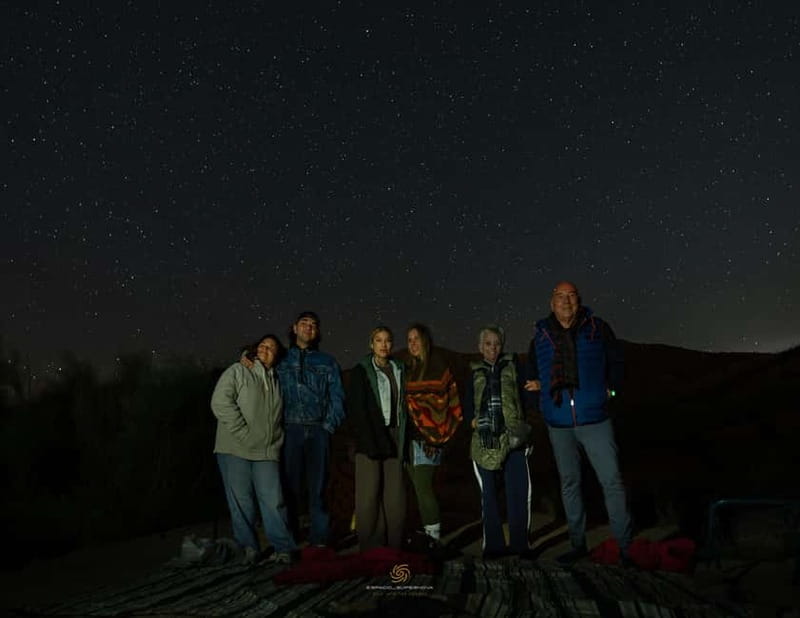
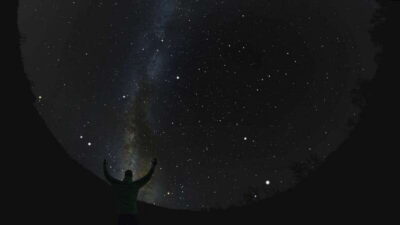
The final group photograph places the stars in the background. It gives you a keepsake from the night, though you should think of it as a group photo rather than a private portrait session. The emphasis remains on the shared experience.
Bring clothing suited to sitting outside after dark. The supplied information does not specify temperatures or blankets, so you should not assume that beach location means warmth. You will also want to arrive ready for an outdoor activity, with a charged phone if you have selected the audioguide.
The location is not suitable for wheelchair users, and the activity is not recommended for people over 95. Those limits matter because the meeting point and viewing area are outdoors, with mattresses rather than indoor seating.
Is $35 a fair price?
At $35 per person, the value depends on what you want from an astronomy evening.
For that price, you receive a two-hour guided program, access to professional telescopes, mattresses, constellation instruction, mythology, and a group photo. There is no hotel transportation, food, or drink, so you must make your own way to Cala Viola de Ponent and plan around the meeting time.
I consider the price fair for someone who wants structure and equipment. You could look at the sky for free, but you would not necessarily know what you were seeing or how to find it again. The guide supplies the context, the equipment, and the method.
The value is weaker if you want a private telescope session, a guaranteed list of specific objects, or a relaxed meal beside the water. This is a guided group activity, and the weather can cancel it. The provider requires at least five participants, so a small booking may depend on enough people joining.
Weather is a genuine factor. Clouds or other poor conditions can make the telescope work impossible, and the provider may contact you to reschedule or refund the tour. The flexible booking terms allow cancellation up to 24 hours before the activity for a full refund, and you can reserve now and pay later.
Who will enjoy this most?
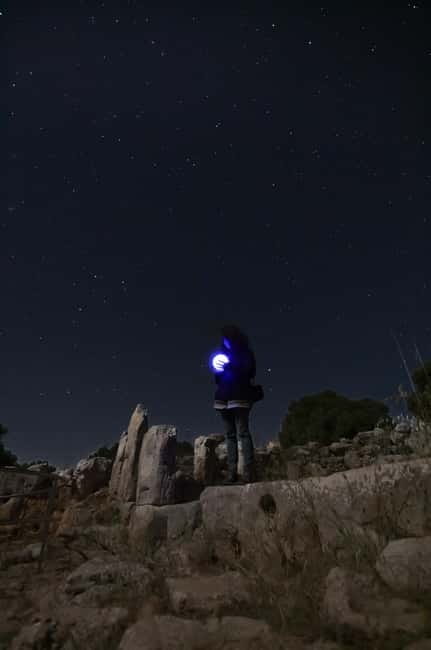
I would recommend this for families with curious children, couples looking for a quiet night out, and adults who want a first introduction to astronomy without committing to a full course. The myths make the material approachable, while the telescopes add a real sense of discovery.
It also suits visitors who have already spent their days on Menorca’s beaches and want to see a different side of the island. The coast is still present, but the focus shifts from water and sunlight to distance, darkness, and the larger setting of the Milky Way.
Spanish speakers will get the clearest live experience. English and French speakers can use the audioguide, provided they bring a charged phone and ideally headphones. If you need constant one-to-one assistance, this group format may feel limited.
I would be cautious about booking if your priority is taking long turns at the telescope. The activity does include professional telescopes and space-object observation, but the exact amount of individual eyepiece time is not specified. Ask before booking if that detail will determine your decision.
Practical planning for Cala Viola de Ponent
You are responsible for reaching the parking lot at Cala Viola de Ponent Beach. Since hotel pickup and drop-off are not included, allow time to find the meeting point and arrive before the session begins. Starting times vary, so check availability for the date you want.
Bring your own phone if you have selected the English or French audioguide. Charge it fully before leaving, and bring headphones if possible. Food and drinks are not supplied, so plan those separately rather than expecting refreshments at the beach.
The activity lasts two hours, but the night can feel longer if you are uncomfortable outdoors. Wear suitable clothing, and remember that the mattresses are provided for lying down, not necessarily for warmth or back support.
The minimum group requirement is five people. If the provider cancels because of weather or participation numbers, the team will contact you about a new date or a refund.
Should you book this stargazing experience?
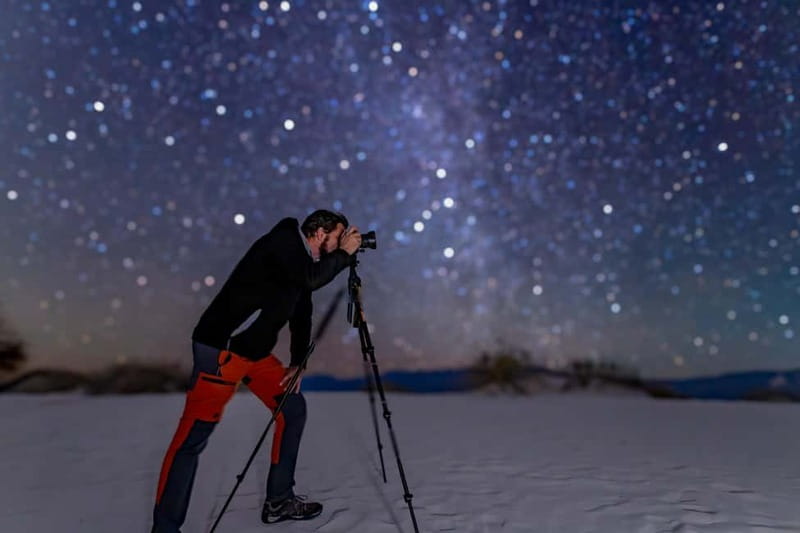
Book it if you want a guided introduction to Menorca’s night sky, enjoy stories as much as facts, and like the idea of looking through professional telescopes from a dark coastal setting. The price is reasonable for two hours of instruction and equipment, and the combination of constellations, mythology, the Moon, and deep-space objects gives the evening enough variety.
Think twice if you need wheelchair access, live commentary in English or French, or guaranteed long telescope sessions. For the best match, choose this experience for its setting and teaching, then treat the telescope viewing as a shared part of the evening rather than a private observing appointment.
FAQ
Where does the stargazing activity meet?
Meet at the parking lot at Cala Viola de Ponent Beach in Menorca.
How long does the experience last?
The guided stargazing session lasts two hours.
What language is the live tour guide?
The live guide speaks Spanish. An English or French audioguide option may be available.
Do I need to bring my own phone?
Yes, if you have booked the audioguide. The files must play on each participant’s own phone, so bring a sufficiently charged device. Headphones can also be useful.
What happens if the weather is bad?
The activity depends on good weather. If it is cancelled, the provider’s team will contact you to arrange a rescheduled date or a refund.
Is hotel transportation included?
No. Hotel pickup and drop-off are not included, so you must make your own way to the Cala Viola de Ponent Beach parking lot.
Fresh listings near Spain
- Cabo de Gata: Guided Night Walk with Stargazing★ 4.7 · 36 reviews
- Cabo de Gata: Stargazing Experience★ 4.5 · 7 reviews
- Magic Stargazing & Sunset in Teide with Dinner + Telescopes★ 3.5 · 20 reviews
- La Palma: Premium Stargazing Tour for 10★ 4.3 · 51 reviews
- Stargazing Private Tour at Roque De Los Muchachos in La Palma★ 5.0 · 43 reviews
- Private astronomy tour with sunset toast, picnic, and astrophotography★ 4.8 · 83 reviews
- Mount Teide Night Tour: Stargazing, Dinner and Hotel Pick up★ 3.5 · 86 reviews
- Tenerife: Stargazing at Mt. Teide★ 4.2 · 72 reviews
Telescope Stargazing, side by side.
Teide by Night: Sunset & Stargazing with Telescopes Experience
Read our review →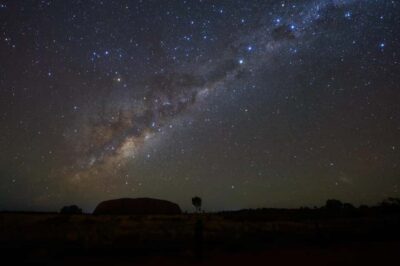
National Park Astronomy Tour with Telescope and Photo
Read our review →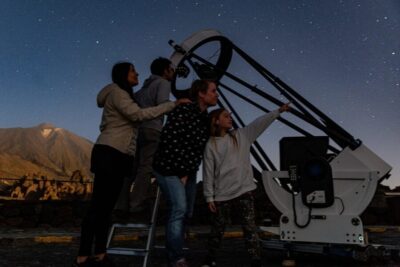
Teide National Park: Guided Large Telescope Stargazing Tour
Read our review →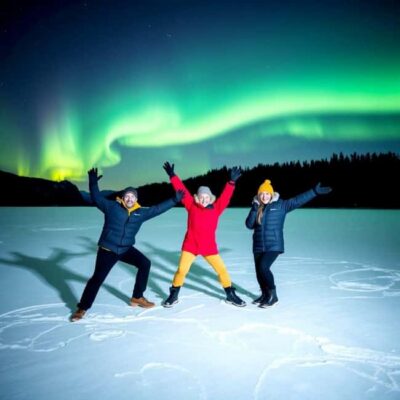
Northern Lights Tour and Stargazing by Telescope
Read our review →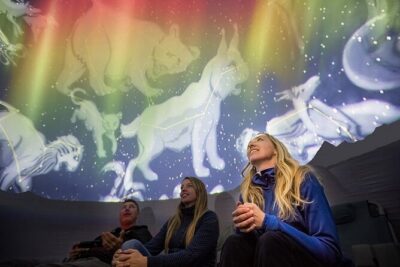
Jasper Planetarium and Telescope Combo Tour Tickets
Read our review →
Magic Stargazing & Sunset in Teide with Dinner + Telescopes
Read our review →
Akaroa: Stargazing Tour with 2 Telescopes & Souvenir Photos
Read our review →Lists this night appears in