
REVIEW · GUIDED
Fuerteventura: Guided Stargazing Calderón Hondo Volcano Tour
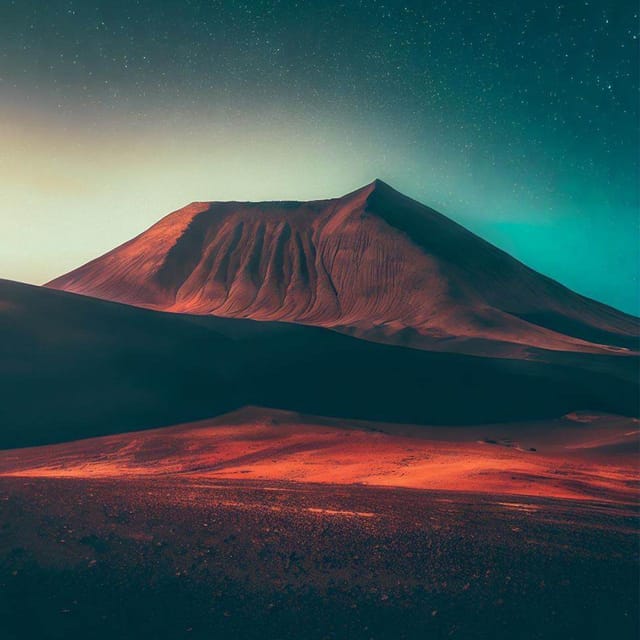
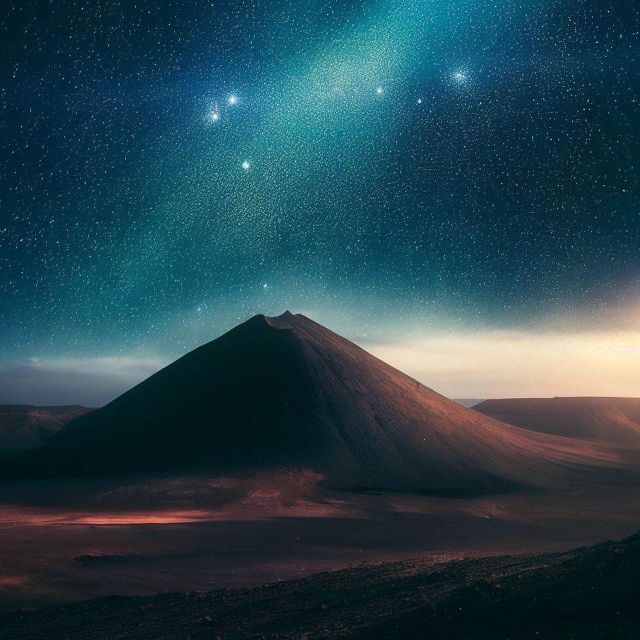
Calderón Hondo gives you a rare night out: a volcanic crater beneath the Milky Way. You walk up after sunset, look across to Lajares, Corralejo’s dunes, and Lanzarote, then settle into a dark spot for astronomy and island stories.
I like the mix of geology and sky watching, and I like that guides such as Victor bring humor and clear explanations to the evening. The main catch is simple: clouds can block the stars, and the rocky path calls for steady footing, warm clothes, and closed shoes.
Key points to know
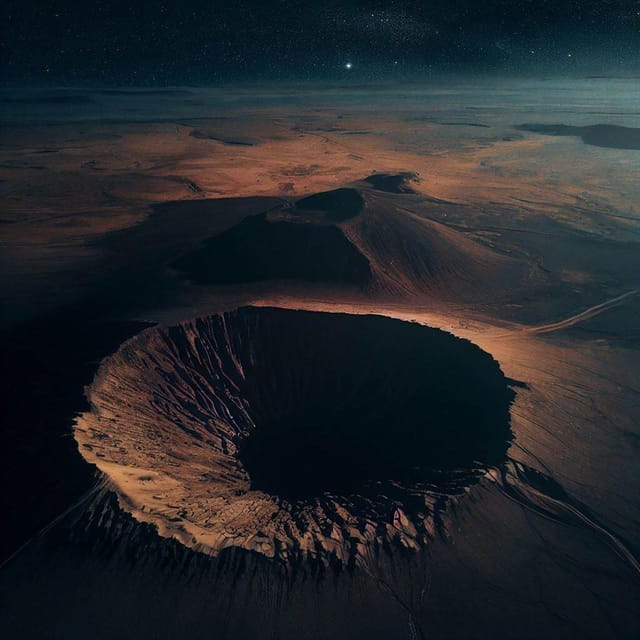
- Crater views after dark: Walk up Calderón Hondo for wide views toward Lajares, Corralejo, and Lanzarote.
- Astronomy with context: Identify constellations, planets, satellites, and the Milky Way with help from a guide, laser pointer, and tablet.
- More than stargazing: Learn how fire and the sky featured in the traditions of Fuerteventura’s native people.
- Friendly guiding: Victor is often the guide, while Alfredo has also led departures, with talks that mix facts, humor, and local stories.
- Three hours in the open air: Water and headlights are provided, but you need comfortable closed shoes and a jacket.
- Weather matters: Clouds may limit the sky show, and star visibility is not guaranteed or refundable.
Why a volcano is the perfect observatory
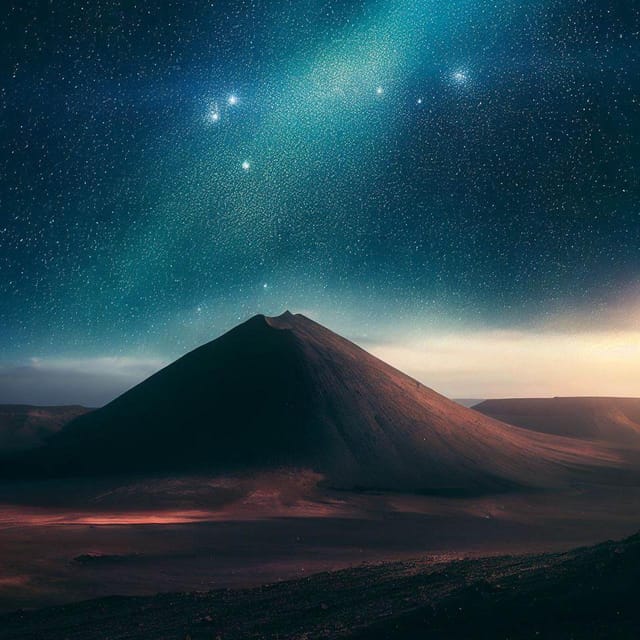
You do not need to be an astronomy expert to enjoy this outing. The appeal begins before the first constellation appears. Calderón Hondo gives you a solid sense of Fuerteventura’s volcanic past, with dark ground, rough rock, and the broad, quiet scenery of the north of the island.
The walk leads toward the crater edge, where the views open up. In daylight, the route would already be worthwhile for the panorama. At night, your attention shifts from the horizon to the sky, and the crater becomes a natural setting for the astronomy talk.
I like this combination because it gives the evening a clear shape. You are not simply driven to a dark field and asked to look upward. First, you understand the ground beneath your feet. Then you learn how people once read the sky for seasons, direction, and stories.
The tour presents Calderón Hondo as Fuerteventura’s last active volcano. The point is not a dramatic eruption show. Instead, you get a close look at the island’s volcanic character, followed by a quiet hour under a sky with far less artificial light than you find around the resorts.
More Guided Nights Out in Spain:
- Teide: Guided Sunset & Stargazing Tour by Night with Dinner
★ 4.7 · 1,339 reviews - Tenerife: Mount Teide Observatory Guided Tour
★ 4.6 · 818 reviews - Teide National Park: Guided Large Telescope Stargazing Tour
★ 4.9 · 319 reviews
Walking up Calderón Hondo after sunset
The route involves a walk to the crater, with a somewhat steep section and rocky footing. It is not described as a technical hike, but it is not a smooth promenade either. I would take the footwear advice seriously, especially after dark when loose stones and uneven ground are harder to see.
Headlights are supplied, which helps on the approach and return. Still, bring shoes with a firm sole and good support. Sandals, thin trainers, and open footwear are poor choices here.
At the top, you can look toward Lajares, the dunes around Corralejo, and Lanzarote. These views give the tour a strong visual start before the main astronomy session. You may also have time for photographs, though a night volcano is more about the atmosphere than a perfect camera image.
People uneasy with heights should think carefully before booking. The experience takes place around a crater and includes a climb to its edge. It is also unsuitable for people over 65 under the stated conditions, for babies under one year, and for anyone with serious mobility difficulties.
What the astronomy session is really like
Once the group reaches a suitable viewing area, the guide shifts from volcanoes to the night sky. You may learn to pick out constellations, planets, and bright stars, with explanations of their names and place in mythology.
The guide may use a laser pointer to direct your attention and a tablet app to show the shape of a constellation before locating it overhead. That is useful for beginners. Looking at a scatter of stars can feel confusing at first, but the screen gives you a pattern to search for in the real sky.
Past departures have included views of Saturn and its rings, Jupiter, the Moon, satellites, and the Milky Way. What you see depends on the season, moonlight, clouds, and visibility on that particular night. Do not book this expecting a fixed list of planets.
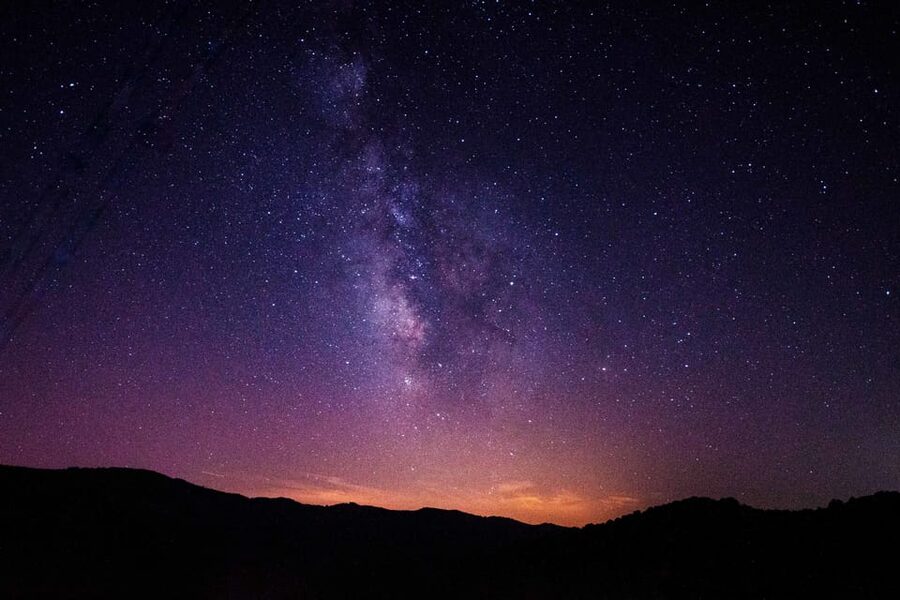
The Milky Way is the big prize. On a clear night, it can appear as a pale band across the sky, far removed from the washed-out view above a town. The setting inside or beside a volcanic crater adds a sense of scale. You are looking at deep space from ground formed by fire.
If clouds roll in, the guide can still talk about the stars, the volcano, and island traditions. That helps, but it cannot replace a clear sky. The supplier does not offer a refund simply because stars are hidden by weather, so you need to accept that risk before booking.
Fire, folklore, and Fuerteventura’s native culture
The cultural side keeps the tour from becoming a basic star chart lesson. The guides explain the role of fire and the sky in native traditions, including how people used the stars to understand the passing seasons.
That connection is easy to appreciate in a place like Fuerteventura. With the crater under your feet and the sky overhead, the talk feels tied to the setting rather than added as a random fact. You get a sense of why the night sky mattered to people who lived closely with weather, land, and seasonal change.
The explanations also cover local geology and the wider volcanic scenery. A good guide can make the walk feel like a story, moving from the island’s formation to the meaning people gave to the sky.
Victor has received particularly strong praise for keeping the group involved, switching between English, Italian, and Spanish, and making the journey feel social without losing the subject. Alfredo has also led tours, including one that used a telescope for a glimpse of the Moon and included drone photographs and video. Those extras should not be treated as guaranteed parts of every departure, but they show how the evening can vary by guide and conditions.
More Stargazing Tours in Spain:
- Tenerife: Teide National Park Sunset & Stargazing Tour
★ 4.2 · 3,812 reviews - Tenerife: Sunset and Stargazing at Teide National Park
★ 4.7 · 2,826 reviews - Teide National Park Sunset & Stargazing with Dinner (Star Safari)
★ 5.0 · 2,601 reviews - Teide National Park: Sunset & Stargazing Safari with Dinner
★ 4.6 · 2,115 reviews
Victor, Alfredo, and the human side of the tour
The guide makes a real difference here because the activity has quiet stretches. You may spend time waiting for clouds to clear or for your eyes to adjust to the darkness. A dry talk would make that feel long. A warm, lively guide can turn it into part of the experience.
Victor is often described as funny, welcoming, and attentive to the whole group. He has helped solo participants feel comfortable, kept children involved, and made the minibus ride part of the evening rather than dead time. His style includes jokes, music, and plenty of conversation, so this is not a silent, formal astronomy lecture.
That energy will suit you if you like a guide who talks freely and creates a group mood. If you want a private, hushed stargazing session with long periods of silence, this may feel more animated than expected.
The audience can include families, couples, solo visitors, and mixed-language groups. One family with children aged 11 and 14 found the evening suitable, while another group included children aged eight and 11. The official age and mobility restrictions still matter, but older children who can manage the walk may find the volcano and sky combination memorable.
Transport, meeting point, and timing
The standard duration is three hours, though the total time can vary depending on where you are collected. Pickup and drop-off are available from Corralejo, El Cotillo, and Puerto del Rosario when you select the transfer option.
The listed meeting point is the Repsol h2go service station. Check your exact pickup instructions carefully, especially if you are not using the transfer option. There has been at least one case of confusion over the meeting place, although the guide managed to find the participant and return them to their accommodation.
Taking the minibus can be a sensible choice even if you have a hire car. The access road and night driving may be less appealing than letting the guide handle the route, and you can listen to the island commentary on the way. One participant considered the transport worthwhile for precisely that reason.
The precise start time changes during the year and depends on your location. The guide sends the exact time by email 24 hours before the activity, so do not rely only on the initial time shown during booking.
Is $53 good value?
At $53 per person, the tour is fairly priced if you want three different things in one evening: transport or organized access, a guided volcano visit, and an astronomy lesson. Water and headlights are included, and the guide supplies the structure and local interpretation.
The value is strongest on a clear night. You get the crater, wide views, cultural stories, and a proper look at planets and constellations without having to plan your own dark-sky drive. If cloud covers most of the sky, the volcano walk and guide’s talk still have value, but the main attraction is reduced.
Food is not included, so eat beforehand. The three-hour schedule is long enough to make a meal beforehand sensible, especially since the activity takes place outdoors and includes a climb.
Free cancellation is available up to 24 hours before the start, and you can reserve now and pay later. Book at least three days ahead so the provider has time to check conditions. That does not guarantee clear skies, but it gives the operator a better chance to plan around the weather.
Weather, clothing, and comfort
Fuerteventura can feel cool and windy after sunset, even when the daytime weather is warm. Bring a jacket or coat, and consider an extra layer if you feel the cold easily.
Closed, comfortable shoes are essential. The path is rocky, and the short steep section becomes more demanding in darkness. Water is provided, but food is not.
Cloud cover is the biggest unknown. Several outings have begun under cloudy skies and later found clear gaps. On other nights, the clouds stayed thick enough to hide the stars. A patient guide may adapt the talk and wait for breaks, but nobody can promise the Milky Way.
Moonlight can also affect the view. A bright moon may make some stars harder to see, though you can still identify major constellations and planets. A completely clear night near a darker moon phase offers the best chance of seeing a dense field of stars.
Who should book this Calderón Hondo tour?
I would recommend it to couples looking for a different evening, families with children who can handle a rocky uphill walk, and solo visitors who like meeting people through a shared activity. It also suits anyone who wants more context than a simple viewpoint provides.
You should book it if the idea of combining geology, local culture, and astronomy sounds appealing. The evening has enough variety to work even when the sky is not perfect.
I would hesitate if you have mobility problems, fear heights, dislike group activities, or need guaranteed stargazing. It is also not suitable for cruise ship passengers, babies under one year, or people over 65 under the stated restrictions.
Should you book it?
Book the Calderón Hondo stargazing tour if you can accept weather uncertainty and enjoy a guided night outdoors. The best version includes a clear view of the Milky Way, planets, and constellations from a volcanic crater, but the walk, views, and island stories give the evening substance even when clouds interfere.
Wear proper shoes, bring a warm layer, check the pickup details, and keep your schedule flexible. For about $53, it offers a memorable look at Fuerteventura from below and above, with a guide such as Victor adding the local color and humor that make the three hours pass quickly.
FAQ
How long does the Calderón Hondo stargazing tour last?
The tour lasts three hours. The total duration may vary depending on your pickup location.
Where is the meeting point?
The listed meeting point is the Repsol h2go service station. Exact pickup information depends on the option you book.
Is hotel pickup available?
Pickup and drop-off by bus are available from Corralejo, El Cotillo, and Puerto del Rosario when you select the transfer option.
What languages are available?
The live guide service is available in English, Italian, and Spanish.
What should I bring?
Bring comfortable closed-toe shoes and a jacket or coat. The path is rocky, and it can be cold and windy after sunset.
Are food and drinks included?
Water is included, but food is not.
Can I get a refund if clouds hide the stars?
The activity does not provide a refund if the stars are not visible because of weather. Star visibility cannot be guaranteed.
Who should not take this tour?
The tour is not suitable for people afraid of heights, cruise ship passengers, people over 65, or babies under one year. The rocky route also makes it unsuitable for people with mobility problems.
Fresh listings near Spain
- Cabo de Gata: Guided Night Walk with Stargazing★ 4.7 · 36 reviews
- Cabo de Gata: Stargazing Experience★ 4.5 · 7 reviews
- Magic Stargazing & Sunset in Teide with Dinner + Telescopes★ 3.5 · 20 reviews
- La Palma: Premium Stargazing Tour for 10★ 4.3 · 51 reviews
- Stargazing Private Tour at Roque De Los Muchachos in La Palma★ 5.0 · 43 reviews
- Private astronomy tour with sunset toast, picnic, and astrophotography★ 4.8 · 83 reviews
- Mount Teide Night Tour: Stargazing, Dinner and Hotel Pick up★ 3.5 · 86 reviews
- Tenerife: Stargazing at Mt. Teide★ 4.2 · 72 reviews
Guided, side by side.
Teide: Guided Sunset & Stargazing Tour by Night with Dinner
Read our review →
Griffith Observatory Hike: Guided Tour through Griffith Park
Read our review →
Teide National Park: Guided Large Telescope Stargazing Tour
Read our review →
Northern Lights and Stargazing Small-Group Tour with Local Guide
Read our review →
Private Getty Center to Griffith Observatory Guided Tour
Read our review →Lists this night appears in