
REVIEW · MOAB STARGAZING
Professional Stargazing in Moab
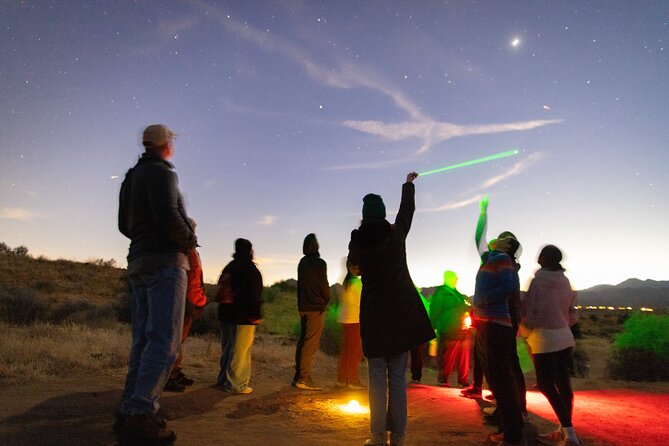
Moab’s red-rock country changes character after dark. At this stargazing outing, you begin with a walk through a scale model of the solar system, then settle into a zero gravity pod while an astronomy guide maps the heavens with laser pointers. The setting is the real attraction: internationally certified dark skies give the stars room to show themselves.
I like two things right away. The reclining pods and blankets make two hours of looking upward far easier on your neck and back. I also like the mix of storytelling and equipment: binoculars help you scan the sky, while powerful telescopes bring galaxies, nebulae, and clusters closer.
The main catch is logistics. You must reach the La Sal meeting point on your own, and no restroom is included. One booking also ran into confusion about a possible shuttle, so I would arrange transport well before the start time and not count on a rideshare.
Key points to know before you book
- A scale solar system starts the evening: You get a simple visual introduction to the planets before the sky becomes fully dark.
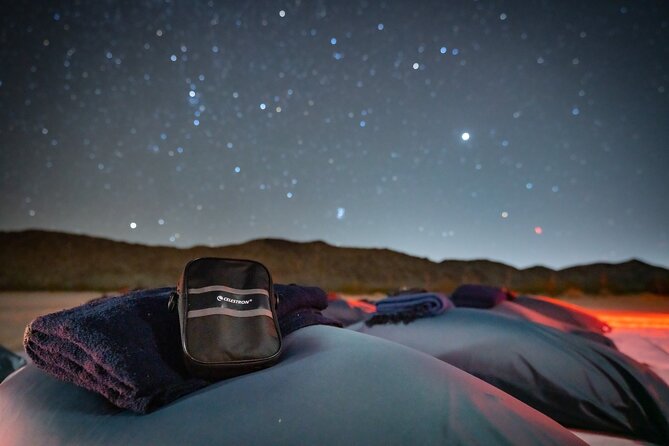
- Zero gravity pods make long sky watching easier: Each person has a lounger, blanket, and room to settle in.
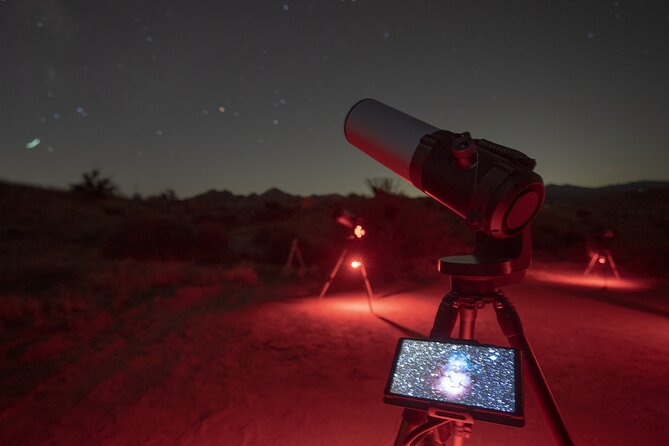
- Powerful telescopes show more than stars: The program includes views of galaxies, nebulae, and star clusters.
- A guide leads the sky tour: Laser pointers and constellation stories help you understand what you are seeing.
- Hot drinks are part of the setup: Coffee, tea, and hot chocolate are available during the session.
- You need your own transport: The activity ends where it begins, but transportation and a restroom are not provided.
Why Moab is so good after sunset
Many visitors come to Moab for daylight scenery, but the area earns a second look after the sun goes down. Away from bright city lights, the sky becomes the main show. This program takes place under Moab’s internationally certified dark skies, which is important because darkness is not just a pleasant extra. It determines how many faint stars and distant objects you can see.
I like that the evening is built around looking up, not rushing between several attractions. You are not trying to squeeze in a quick telescope stop before moving on. The two hour format gives the guide time to explain the sky, answer questions, and return to objects that deserve a second look.
The program is also designed for people who do not know much about astronomy. You do not need to arrive with a star chart or a working knowledge of constellations. The guide uses a laser pointer to direct your eyes, which helps turn a field of scattered lights into something you can follow.
More Stargazing Tours in the USA:
- Small Group Big Island Twilight Volcano and Stargazing Tour
★ 5.0 · 1,619 reviews - Griffith Observatory Hike: Guided Tour through Griffith Park
★ 5.0 · 1,020 reviews - Sedona Stargazing Tours LLC
★ 4.5 · 881 reviews
The scale solar system makes the planets feel real
The first part begins with a short walk through a scale model of the solar system. This is a smart opening because it gives you a sense of proportion before you start looking into space.
A list of planet names can feel dry. A model spread along a path gives the guide a way to talk about neighboring worlds in a physical, easy-to-follow way. As astronomical twilight begins, the timing also works well. You start with something close to home, then shift your attention to the darkening sky above.
This walk is short, but it does require some standing and movement. The activity says you should have a moderate level of physical fitness, and it is not recommended if you are unable to stand for 30 minutes. The rest of the evening is much more relaxed, but the opening is not entirely seated.
Zero gravity pods are a thoughtful comfort feature
After the introduction, each person gets a zero gravity pod, a blanket, and a pair of astronomy binoculars. The pods are designed to conform to your body and reduce pressure points. That matters more than it may sound.
Stargazing often involves a sore neck, stiff shoulders, or the temptation to keep shifting around in a normal chair. These loungers let you lean back and keep your view pointed toward the sky. The blanket is useful too, since open desert settings can feel cool at night even when the daytime heat was strong.
The pods also make the experience feel personal. You are not simply standing at the edge of a group while one telescope moves from person to person. You have your own place to settle in and watch the sky between telescope views.
Still, I would dress for the night rather than for the afternoon. The provided blanket helps, but it is not a replacement for suitable clothing. The supplied details do not specify a dress code or temperatures, so bring layers based on the weather forecast.
Telescopes, binoculars, and laser pointers work together
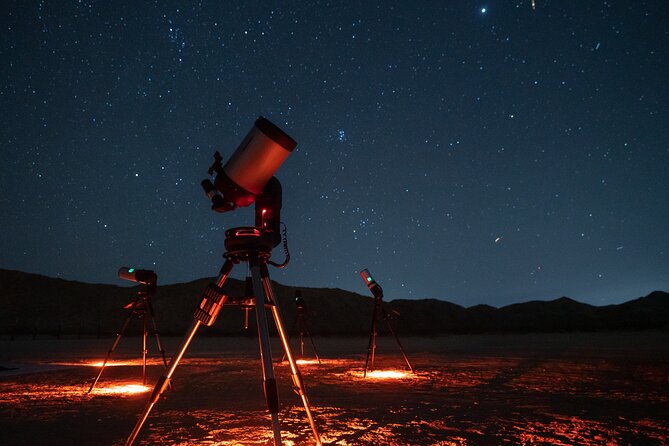
The strongest part of the program is the combination of tools. Binoculars offer a broad view that you can use at your own pace. Telescopes provide the close look at selected objects. Laser pointers connect the two by showing you exactly where to look.
The guide leads you through constellations and other objects in the night sky. The program includes galaxies, nebulae, and clusters, giving you more variety than a simple constellation lesson. Some objects are familiar in name but hard to locate without help. The laser pointer gives the sky a sense of order.
The telescopes are described as powerful and state of the art. That does not mean every view will look like a polished space photograph. Telescope views depend on conditions, equipment, and the object being shown. What you get is a direct look through the instrument, with a guide explaining what is in front of you.
That personal explanation is a big part of the value. Without it, you may see a faint blur and move on. With it, the blur becomes a galaxy or nebula located far beyond our own solar system. The guide’s stories about constellations add another layer, connecting the science with the old human habit of making pictures and tales from the stars.
Same sky over the USA, a different way to watch it:
- Miami: Frost Museum of Science and Planetarium Entry Ticket
★ 4.5 · 429 reviews - Griffith Observatory Insider Tour
★ 4.5 · 306 reviews - LA: Griffith Observatory Insider Tour
★ 4.5 · 287 reviews - The Original Sedona UFO and Stargazing Night Tour
★ 4.5 · 269 reviews
Devon has made a strong impression as a guide
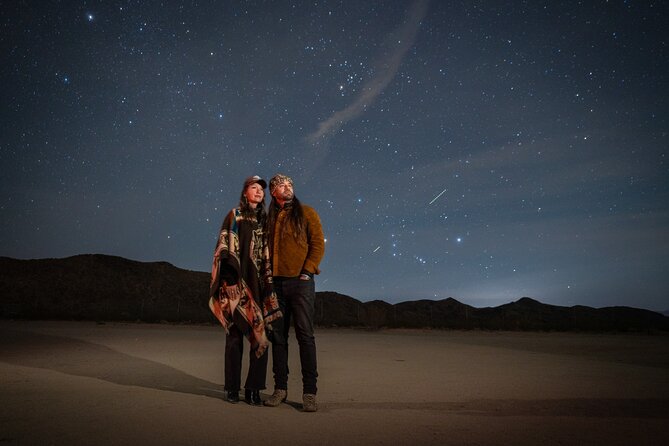
The guide can shape this kind of evening more than almost any other feature. Two especially positive accounts name Devon, who is described as entertaining and skilled at pointing out constellations, sharing their stories, and using digital telescopes to show distant galaxies.
That detail is worth noting if Devon is leading the session on your date, though the available information does not promise a particular guide. The best astronomy guide knows when to explain, when to let you look, and how to help a beginner find the target without making the lesson feel like school.
The praise for Devon centers on both personality and substance. That combination matters. A guide who knows the sky but cannot explain it clearly will leave you lost. A lively guide without good astronomy content gives you an enjoyable evening but not much to remember. Here, the strongest accounts point to both.
The activity has a maximum of 18 people. That is small enough for the guide to manage a shared program, though it is not a private session. If the group reaches its limit, you should expect to share the telescope time and follow a set presentation.
Hot chocolate helps make the night comfortable
A hot beverage station provides coffee, tea, and hot chocolate. This is a simple touch, but it fits the setting well. You can warm your hands and take a break from looking up without leaving the program.
The drinks also make the experience easier for families and for anyone who is unsure about spending two hours outdoors at night. They do not turn the outing into a meal, and no food is listed, so plan dinner separately.
I would treat the hot drinks as a comfort feature, not a reason to book on their own. The real value is the guided access to the dark sky and telescopes. The beverage station simply makes the wait and viewing time more pleasant.
The $200 price needs a careful look
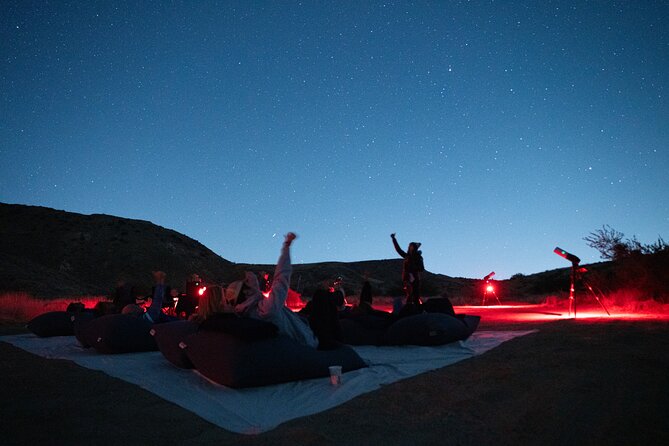
At $200 per person, this is not a casual add-on. You are paying for a specialized evening with an astronomy guide, telescope equipment, loungers, binoculars, blankets, and drinks. You are also paying for the location, where dark skies make the equipment more useful.
The value depends on how much you want help understanding what you see. If you already know the constellations and own good binoculars, the program may feel expensive. If you want a clear introduction to astronomy and a chance to view distant objects through strong telescopes, the cost is easier to justify.
The two hour duration helps. A shorter session would make the per-minute value weaker, especially once you account for setup and the trip to the observation site. Here, the evening has a clear beginning, a guided middle, and enough time for multiple objects.
The activity is often booked about 48 days ahead on average. That suggests you should not leave it until the last night of a busy Moab trip, especially if the sky is a major reason for booking. Since the program depends on good weather, an earlier booking also leaves room to move to another date if needed.
Transportation is the detail most likely to cause trouble
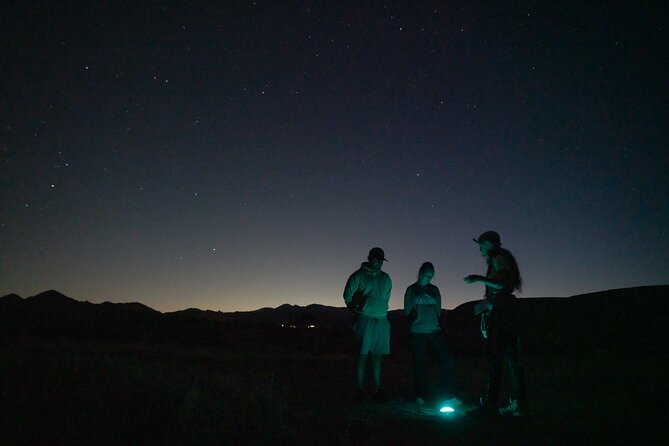
The meeting point is listed at 8HFF+7V in La Sal, Utah, and the activity ends at that same meeting point. Transportation is not included. That means you need a firm plan for getting there and back before the evening starts.
Do not assume a rideshare will be available in a remote area after dark. One person booked without a car, discovered at the last minute that a ride was not available, and had trouble reaching the operator before the start time. The same account referred to a possible shuttle, but the published details clearly say transportation is not provided.
My advice is simple: confirm your own vehicle or other dependable transport well ahead of time. Do not wait until an hour before departure. If you need to ask about a shuttle, do so before booking or as soon as you receive confirmation, and get the answer in writing.
This is also an important reason to avoid scheduling the program too close to another evening activity. The experience lasts about two hours, and the drive to and from the meeting point needs to be part of your plan.
Weather and timing can change the plan
Stargazing depends on good weather. If conditions cancel the session, you are offered another date or a full refund. The same applies if the minimum number of people is not met, with the choice of another date or experience, or a full refund.
The precise start time is not provided here, but the program begins as astronomical twilight starts to set. That timing is deliberate. You get the scale solar system introduction while the sky changes, then move into fuller night for the main telescope program.
I would keep your evening flexible. Avoid booking a nonrefundable dinner or performance immediately afterward. Weather can shift, and telescope viewing works best when the guide has enough time to present the sky properly.
For a full refund, cancel at least 24 hours before the start time. Changes or cancellations made less than 24 hours before the start are not accepted for a refund. The cut-off follows local time.
Who will enjoy this most
I would choose this for you if you want more than a pretty night sky. It suits first-time astronomy visitors, couples looking for a quiet evening, families with older children, and anyone who likes learning through direct observation.
The program also works well after a day of hiking, rafting, or canyoneering. It gives your body a slower activity while keeping the evening connected to Moab’s natural setting. You do not need to be an expert, but you should be comfortable standing for the opening portion and spending the evening outdoors.
I would hesitate if you dislike sitting still, need guaranteed transportation, or want a private telescope session. The group can include up to 18 people, and the experience does not include a restroom. It is also not a good choice for someone who cannot stand for about 30 minutes.
Should you book Professional Stargazing in Moab?
I would book it if the night sky is an important part of your Moab trip and you want help making sense of it. The scale model, comfortable pods, binoculars, laser guided constellations, and telescope views create a well-shaped two hour program. Devon’s praised guiding style is another reason to feel hopeful, though a particular guide is not guaranteed.
The price is high, and the transportation issue deserves serious planning. But for someone who values astronomy and wants to see galaxies, nebulae, and clusters through proper equipment, this offers more than simply pulling into a roadside viewpoint.
Book it with reliable transport, warm layers, and a flexible evening schedule. If you do that, the dark sky becomes the main event rather than a quick pause between daytime activities.
FAQ
How long does the stargazing experience last?
The program lasts about two hours.
Where does the experience begin and end?
It begins at 8HFF+7V La Sal, Utah, and ends back at the same meeting point.
Is transportation included?
No. Transportation to and from the observation site is not included.
Is a restroom available?
No restroom is included with the activity.
What equipment is provided?
You receive access to telescopes, astronomy binoculars, zero gravity loungers, blankets, and an astronomy guide.
Are hot drinks included?
Yes. Coffee, tea, and hot chocolate are available at the hot beverage station.
Do I need astronomy experience?
No specific astronomy experience is required. The guide presents constellations and night sky objects with laser pointers and telescopes.
How many people can join the program?
The activity accepts a maximum of 18 people.
Is the activity suitable for someone with limited mobility?
Participants should have a moderate level of physical fitness. The activity is not recommended for anyone unable to stand for 30 minutes.
What happens if bad weather cancels the experience?
You will be offered another date or a full refund if poor weather causes the cancellation.
Fresh listings near the USA
- Milky Way Photography in Arches National Park★ 4.0 · 4 reviews
- Private Stargazing – Sequoia National Park★ 4.5 · 14 reviews
- Private Tour of Griffith Observatory★ 4.5 · 58 reviews
- Haleakala Sunset and Stargazing Audio Tour★ 4.0 · 10 reviews
- Stargazing Tour in Kapalua★ 5.0 · 31 reviews
- S’mores and Stargazing on Hidden Beach★ 5.0 · 4 reviews
- Astro-Photo, Hiking and Stargazing Tour in Arches National Park★ 5.0 · 63 reviews
- Haleakala Sunset and Astronomy Tour★ 5.0 · 33 reviews
Moab Stargazing, side by side.
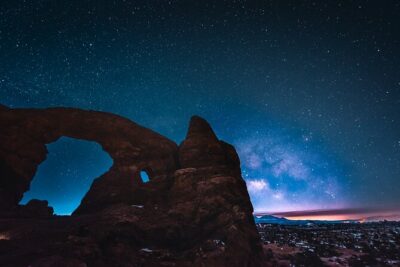
Astro-Photo, Hiking and Stargazing Tour in Arches National Park
Read our review →
The Windows Astro-Photography and Stargazing Hike
Read our review →
Lists this night appears in