
REVIEW · TELESCOPE STARGAZING
San Pedro de Atacama: Astro Tour with big telescopes
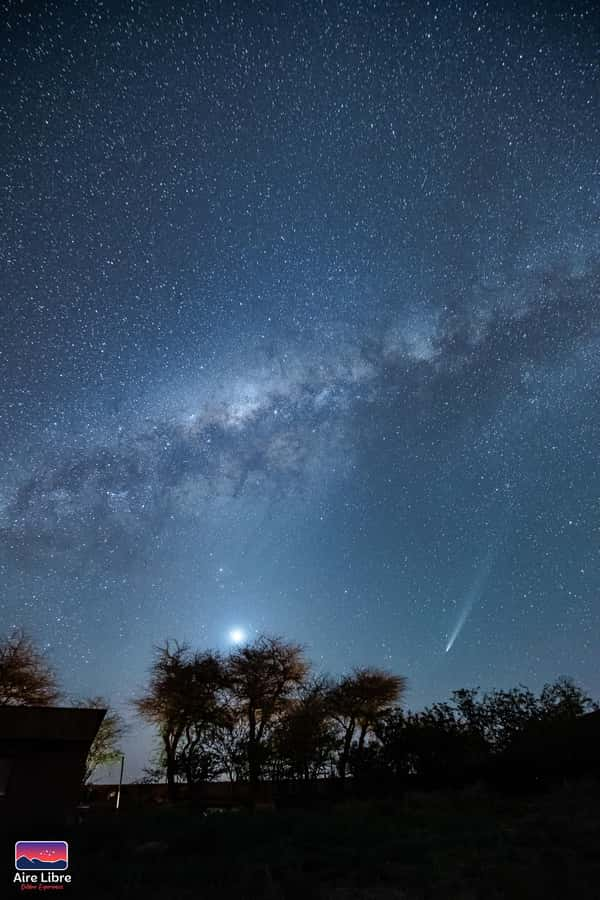
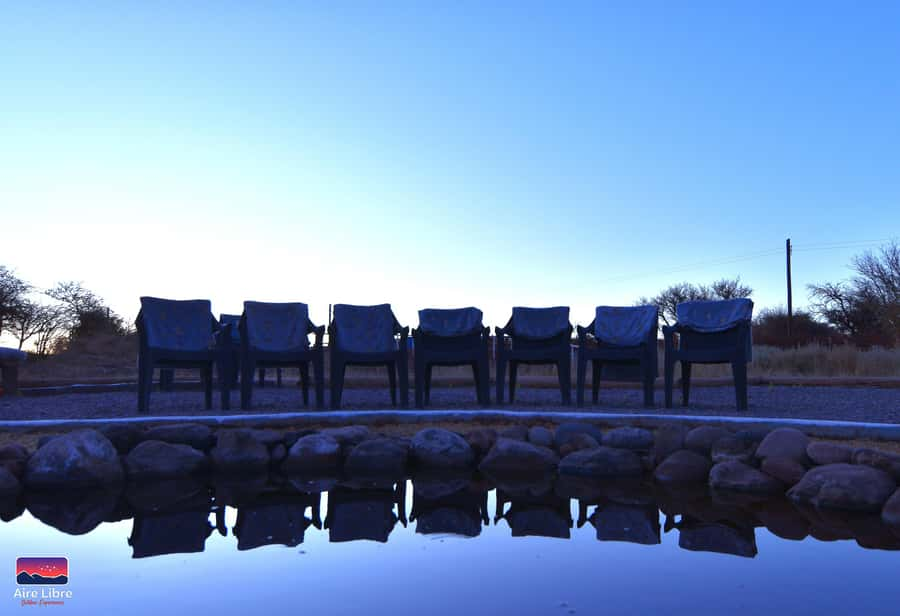
The Atacama night sky is the main event here, but the setting gives it a thoughtful local frame. You travel just 15 minutes from San Pedro de Atacama to an outdoor viewing area shaped like a Chakana, the Andean Cross, with a water mirror at its center. Look up at the stars, then down at their reflection.
I like two things in particular: the tour gives equal time to Andean and Greek-Roman star stories, and the professional telescopes turn faint points of light into clear celestial objects. The star portrait taken with a light-sensitive camera is also a fine souvenir. One consideration: desert nights can be cold, and cloudy or stormy weather can affect the activity.
Key points to know before booking
- A short 15-minute ride: Hotel, Airbnb, or housing pickup keeps the evening simple.
- Two ways to read the sky: You learn both Indigenous Andean constellations and classic European interpretations.
- Professional telescopes: The equipment gives you more than naked-eye stargazing.
- A Chakana-shaped setting: The central water mirror reflects the stars and adds a quiet visual focus.
- A personal night photo: A light-sensitive camera captures you beneath the sky.
- Small-group or private options: The private format may suit you if you want a slower pace and more questions.
Why this Atacama stargazing tour feels different
Many night-sky outings come down to standing in a dark field and pointing upward. This one gives the evening a clear shape. You begin with the way people have looked at the sky for centuries, then move to the science and detail offered by modern telescopes.
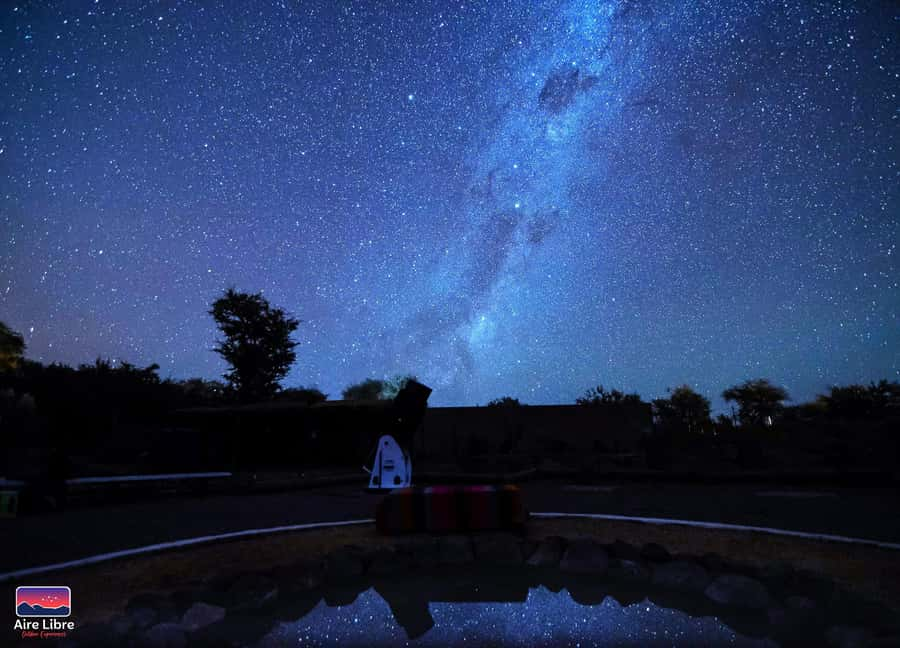
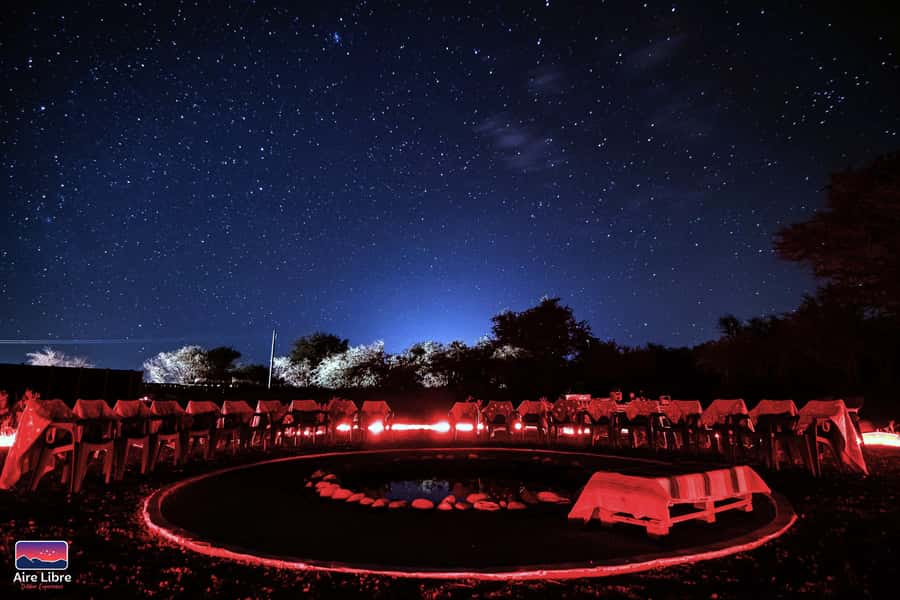
The Andean setting matters. The viewing area is arranged in the form of a Chakana, an Andean Cross, and a shallow water mirror sits in the middle. The mirror lets you see the stars reflected below you, echoing a way Indigenous cultures in the Central Andes used water to observe the sky.
That does not replace the astronomy. It gives you another way to think about it. The guide explains Andean constellations alongside the familiar Greek and Roman figures used in much of Western astronomy. You get two systems for making sense of the same night sky.
I like this approach because it avoids treating the desert as just a dark backdrop. The place, the stories, and the equipment all have a role. You can enjoy the beauty of the stars without needing a technical background.
More Telescope Stargazing in San Pedro De Atacama:
- Teide by Night: Sunset & Stargazing with Telescopes Experience
★ 4.5 · 1,492 reviews - Uluru: National Park Astronomy Tour with Telescope and Photo
★ 4.4 · 357 reviews - Teide National Park: Guided Large Telescope Stargazing Tour
★ 4.9 · 319 reviews
The 15-minute ride from San Pedro
Pickup is offered in San Pedro de Atacama, including the Tocopilla 517 meeting point. The operator can collect you from your hotel, Airbnb, or other housing, with the driver using a passenger list that includes your names.
The drive to the observation site takes about 15 minutes by van. That is short enough that you do not lose much of your evening to transport, yet it gets you away from the lights of town. The return trip takes another 15 minutes after the program.
This simple transfer is one reason the activity works well as an evening plan. You do not need to arrange a taxi to a remote site or find your way back through the desert at night. Pickup and drop-off are included.
The exact starting time depends on availability. Since the program lasts about two hours, you should allow roughly three hours from hotel pickup to return, including both rides.
Entering the Chakana viewing area
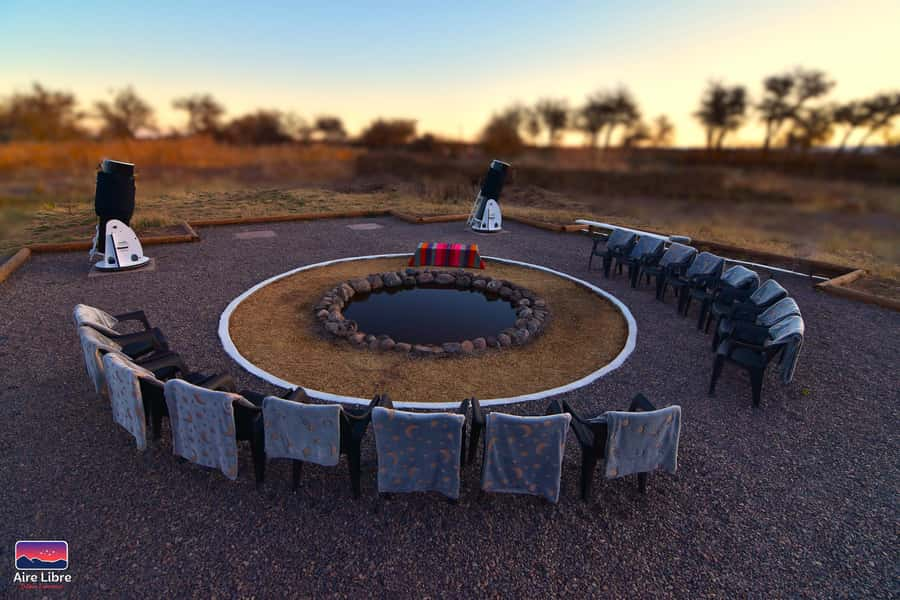
At the site, you arrive at an arranged outdoor observation area rather than a conventional indoor visitor center. Its Chakana shape gives the place a sense of purpose, and the water mirror at the center creates a second view of the sky.
This is a setting for quiet observation, not a fast-moving attraction. You may spend time simply looking with your own eyes before using any equipment. The naked-eye portion helps you find constellations and recognize the broad pattern of the sky.
The mirror is especially appealing if you enjoy photography or visual details. It gives you a reflected sky beneath the real one. The supplied information does not promise a particular size or design for the mirror, so think of it as a central feature of the setting rather than a separate attraction.
You will also find a toilet at the site, a practical detail in an isolated desert location.
Andean constellations beside Greek and Roman ones
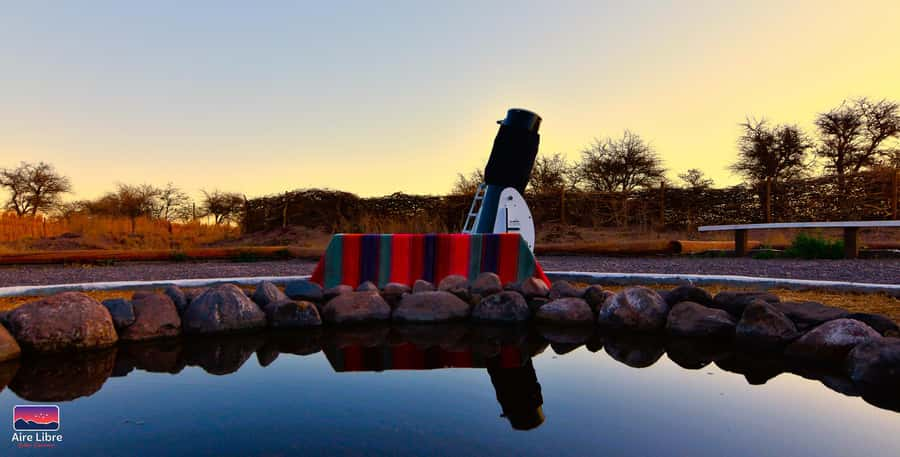
The guide explains two different traditions of reading the stars. The Andean Cosmovision includes constellations and interpretations from the Central Andes, while the classic European tradition draws on Greek and Roman figures.
This comparison is one of the strongest parts of the experience. You are not simply memorizing constellation names. You are seeing how different cultures organized the same sky according to their own needs, stories, and ways of understanding the natural world.
The tour is suitable for beginners because the guide explains the sky in an accessible way. Lasse, one of the named guides associated with the experience, received particular praise for answering questions and helping people connect with astronomy without feeling overwhelmed.
That point matters. Astronomy can become technical quickly, especially when a guide begins listing distant objects and unfamiliar terms. A good guide keeps the explanation clear, then lets you ask for more detail when you want it.
Guiding is available in English, French, German, and Spanish. Private and small-group formats are offered, so you can choose the kind of evening that fits your interest. A private outing may be useful if you want to set your own pace or spend more time asking questions.
More Stargazing Tours in San Pedro De Atacama:
- San Pedro de Atacama: Etno-Stargazing Tour with Transfer
★ 4.8 · 629 reviews - San Pedro de Atacama: Stargazing Experience
★ 4.7 · 489 reviews - Astronomical Tour with Guide and Pick Up San Pedro de Atacama
★ 4.5 · 145 reviews - “Astronomical Adventure in San Pedro de Atacama”
★ 4.5 · 96 reviews
What the professional telescopes add
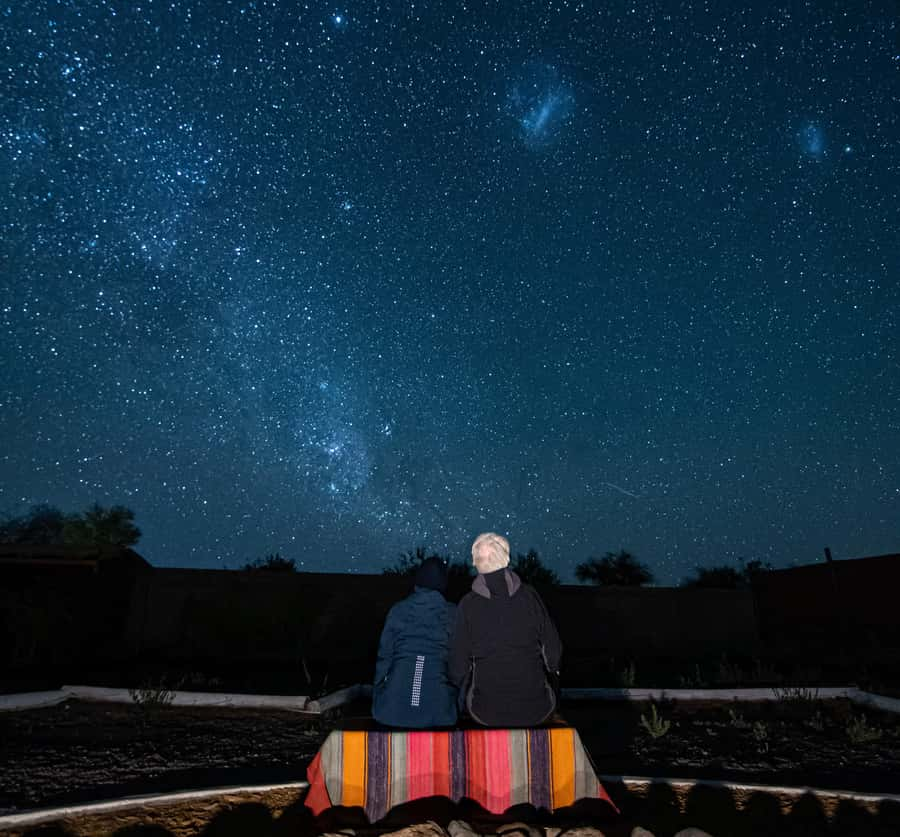
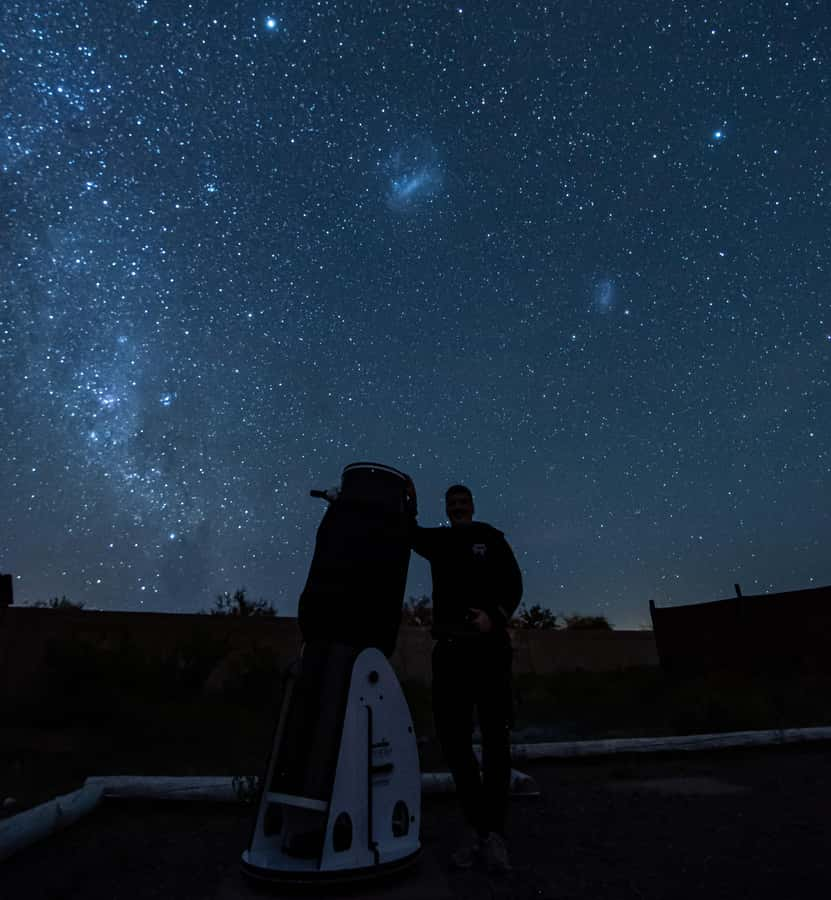
After the introduction, you look through high-end professional telescopes at selected celestial objects. The telescopes are the reason to choose this outing over a simple walk outside town with a star app.
With the naked eye, you see the scale and clarity of the Atacama sky. Through the telescope, you can examine specific objects in more detail. The supplied information does not promise a fixed list of planets, galaxies, or nebulae, because what you see depends on the date, visibility, and weather.
That flexibility is normal for astronomy. The night sky changes through the year, and cloud cover can limit what equipment can show. The guide chooses the most interesting visible objects for the conditions.
The equipment also gives the experience more depth for people who already have some interest in astronomy. You can begin with a simple explanation, then ask more technical questions as the evening develops.
The best way to approach this portion is to expect guided observation rather than a guaranteed checklist. You are paying for access to professional telescopes and an experienced explanation of what is visible that night.
The star portrait and the quieter moments
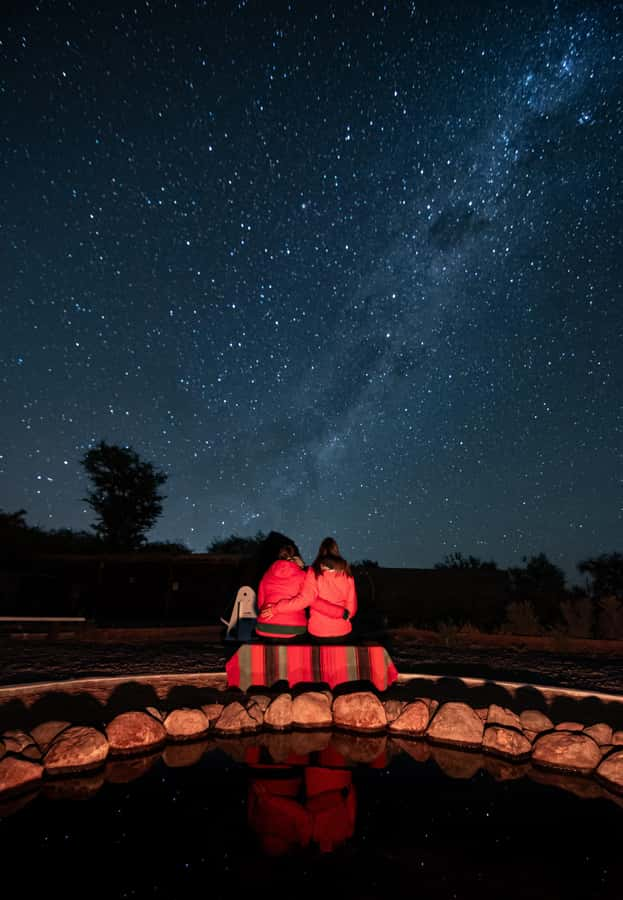
A light-sensitive camera and special lens are used to take pictures of you with the stars. This adds a personal record to an activity that can otherwise be difficult to photograph.
Night photography is not always easy. Ordinary phone cameras may show little in very dark conditions, and bright screens can disturb your night vision. The dedicated camera gives you a better chance of leaving with an image that connects you to the place.
The photo is not the whole point of the evening, and you should not treat it as a studio portrait session. The main activity remains observing and learning. Still, it is a useful extra, especially if you want something more personal than a standard desert photo taken during daylight.
The program also gives you time to sit, look up, and let the sky do some of the work. A hot tea, hot chocolate, or glass of red wine is served while you stargaze. The drinks make a practical difference in the cold desert air and slow the pace at the right moment.
Alcohol and drugs are not allowed as general activity rules, but the included glass of wine is part of the planned refreshment service. If you prefer something warm, choose tea or chocolate.
Cold nights and weather limits
Bring warm clothing. This is the advice to take most seriously. Desert temperatures can fall sharply after dark, and you may be standing or sitting outside for much of the two-hour program.
Wear comfortable shoes as well. The tour takes place outdoors, and sturdy, easy footwear is more useful than anything formal. You do not need special astronomy equipment because the telescopes and other viewing tools are provided.
Cloudiness or storms can affect the activity. The Atacama is famous for clear skies, but no stargazing operator can control the weather. A cancellation or change may be necessary if conditions make observation impossible.
I would place this tour early enough in your San Pedro stay to leave room for a second attempt if weather interferes. The booking terms allow free cancellation up to 24 hours in advance, with a full refund, and you can reserve now and pay later. Those options help if your desert schedule is still changing.
Is $82 a fair price?
At $82 per person, this is not the cheapest way to look at the night sky. You are paying more than you would for a self-guided walk outside town, but the comparison is not quite fair.
The price includes hotel, Airbnb, or housing pickup and return, a certified guide, naked-eye instruction, Andean Cosmovision, professional telescopes, night photography, refreshments, and use of the arranged observation site. Transport and equipment are already handled.
The value is strongest if you care about interpretation and want access to serious equipment. A private or small-group format can also make the price easier to justify if you prefer personal attention and a relaxed pace.
The value is weaker if you mainly want a quick photo or a short look at the stars. The experience lasts about two hours, and part of that time is spent listening to explanations and moving between naked-eye viewing, telescopes, and photography.
I see it as a worthwhile middle ground between a basic sightseeing stop and a highly technical astronomy program. You get cultural context, science, comfort, and a memorable setting without committing to a long night.
Who will enjoy this most?
I would recommend it to first-time stargazers who want a guide to make the sky easier to understand. You do not need prior knowledge, and the guide can help you connect the patterns above you with both Andean and European traditions.
It also suits families and mixed-interest groups, provided everyone is comfortable being outdoors at night. The water reflection, portrait session, and hot drinks give non-astronomy fans something to enjoy while the telescope portion unfolds.
Photography-minded visitors should like the light-sensitive camera and Chakana setting. The water mirror offers another composition, although the final photo possibilities depend on the conditions and the camera work that night.
Private groups may prefer this activity because they can work at their own pace. One private outing was described as especially relaxing, with enough freedom to ask questions and spend time on the parts that mattered most.
You might want a different option if you dislike cold weather, need a tightly timed schedule, or expect guaranteed views of a particular planet or galaxy. Astronomy always has an element of uncertainty.
How the two-hour itinerary works
The evening follows a simple sequence:
- Your driver collects you in San Pedro de Atacama and takes you about 15 minutes to the site.
- You enter the Chakana-shaped outdoor area and begin with naked-eye viewing.
- The guide explains Andean and Greek-Roman constellations and answers questions.
- You use professional telescopes to examine visible celestial objects.
- A light-sensitive camera takes your portrait with the stars.
- You enjoy hot tea, hot chocolate, or red wine while continuing to look at the sky.
- The van returns you to your San Pedro pickup point after about two hours at the site.
This order gives the night a natural rhythm. You start broad, learn how to read the sky, move closer with the telescopes, and finish with a slower period of looking and talking.
Should you book this stargazing tour?
Book it if you want more than a dark-sky photo. The combination of Andean star knowledge, professional telescopes, a water mirror, and a personal night portrait gives the two-hour outing a clear identity.
I would especially choose it if you value a good guide. Lasse is praised for clear explanations, patient answers, and making astronomy approachable. That human side can make the difference between staring at equipment and understanding what you are seeing.
Pack seriously warm clothing, keep your schedule flexible for weather, and remember that the exact objects in the telescope will change with the night. If those conditions suit you, $82 buys a well-organized evening with transport, equipment, interpretation, and a memorable view of the Atacama sky.
FAQ
How long does the stargazing activity last?
The guided stargazing program lasts about two hours. The van ride takes about 15 minutes each way, so allow extra time for pickup and return.
Is hotel pickup included?
Yes. Pickup and drop-off are included from your hotel, Airbnb, or housing in San Pedro de Atacama. Tocopilla 517 is also listed as a pickup and drop-off location.
Which languages are available?
Guides are available in English, French, German, and Spanish.
Is this a private tour or a group tour?
Private and small-group options are available. The exact format depends on the option you choose when booking.
What will I see through the telescopes?
You will view the most interesting celestial objects visible under that night’s conditions through high-end professional telescopes. The exact objects are not fixed in advance.
Is photography included?
Yes. A light-sensitive camera and special lens are used to take pictures of you with the stars.
What should I bring?
Bring comfortable shoes and warm clothing. Desert nights can be cold.
Can weather cancel the activity?
Yes. The activity is subject to weather conditions, including cloudiness or storms. Free cancellation is available up to 24 hours in advance for a full refund.
Fresh listings near San Pedro De Atacama
- San Pedro de Atacama: Astronomical Tour★ 3.9 · 3 reviews
- San Pedro de Atacama: Stargazing Tour in the Atacama Desert★ 3.0 · 5 reviews
- San Pedro de Atacama: Stargazing Experience with Transfer★ 3.5 · 8 reviews
- San Pedro de Atacama: Etno-Stargazing Tour with Transfer★ 3.5 · 5 reviews
- SAN PEDRO DE ATACAMA: ASTRONOMICAL TOUR★ 3.6 · 3 reviews
- From San Pedro de Atacama: Astronomy Tour★ 5.0 · 2 reviews
- Chile: Astronomical Tour in the Atacama Desert★ 4.8 · 4 reviews
- Antofagasta: Astronomical Tour with a Guide★ 3.7 · 4 reviews
Telescope Stargazing, side by side.
Teide by Night: Sunset & Stargazing with Telescopes Experience
Read our review →
National Park Astronomy Tour with Telescope and Photo
Read our review →
Teide National Park: Guided Large Telescope Stargazing Tour
Read our review →
Northern Lights Tour and Stargazing by Telescope
Read our review →
Jasper Planetarium and Telescope Combo Tour Tickets
Read our review →
Cavalleria: Guided Stargazing at the Beach with Telescope
Read our review →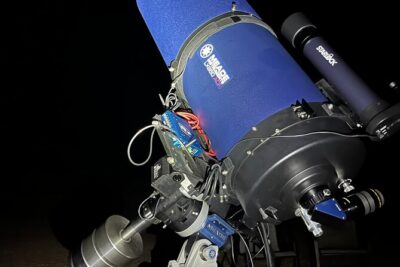
Stargazing Tour with Telescopes and Video Astronomy in Sedona
Read our review →Lists this night appears in