
REVIEW · INDIA STARGAZING
Niel Island Star Gazing
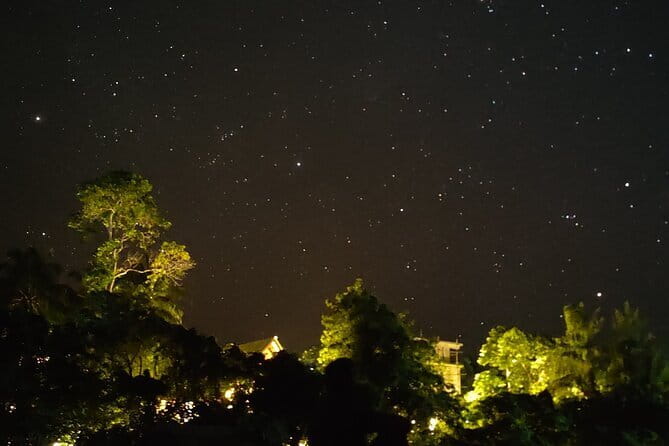
Neil Island’s dark night sky is the real star of this 90-minute outing. Away from bright resort lights, you walk with a red-light headlamp to a secluded viewing site, then use a large Dobsonian telescope to look for the Moon, Saturn, Jupiter, nebulae, and distant star clusters.
I like two things here: the guide explains both the science and the old myths tied to each constellation, and the small group size, capped at 15, should give you a fair chance at the telescope. Harshal Patil has been singled out for patient, lively explanations and careful answers.
The main drawback is simple: good weather is essential. Haze or cloud can spoil the view, and the activity may be moved or canceled. The walk also takes place at night, so bring patience, sensible footwear, and realistic expectations.
Key points to know before booking
- A rare dark-sky setting: Neil Island offers a far better chance of seeing stars than a brightly lit town or resort area.
- Red-light headlamps supplied: You can walk to the site without flooding the group’s eyes with white light.
- A Dobsonian telescope: The equipment is suited to bright planets, lunar craters, nebulae, and star clusters.
- Science plus mythology: Guides explain what you are seeing and the stories attached to the constellations.
- Small group limit: The maximum is 15 participants, useful when several people need time at one telescope.
- Weather can change the plan: Poor conditions bring a choice of another date or a full refund.
Why Neil Island works so well for stargazing
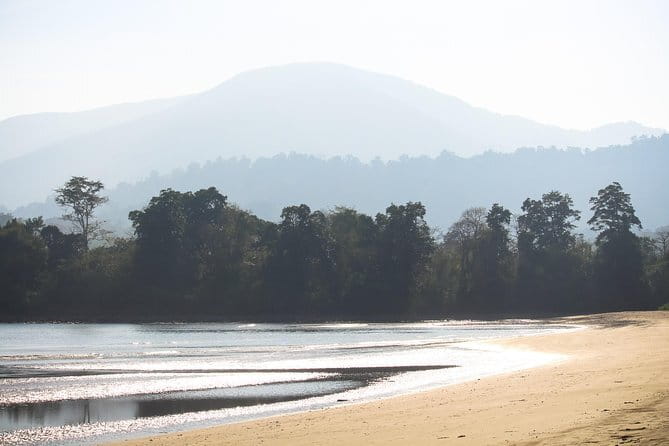
The Andaman and Nicobar Islands are a good place to slow down and look up. On Neil Island, the absence of heavy city lighting can make the night sky feel much larger than it does at home. That difference matters more than fancy equipment. A telescope can show you Saturn’s rings, but a dark sky lets you see the setting around it.
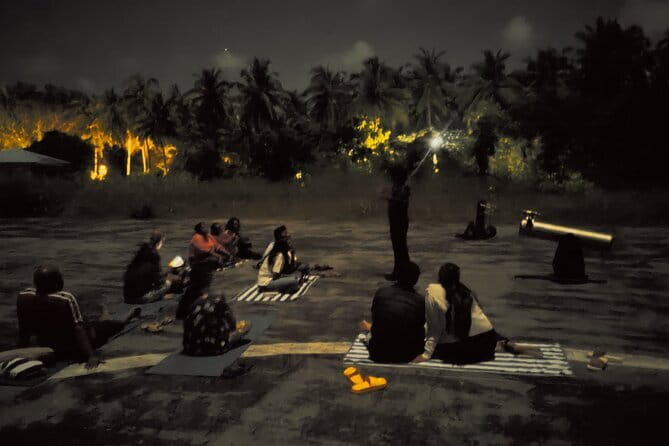
The experience begins at SeaShell Samssara, near Lakshmanpur Beach and opposite the helipad. From there, you walk to a darker site. The supplied red-light headlamp is more than a fun prop. Red light helps preserve night vision, so your eyes can continue adjusting to the dark while you move around and listen to the guide.
That walk is part of the appeal, but it also calls for care. You are outside at night, and the route is not described in detail, so sensible shoes are a good idea. Stay with the group and use the light only as needed. Bright phone screens can make it harder for everyone nearby to see faint stars.
More Stargazing Tours in the world:
- Dubai Red Dunes ATV, Camels, Stargazing & 5* BBQ Al Khayma Camp
★ 5.0 · 21,620 reviews - Sharm El-Sheikh: Ultimate ATV Quad, Stargazing & BBQ Dinner
★ 4.7 · 4,084 reviews - Tenerife: Teide National Park Sunset & Stargazing Tour
★ 4.2 · 3,812 reviews
The walk to the secluded viewing site
The first part of the outing is low-tech and quiet. Instead of sitting beside a resort under stray lamps, you leave the meeting point and head toward a site chosen for darker conditions. This gives the session a clear purpose from the start: reduce light, let your eyes adjust, and prepare to read the sky.
You receive a headlamp and learn how to use it without shining it into another person’s face. That small detail can make a real difference. White light ruins night vision for several minutes, while red light is less disruptive to the group.
Do not expect a long island tour or private transport. Transportation is not included, and the activity begins and ends at the stated meeting point. If your hotel is elsewhere on Neil Island, you need to arrange your own way there and back. The scheduled operating window is 7:00 PM to 11:00 PM, giving the operator room to place the 90-minute session at a suitable time.
Learning the Dobsonian telescope
At the viewing site, the guide introduces the Dobsonian telescope before aiming it at the sky. This is useful for first-time stargazers because the telescope can look intimidating when you first see it. A short explanation helps you understand how it moves and how to take your turn without bumping the instrument.
A Dobsonian is especially well suited to visual observing. It does not promise a polished, colorful image like a space photograph. Instead, you look through the eyepiece and see the actual object as a small, live point or shape in the night sky. The reward is the sense that you are observing the sky directly, not watching a prepared presentation.
The exact targets depend on the date, time, and weather. The Moon may show craters and bright surface detail. Saturn may reveal its rings. Jupiter may be visible, and the session has also included nebulae, supergiants, and old star clusters. You should treat these as possible highlights rather than a fixed menu.
That changing schedule is a strength. The sky is different from one night to the next, and the guide can focus on objects that are visible at that hour. It also means nobody should book expecting the same sequence every time.
Constellations, planets, and the stories behind them
The guide does more than point at bright dots. You learn how to connect stars into recognizable constellations, then hear the myths associated with them. This combination helps the information stick. Scientific facts tell you what an object is, while mythology explains how people in earlier cultures made sense of the same sky.
Harshal Patil has been praised for making the session engaging, patient, and easy to follow. His background has been described as covering both marine biology and astronomy, an unusual mix for an island-based activity. If Harshal leads your session, you can expect room for questions rather than a rushed list of facts.
The strongest part of this format is the chance to ask about what you are seeing at that moment. You can ask why a planet looks bright, how a constellation was named, or how a nebula differs from a star cluster. The guide also uses astronomy apps and visual aids in some sessions, helping you identify objects that are difficult to recognize with the naked eye.
This is a good fit for children who ask endless questions, adults returning to school-level astronomy, and anyone who likes a story with their science. It is less suitable if you want a silent, private night with no instruction. The guide is central to the experience.
Same sky over the world, a different way to watch it:
- Tenerife: Sunset and Stargazing at Teide National Park
★ 4.7 · 2,826 reviews - Teide National Park Sunset & Stargazing with Dinner (Star Safari)
★ 5.0 · 2,601 reviews - Dubai: Sunset Camel Trek, Al Khayma Camp, Stargazing & BBQ
★ 4.8 · 2,588 reviews - Dubai: Overnight Safari, Dinner, Stargazing & Al Khayma Camp
★ 4.8 · 2,562 reviews
What you might see through the telescope
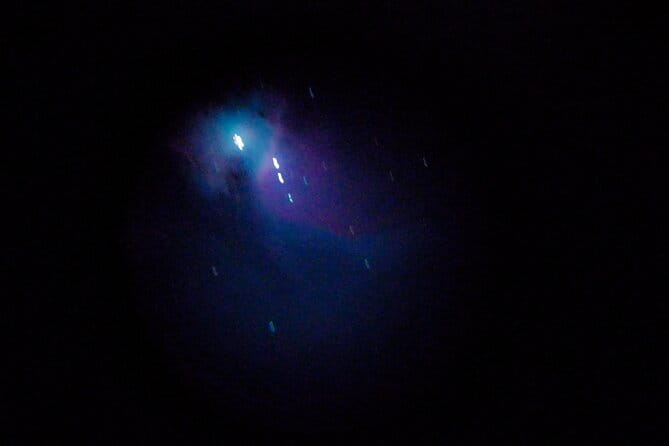
The Moon is usually the easiest target to appreciate. Its craters and uneven surface can look surprisingly sharp through a telescope, especially compared with the pale disk you see with the naked eye. A bright full Moon can be impressive, but it can also wash out some faint stars, so lunar conditions affect the rest of the session.
Saturn is the classic telescope moment. Its rings turn a small point of light into a recognizable planet, though visibility depends on its position in the sky and the conditions that night. Jupiter can also be striking, and the supplied reports specifically note views of both Jupiter and Saturn during past sessions.
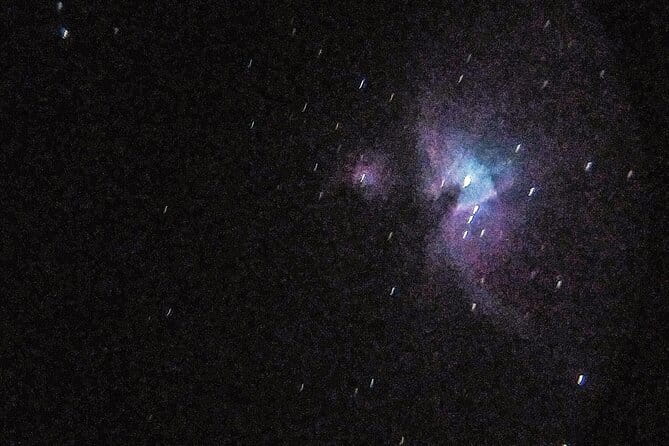
Nebulae and star clusters offer a different lesson. A nebula may appear as a soft, faint patch rather than a dramatic cloud of color. A cluster can look like a compact spray of stars. That is not a flaw in the equipment. Your eyes work differently from a long-exposure camera, and the guide can explain what you are really seeing.
A supergiant or distant cluster helps put scale into perspective. These objects are far beyond anything you can visit, yet a telescope lets you observe their light from a quiet patch of Neil Island. That is the experience’s best quality: the equipment is practical, but the subject is enormous.
Group size, comfort, and the pace of the night
The maximum group size is 15 people. That is not a private tour, but it is manageable for a single-telescope session. You will still need to wait your turn at the eyepiece, especially when the Moon or a planet draws everyone’s attention.
The guide’s explanations fill that waiting time. Instead of standing around while the telescope is adjusted, you can learn the constellation’s name, hear its story, or ask a question. The pace may still feel slower if the group is full, so families should prepare children for a shared activity rather than nonstop telescope views.
The duration is about 1 hour and 30 minutes. That is long enough for an introduction, a walk, constellation spotting, and several telescope targets without turning into a late-night endurance test. The actual balance can shift with cloud cover, the number of questions, and how quickly the guide can locate each object.
There are no private vehicles included. The activity ends where it starts, at SeaShell Samssara. Public transportation is nearby, and service animals are allowed. Most people can participate, but the supplied information does not describe the path or its surface, so anyone with mobility concerns should ask the operator about the walk before paying.
Is $35.99 a fair price?
At $35.99 per person, this is not the cheapest way to spend an evening on an island. The value depends on what you would otherwise do after dark. If you already enjoy looking at stars on your own, you might prefer finding a quiet beach and using a phone app. You would not, however, have the Dobsonian telescope or an astronomy guide.
For a first telescope experience, the price is reasonable. It covers the guide, telescope, red-light headlamp, fees, and taxes. You are paying for equipment, instruction, and access to a darker viewing point, not simply for a place to sit outside.
Group discounts can improve the cost for families or friends. The experience is also mobile-ticket friendly, and confirmation is received when you book. Since transportation is not included, add the cost and time of reaching SeaShell Samssara if you are staying somewhere else.
The best value comes when the sky cooperates and the guide has time to explain what you see. That is why the weather policy matters so much. If poor conditions cancel the session, you are offered another date or a full refund. You can also cancel for a full refund if you do so at least 24 hours before the start time. Changes or cancellations inside that 24-hour window are not refunded.
Weather, haze, and realistic expectations

Stargazing is never a guaranteed list of planets. Clouds, haze, moonlight, and the position of objects all affect the night. One scheduled session was called off because the sky was hazy, with the operator saying that the views would not be worthwhile. That decision may disappoint you, but it is better than using a telescope under poor conditions and pretending the experience is complete.
Check the forecast before you leave for the meeting point, but remember that local sky conditions can differ from a general weather app. If the operator cancels for poor weather, you receive the choice of a new date or a full refund.
You should also pack lightly. The operator supplies the telescope and headlamp, so you do not need special gear. Comfortable clothing, sturdy footwear, and a phone with its screen kept dim are practical choices. The data provided does not promise chairs, refreshments, insect protection, or photography support, so do not assume these are included.
Who will enjoy this most
I would recommend this session to curious families, couples who want a quiet evening activity, and adults who have always wanted to learn the constellations. It suits people who enjoy guided learning but do not need a polished show. The mix of scientific explanation and mythology gives the night enough variety for beginners.
Children have enjoyed the activity because it turns a dark evening into a lesson with visible targets. Still, young children need to manage a walk, darkness, waiting time, and a shared telescope. If your child expects every planet to appear large and colorful, explain in advance that real telescope views are smaller and subtler than images in books.
Experienced amateur astronomers may find the session basic, particularly if they already own good equipment. Even then, the dark setting and a different guide’s choice of targets can make it worthwhile. The maximum of 15 means you should not expect an advanced private observing program.
The activity is less suitable if you need guaranteed views, private transportation, or an indoor backup plan. It is also a poor fit for a tight schedule where a weather cancellation would cause trouble.
Should you book Niel Island Star Gazing?
Book it if you want an accessible introduction to astronomy and like the idea of seeing the sky from a genuinely dark island setting. The red headlamp, Dobsonian telescope, and guide-led constellation session give the evening more substance than simply standing on a beach and looking up.
I would choose a night when your schedule has some flexibility. That way, a hazy sky does not ruin your plans, and you can accept a replacement date if needed. Ask about the guide when you arrive, and if Harshal Patil is leading, make the most of his patient, question-friendly style.
Skip it if you want a private experience, guaranteed planets, or transport from your hotel. For everyone else, $35.99 buys a thoughtful, equipment-based night out, provided you understand that the sky, not the operator, gets the final say.
FAQ
Where does the stargazing experience begin?
It begins at SeaShell Samssara, Sea Survey No./Plot No. 26, Lakshmanpur Beach, opposite the helipad, Neil Island, Andaman and Nicobar Islands 744104, India.
Where does the activity end?
The session ends back at the same meeting point.
How long does the experience last?
The stargazing activity lasts approximately 1 hour and 30 minutes.
What time does the activity operate?
The stated opening hours are Monday through Sunday, from 7:00 PM to 11:00 PM.
Is transportation included?
No. Private transportation is not included. The activity begins and ends at the meeting point, which is near public transportation.
What equipment is provided?
The operator provides a telescope and a red-light headlamp. Fees and taxes are included as well.
How many people can join?
The group can include a maximum of 15 participants.
Can I cancel for a refund?
Yes. You can receive a full refund if you cancel at least 24 hours before the experience starts. Cancellations or changes made less than 24 hours in advance are not refunded.
What happens if the weather is poor?
The experience requires good weather. If poor conditions cause a cancellation, you are offered another date or a full refund.
Fresh listings near the world
- Cabo de Gata: Guided Night Walk with Stargazing★ 4.7 · 36 reviews
- Brisbane: Glow Worms, Sunset, Star Gazing & BBQ★ 4.4 · 26 reviews
- Cabo de Gata: Stargazing Experience★ 4.5 · 7 reviews
- Antofagasta: Astronomical Tour with a Guide★ 3.7 · 4 reviews
- Boulder: Guided Astronomy Tour★ 4.7 · 11 reviews
- 1-Day Grand Canyon Tour from Las Vegas: Stargazing & Sunrise★ 3.6 · 3 reviews
- Astronomical Tour: San Pedro de Atacama – Chile★ 4.5 · 3 reviews
- Perth: Pinnacles Stargazing, Sandboarding & Beach Kangaroos★ 5.0 · 3 reviews
India Stargazing, side by side.
Non-Touristic Overnight Camel Safari with Stargazing Hidden Tour In Desert
Read our review →
Tour De Small Town Maharashtra Nature Trekking and Star Gazing
Read our review →Lists this night appears in