
REVIEW · STARGAZING
Stargazing Under the Bali Skies
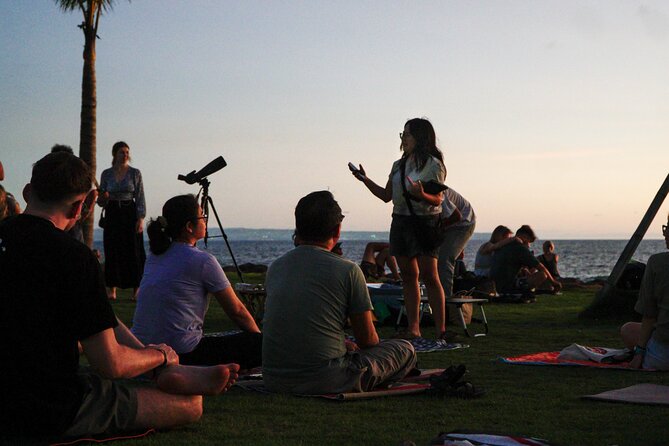
Seeing Saturn’s rings and the Moon’s craters from a Bali beach is the headline here, but the hands-on approach is what makes the evening worthwhile. Gabs and Donny guide your private group through constellations, planets, sky stories, and the basics of using the equipment.
I like two things in particular: you get several types of viewing gear instead of one telescope, and the guides make room for real questions rather than giving you a stiff classroom talk. The coffee brewing, 20 minutes of photography, and small astronomy gifts add warmth to the night.
The main consideration is weather. Clouds can cancel the session, and the $191.49 price is for a group of up to five, so it offers better value when shared. Tips, fees, and taxes are not included.
Key points to know before booking
- Private beach setting: Only your group takes part, beginning at Munggu Beach at 6:30 pm.
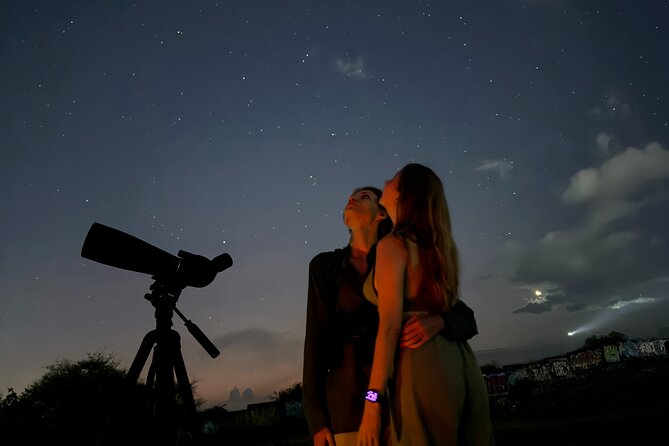
- Several ways to view the sky: Telescopes, binoculars, a spotting scope, and a smart astrophotography camera are included.
- Planets are weather-dependent: You may see the Moon, Saturn, Jupiter, and its moons, depending on conditions and what is visible that night.
- A friendly introduction to astronomy: Gabs and Donny explain the sky in plain language and show you how to operate a telescope.
- Small extras add value: Coffee, 20 minutes of photography, a starmap, an astronomy pocket guide, and surprise take-home items are part of the session.
- A flexible booking choice: Cancel at least 24 hours ahead for a full refund, or accept a new date or full refund if poor weather cancels the activity.
Why this Bali stargazing night feels different
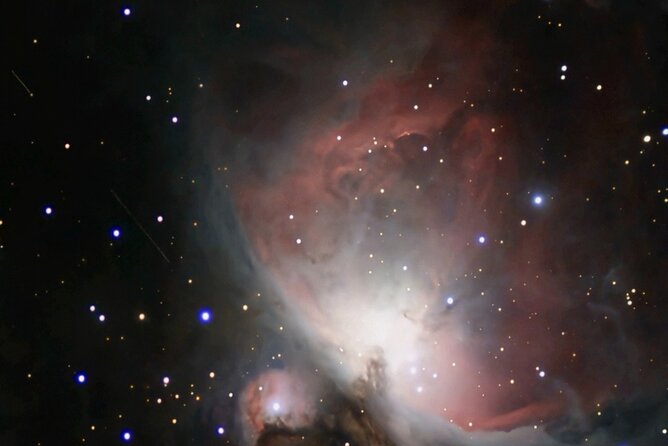
Many evening activities in Bali revolve around food, music, or sunset views. This one asks you to slow down after dark and pay attention to what is overhead. The setting at Munggu Beach gives the night a simple rhythm: arrive, get comfortable, look up, ask questions, and let the sky do most of the work.
I like that the activity is built for curious beginners. You do not need to know the names of constellations or understand how telescopes work. The aim is not to turn you into an astronomer in one evening. It is to help you recognize more of what you are seeing and give you enough practice to handle the equipment yourself.
The private format matters. Your group has the guides’ attention, so you can ask basic questions without feeling out of place, or keep asking when a planet or star raises a new one. The session is listed at about two and a half hours, which gives the evening enough time to feel unhurried without taking over your entire night.
The tone also sounds personal rather than formal. Gabs and Donny are described as friendly and passionate, and the session includes stories and trivia along with the technical side of astronomy. That balance should suit you if you want something educational but do not want a lecture.
More Stargazing Tours in the world:
- Dubai Red Dunes ATV, Camels, Stargazing & 5* BBQ Al Khayma Camp
★ 5.0 · 21,620 reviews - Sharm El-Sheikh: Ultimate ATV Quad, Stargazing & BBQ Dinner
★ 4.7 · 4,084 reviews - Tenerife: Teide National Park Sunset & Stargazing Tour
★ 4.2 · 3,812 reviews
Arriving at Munggu Beach at 6:30 pm
The meeting point is Munggu BeachSea, Bali, with the activity starting at 6:30 pm. The supplied details do not list transport from your hotel, so you should arrange your own way to the meeting point and allow enough time to arrive before the equipment is set up.
The exact viewing location may be adjusted. Gabs has advised people on location choices based on conditions, which is useful for an activity so dependent on clear skies. If your confirmation gives a different nearby spot, check it carefully rather than heading straight to the beach listed in a general description.
The early start also gives the group time to settle in before the main viewing period. Depending on the season and weather, the first part may include an introduction to the equipment and the night’s plan. You can expect the guides to explain what may be visible, but no particular planet can be guaranteed on every date.
That point is important. Saturn, Jupiter, the Moon, shooting stars, and specific constellations depend on cloud cover, visibility, and what is above the horizon. The promise is a guided look at the night sky, not a fixed planet-by-planet show.
Telescopes, binoculars, and a camera you can use
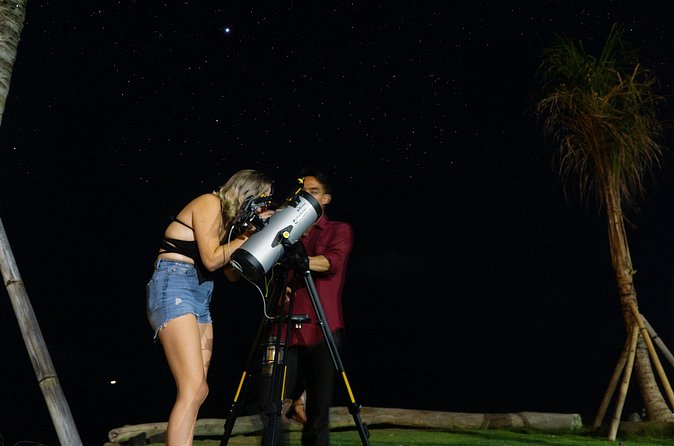
The equipment list is one of the strongest parts of this activity. You are not limited to looking through a single telescope while waiting your turn. The session includes high-quality telescopes, binoculars, a spotting scope, and a smart astrophotography camera.
Each tool gives you a different view. A telescope can bring out the Moon’s craters or a planet’s details. Binoculars offer a wider, easier way to scan the sky. A spotting scope gives you another focused view, while the smart camera can help record objects that are difficult to capture with an ordinary phone.
The guides also show you how to operate the equipment. That hands-on element is useful because it changes the evening from a simple viewing session into a basic astronomy workshop. You can learn how to position a telescope, follow the instructions, and understand what you are looking at instead of treating the instrument like a magic box.
Do not expect every object to look like a polished space photograph. Real telescope viewing is affected by light, air, clouds, and the equipment in use. The pleasure comes from seeing an object directly and then understanding what makes it special. The smart astrophotography camera helps with documentation, but it does not replace the experience of looking through the eyepiece.
What you may see through the eyepiece
The Moon is often an excellent subject for a first viewing because its surface has clear features. The experience specifically includes looking at its craters, so you should have a good chance to see a closer, more textured view when the Moon is visible.
Saturn’s rings are another featured sight. Their appearance depends on visibility and equipment, but the chance to see them through a telescope gives the evening a clear highlight. Jupiter and its moons are also part of the planned viewing list. The wording is careful, since weather and sky conditions decide what can actually be seen.
The session also covers constellations, stars, and deeper sky subjects. The guides add facts and stories, which helps you connect individual points of light to a larger pattern. This is where the experience can appeal to people who enjoy stories as much as images.
Shooting stars are possible, but they should be treated as a lucky extra rather than a promised feature. The same applies to any particular constellation or planet. If clouds appear, the guides may need to change the focus or reschedule the night.
Same sky over the world, a different way to watch it:
- Tenerife: Sunset and Stargazing at Teide National Park
★ 4.7 · 2,826 reviews - Teide National Park Sunset & Stargazing with Dinner (Star Safari)
★ 5.0 · 2,601 reviews - Dubai: Sunset Camel Trek, Al Khayma Camp, Stargazing & BBQ
★ 4.8 · 2,588 reviews - Dubai: Overnight Safari, Dinner, Stargazing & Al Khayma Camp
★ 4.8 · 2,562 reviews
A relaxed astronomy lesson, not a classroom lecture
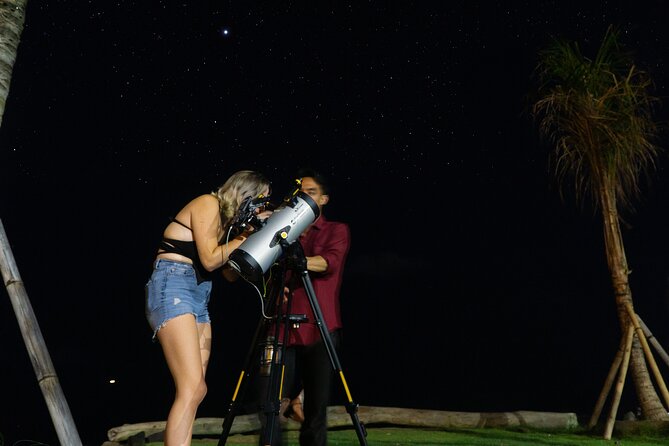
The strongest educational feature is the open question period. You can ask about the Moon, planets, stars, telescopes, or anything else connected to space. The private setting makes this easier than a large group tour, where the guide has to keep moving and simple questions can get lost.
Gabs and Donny bring a conversational style to the subject. The information is presented as sky stories, fun facts, and deep-sky trivia rather than as a technical course. That should work well for families, couples, and friends with different levels of interest.
I also like that you leave with practical knowledge. By the end, you should have a basic sense of how to operate a telescope. The starmap and astronomy pocket guide give you something useful to refer to after the tour, although the supplied information does not specify the exact contents of the guide or which objects it covers.
This approach makes the activity more lasting than a quick look through a lens. You can return to the night sky later and recognize a few more patterns or understand what you are seeing. The experience does not require you to buy equipment or prepare ahead of time.
Coffee, photographs, and small take-home gifts
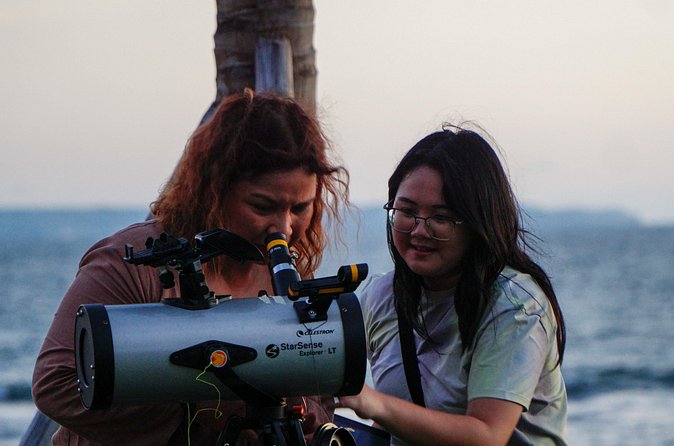
The complimentary coffee brewing experience adds a welcome human touch. Sitting with a warm drink while looking up makes the beach setting feel cozy, especially if the night is breezy. It also gives the evening a pause between rounds of viewing.
Photography and documentation under the stars are included for 20 minutes. This is useful if you want a record of the night without spending the entire activity trying to hold a phone steady or manage camera settings. The information does not promise a specific number of images or a particular delivery method, so ask the operator if photographs matter greatly to you.
You also receive a starmap, an astronomy pocket guide, and surprise goodies to take home. These are modest extras, but they support the educational side of the activity. The starmap can help you remember what you studied that evening, while the pocket guide gives you a starting point for further sky watching.
These additions do not make the activity cheap, but they help explain why it is more than a short telescope demonstration. You are paying for private guiding, several kinds of equipment, instruction, coffee, and photography as well as the viewing time.
Is $191.49 good value for up to five people?
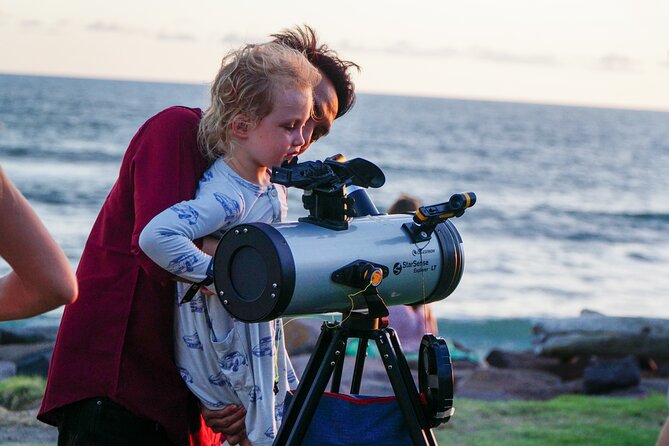
The listed price is $191.49 per group of up to five. For one person, that is a high price for a two-and-a-half-hour evening. For five people sharing it, the cost works out to roughly $38.30 each before fees and taxes, which is much easier to justify for a private activity with specialist equipment.
The value improves if your group wants a quiet, focused night rather than a standard sightseeing stop. You are not just paying to look at stars. The fee covers several viewing tools, instruction, coffee, photography for 20 minutes, printed material, and a private guide-led format.
Still, you should account for fees and taxes, since they are not included. Tips are also not required, though they are appreciated. The listing does not include hotel transport, so that may be another cost depending on where you are staying.
I would compare this with the price of other private evening activities, not with a free walk on the beach. If you already enjoy astronomy, the hands-on equipment and private format are likely to matter. If you only want a quick look at stars, the price may feel harder to defend.
The local contribution is another part of the value. A portion of the proceeds supports a local village. The supplied information names both Munggu Village and Seseh in different places, so you may want to confirm the exact community designation when booking. Either way, the activity presents itself as connected to the local area rather than as a detached pop-up attraction.
Weather, cancellation, and practical planning
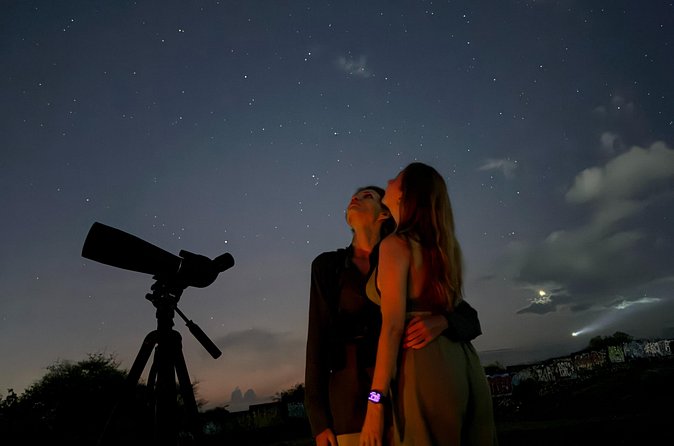
This activity requires good weather. If poor conditions force a cancellation, you are offered a different date or a full refund. That is a fair arrangement for an outdoor astronomy session, since clouds can make the main purpose impossible.
You can cancel for a full refund if you do so at least 24 hours before the local start time. Cancellations or changes made within 24 hours are not accepted for a refund. Confirmation is sent within 48 hours of booking, subject to availability, so do not treat the reservation as final until you receive it.
Most people can participate, and the activity is private. The provided details do not give specific information about beach surfaces, seating, or accessibility equipment. If anyone in your group has mobility needs, contact AstroBali before booking and ask about the meeting area.
Bring realistic expectations. A clear night does not guarantee every planet, and a cloudy night does not mean the guides can control the result. The best reason to book is the combination of sky watching, instruction, and conversation, not a guaranteed checklist of objects.
Who should book this night under the Bali sky?
I would recommend it most to couples, families, and small groups who want a slower evening. It is also a strong choice if you have already done Bali’s usual beach and adventure activities and want something less common.
Beginners should feel comfortable here. You do not need astronomy experience, and the guides explain how the equipment works. Children may enjoy the Moon and planets, though the supplied information does not set a minimum age, so check before booking if you are bringing young children.
It is also a good fit for anyone who has lived under bright city skies and rarely sees many stars. The experience gives you a chance to spend focused time looking upward rather than simply passing through a beach after sunset.
I would hesitate if your schedule is tight or if you need a guaranteed indoor backup. The session depends on weather, begins at 6:30 pm, and ends back at the meeting point after about two and a half hours. You should also skip it if your main goal is a particular planet on a specific night.
Should you book AstroBali?
Book this experience if you want a private, beginner-friendly introduction to astronomy with real equipment, patient guidance, coffee, and a quiet beach setting. The strongest features are the chance to use several kinds of gear, the friendly teaching style associated with Gabs and Donny, and the included photography and take-home guides.
Think carefully about the price if your group is small, and remember that fees, taxes, and transport are extra. Check the weather forecast and keep your plans flexible. If you can accept those limits, this is a thoughtful alternative to Bali’s standard evening outings, with enough practical learning to stay with you after the stars fade.
FAQ
Where does the stargazing activity begin?
It begins at Munggu BeachSea in Bali at 6:30 pm. The activity ends back at the meeting point.
How long does the experience last?
The session lasts approximately two hours and 30 minutes.
Is this a private activity?
Yes. Only your group takes part, with a maximum of five people per booking.
What equipment can I use?
The experience includes high-quality telescopes, binoculars, a smart astrophotography camera, and a spotting scope.
Can I see Saturn, Jupiter, and the Moon?
The session is designed to explore the Moon’s craters, Saturn’s rings, Jupiter’s moons, and other sky objects. What you see depends on weather and visibility.
Is coffee included?
Yes. A complimentary coffee brewing experience under the stars is included.
What happens if bad weather cancels the activity?
You will be offered another date or a full refund. You can also receive a full refund by canceling at least 24 hours before the experience start time.
Fresh listings near the world
- Vincentia: Jervis Bay Beach Stargazing with an Expert★ 4.9 · 19 reviews
- Blue Mountains: Stargazing with a Telescope and Astronomer★ 4.4 · 21 reviews
- ( canyon hurghada & stargazing )★ 4.9 · 16 reviews
- Twizel: Stargazing Tour with an Astronomer and Telescope★ 4.9 · 36 reviews
- Twizel Stargazing Experience with a Guide (Carbon Positive)★ 4.7 · 26 reviews
- Private Stargazing at Star Safari near Martinborough★ 5.0 · 3 reviews
- Star Safari Stargazing Experience, Martinborough★ 5.0 · 6 reviews
- Klein Karoo “High 5” Stargazing Experience in Oudtshoorn★ 5.0 · 7 reviews