
REVIEW · STARGAZING
Stargazing Adventure in Jordan
Wadi Rum’s dark desert sky is the real star of this 90-minute stargazing adventure. After dinner, a transfer takes you from most camps to an observatory, where professional astronomers explain the cosmos, point out constellations with a green laser, and aim computerized telescopes at distant objects.
I like two things here: you get both the human story of the sky, including mythology and zodiac signs, and a chance to see far-off objects through large telescopes. The $30 price also includes transport, which saves you from arranging a night drive across the desert.
The main thing to consider is expectation. The observatory may not feel as remote from camp lights as some people imagine, and telescope views depend heavily on weather, timing, and the specific object being shown. The presentation is a strong part of the evening, but the viewing may feel modest to serious astronomy fans.
Key points before you book
- A 20-minute indoor presentation comes first, giving you a simple introduction before the outdoor viewing begins.
- The laser session teaches you how to read the sky, including directions, star movement, constellations, zodiac signs, and old myths.
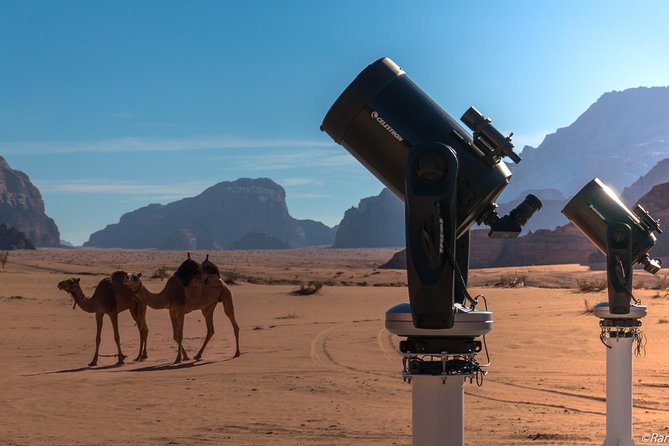
- GPS-enabled telescopes target galaxies, nebulae, planets, and moons, with a second astronomer guiding the viewing.
- The two groups switch after 35 minutes, so everyone gets both the naked-eye lesson and telescope time.
- Pickup usually follows dinner, with winter collection around 7:45 PM from camps in the Disi Area.
- A time-exposure group photo is included, although bottled water and soft drinks cost extra.
Why Wadi Rum works so well after dark
Wadi Rum is famous for red rock and wide desert views by day, but its low light pollution gives the area a second identity at night. Far from city glare, the sky can show a much broader field of stars than you usually see from Aqaba or a large town.
That setting matters most during the naked-eye portion. A professional astronomer uses a powerful green laser to trace patterns overhead, so you are not simply told to look at a tiny point of light and guess what it is. The laser gives your eyes a clear route from one star to the next.
You will also hear how different cultures turned star patterns into stories. The session covers constellations, zodiac signs, and the daily and yearly movement of the stars. I like this part because it gives the sky a human connection. You are not only looking at objects. You are learning how people used the stars to find direction, mark time, and build myths.
Still, dark skies do not guarantee a perfect show. Moonlight, haze, clouds, dust, and the position of a planet can change what you see. Even in a desert, the best views are never automatic.
More Stargazing Tours in the world:
- Dubai Red Dunes ATV, Camels, Stargazing & 5* BBQ Al Khayma Camp
★ 5.0 · 21,620 reviews - Sharm El-Sheikh: Ultimate ATV Quad, Stargazing & BBQ Dinner
★ 4.7 · 4,084 reviews - Tenerife: Teide National Park Sunset & Stargazing Tour
★ 4.2 · 3,812 reviews
The evening begins after dinner
In winter, pickup starts around 7:45 PM from local camps in the Disi Area. The timing is set after dinner, so you do not need to rush through your meal or choose between an evening camp experience and the astronomy program. Summer pickup times change, so you should check the current time before going.
Round-trip transport is provided free from most local Wadi Rum camps. This is one of the practical strengths of the experience. Night driving in the desert is not a job you want to improvise, especially if you are unfamiliar with the camp roads and the dark terrain.
The pickup arrangement is not universal for every possible camp, so confirm that your accommodation is on the transport list. The tour operates in the evening, with stated hours from 5:00 PM to 11:30 PM, but your actual pickup follows the seasonal schedule.
The full activity lasts about an hour and a half. You should allow extra time around that for collection and return, since the tour picks up from several camps rather than one central departure point.
A clear 20-minute introduction indoors
The first formal part is a seated presentation on a large screen. It lasts about 20 minutes and sets up the rest of the night.
This is not filler. If you are new to astronomy, it gives you enough basic context to understand what the astronomers point out later. The presentation also provides a useful fallback if the sky is less cooperative than hoped. Even when clouds or haze reduce the telescope targets, you still receive a structured introduction to the cosmos.
The lecture is designed to be easy to follow while still offering useful information. It is a good fit for families, first-time stargazers, and anyone who knows a few constellation names but cannot find them in the sky.
People who already own telescopes or follow astronomy closely may find the talk basic. One visitor with a personal telescope found the advice from the local astrophotographer useful, but the broader program is aimed at a mixed audience rather than advanced observers.
Two 35-minute sessions, then a switch
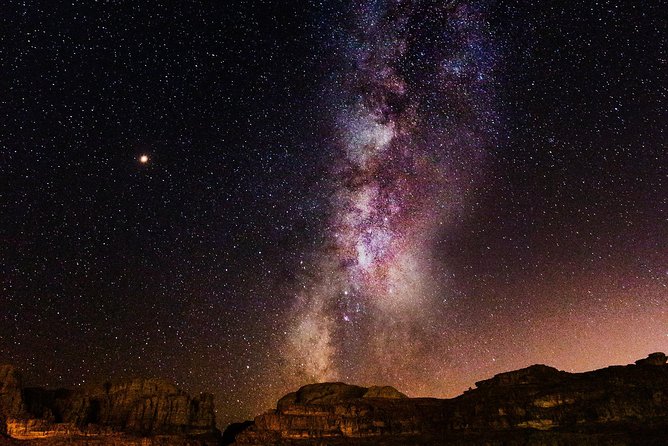
After the presentation, the group is divided into two equal sections. One begins under the laser, while the other goes to the telescopes. After 35 minutes, the groups change places.
This rotation is important. You do not have to choose between learning the sky and looking through the instruments. Both parts are included, and the equal split gives the evening a clear rhythm.
The group arrangement also affects the feel of the experience. The stated maximum is 120 people, which is a large possible total. Splitting the group helps, but your time at an individual telescope may still feel shared if the evening is busy.
Same sky over the world, a different way to watch it:
- Tenerife: Sunset and Stargazing at Teide National Park
★ 4.7 · 2,826 reviews - Teide National Park Sunset & Stargazing with Dinner (Star Safari)
★ 5.0 · 2,601 reviews - Dubai: Sunset Camel Trek, Al Khayma Camp, Stargazing & BBQ
★ 4.8 · 2,588 reviews - Dubai: Overnight Safari, Dinner, Stargazing & Al Khayma Camp
★ 4.8 · 2,562 reviews
Following the green laser
The first section follows a bright green laser across the sky. The astronomer explains how to find directions using the stars and describes the daily and annual movement of the sky.
You will be shown visible constellations and zodiac patterns, with mythology from several cultures woven into the explanation. This is the most accessible part of the evening because it does not depend on a telescope or on seeing a tiny target through an eyepiece.
I especially like the practical angle. Learning where north lies or recognizing a constellation gives you something you can use again later. The stories also make the patterns easier to remember than a list of star names.
There is a limit, though. If you expect a dramatic, high-tech show, a laser moving across the sky may seem simple. The value comes from the astronomer’s explanation, not from the laser itself. Guests seeking a quiet, purely visual night may also find the spoken instruction more central than expected.
Looking through the GPS-enabled telescopes
The second section uses large telescopes fitted with computerized GPS systems. The astronomer selects targets such as galaxies, nebulae, planets, and moons, then guides you through what you are seeing.
The GPS system helps the astronomer locate objects efficiently. That matters during a short session because there is no need to spend the whole evening manually searching for one target. The system also allows the program to adjust the selection according to what is visible.
The telescope portion is the most exciting part for many people, but it is also the least predictable. A distant galaxy may appear as a faint smudge rather than a colorful space photograph. A planet can be more recognizable, while a moon may depend on the night’s position and clarity.
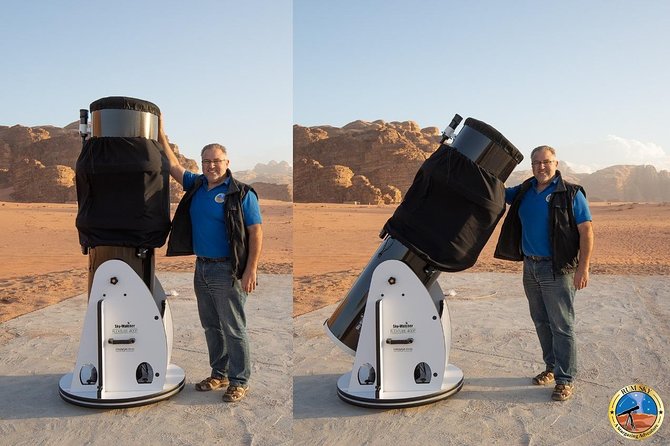
You should also keep the scale of the activity in mind. This is a public group program, not a private observing session with unlimited time at the eyepiece. The telescopes are described as large and powerful, but the actual view can vary from one target to the next.
What the astronomy stories add
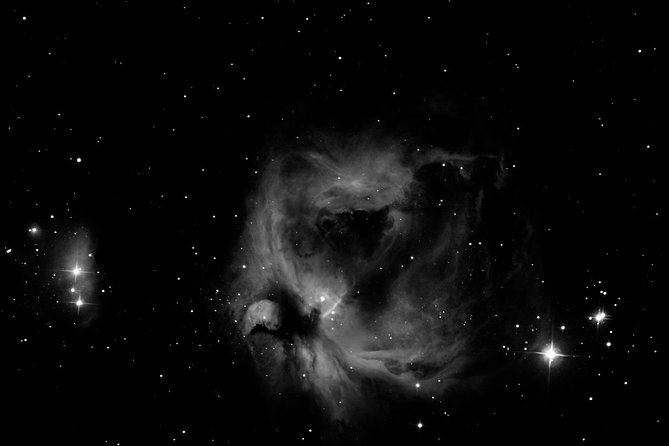
The constellation talk gives the night a stronger sense of place than a simple telescope queue. In Wadi Rum, the stars are not just background decoration for a desert camp. They become a way to think about navigation, seasons, movement, and cultural storytelling.
The explanation of daily and annual star rotation is particularly useful for anyone who has wondered why different constellations appear at different times of year. You do not need prior astronomy knowledge. The session starts with things you can see directly and builds from there.
The mythology section adds another layer. Constellations are not interpreted in only one way, and the program discusses stories from various cultures. That makes the activity more than a technical demonstration, while still keeping the focus on the actual sky above you.
Is the $30 price fair?
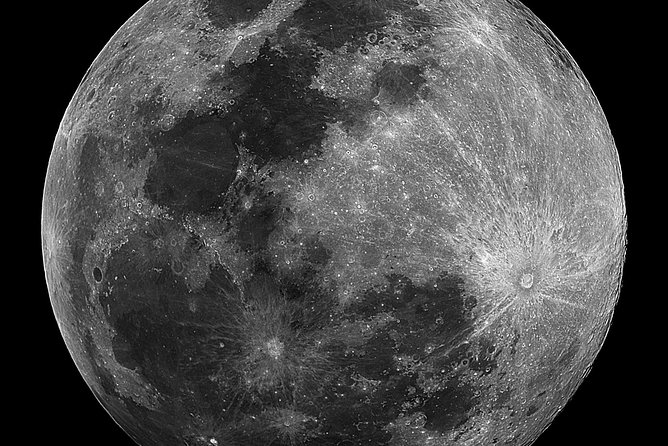
At $30 per person, this is reasonably priced for a 90-minute evening that includes a presentation, two guided astronomy sessions, telescopes, a laser explanation, transport from most camps, and a group photograph.
The transport is a major part of the value. If you had to arrange a separate desert transfer, the low headline price would not tell the whole story. Here, pickup after dinner keeps the evening simple and removes the need for night driving.
The price is easier to justify if you are curious about astronomy or want an organized nighttime activity in Wadi Rum. It is less compelling if your only goal is to see a spectacular Milky Way sky without a lecture or group structure. You can sometimes see an impressive sky simply by stepping outside your camp, though this program adds explanation and telescope access.
Water and soft drinks are available at a reasonable extra cost, but bottled water is not included. Bring or buy what you need, especially if you prefer not to interrupt the viewing.
Who will enjoy this most
I would recommend the experience to first-time stargazers, families, couples, and curious visitors who want more context than a quick look at the night sky. The split format keeps the evening moving, and the professional astronomers provide enough explanation to make the activity approachable.
It also suits people staying in Wadi Rum camps who do not want to organize their own transport after dark. Since pickup is usually after dinner, you can fit the program into a wider desert stay without giving up the camp meal.
Children and adults can take part, and most people can participate. Service animals are allowed. The program is not presented as a specialist astronomy course, so advanced hobbyists should treat it as a friendly introduction with some useful telescope advice rather than a technical observing workshop.
The biggest question is how much you care about the telescope view. If you want to learn the constellations and hear the stories behind them, the program offers solid value. If you expect every telescope target to look like a sharp observatory photograph, you may leave disappointed.
Weather, timing, and what to keep in mind
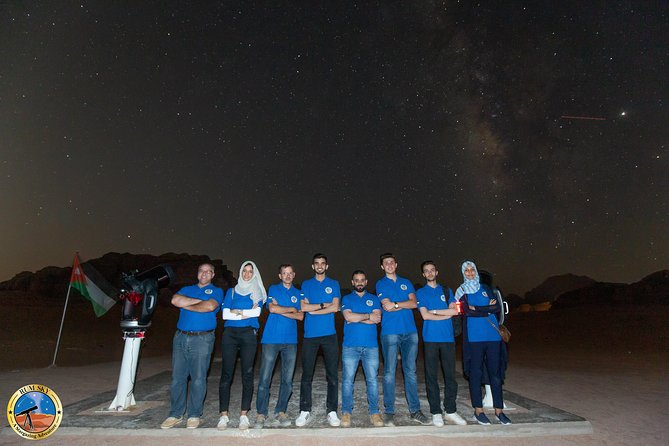
The experience requires good weather. If poor conditions force cancellation, you are offered another date or a full refund. That policy makes sense for an outdoor astronomy program, since clouds and haze can affect both the laser session and telescope work.
You can cancel for a full refund up to 24 hours before the start time. Changes or cancellations inside that 24-hour window are not accepted, and the amount paid is not refunded.
Because the program is outdoors as well as indoors, dress for a desert night rather than for the daytime heat. The supplied information does not specify a dress code, but evening temperatures can feel very different from afternoon conditions. You should also remember that the activity runs at night and includes time standing outside.
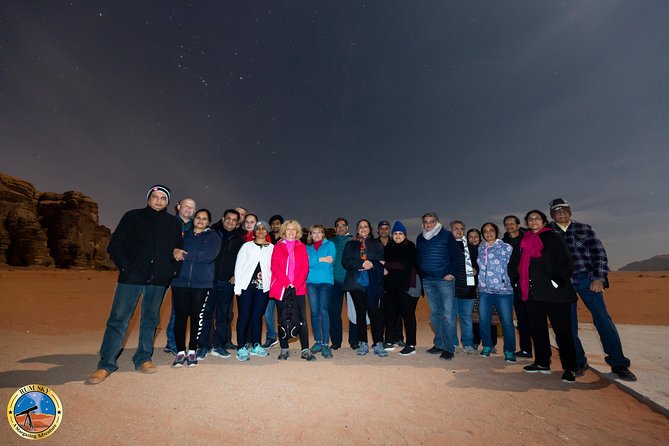
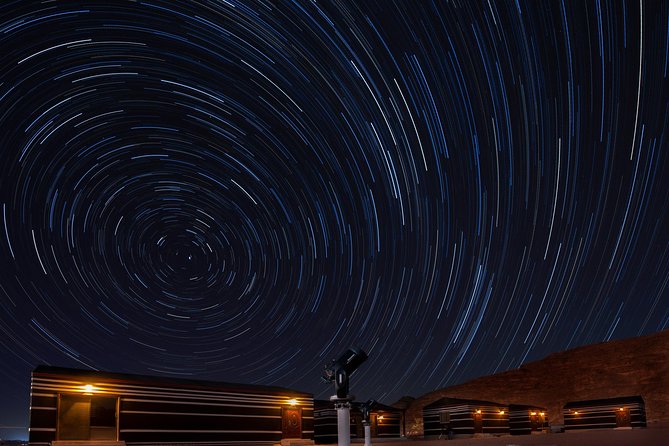
The group photo at the end uses a time-exposure technique to show the sky objects behind the group. It is a nice closing touch and gives you a record of the evening, though you should not treat it as a personal astrophotography session.
My booking advice
Book this if you want a guided introduction to the Wadi Rum sky, appreciate stories as much as equipment, and value a safe transfer from your camp. The strongest parts are the clear presentation, the green-laser constellation lesson, and the chance to compare naked-eye viewing with telescope work.
Think twice if your main goal is an isolated desert night far from every camp or a long session with advanced telescope targets. The observatory may be closer to camp areas than you expect, and the telescope views can be less dramatic than the images used to represent space.
For most visitors, the $30 cost is fair because it combines transport, instruction, equipment, and a full 90-minute program. I would choose it as an easy, structured evening in Wadi Rum, not as a guarantee of perfect astronomical conditions.
FAQ
Where does the stargazing adventure take place?
The activity takes place in Wadi Rum, with pickup offered from most local camps in the Disi Area.
How long does the experience last?
The stargazing program lasts approximately 1 hour and 30 minutes.
What time is pickup?
Winter pickup begins around 7:45 PM. Summer times change, so you should check the current schedule.
Is pickup included?
Yes. Free round-trip transportation is provided from most local Wadi Rum camps. You should confirm that your camp is included.
What happens during the presentation?
A professional astronomer gives a 20-minute astronomy presentation on a large screen in a seated hall.
Will I use a telescope?
Yes. You spend one 35-minute session using large GPS-enabled telescopes to view targets such as galaxies, nebulae, planets, and moons.
Will I learn about constellations?
Yes. A professional astronomer uses a powerful green laser to explain directions, star movement, constellations, zodiac signs, and myths from several cultures.
Is food or bottled water included?
No. Bottled water is not included. Water and soft drinks are available for an additional reasonable cost.
What is the cancellation policy?
You can cancel at least 24 hours before the start time for a full refund. Cancellations or changes made less than 24 hours before the experience are not accepted. If poor weather causes the operator to cancel, you are offered another date or a full refund.
Fresh listings near the world
- Cabo de Gata: Guided Night Walk with Stargazing★ 4.7 · 36 reviews
- Brisbane: Glow Worms, Sunset, Star Gazing & BBQ★ 4.4 · 26 reviews
- Cabo de Gata: Stargazing Experience★ 4.5 · 7 reviews
- Boulder: Guided Astronomy Tour★ 4.7 · 11 reviews
- 1-Day Grand Canyon Tour from Las Vegas: Stargazing & Sunrise★ 3.6 · 3 reviews
- Antofagasta: Astronomical Tour with a Guide★ 3.7 · 4 reviews
- Astronomical Tour: San Pedro de Atacama – Chile★ 4.5 · 3 reviews
- Perth: Pinnacles Stargazing, Sandboarding & Beach Kangaroos★ 5.0 · 3 reviews