
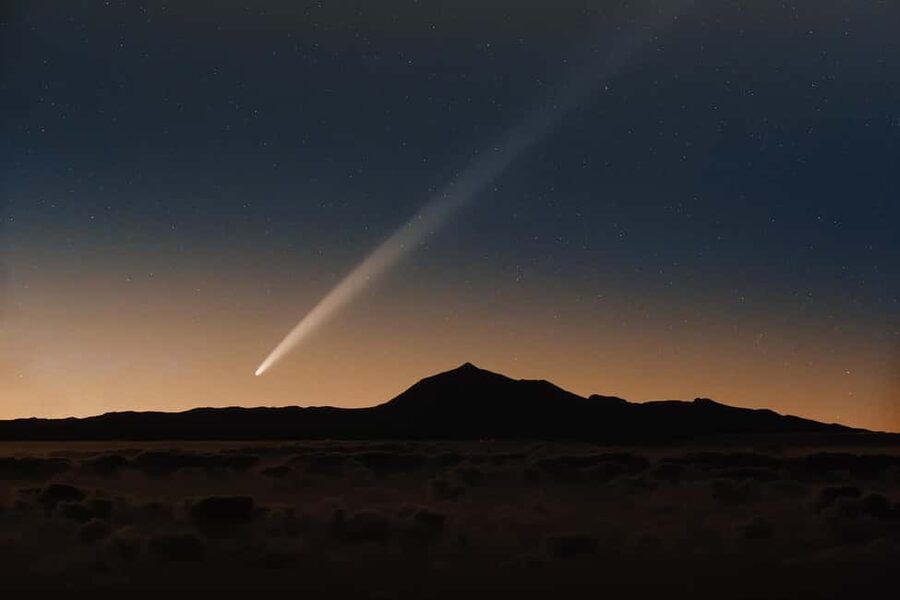
REVIEW · LA PALMA STARGAZING
La Palma: Premium Stargazing Tour for 10
At Roque de Los Muchachos, you watch the sky from above La Palma’s usual cloud layer. That height, cleaner air, and low light pollution give this 90-minute stargazing tour a real advantage over simply looking up from the coast. I especially like the chance to view planets, nebulae, star groups, and the Moon through proper telescopes, not just with the naked eye.
I also like the guides’ plain-speaking approach. Angelo has impressed with his clear explanations of astronomy and La Palma’s place in the world of stargazing, while Antonio has guided guests through telescope views that build nicely from one object to the next. The main drawback is the cold, and at $88 per person, the price may feel high if the sky is cloudy or the group grows beyond the advertised 10-person limit.
Key points at a glance
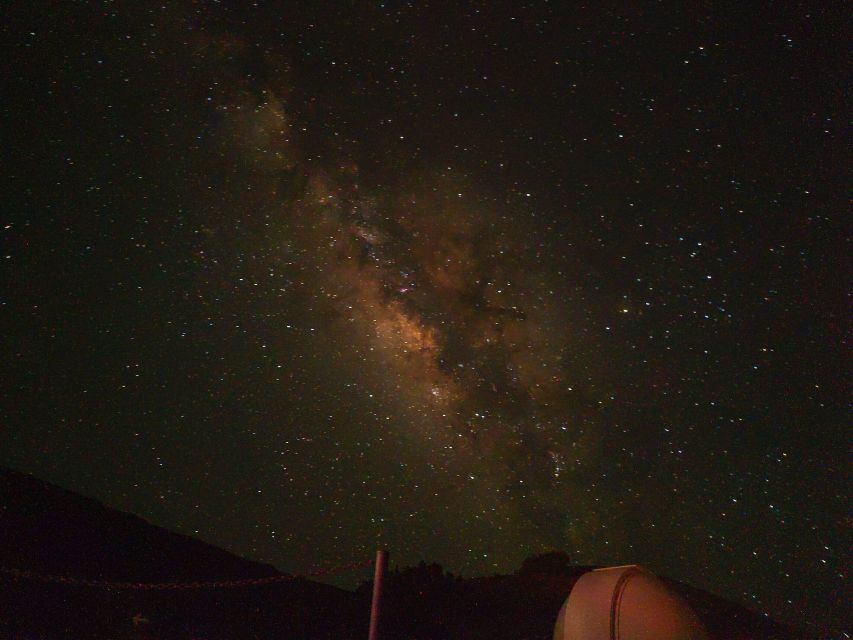
- Roque de Los Muchachos at 1,300 meters: The fixed meeting point sits above the sea of clouds, where conditions can be far better than at lower elevations.
- Telescope viewing: You receive an introduction to the equipment, practice setting it up, and use it to view planets, nebulae, star groups, and the Moon.
- Guides who explain rather than lecture: English and Spanish tours use accessible language, with guides such as Angelo and Antonio making complex ideas easier to follow.
- A very cold evening: Temperatures can fall below 5°C after sunset, so bring more layers than you think you need.
- You drive yourself: Hotel pickup and drop-off are not provided, and a personal vehicle is required throughout.
- A small group with one important caveat: The advertised limit is 10 people, though one recent outing had 12, which meant longer turns at the telescope.
Why Roque de Los Muchachos is the right place to stargaze
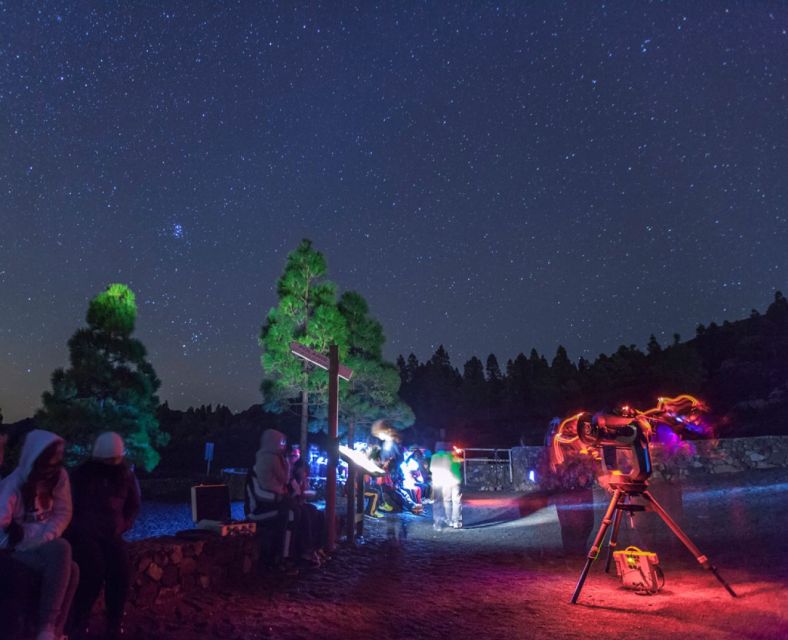
The location does much of the work here. Roque de Los Muchachos is in La Palma’s high summit zone, at about 1,300 meters. You meet beside the Visitor Center parking lot, at Museo Roque de los Muchachos, rather than being taken from your hotel to a series of different stops.
That fixed location is practical and purposeful. At this height, you may be above the cloud layer that often gathers lower on the island. The air is also cleaner, with less atmospheric disturbance and light pollution. Those conditions can make faint objects easier to see through a telescope.
This does not guarantee a perfect night. Cloud can still interfere, and one January outing was simply described as cloudy. That is the basic risk of any outdoor stargazing event. The high location improves your odds, but it cannot control the weather.
I like the recommendation to drive up earlier in the day. Roque de Los Muchachos is worth visiting before the tour begins, and the summit is a good place to watch the sunset. Arriving early also gives you time to find the Visitor Center parking lot, take a short walk, and adjust to the altitude before darkness arrives.
More Stargazing Tours in Spain:
- Tenerife: Teide National Park Sunset & Stargazing Tour
★ 4.2 · 3,812 reviews - Tenerife: Sunset and Stargazing at Teide National Park
★ 4.7 · 2,826 reviews - Teide National Park Sunset & Stargazing with Dinner (Star Safari)
★ 5.0 · 2,601 reviews
Getting to the summit and finding the meeting point
You need your own vehicle for this experience. Hotel pickup and drop-off are not included, so the drive to the summit is part of your evening plan. Make sure you allow enough time to reach the meeting point without rushing along mountain roads after sunset.
The exact meeting point is next to the Visitor Center parking lot at Museo Roque de los Muchachos. Put that name into your map app rather than searching only for Roque de Los Muchachos, since the mountain area is broad and the activity uses one specific spot.
The start can require a little attention. Two groups have gathered at the same meeting point, making it unclear at first which guide to approach. Look for the activity guide and confirm the group before settling in. That small bit of confusion should not spoil the night, but it is worth knowing so you can get your bearings fast.
Use the afternoon well. You can watch the sunset, take a short walk, and eat before the tour. The organizers specifically advise bringing food and drinks, and that makes sense because the activity is short but takes place far from the island’s lower-town dining areas.
Your first look through the telescope
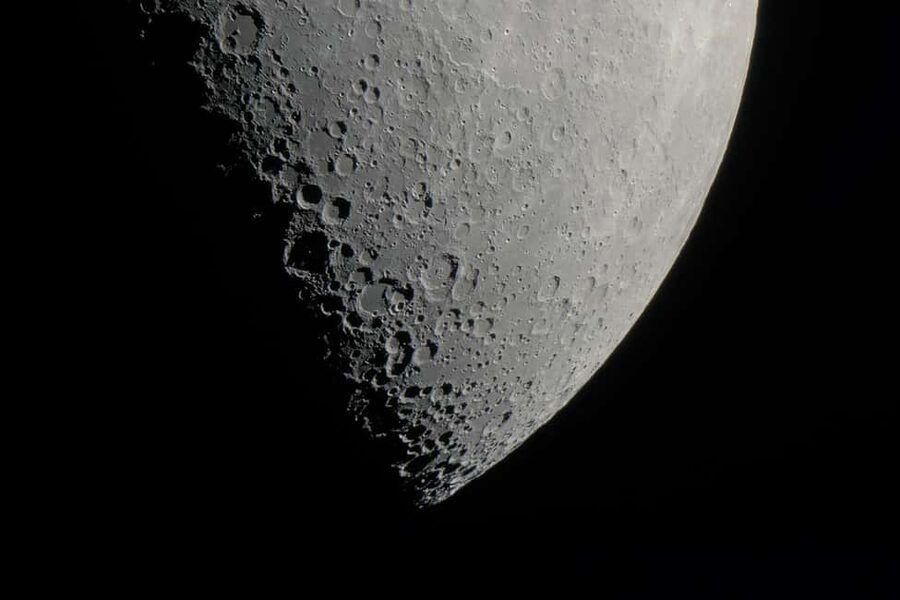
The session begins with an introduction to the telescopes. Your guide explains the basic setup, helps you position the equipment, and gives you time to practice. That is useful even if you have never handled a telescope before.
This is not a tour where you simply stand behind the guide while an object appears in the eyepiece. You are given an active role in setting up and using the equipment. The process may take a little time, especially when several people need their turn, but it helps you understand how the telescope works.
The group size matters here. With 10 people, the experience should remain fairly personal, though everyone still shares the available equipment. One recent group reached 12 people, and that slowed the rotation at the telescope. If your group is full, expect some waiting between views.
That waiting is easier to accept when the guide keeps the session moving with explanations. The strongest part of the experience is not just the equipment. It is the way the guide connects each object in the sky with a simple explanation, a story, or a piece of human history.
From constellations to nebulae and planets
Once the telescopes are ready, the guide leads you through the night sky. The exact objects depend on the season and the weather, but the stated program can include nebulae, star groups, planets, and the Moon.
You also learn about the ways people have interpreted and used the stars over tens of thousands of years. That gives the session more shape than a list of astronomical names. Constellations become part of human storytelling, navigation, and attempts to understand the sky.
The guide’s teaching style is important. Astronomy can become technical very quickly, but the best explanations use ordinary comparisons and short steps. Antonio has been praised for making difficult ideas easy to grasp, while Angelo has brought strong knowledge of both astronomy and La Palma’s special setting.
I would choose this tour for the explanations as much as for the telescope views. A high-grade telescope can show you a remarkable object, but a good guide helps you understand what you are seeing and why it matters. The experience works best when you stay curious and ask questions.
Same sky over Spain, a different way to watch it:
- Teide National Park: Sunset & Stargazing Safari with Dinner
★ 4.6 · 2,115 reviews - Teide by Night: Sunset & Stargazing with Telescopes Experience
★ 4.5 · 1,492 reviews - Teide: Guided Sunset & Stargazing Tour by Night with Dinner
★ 4.7 · 1,339 reviews - Sunset & Stargazing Experience From Teide
★ 4.5 · 1,129 reviews
What the telescope adds
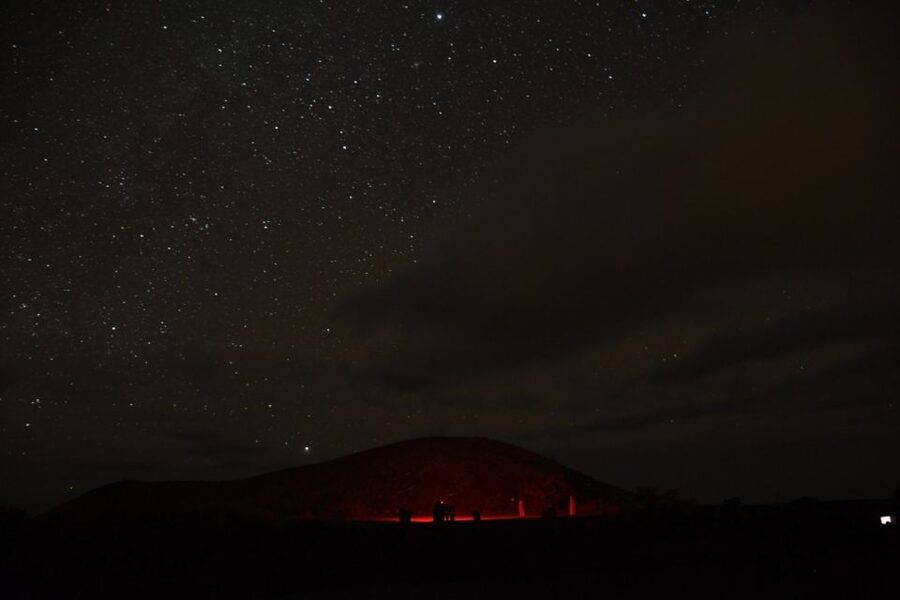
Looking at the stars with your eyes is free, and La Palma’s dark skies make that worthwhile. The telescope adds another layer by bringing selected objects closer and making details easier to see.
The exact view will depend on the night. Still, the activity is designed around viewing objects that are only properly appreciated after dark. Nebulae, planets, star groups, and the Moon can each offer a different kind of sight, from broad star patterns to more focused details.
The telescope experience is shared, not private. You will not have unlimited time at the eyepiece, and other people will be waiting for their turn. That is the tradeoff for a small-group price rather than a private astronomy session.
The best approach is to treat each viewing as one part of a guided sequence. The telescope views can build on one another, as Antonio’s style has done, so the night develops from basic orientation into more interesting objects and ideas.
The cold is not a minor detail
Take the warning about clothing seriously. After sunset, temperatures can fall below 5°C, and the open summit feels colder than the daytime weather on the coast suggests. A regular holiday jacket may not be enough.
Bring a warm coat, several layers, and extra protection for your head and hands. The instructions specifically call for warm clothing and a jacket, but I would go beyond the minimum. You want to remain focused on the sky, not spend the session wishing you had packed more.
Pack a picnic and drinks as well. Food is not included, and there is no promise of a meal at the meeting point. Eating before the session also lets you avoid leaving the summit early because you are hungry.
The cold may be more manageable at another time of year, but no season removes the need for warm clothing at this altitude. The summit conditions are part of what makes the stargazing good, so comfort requires preparation.
Is $88 per person fair?
At $88 per person, this is not a casual, low-cost evening activity. You are paying for a guided astronomy session in a special high-altitude setting, along with telescope use and explanations in English or Spanish.
The value is strongest if you care about astronomy and want a guide to help you make sense of the sky. You are also paying for access to a carefully chosen location above much of the island’s cloud and light pollution. For someone who would otherwise struggle to identify planets or nebulae, that guidance can make the night far more rewarding.
The price is harder to justify if the conditions are poor, the group is larger than expected, or you mainly want a quick look through a telescope. The entry fee does not include access to the Visitor Center, hotel transport, food, or drinks. Those extra costs and arrangements remain yours.
A cloudy night is the biggest value concern. The high summit improves the conditions but cannot promise clear skies. I would book only if you are comfortable with some weather risk and are prepared to judge the experience by the guide’s teaching as well as the number of objects you see.
Free cancellation up to 24 hours before the activity and the option to reserve now and pay later make the booking less rigid. Those policies are useful when your La Palma schedule depends on changing weather.
Who will enjoy this night most
This tour suits curious adults, families with older children, and anyone who wants more than a quick photograph of the night sky. You do not need a background in astronomy. The explanations are intended to be accessible, and the telescope introduction helps beginners take part.
It is also a good fit for people already planning a visit to Roque de Los Muchachos. Arrive early, watch the sunset, have your picnic, and stay for the stargazing. That turns a 90-minute activity into a fuller summit outing without requiring another long drive.
You may want to choose another plan if you dislike cold weather, need hotel transport, or want a private telescope session. The shared equipment and possible waiting time are important parts of the decision.
The activity is usually offered in Spanish and English. Confirm the language arrangement when booking if everyone in your group needs the same language.
Practical ways to improve your evening
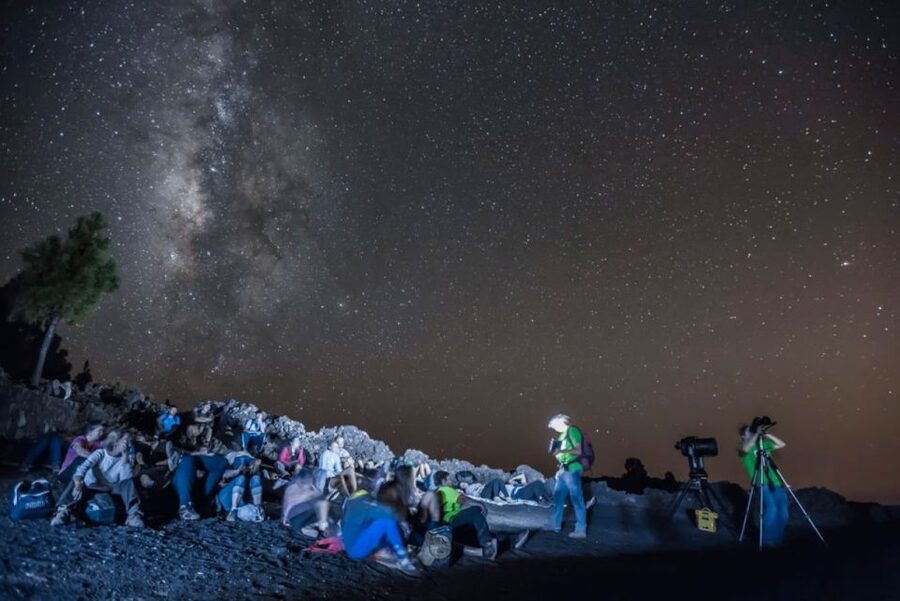
- Arrive before sunset: This gives you time to enjoy the summit, find the parking lot, and avoid a rushed arrival.
- Search for Museo Roque de los Muchachos: That is the exact meeting point beside the Visitor Center parking lot.
- Bring more clothing than seems necessary: Temperatures can fall below 5°C after dark.
- Eat before the session or pack a picnic: Food and drinks are not included.
- Expect shared telescope time: A full group means you may wait between views.
- Keep weather in mind: A high location helps, but cloudy skies can still limit what you see.
- Plan your return drive carefully: You must provide your own transport, and hotel pickup is not included.
Should you book the Roque de Los Muchachos stargazing tour?
Book it if you want a guided introduction to La Palma’s dark skies and like the idea of seeing planets, nebulae, star groups, and the Moon through a telescope. The strongest reasons to go are the summit location, the clear teaching style of guides such as Angelo and Antonio, and the chance to connect astronomy with the long human history of reading the stars.
Think twice if $88 feels high for a short outdoor activity, if you cannot tolerate cold, or if cloudy weather would leave you disappointed. Also keep in mind that the advertised group limit is 10, while one outing had 12 people.
For the best chance of a satisfying night, drive up early, watch the sunset, bring serious winter clothing, and treat the guide’s explanations as part of the main experience. With those expectations, this can be one of La Palma’s most memorable evening activities.
FAQ
Where does the stargazing tour meet?
The meeting point is at Roque de Los Muchachos, beside the Visitor Center parking lot at Museo Roque de los Muchachos.
How long does the activity last?
The guided stargazing session lasts 1.5 hours.
Is transportation provided?
No. You must use a personal vehicle, and hotel pickup and drop-off are not included.
What can I see through the telescopes?
Depending on the conditions and time of year, the guide may show you nebulae, star groups, planets, and the Moon.
What languages are available?
The activity is usually conducted in English and Spanish with a live guide.
What should I bring?
Bring very warm clothing, a jacket, food, and drinks. Temperatures can drop sharply after sunset at the summit.
Can I cancel the booking?
You can cancel up to 24 hours in advance for a full refund. The activity also offers a reserve-now, pay-later option.
Fresh listings near Spain
- Cabo de Gata: Guided Night Walk with Stargazing★ 4.7 · 36 reviews
- Cabo de Gata: Stargazing Experience★ 4.5 · 7 reviews
- Magic Stargazing & Sunset in Teide with Dinner + Telescopes★ 3.5 · 20 reviews
- Stargazing Private Tour at Roque De Los Muchachos in La Palma★ 5.0 · 43 reviews
- Private astronomy tour with sunset toast, picnic, and astrophotography★ 4.8 · 83 reviews
- Tenerife: Stargazing at Mt. Teide★ 4.2 · 72 reviews
- Tenerife: Teide Stargazing with an Astrophysicist★ 4.9 · 74 reviews
- Cavalleria: Guided Stargazing at the Beach with Telescope★ 4.9 · 87 reviews
La Palma Stargazing, side by side.
Roque de los Muchachos Stargazing Tour with Wine
Read our review →
Stargazing Private Tour at Roque De Los Muchachos in La Palma
Read our review →Lists this night appears in