
REVIEW · STARGAZING
Astronomy Evening “Rando Astro Fréjus”
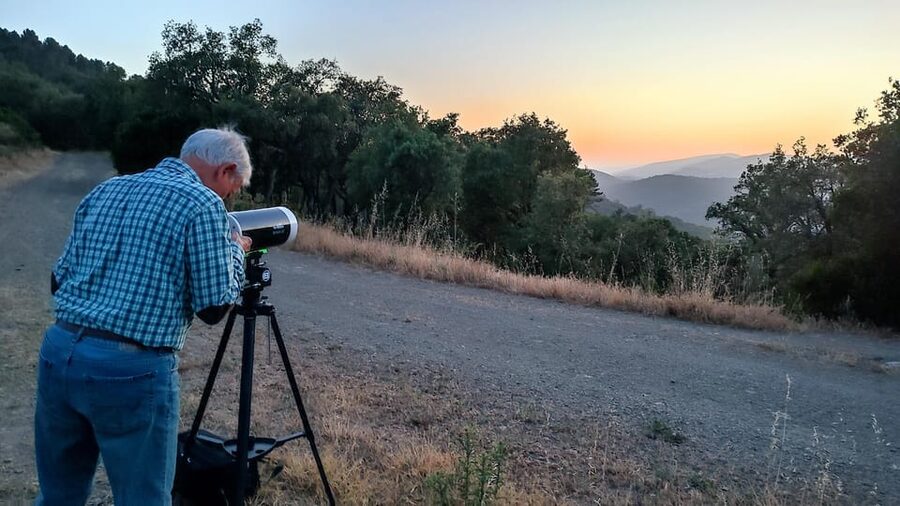
Saturn’s rings, Jupiter’s moons, and the rough craters of our own Moon take on a new character through a good telescope. This 90-minute astronomy evening near Fréjus gives you a clear introduction to the night sky, with a friendly astronomer explaining what you are seeing instead of leaving you to guess at bright dots.
I like the small group of up to 10 people, which should make it easier to get a look through the telescope and ask questions. I also like the plain, family-friendly teaching style. The activity is designed for children and adults, and astronomer Edmond has been singled out for showing the group interesting sights and keeping the evening pleasant.
The main drawback is that this is a short introduction, not a full night of observing. The start time changes with availability, and the meeting point is outdoors, so you need warm clothes and water. There is also a five-minute walk after meeting at the beach.
Key points at a glance
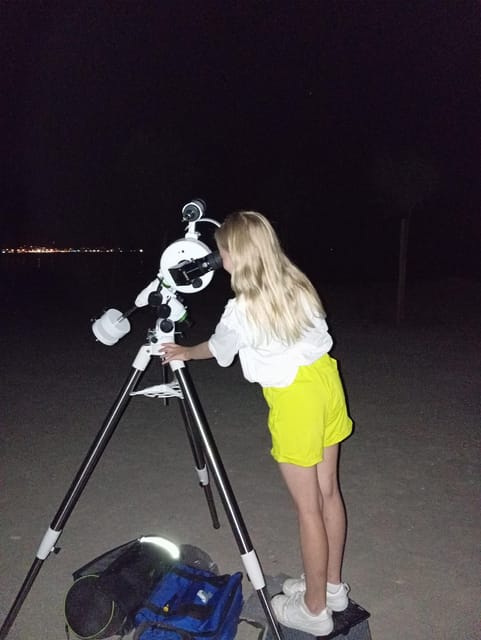
- Saturn, Jupiter, and the Moon: The telescope is set up for classic sights, including Saturn’s rings, Jupiter with its moons, and lunar craters.
- A 10-person limit: The small group keeps the experience more personal than a large public lecture.
- Simple explanations: You learn about constellations, the solar system, and zodiac signs in French, Italian, or English.
- Family-friendly format: Children, parents, solo visitors, and groups of friends can all take part.
- A beachside meeting point: Meet in front of La Table d’Elena, then walk about five minutes to the observing spot.
- A modest price: At $33 per person, the activity offers a focused evening of guided stargazing without taking up a whole night.
What you actually do during the 90 minutes
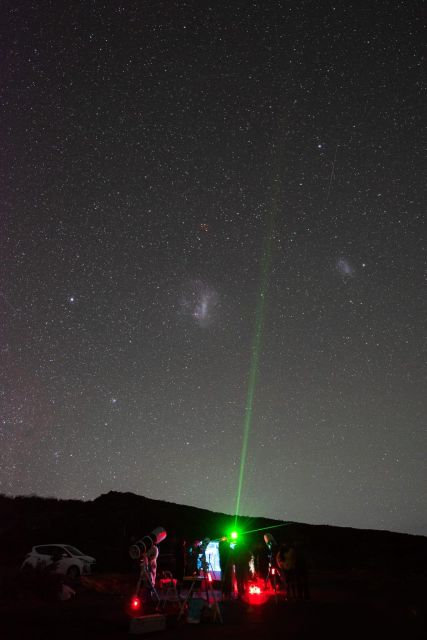
This is a compact observing session rather than a complicated astronomy course. You meet the guide, walk about five minutes from the stated meeting point, and settle in for a guided look at the sky.
The astronomer introduces the basic pieces first: constellations, the solar system, and the signs of the zodiac. That foundation matters because the experience is not only about waiting for a turn at the telescope. You get help making sense of the sky above you.
The exact viewing order can change. Night-sky observation depends on what is visible at the time, and the activity description promises stops at Saturn, Jupiter, the Moon, and other objects rather than a fixed sequence. You should think of the session as a guided tour through the sky, with the telescope aimed at the best available targets.
The telescope is the central piece of equipment, and all necessary astronomy equipment is included. You do not need to bring a telescope or any special kit. Your job is to arrive prepared for an outdoor evening and listen for the guide’s instructions.
More Stargazing Tours in the world:
- Dubai Red Dunes ATV, Camels, Stargazing & 5* BBQ Al Khayma Camp
★ 5.0 · 21,620 reviews - Sharm El-Sheikh: Ultimate ATV Quad, Stargazing & BBQ Dinner
★ 4.7 · 4,084 reviews - Tenerife: Teide National Park Sunset & Stargazing Tour
★ 4.2 · 3,812 reviews
Saturn’s rings are the headline sight
Saturn is often the object that gives a first astronomy evening its strongest sense of scale. Through a quality telescope, the planet is not just another point of light. Its rings become visible as a distinct feature, turning a distant object into something you can inspect.
The session specifically highlights Saturn’s rings, so this is one of the sights to look forward to most. The guide can place the view in context by explaining where Saturn belongs in the solar system and how it differs from the other planets.
The display will be small in the eyepiece. That is normal. A telescope does not turn a planet into a giant cinema image, and you should not expect a glossy, full-screen picture. The reward is the directness of the view: you are looking at a planet far beyond Earth with your own eyes, using a telescope set up for the evening.
Jupiter and its moons add a second highlight
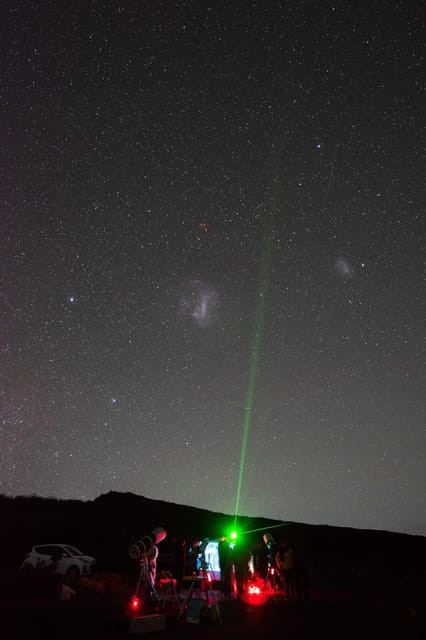
Jupiter gives the guide another excellent way to explain the solar system. The planet’s moons are specifically included in the program, so you may see them arranged near Jupiter as small points of light.
That simple view can teach you a lot. The moons help show that Earth is not the only world with objects moving around a larger planet. The guide can connect what you see in the eyepiece to the larger idea of a planetary system.
Jupiter is also a useful comparison with Saturn. One is known for its broad ring system, while the other is accompanied by visible moons. Seeing both during a single short session gives the evening a sensible shape without requiring a long lecture.
The experience promises Jupiter with moons, but astronomy always depends on conditions and timing. The exact appearance can vary. Still, this is one of the main reasons to book, particularly if you want a first look at planets rather than only stars.
The Moon brings the details close
The Moon is the easiest major target to appreciate because its surface has visible detail. The program includes lunar craters, which can appear as rough marks and circular depressions through the telescope.
For children, the Moon may be the quickest way to understand what the telescope does. It is familiar in the sky, but the view changes once you can examine its surface. Adults may also find it more impressive than expected because the craters give the Moon a physical, textured appearance.
The Moon can be bright, so it may not create the same dark-sky feeling as a field full of stars. That is not a flaw. It gives the guide a strong object for explaining how observation works, and it provides a clear target if you are new to telescopes.
If you are choosing among the listed sights, Saturn offers the surprise, Jupiter offers the planetary system, and the Moon offers the clearest detail. Together, they make a balanced short program.
Same sky over the world, a different way to watch it:
- Tenerife: Sunset and Stargazing at Teide National Park
★ 4.7 · 2,826 reviews - Teide National Park Sunset & Stargazing with Dinner (Star Safari)
★ 5.0 · 2,601 reviews - Dubai: Sunset Camel Trek, Al Khayma Camp, Stargazing & BBQ
★ 4.8 · 2,588 reviews - Dubai: Overnight Safari, Dinner, Stargazing & Al Khayma Camp
★ 4.8 · 2,562 reviews
Constellations, zodiac signs, and the wider sky
The evening is not limited to telescope targets. You also receive an introduction to constellations, the solar system, and the zodiac signs.
That wider explanation gives you something useful after the activity ends. You may not leave able to identify every constellation, but you should have a better sense of how the sky is organized and how the zodiac fits into common sky watching.
The guide explains what the group is seeing as the evening moves along. This is especially useful for families. Children can ask direct questions, while adults who have never learned the basic star patterns can get a simple starting point without feeling lost.
The language choice also matters. Instruction is available in French, Italian, or English. You should select the language you understand best when booking or checking the available arrangements, since clear explanation is a large part of this experience.
Why the small group matters
The group is limited to 10 participants. That is a practical advantage for a telescope activity because everyone needs a chance to look through the equipment.
A smaller group can also make questions easier. You are not simply standing at the back of a crowd while the guide speaks. You can follow the explanation, take your turn, and ask about an object that catches your attention.
The group size does not guarantee that every person will spend the same amount of time at the eyepiece. The 90-minute duration is fixed, and the guide has several subjects to cover. Still, 10 people is a reasonable limit for a hands-on observation session.
This format suits solo visitors and couples as well as families. You do not need to arrive with a large party, and the activity is not described as an advanced club session. It is built for a mixed audience.
A family activity that does not feel like homework
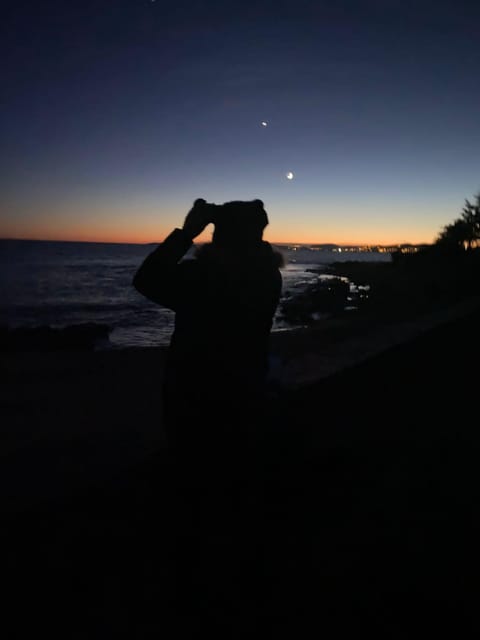
The strongest appeal for families is the mix of learning and direct observation. The explanations are intended to be simple, and the program is described as suitable for children and adults.
That does not mean every child will stay equally interested for the entire 90 minutes. Young children may need help waiting their turn or following a technical explanation. The telescope viewing gives the session a clear focus, but there is still listening involved.
For older children, the combination of planets, moons, and the zodiac can make astronomy feel concrete. Instead of reading about Saturn or Jupiter in a book, they can look through the telescope and then ask questions while the subject is in front of them.
Adults should not dismiss this as a children’s activity. A beginner can learn a lot from a calm explanation of what is visible and why. If you already spend time with astronomy equipment, though, this may feel basic rather than specialized.
The meeting point and outdoor setup
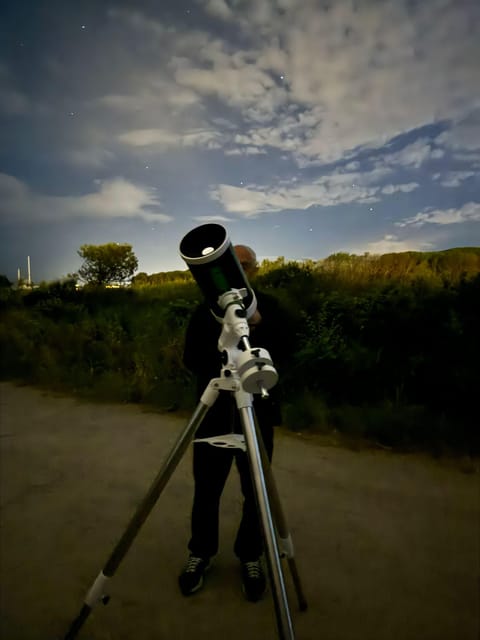
There is no shop or indoor reception area for this experience. You meet in front of the beach and restaurant La Table d’Elena, then walk about five minutes to the observing location.
This is easy enough, but you should plan for it. Arrive at the stated meeting point rather than searching for a storefront with the activity name. The short walk means comfortable shoes are sensible, especially if you are bringing children.
The activity ends back at the meeting point. That makes the arrangement simple, particularly if you are planning dinner or another evening activity nearby.
The outdoor setting also affects what you should pack. Warm clothing is specifically recommended, and you should bring drinking water. Even on a mild Provence evening, standing still while looking through a telescope can feel cooler than walking around town.
Timing, price, and what the value looks like
The price is $33 per person for 1.5 hours. I consider that fair for a guided small-group activity with astronomy equipment included, especially if you want a structured experience rather than trying to identify planets on your own.
The value depends on your expectations. You are paying for access to a telescope, the guide’s explanations, and a chance to view several major sky objects. You are not paying for transportation, a meal, or an all-night astronomy camp.
At roughly 90 minutes, the activity also fits neatly into an evening in Provence. You can pair it with dinner before or after, although the exact start time must be checked when you choose a date. The changing start times are worth noting because night observation needs to take place after dark.
Free cancellation is available up to 24 hours before the activity for a full refund. You can also reserve now and pay later, which helps if your plans between Cannes and Saint-Tropez are still moving around.
Who should book this astronomy evening
I would recommend this for a first astronomy experience, a family looking for an evening activity, or anyone who wants something different from the usual coastal sightseeing. The focus on Saturn, Jupiter, the Moon, and constellations gives you a good range of subjects in a short period.
It is also a good choice if you prefer guided learning to a self-led visit. The astronomer explains what you see, and the small group makes the activity feel more personal.
You may want to choose something longer if you already know the night sky or want advanced instruction. The program is introductory and only 90 minutes long. It is also not the best fit if you dislike cool outdoor conditions or prefer an indoor evening.
The activity is wheelchair accessible, according to the supplied details. Since the meeting arrangement includes a five-minute walk, you should still confirm any route concerns when booking.
Should you book Rando Astro Fréjus?
Book it if you want a friendly, focused introduction to astronomy with a real telescope and a short list of strong targets. The chance to see Saturn’s rings, Jupiter and its moons, and lunar craters gives the $33 price a clear purpose.
I would especially choose it for families, first-time stargazers, and curious adults who want explanations in English, French, or Italian. Bring warm clothes and water, arrive at La Table d’Elena, and treat the evening as a guided introduction rather than an advanced observatory visit.
FAQ
How long does the astronomy activity last?
The activity lasts 1.5 hours, or 90 minutes.
How much does it cost?
The listed price is $33 per person.
What can I see through the telescope?
The activity includes views of Saturn’s rings, Jupiter with its moons, the craters of the Moon, and other astronomical objects.
Will the guide explain the constellations?
Yes. The session includes an introduction to constellations, the solar system, and the signs of the zodiac.
Which languages are available?
Instruction is available in French, Italian, and English.
How many people can join the group?
The group is limited to 10 participants.
Is the activity suitable for children?
Yes. It is described as suitable for children and parents, as well as solo participants and friends.
Where do I meet the guide?
Meet in front of the beach and the restaurant La Table d’Elena. There is no shop, and you walk about five minutes from the meeting point.
Where does the activity end?
The activity ends back at the meeting point.
What should I bring?
Bring warm clothing and drinking water. All necessary astronomy equipment is provided.
Fresh listings near the world
- Cabo de Gata: Guided Night Walk with Stargazing★ 4.7 · 36 reviews
- Brisbane: Glow Worms, Sunset, Star Gazing & BBQ★ 4.4 · 26 reviews
- Cabo de Gata: Stargazing Experience★ 4.5 · 7 reviews
- Antofagasta: Astronomical Tour with a Guide★ 3.7 · 4 reviews
- Boulder: Guided Astronomy Tour★ 4.7 · 11 reviews
- 1-Day Grand Canyon Tour from Las Vegas: Stargazing & Sunrise★ 3.6 · 3 reviews
- Astronomical Tour: San Pedro de Atacama – Chile★ 4.5 · 3 reviews
- Perth: Pinnacles Stargazing, Sandboarding & Beach Kangaroos★ 5.0 · 3 reviews