
REVIEW · PRIVATE STARGAZING TOURS
Florence: Private Astronomical Tour of the Museo Galileo
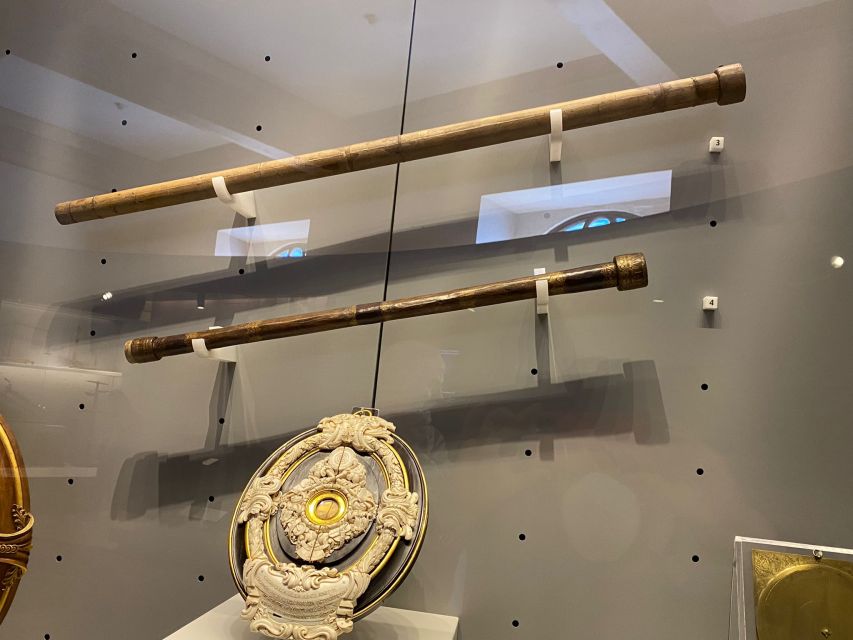
Galileo’s original telescope is the star of this Florence museum tour, but it is only one piece of a much larger story. Inside the Museo Galileo, you’ll see how Medici-era scientists measured time, space, temperature, and the heavens, using instruments that look part laboratory, part work of art.
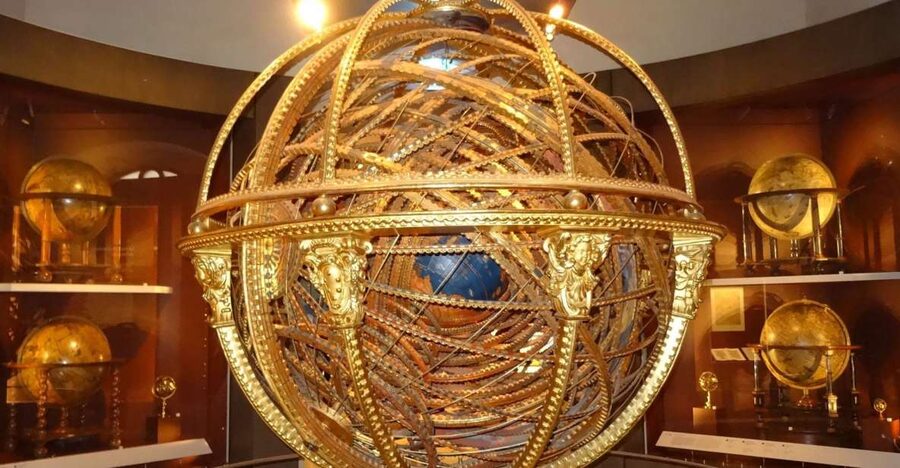
I like the private format because your guide can shape the visit around your questions, and I like the unusually specific collection: the 1568 Nocturnal by Girolamo della Volpaia and Santucci’s 1593 armillary sphere are not the usual Florence sights. The main consideration is time. Ninety minutes is enough for a guided overview, but not enough to study every display or watch every scientific video.
Key points to know
- Galileo’s original telescope: See the instrument linked to his astronomical work, along with other original scientific tools.
- Medici science in context: Learn how Cosimo I de’ Medici and later rulers built Florence’s scientific collection.
- Rare measuring instruments: Look for astrolabes, celestial globes, antique clocks, thermometers, maps, and the 1568 Nocturnal.
- Private 90-minute visit: Your group has its own guide, with tours available in English, Spanish, German, Italian, and French.
- Best for curious families and history-minded visitors: The museum includes hands-on-looking devices, old scientific games, and displays that appeal to children as well as adults.
- Plan extra time if science is your main interest: The museum app provides video explanations that can help you understand how several devices worked.
Why Galileo’s telescope matters in Florence
The Museo Galileo is not simply a room full of old instruments. It tells the story of how people began to measure the natural world with greater precision. Galileo’s telescope gives the visit its focus, but the surrounding collection shows the tools, habits, and institutions that made new discoveries possible.
Galileo worked at the court of the Grand Dukes of Florence during the reign of Cosimo II de’ Medici. That connection matters. Florence was not only a city of painters, sculptors, and churches. Its ruling family also supported mathematics, astronomy, engineering, medicine, and experimental study.
The collection began under Cosimo I de’ Medici in the 16th century. It continued under his successors, with an important step in 1657 when the Academy of Assay was founded. Later, Grand Duke Leopoldo of the Lorraine family helped carry the collection forward.
Your guide will connect these names and dates to the objects in front of you. That historical framing is one of the tour’s strongest features. A telescope becomes more meaningful when you understand who paid for scientific work, who used the instruments, and why measuring the sky mattered to courts, merchants, sailors, and scholars.
More Private Stargazing Tours in the world:
- Private Getty Center to Griffith Observatory Guided Tour
★ 5.0 · 185 reviews - Sedona Dark Sky Sunset & Night Hike With a Private Guide
★ 5.0 · 86 reviews - Stargazing Experience at Cowan’s Private Observatory
★ 4.0 · 85 reviews
The first 90 minutes inside the museum
You meet at the City Florence Tours office and should arrive 15 minutes before the scheduled start. Before the tour begins, you exchange your voucher at the ticket office. This adds a small step, so do not arrive at the last second.
The experience includes fast-track entrance tickets, reservation fees, a professional guide, and headsets. There is no hotel pickup, transportation, food, or drink, so plan to reach the museum on your own and keep the rest of your Florence schedule flexible around the 90-minute visit.
Once inside, the guide introduces the museum’s scientific collection and its connection to the Medici court. Because the group is private, you can ask for more detail about Galileo, astronomy, optics, timekeeping, or the history of the instruments.
The exact order of the rooms can depend on the guide and museum conditions, but you should expect a guided look at the collection’s main themes rather than a full technical study of every object. The pace is fairly brisk. That works well if you want an organized introduction before exploring other parts of Florence.
Galileo’s original instruments and the changing view of the sky
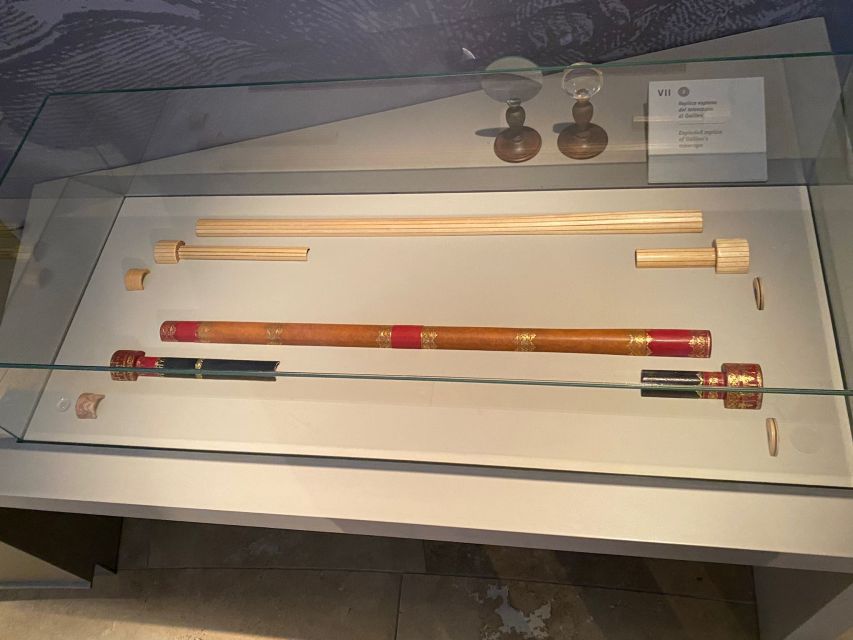
The original telescope is the obvious high point for most people. Seeing the actual instrument associated with Galileo’s astronomical studies gives the story a physical anchor. You are not only hearing about a discovery from a guidebook. You are looking at the tool that helped change how educated Europeans understood the sky.
The tour also covers Galileo’s life and work at the Florentine court. Your guide can help place his discoveries within the culture of the period, when old ideas about the universe met new observations and better instruments.
I would pay close attention to the difference between the objects themselves and the explanations around them. The museum preserves original instruments, but a telescope can look surprisingly simple if you do not know what problem it solved. The guide’s historical explanation helps, though visitors who want detailed science may need more time than this tour provides.
One useful approach is to ask questions early. If you care most about how the telescope worked, say so. If you are more interested in Galileo’s relationship with the Medici family, ask the guide to emphasize that instead. A private visit gives you a better chance to steer the conversation than a large group tour.
Astrolabes, globes, and the problem of measuring space
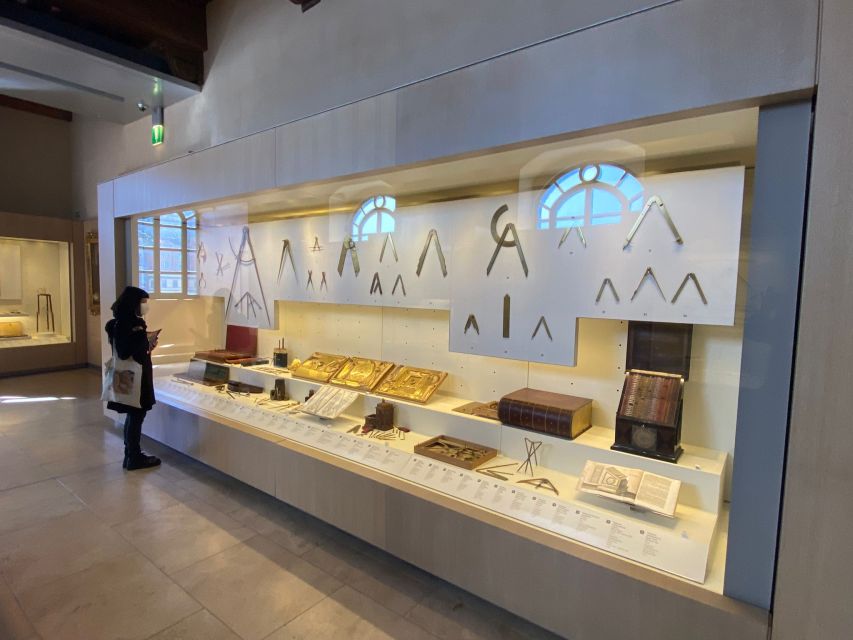
The museum’s astrolabes and celestial globes show how people represented the sky before modern technology. These objects were practical tools, teaching aids, and works of craftsmanship at the same time.
An astrolabe could help with measurements connected to the stars and the horizon. A celestial globe presented the heavens as a model that could be studied and manipulated. To modern eyes, both may look decorative. The guide’s job is to explain what information they carried and how people used them.
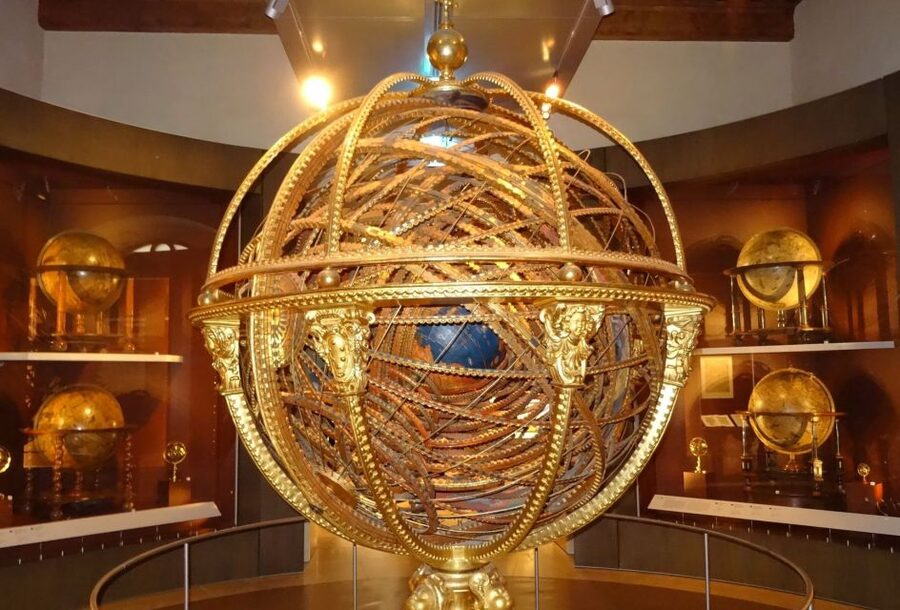
Santucci’s Armillary Sphere from 1593 is another important object. Its rings represent the main circles used to describe the heavens. You can see how a complicated model turned an abstract idea about the sky into something a scholar could hold, inspect, and use.
These displays are especially useful for families. Children may not follow every historical detail, but the shapes are engaging, and the idea of mapping the sky feels more concrete when it is shown through brass rings and moving parts.
The museum also includes maps and globes that help explain how geography and astronomy overlapped. Measuring the sky was not an isolated hobby. It supported navigation, calendars, timekeeping, and the wider work of understanding where people were in the world.
More Stargazing Tours in the world:
- Dubai Red Dunes ATV, Camels, Stargazing & 5* BBQ Al Khayma Camp
★ 5.0 · 21,620 reviews - Sharm El-Sheikh: Ultimate ATV Quad, Stargazing & BBQ Dinner
★ 4.7 · 4,084 reviews - Tenerife: Teide National Park Sunset & Stargazing Tour
★ 4.2 · 3,812 reviews - Tenerife: Sunset and Stargazing at Teide National Park
★ 4.7 · 2,826 reviews
Antique clocks, thermometers, and a 1568 Nocturnal
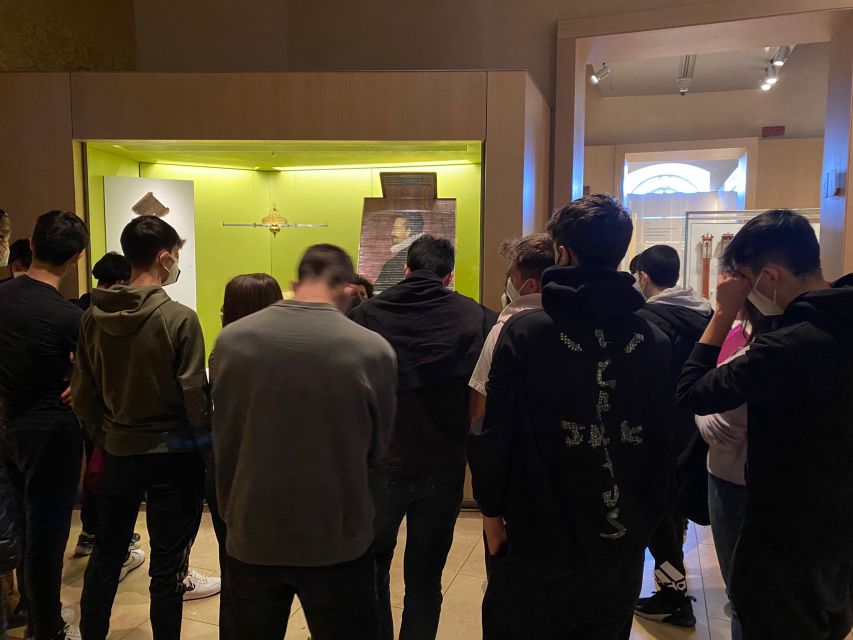
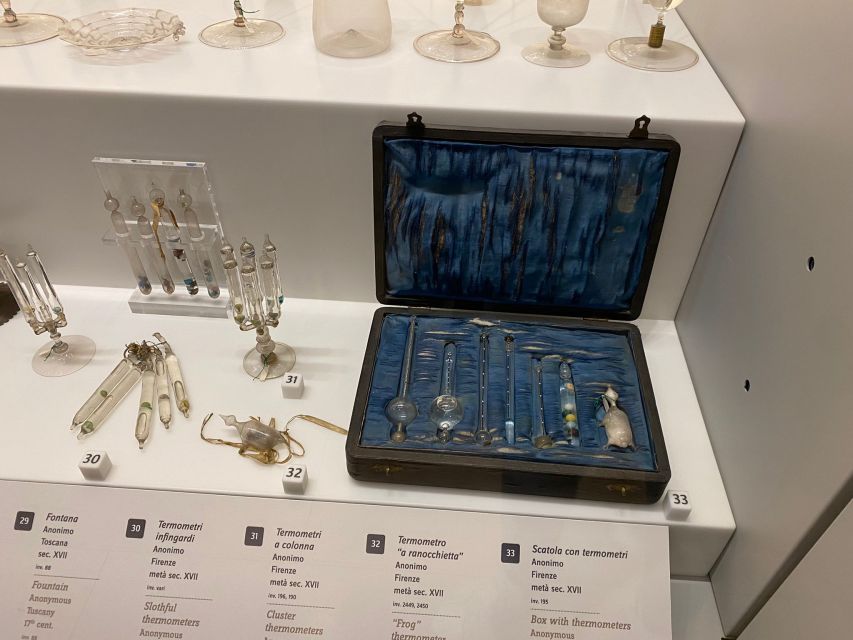
A strong part of the tour is the section on measuring time and temperature. Antique clocks show how mechanical timekeeping developed, while thermometers point to the effort to give numbers to changes in the physical world.
The 1568 Nocturnal by Girolamo della Volpaia is one of the collection’s most unusual objects. This instrument helped with night-time readings based on the stars. Its presence makes the visit feel more specific than a general museum tour because you are seeing a named object from a precise date and maker.
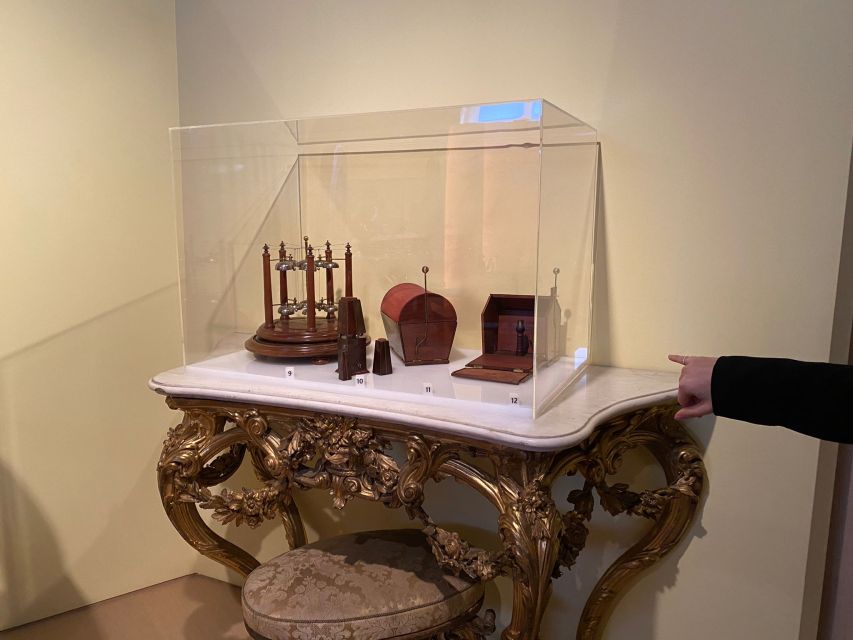
You will also encounter instruments connected with optics and electrostatics. These displays broaden the visit beyond astronomy. They show that the scientific world of the period included experiments with light, electricity, motion, temperature, and measurement.
Some devices are easier to appreciate after an explanation than by sight alone. If you love science, allow additional time after the guided portion to examine the displays more slowly. The museum app includes useful video explanations for several main exhibits, and these can show how the mechanisms worked in a way that a quick spoken explanation may not.
This is the main tradeoff of the experience. The guide can give you the historical and cultural setting, but 90 minutes does not leave much room for extended demonstrations, videos, and questions about every instrument.
What the private guide adds
A private guide is most valuable here as a translator of context. The objects are old, the terminology can be unfamiliar, and the connections between astronomy, physics, court life, and engineering are not always obvious at first glance.
The available languages are English, Spanish, German, Italian, and French. Headsets are included, which should make it easier to follow the explanation while moving through the galleries.
The guide is likely to focus on the story of Galileo, the Medici collection, and the broad evolution of astronomy, physics, and timekeeping. That is a good match for a first visit or for anyone who wants a clear route through the museum without reading every panel.
It may be a less complete match for someone who wants a technical lesson on each machine. One visitor found the guide helpful with the historical setting but felt that the scientific explanations needed more attention. That is useful advice. The tour is not a substitute for a slow, self-guided museum visit if your main goal is to understand every mechanism.
For the best result, use the guide and the app for different jobs. Let the guide explain why the collection matters and how it fits Florence’s story. Then use the app’s videos, if available to you, to see how key devices operate.
Family appeal, old games, and visual detail
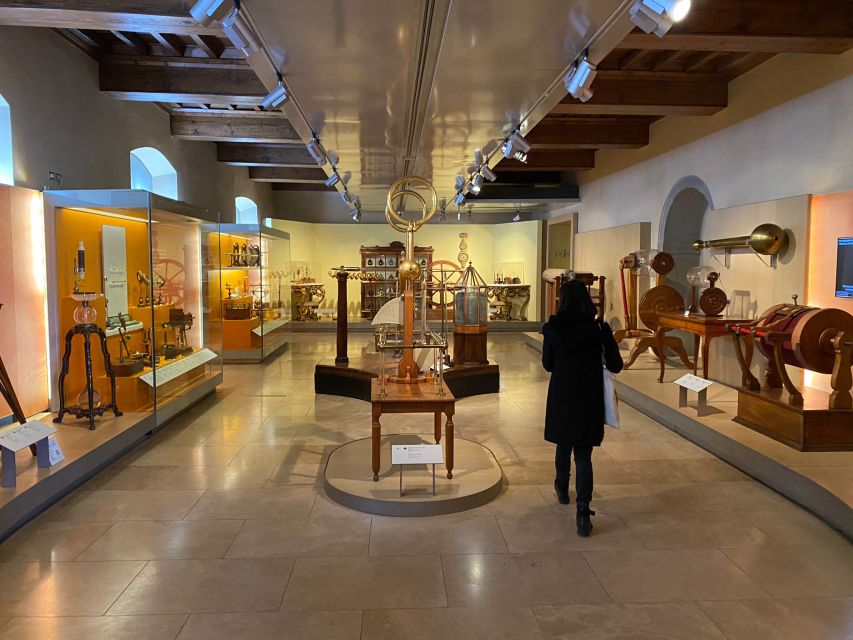
The museum works well for families because the collection is not made up only of small labels and portraits. You’ll see large globes, unusual machines, moving parts, measuring instruments, and old scientific games.
The games of the past add a lighter note to a subject that can otherwise feel technical. Children may connect with the puzzle-like quality of the objects, while adults can follow the larger story of how people tested ideas before modern laboratories.
Still, the tour is not designed as a children’s program. Young children may lose interest during the historical sections, especially if the guide spends a long time on court politics or scientific terminology. Families should use the private format to ask for shorter explanations and more object-based discussion.
Photography is allowed without flash. That lets you record the instruments, but the no-flash rule is important because these are historic objects. Large bags and backpacks may need to go in the cloakroom, so pack lightly if you can.
Comfortable shoes are a sensible choice. The visit lasts only 90 minutes, but you will be walking through the museum and standing for explanations.
Is $159 per person a fair price?
At $159 per person, this is not a cheap museum entrance. You are paying for a private guide, reserved access, reservation fees, headsets, and a focused visit rather than admission alone.
The value depends on how you use the hour and a half. For a first-time visitor who wants the main objects explained in a private setting, the price can make sense. You avoid building your own route through an unfamiliar collection, and you can ask questions without waiting for a large group to move on.
For a science enthusiast, the value is less straightforward. You may want two visits in one: a short guided tour for history and context, followed by a longer self-guided session with the museum app. Paying for a private tour and then returning for more time can be worthwhile, but it raises the total cost.
If you have only one short opening in your Florence schedule, the tour gives you a dependable introduction. If you can spend several hours at the museum, buying admission and exploring independently may offer better value for close study of the machines and videos.
The free cancellation period and reserve now, pay later option make booking less risky, especially if your Florence plans are still moving around. You can cancel up to 24 hours before the activity for a full refund.
Access, meeting point, and practical planning
The museum is described as wheelchair accessible, but the activity information also says it is not suitable for people with mobility impairments. That is conflicting guidance. If you use a wheelchair or have mobility concerns, contact the provider before booking and ask exactly what the route involves.
You should arrive 15 minutes early at the City Florence Tours office. Look for the office by name and meet the guide inside. You must exchange your voucher at the ticket office before the tour, so allow time for that rather than walking straight to the museum entrance.
The tour is available as a private group, and the guide can speak English, Spanish, German, Italian, or French. Food and drinks are not included. Since the tour is in central Florence, you can pair it with other sightseeing, but do not schedule a major timed attraction immediately afterward unless you leave a buffer.
Book ahead during busy periods. The private format limits the number of spaces, and the guided experience works best when you are not rushing in late.
Who should book this Florence science tour?
I would choose this tour if you want Galileo to be more than a name attached to a telescope. It is a good fit for history-minded visitors, families with curious children, and anyone who enjoys seeing original objects with a guide who can explain the Medici connection.
I would also choose it if you prefer a private conversation to a crowded group tour. The ability to ask about the telescope, the armillary sphere, the Nocturnal, or timekeeping can make the visit feel personal.
I would pause before booking if you want a detailed technical demonstration of every instrument. The short duration favors a clear overview. You may leave wishing you had more time with the museum app and the scientific videos.
The best plan for a serious science fan is to treat the guided visit as the historical introduction, then return or stay longer for independent study if your schedule allows.
FAQ
How long is the Museo Galileo tour?
The tour lasts 1.5 hours, or 90 minutes.
What can I see during the tour?
You can see Galileo’s original telescope, astrolabes, celestial globes, maps, antique clocks, thermometers, the 1568 Nocturnal by Girolamo della Volpaia, and Santucci’s 1593 armillary sphere.
Is the tour private?
Yes. The activity is organized as a private group tour.
Which languages are available?
The live guide can provide the tour in English, Spanish, German, Italian, or French.
Are entrance tickets included?
Yes. Fast-track entrance tickets, reservation fees, a professional guide, and headsets are included.
Can I take photographs inside the museum?
Photography is allowed, but flash photography is not permitted.
Is the museum wheelchair accessible?
The information says the museum is fully wheelchair accessible, but it also says the activity is not suitable for people with mobility impairments. Contact the provider before booking to confirm that the full tour route meets your needs.
Should you book the Museo Galileo private tour?
Book it if you want a focused, private introduction to Galileo, Medici science, and Florence’s instruments of measurement. The original telescope, the 1593 armillary sphere, and the 1568 Nocturnal give the visit real substance, while the guide supplies the historical links that make the objects easier to understand.
Skip it, or plan extra museum time, if your priority is technical science. Ninety minutes passes quickly, and you may want the app’s videos and a slower look at the displays. For most visitors, the smartest choice is to use the tour for context, ask direct questions, and leave room afterward for the machines to speak for themselves.
Fresh listings near the world
- Cabo de Gata: Guided Night Walk with Stargazing★ 4.7 · 36 reviews
- Brisbane: Glow Worms, Sunset, Star Gazing & BBQ★ 4.4 · 26 reviews
- Cabo de Gata: Stargazing Experience★ 4.5 · 7 reviews
- Antofagasta: Astronomical Tour with a Guide★ 3.7 · 4 reviews
- Boulder: Guided Astronomy Tour★ 4.7 · 11 reviews
- 1-Day Grand Canyon Tour from Las Vegas: Stargazing & Sunrise★ 3.6 · 3 reviews
- Astronomical Tour: San Pedro de Atacama – Chile★ 4.5 · 3 reviews
- Perth: Pinnacles Stargazing, Sandboarding & Beach Kangaroos★ 5.0 · 3 reviews
Private Stargazing Tours, side by side.
Private Getty Center to Griffith Observatory Guided Tour
Read our review →
Sedona Dark Sky Sunset & Night Hike With a Private Guide
Read our review →
Stargazing Experience at Cowan’s Private Observatory
Read our review →
Stargazing Private Tour at Roque De Los Muchachos in La Palma
Read our review →
Balaton: All-Weather Private Stargazing & Planetarium Tour
Read our review →
Stargazing & Mythology of Paros Night Sky: Private Experience
Read our review →Lists this night appears in