
REVIEW · CHILE STARGAZING
Easter Island: Rapa Nui Stargazing Tour
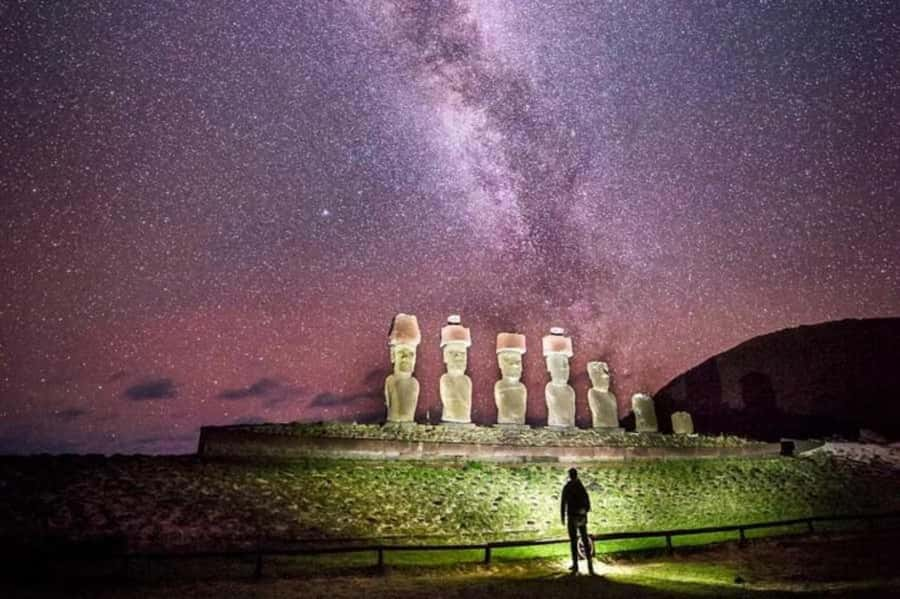
Rapa Nui’s night sky is the real star of this experience. At a remote observation site, you’ll connect Polynesian ocean voyages with the constellations overhead, then view stars and planets through a telescope before visiting Ahu Nau Nau after dark. I especially like the hands-on astronomy lesson and the chance to photograph yourself beside the moai at night.
I also like the small-group limit of 12 and the warm break with hot chocolate and local cake. Guide Marc has added a traditional song for some groups, giving the evening a personal Rapa Nui touch. The main caution is simple: clouds can cancel the experience, and uneven ground may be difficult for anyone with limited mobility.
Key points to know before booking
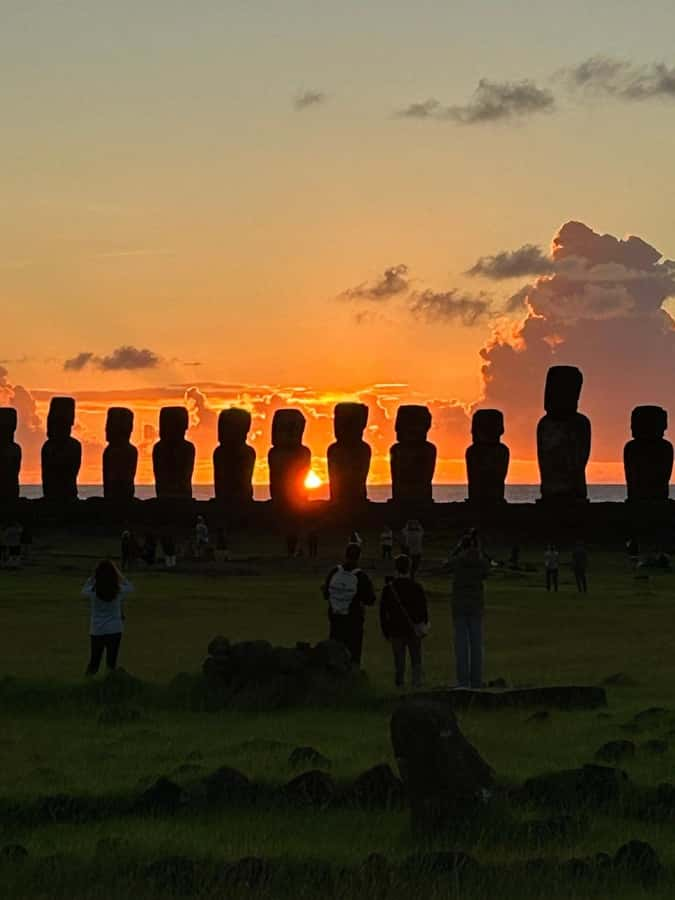
- Night access to Ahu Nau Nau: See the moai and nearby beach area after dark, with a digital photo included.
- Polynesian navigation comes first: The guide explains how voyagers used stars and constellations to cross the Pacific.
- A real telescope session: You’ll look at stars and planets rather than only hearing a lecture.
- Seasonal meeting times: Meet at Katipare Library at 21:00 in summer or 19:00 in winter.
- Small group, limited moonlight: The maximum is 12 people, and tours do not run from four days before to two days after the full moon.
- Bring your National Park ticket: It is not included, and hotel pickup is not provided.
Why Rapa Nui’s night sky matters
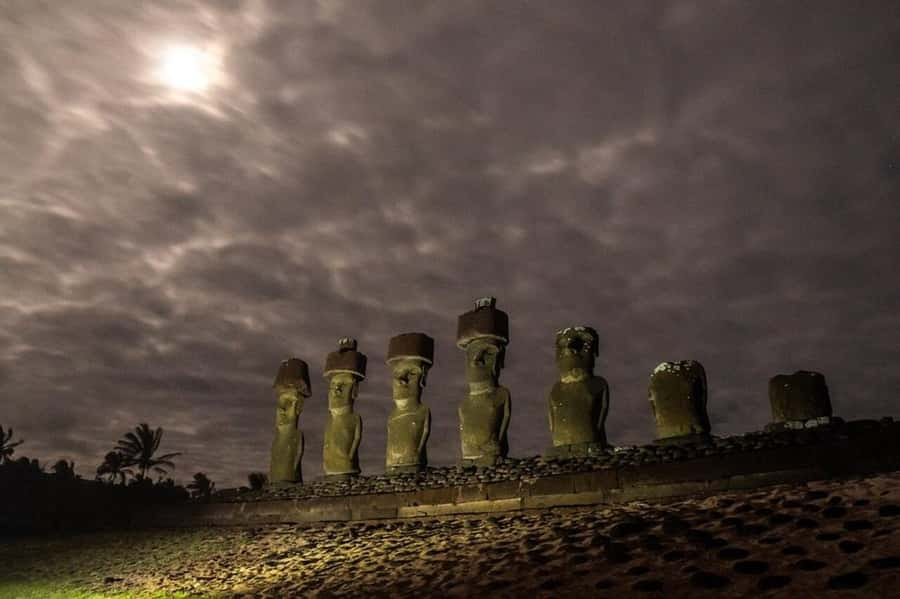
Rapa Nui is famous for its moai, but the sky helps explain how the island fits into the wider Polynesian world. This tour uses basic astronomy to show how voyagers could read stars and constellations while crossing huge stretches of ocean.
You are not simply taken to a dark spot and told to look upward. The evening links astronomy, navigation, settlement, and the archeo-astronomy of Rapa Nui. That context matters. A telescope view can be memorable on its own, but it becomes more meaningful when you understand why the same sky once helped guide ocean-going canoes.
The setting also changes your sense of scale. On an island far from major cities, darkness is part of the experience. You may see stars and constellations that are visible only in the Southern Hemisphere, a useful reminder that the night sky looks different depending on where you stand on Earth.
The experience is designed as an active lesson rather than a formal observatory visit. You can ask questions, look through the telescope, and take your own photos. If you bring a phone and tripod, you may be allowed to make your own night images.
More Stargazing Tours in Chile:
- San Pedro de Atacama: Etno-Stargazing Tour with Transfer
★ 4.8 · 629 reviews - San Pedro de Atacama: Stargazing Experience
★ 4.7 · 489 reviews - Astronomical Tour with Guide and Pick Up San Pedro de Atacama
★ 4.5 · 145 reviews
Meeting at Katipare Library
The evening begins in front of Centro Lector Katipare, also called Katipare Library, in Hanga Roa. This is a meeting-point tour, so you need to make your own way there. Hotel pickup is not included, though hotel drop-off is provided at the end.
The start time changes with the season:
- Summer: 21:00
- Winter: 19:00
Check the exact time when you book, since the three-hour schedule depends on the season. Arriving early is sensible, especially if you need to locate the library or are carrying a tripod and warm clothing.
The group can include up to 12 people. That is a useful size for an astronomy activity. You are less likely to feel lost in a crowd, and it should be easier to hear the guide when the group gathers around the telescope.
The guide speaks English or Spanish. Marc has been a memorable presence for some groups, explaining the constellations and navigation before ending the night with a traditional song. That musical touch is not the central promise of the tour, but it can make the evening feel more connected to the island than a standard telescope demonstration.
The astronomy and navigation lesson
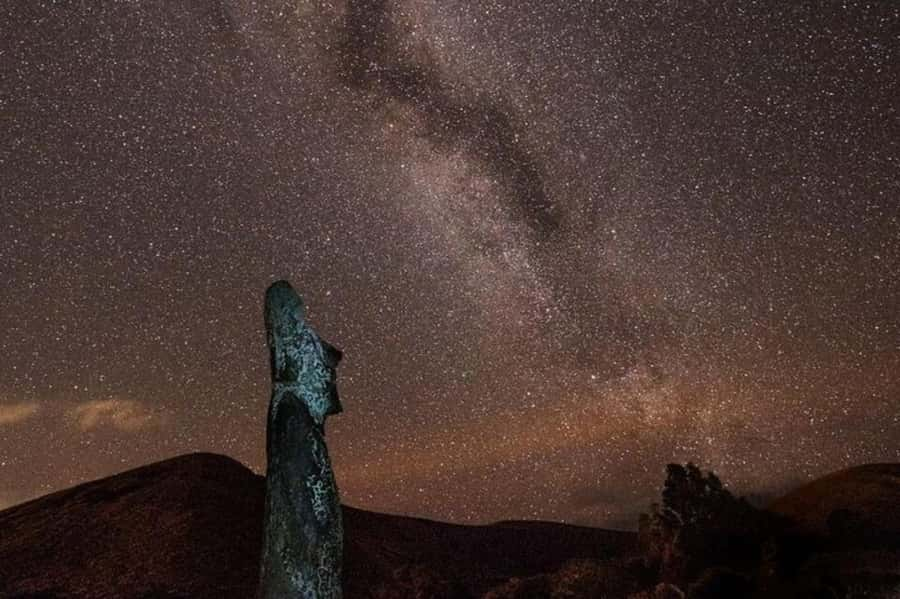
The first major part of the tour explains basic astronomy and Polynesian voyaging. You’ll learn how the night sky helped Polynesian navigators move across the Pacific and how knowledge of stars supported settlement on distant islands.
This is the part I would pay attention to, even if you already know a little astronomy. The value is not only in identifying stars. It is in seeing the sky as a practical guide used by people traveling without modern navigation equipment.
The guide also discusses Rapa Nui’s archeo-astronomy, which links celestial observation with traditional sites on the island. The presentation is intended for a general audience, so you do not need a science background. Expect a mixture of explanation, visual observation, and questions rather than a technical astronomy course.
The quality of the evening depends partly on the guide and partly on the conditions. On a clear night, the lesson has a strong visual payoff because you can connect the explanation to the stars above you. If clouds move in, the educational portion may still be useful, but the telescope session will be less satisfying.
Traditional observatory sites after dark
The tour heads to traditional observation areas used for understanding the night sky. Ahu Nau Nau is the key named site, and visiting it at night gives the familiar moai a very different presence.
You may have the chance to take photographs beside the statues, including the digital photo provided as part of the tour. The photo is a nice practical addition because low-light images can be difficult to make yourself, especially when you are trying to include both people and moai.
The night setting also asks you to slow down. During the day, Ahu Nau Nau is part of a busy sightseeing schedule. At night, the focus shifts toward darkness, stars, and the relationship between the site and the sky. Access rules and conditions can affect exactly how long you spend in each area, so think of this as a guided night visit rather than an open-ended photo session.
One important point is that you must already have your National Park ticket. It is not included in the $140 price. Check the park-entry requirements before booking so you are not caught without the required admission.
Same sky over Chile, a different way to watch it:
- “Astronomical Adventure in San Pedro de Atacama”
★ 4.5 · 96 reviews - San Pedro de Atacama: Guided Atacama Desert Stargazing Tour
★ 3.9 · 93 reviews - Stargazing Hiking Valle de Elqui
★ 5.0 · 46 reviews - Pisco Elqui: Mountaintop Stargazing and Night Portrait
★ 4.6 · 20 reviews
Telescope viewing at a remote site
The telescope is the practical center of the experience. After the guide sets up at a remote observation location, you’ll have a chance to view stars and planets through the instrument.
That makes this more than a scenic night drive. You get direct access to an organized observation session, with the guide explaining what you are seeing. The telescope’s quality has been praised, and the viewing time can be substantial.
Still, expectations matter. Astronomy depends on clear conditions, and there may not always be a long list of objects to see. If the sky is hazy or the night offers fewer points of interest, you could spend much of the evening listening and waiting rather than moving from one spectacular sight to another.
I would book this for the chance to understand and observe the sky, not as a guaranteed parade of dramatic telescope images. That distinction helps explain why one person may consider the tour excellent value while another may find the evening too quiet for the price.
Photography beside the moai
You are welcome to take your own photos, and the tour includes a digital photo. The chance to make images at night beside the moai is one of the more unusual features.
Bring your phone if you want a personal record, and bring a tripod if you have one and want to try night-sky photography. A tripod was specifically useful for people hoping to photograph the stars with their own equipment.
Do not expect ordinary daytime snapshots. Darkness, uneven ground, and limited light make night photography slower and less predictable. Follow the guide’s instructions and stay aware of where you step.
The digital photo adds value because it gives you a finished image without requiring you to master night photography on the spot. It also means you can put your camera away for part of the evening and pay attention to the explanation.
Hot chocolate, local cake, and a human finish
A warm drink and local cake are included. Hot chocolate may sound like a small detail, but it matters during a late outdoor activity, particularly in winter or on a cool night.
The break gives you a chance to pause after the telescope session and talk with the guide and other members of the group. It also keeps the experience from feeling like a nonstop lecture.
Marc may add a traditional song at the end. A song is not promised as a formal part of every departure, so I would not book solely for that reason. If it happens, though, it can be a memorable closing moment and a direct cultural connection that a standard astronomy talk often lacks.
Is $140 a fair price?
At $140 per person, this is not a cheap evening activity. You are paying for a three-hour guided program, transportation during the outing, telescope use, night access to a major Rapa Nui site, a digital photo, hotel drop-off, and refreshments.
The value is strongest if you care about several parts of the experience at once. Someone interested in Polynesian navigation, moai sites, astronomy, and photography can get a lot from the combination. The small maximum group of 12 also makes the price easier to justify than a large coach-style outing.
The value is weaker if you only want a quick look through a telescope. A cloudy evening, limited viewing conditions, or a lack of interest in the historical explanation could leave you feeling that there was not enough to do.
The National Park ticket is an extra cost, and hotel pickup is not included. Include both points in your budget. Hotel drop-off is provided, which is helpful because the tour finishes late.
Weather, moonlight, and the timing of your visit
Clear weather is essential. If poor weather cancels the tour, you will be offered another date or a full refund. The same applies if the minimum number of participants is not reached, with the option of another date or experience.
The tour also does not operate from four days before to two days after the full moon. That rule protects the darkness needed for stargazing. A bright moon can wash out many stars, so the limited calendar is not a minor scheduling quirk. It is central to the quality of the activity.
Before booking, check the moon phase against your time on Rapa Nui. If your schedule is tight, leave some flexibility for weather. You can cancel up to 24 hours in advance for a full refund, according to the stated policy.
The best choice for you may be a night early in your stay rather than the final night. That gives you a chance to reschedule if weather causes a cancellation.
Who will enjoy this experience most?
I would recommend the tour to you if you enjoy learning how a place works, not just collecting photos. It suits anyone curious about Polynesian navigation, traditional astronomy, and the link between sacred sites and the sky.
It is also a good fit for photographers who want a night image beside the moai and a chance to use a tripod. Families with older children may appreciate the mix of storytelling and telescope viewing, though the late hour and dark, uneven ground require care.
You should think twice if you need step-free access or have difficulty walking over uneven surfaces. The activity is not suitable for wheelchair users, and one older participant found the ground difficult to manage safely. A small light may help you see where you are walking, but the supplied information does not promise special mobility equipment.
This is also not the best pick if you want a busy, fast-moving evening. The rhythm is quiet: explanation, observation, telescope viewing, photography, and a warm break. That is a strength for some people and a weakness for others.
Practical details that make the night easier
Wear clothing suitable for a late outdoor activity, since the tour takes place at night and includes time at remote observation areas. The supplied information does not specify equipment or clothing, so keep your preparation simple and bring only what you can manage comfortably.
Bring your own camera or phone if you want personal photos. A tripod may help with night images. The tour allows you to take your own photos, but follow instructions around the moai and observation areas.
Remember these points before you leave your hotel:
- Meet at Katipare Library, not at your hotel.
- Confirm whether your departure is at 19:00 or 21:00.
- Carry or arrange your National Park ticket.
- Check the moon phase and weather forecast.
- Tell yourself that telescope viewing depends on conditions.
- Plan for hotel drop-off after the activity.
The group limit of 12 is helpful, but the experience still takes place outdoors and in darkness. Stay close to the guide, especially around uneven ground.
Should you book the Rapa Nui Stargazing Tour?
Book it if you want a thoughtful night on Easter Island that connects Polynesian wayfinding with the stars above Rapa Nui. The combination of a telescope, traditional observation sites, night access to Ahu Nau Nau, photography, and a possible song from Marc gives the evening more character than a simple stargazing stop.
Skip it if your budget is tight, you cannot manage uneven ground, or you want guaranteed telescope highlights regardless of weather. At $140, the tour earns its price through the full mix of guide, transport, site access, small group, photo, and refreshments. It is less convincing if you measure value only by the number of celestial objects viewed.
For the right visitor, this is a memorable way to see the island after the day’s sightseeing ends. Just choose a moon-free date, leave room for weather changes, and arrive at Katipare Library ready for a quiet, dark, sky-focused evening.
FAQ
Where does the Rapa Nui Stargazing Tour meet?
Meet in front of Centro Lector Katipare, also called Katipare Library, in Hanga Roa, Easter Island.
What time does the tour start?
The meeting time is 21:00 in summer and 19:00 in winter. Check availability for the exact departure time on your date.
How long does the tour last?
The activity lasts three hours.
Is hotel pickup included?
No. You must make your own way to Katipare Library. Hotel drop-off is included after the tour.
Is the National Park ticket included?
No. You need to arrange and pay for your National Park ticket separately.
What happens if the weather is poor?
The experience requires good weather. If it is canceled because of poor conditions, you will be offered another date or a full refund.
Does the tour operate near the full moon?
No. The tour is not available from four days before to two days after the full moon.
Fresh listings near Chile
- Stargazing Hiking Valle de Elqui★ 5.0 · 46 reviews
- San Pedro de Atacama: Astronomical Tour★ 3.9 · 3 reviews
- San Pedro de Atacama: Stargazing Tour in the Atacama Desert★ 3.0 · 5 reviews
- San Pedro de Atacama: Stargazing Experience with Transfer★ 3.5 · 8 reviews
- San Pedro de Atacama: Etno-Stargazing Tour with Transfer★ 3.5 · 5 reviews
- San Pedro de Atacama: Astro Tour with big telescopes★ 5.0 · 6 reviews
- SAN PEDRO DE ATACAMA: ASTRONOMICAL TOUR★ 3.6 · 3 reviews
- Pisco Elqui: Mountaintop Stargazing and Night Portrait★ 4.6 · 20 reviews
Chile Stargazing, side by side.
Astronomical Tour with Guide and Pick Up San Pedro de Atacama
Read our review →
“Astronomical Adventure in San Pedro de Atacama”
Read our review →
Pisco Elqui: Mountaintop Stargazing and Night Portrait
Read our review →
Lists this night appears in