
REVIEW · SAN PEDRO DE ATACAMA STARGAZING
Astronomical Tour with Guide and Pick Up San Pedro de Atacama
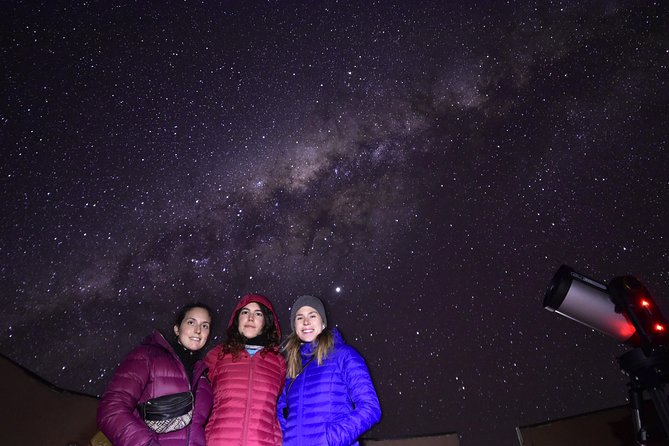
Atacama’s night sky is the star of this tour, but the best part is seeing that sky through a telescope. A bright point becomes Saturn with rings, Jupiter with storm bands, or a star cluster packed with individual suns. I like the clear, practical explanations and the chance to see southern constellations that are unfamiliar to many visitors. I also like the blankets, chairs, warm drinks, and souvenir astrophotography, small comforts in a very cold desert night.
The main catch is waiting. With only two or three telescopes serving a group, you may spend more time listening and standing around than looking through an eyepiece. Moonlight can also wash out the Milky Way, and bilingual explanations may feel rushed when Spanish and English groups are sharing the same session.
Key points before you book
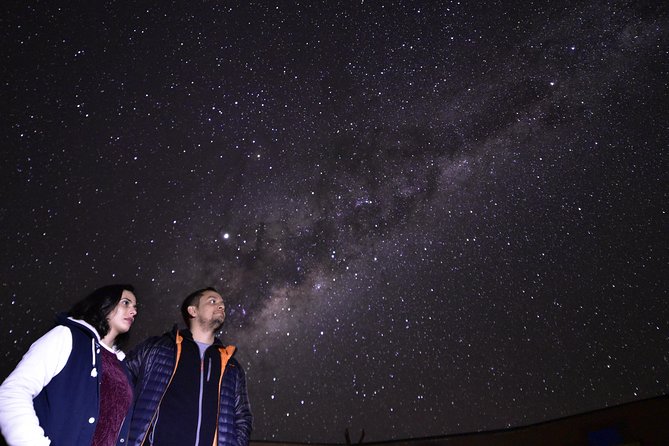
- The telescope views are the main event: Depending on the date, you may see planets, clusters, galaxies, nebulae, the Moon, and other stars in sharper detail than with the naked eye.
- Patricio is a central guide figure: He explains complex astronomy in simple terms, while other sessions may include guides such as Nathan.
- A moonless night matters: New moon or a small crescent gives you the best chance of seeing the Milky Way clearly.
- Pickup saves effort: Transport takes you outside San Pedro, where the sky is darker, but hotel stops can use part of the 2.5-hour outing.
- You get more than stargazing: Blankets, chairs, snacks, hot drinks, alcoholic drinks, soft drinks, restroom access, and an astrophotography session are included.
- Weather can change the plan: Clouds, wind, humidity, and high-altitude weather may lead to cancellation, rescheduling, or a refund.
Leaving San Pedro at 9:30 pm
The outing begins around 9:30 pm with pickup from your accommodation in San Pedro de Atacama. The drive to the observing site is short, but the total time can stretch when several hotel pickups are involved. One account described about 15 to 20 minutes spent collecting people, followed by a 10 to 15-minute ride to the site. Another reported much longer pickup and return delays during a crowded holiday period.
That detail matters because the advertised duration is about two hours and 30 minutes. If you lose 30 or 40 minutes to transport, the telescope portion feels shorter. I would keep the evening after this tour free rather than booking an early activity the next morning.
Pickup is not available from every outlying settlement. The service does not collect from the ayllus of Cucuter, Tulor, Coyo, Solor, or Quitor. If you are staying outside central San Pedro, confirm the meeting arrangement before paying.
The dark site is close enough to be convenient, yet far enough from town lights to make a real difference. You are not heading to a major observatory with giant research equipment. Instead, you are visiting a specially arranged outdoor astronomy area with chairs, telescopes, and room to watch the sky.
More Guided Nights Out in the world:
- Teide: Guided Sunset & Stargazing Tour by Night with Dinner
★ 4.7 · 1,339 reviews - Griffith Observatory Hike: Guided Tour through Griffith Park
★ 5.0 · 1,020 reviews - Tenerife: Mount Teide Observatory Guided Tour
★ 4.6 · 818 reviews
Two telescopes, several celestial targets
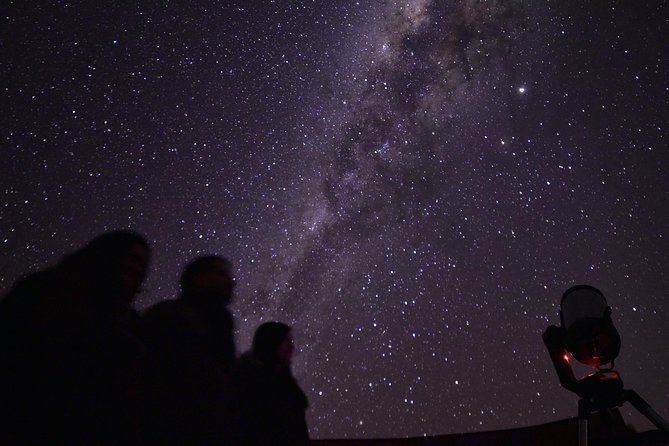
Once you arrive, the guides set up computerized and manual telescopes. Some sessions use two telescopes, while another group had three telescopes for 12 people. The precise number of instruments may depend on the night, but the basic rhythm is the same: the guide selects an object, explains it, and each person takes a turn at the eyepiece.
This is a shared experience, not a private viewing session. You may look at four or so main targets through each telescope, with the guide moving between instruments and questions. If the group is small and orderly, you may get generous viewing time. If the group is larger, each look can be brief.
The payoff is very different from simply staring upward. With your eyes alone, a planet is a bright dot. Through the telescope, you might see Saturn’s rings, Jupiter’s bands or storms, a dense star cluster, or the rough details of the Moon. One family described seeing storms on Saturn and Jupiter, while another used a phone to photograph the Moon through the telescope.
Do not expect photographs from a space telescope. These are ground-based instruments looking through Earth’s atmosphere. Wind, humidity, haze, and air movement can soften the image. The view can still be striking, but it is a live optical view, not a polished image from a scientific observatory.
Patricio’s explanations and the language question
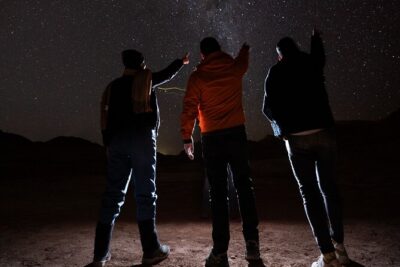
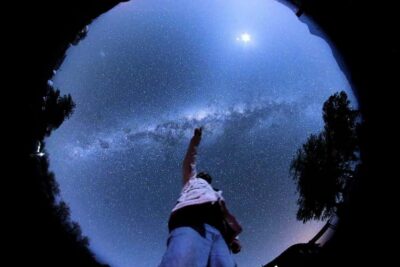
The astronomy talk gives the tour its shape. Patricio has been singled out for explaining stars, galaxies, planets, and cosmic distances in a way that works for beginners. He uses the laser pointer to identify southern constellations, which helps you connect the dark sky above with a clear story.
This is useful in San Pedro because the southern hemisphere presents a different sky for many visitors. You may recognize some familiar stars, but the guide can point out constellations and objects that are hard to identify without help. The explanations also put scale into perspective, using the enormous distances and lifetimes of stars to make the sky feel less like a random scatter of lights.
Language is less predictable. Some sessions are fully in English. Others are mainly in Spanish, with a second guide translating. One English-speaking group found the translation good but rushed, especially when one guide was speaking beside a telescope while the other was helping people view objects. If you need detailed English explanations, ask about the language arrangement before booking.
The guide’s style can shape your night as much as the weather. Patricio is the name most often connected with the experience, and Nathan has also led sessions. Both are described as strong astronomy presenters, but the tour is not built around one guaranteed guide, so the pace and balance between languages can vary.
Moon phase: the decision that shapes the whole evening
Check the moon calendar before you book. A new moon gives you the darkest sky and the best chance to see the Milky Way as a broad band. A bright moon can overpower faint galaxies, nebulae, and many stars, especially in photographs.
That does not make a full moon tour worthless. The Moon itself becomes an excellent target, with craters and sharp surface detail through the telescope. You may also see planets, clusters, and brighter stars. One visitor found the full Moon impressive and still saw many stars, while another felt the night was far below expectations because a half-full Moon hid the Milky Way.
For me, the timing is simple:
- Choose a moonless or nearly moonless night if you want the Milky Way and the darkest sky.
- Choose a brighter moon if you mainly want lunar views and an easier first introduction to astronomy.
- If you have only one night in San Pedro, check the lunar phase before committing to this tour.
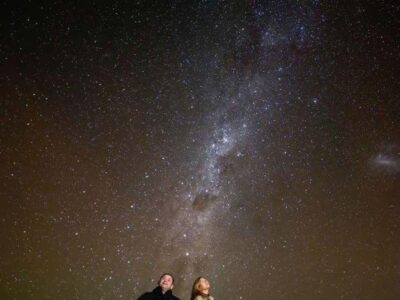
A bright Moon may also change the character of the photography. The included photo can still be attractive, but a Milky Way image is less likely to have the strong contrast you may be expecting.
More Stargazing Tours in the world:
- Dubai Red Dunes ATV, Camels, Stargazing & 5* BBQ Al Khayma Camp
★ 5.0 · 21,620 reviews - Sharm El-Sheikh: Ultimate ATV Quad, Stargazing & BBQ Dinner
★ 4.7 · 4,084 reviews - Tenerife: Teide National Park Sunset & Stargazing Tour
★ 4.2 · 3,812 reviews - Tenerife: Sunset and Stargazing at Teide National Park
★ 4.7 · 2,826 reviews
The cold-weather setup is genuinely useful
The desert can feel cold late at night, even after a warm afternoon. Chairs and blankets are provided, so you are not expected to stand in the open for the full session. Coffee, tea, soft drinks, snacks, and alcoholic drinks are included, with some sessions offering wine, whiskey, or champagne.
The drinks are generally part of the wind-down near the end rather than something you sip throughout the telescope rotation. That timing makes sense, since you need clear hands and attention at the eyepiece, but do not book this expecting a full meal or a long drinks service.
A restroom is available at the site. That is a practical detail on a late-night desert outing, especially for families. Most people can participate, and the setting includes chairs rather than a strenuous walk, so this is an easy activity physically. The main challenge is staying warm and patient while people take turns.
Bring another warm layer anyway. Blankets help, but they do not replace a jacket, hat, or closed shoes. The tour provider may cancel when clouds or other conditions make observation poor, though weather decisions can be complicated. Clear skies can change, and cloud cover can also arrive after a decision has been made.
Astrophotography adds value, with limits
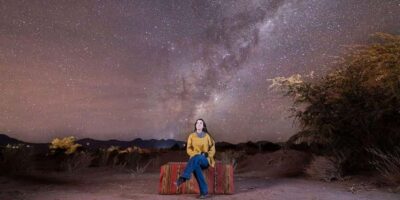
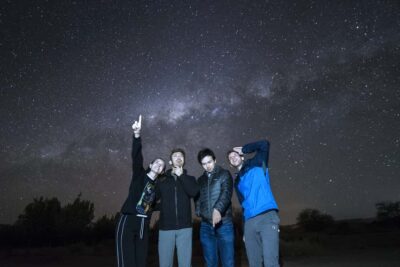
The tour includes professional astrophotography without the Moon. The usual result is a posed photo of you under the stars, supplied as a souvenir. This is a useful extra for people who want a memorable image without carrying a camera, tripod, and remote shutter through the desert.
The camera session can also slow the evening. People may gather around the camera, repeat poses, or wait for their turn. One group found the final photographs excellent but felt too much time was spent arranging them. If the tour is busy, the photo line can take time away from the telescope.
The quality is not guaranteed in every condition. A bright Moon, wind, haze, or camera movement can affect the result. If your priority is serious night-sky photography, bring your own camera only if the guides allow it and you understand that this is a group activity, not a private photography workshop. One participant received help setting up a personal camera, but that kind of assistance depends on the guide’s time.
For most people, the photo is best treated as a bonus. The real value is having someone find objects in the sky and explain what you are seeing.
Group size changes the value
The advertised maximum is 16 people, which is a reasonable size for a telescope session if the group stays organized. At that size, you can expect some waiting, but you should still get a turn at the eyepiece and a chance to ask questions.
A separate account from a holiday weekend described a group of more than 20 and long waits for both the telescopes and photographs. Peak dates in San Pedro can fill quickly, so group size may be one of the most important practical questions to ask before booking. A smaller group gives you more viewing time and makes bilingual explanations easier to follow.
The price is about $38 per person. That is fair if you value the guide, transport, equipment, warm drinks, snacks, and professional photo. It is less compelling if you mainly want to look at stars with your own eyes, since the naked-eye sky from just outside town already provides much of that experience.
You are paying for interpretation and access to equipment, not just darkness. Families often get strong value because children can look through the telescope and ask questions without needing their own gear. Couples may like the photo and late-night setting. Experienced amateur astronomers may find the telescopes modest and the shared format limiting.
Weather, cancellations, and choosing your date
The experience requires suitable weather. The company may cancel because of clouds or poor visibility, offering another date or a full refund. The decision can be made on the same evening, based on forecasts, satellite views, wind, humidity, and what the sky looks like near departure time.
That system can produce frustration. A clear afternoon does not guarantee a clear night, and a forecast can disagree with conditions at the site. If the tour is cancelled, keep a spare evening available if your schedule permits.
Summer in northern Chile can also bring high-altitude rain and cloud conditions. The supplied information includes a poor-weather cancellation and a separate night when cloud cover made the telescope session disappointing. This is not a reason to avoid the activity, but it is a reason to avoid treating the sky as guaranteed.
You can cancel your own booking for a full refund up to 24 hours before the start time. Changes made inside that window are not accepted, and poor-weather cancellations are handled separately by the provider or booking channel.
Who will enjoy this most
I would choose this tour if you want a guided introduction to astronomy and like the idea of seeing planets or star clusters through a telescope. It works well for families, couples, curious first-timers, and anyone who would rather have the sky explained than simply photograph it alone.
It is also a good fit if you are visiting San Pedro without a rental car. Pickup removes the need to find a dark roadside location at night, and the guide handles the equipment.
I would think twice if you dislike group activities, need every minute tightly controlled, or want long periods at the eyepiece. You may also be disappointed if you book during a bright full moon expecting a dramatic Milky Way. In that case, choose the date carefully or adjust your goal toward the Moon and bright planets.
Should you book the San Pedro astronomy tour?
Yes, if the Moon is small, the group is near the stated limit of 16, and you want an approachable astronomy lesson with transport and a souvenir photo. The strongest reasons to go are the guide’s clear explanations, the southern constellations, the chance to see planets and clusters through a telescope, and the convenience of the included setup.
Book with realistic expectations. This is not a giant observatory, a private stargazing session, or a guaranteed Milky Way photo. Waiting is part of the format, language arrangements can vary, and weather may cancel the night.
For the best odds, choose a moonless date, confirm the pickup point and tour language, ask about the expected group size, and bring warm clothing. With those details sorted, $38 is a sensible price for an easy, well-supported night under Atacama’s remarkable sky.
FAQ
Where does the astronomy tour begin?
The tour begins with pickup from accommodation in San Pedro de Atacama at about 9:30 pm. Pickup is not provided from the ayllus of Cucuter, Tulor, Coyo, Solor, or Quitor.
How long does the tour last?
The stated duration is approximately two hours and 30 minutes. Hotel pickups and the return drive are included within the evening schedule.
What can I see through the telescopes?
Depending on the time of year and conditions, you may see planets, star clusters, galaxies, nebulae, stars, and the Moon. The exact targets depend on the sky that night.
Is the tour available in English?
Some sessions are conducted fully in English. Other sessions use a Spanish-speaking guide with a second guide translating into English, so confirm the language arrangement before booking.
Is food or drink included?
Yes. The experience includes snacks, coffee or tea, soft drinks, and alcoholic beverages. Blankets, chairs, and restroom access are also included.
What happens if the weather is poor?
The tour requires good weather. If the provider cancels because of poor conditions, you are offered another date or a full refund. You can cancel your own booking at least 24 hours before the start time for a full refund.
Fresh listings near the world
- Cabo de Gata: Guided Night Walk with Stargazing★ 4.7 · 36 reviews
- Brisbane: Glow Worms, Sunset, Star Gazing & BBQ★ 4.4 · 26 reviews
- Cabo de Gata: Stargazing Experience★ 4.5 · 7 reviews
- Antofagasta: Astronomical Tour with a Guide★ 3.7 · 4 reviews
- Boulder: Guided Astronomy Tour★ 4.7 · 11 reviews
- 1-Day Grand Canyon Tour from Las Vegas: Stargazing & Sunrise★ 3.6 · 3 reviews
- Astronomical Tour: San Pedro de Atacama – Chile★ 4.5 · 3 reviews
- Perth: Pinnacles Stargazing, Sandboarding & Beach Kangaroos★ 5.0 · 3 reviews
San Pedro de Atacama Stargazing, side by side.
“Astronomical Adventure in San Pedro de Atacama”
Read our review →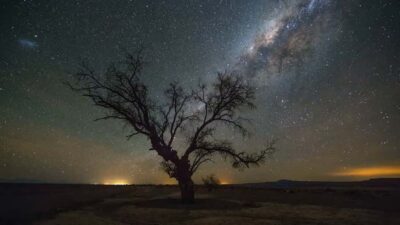
Lists this night appears in