
REVIEW · SEDONA STARGAZING
Sedona: Nighttime UFO & Stargazing Tour
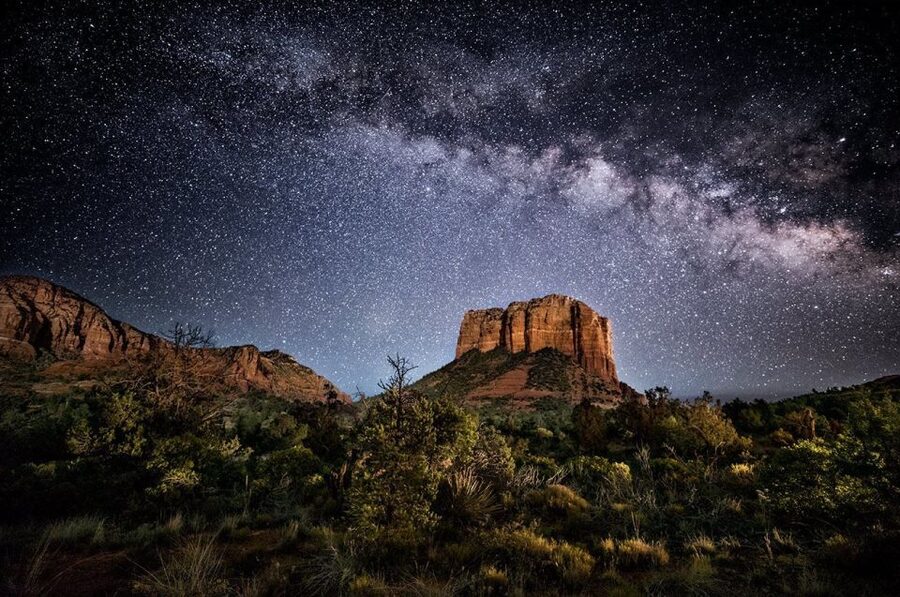
The most unusual thing about this Sedona UFO tour is the equipment. After enjoying the stars with your naked eyes, you use 3rd-generation military night vision goggles that reveal far more light and movement overhead. Guides such as Tom, Mike, Steve, John, and Gloria have made the hour lively with constellation tips, UFO stories, and a bit of good-natured alien talk.
I like the small four-person group, which gives you a better chance to look through the goggles and ask questions. I also like the blend of ordinary sky watching and the unexplained: you may see satellites, Starlink, shooting stars, aircraft, or lights that seem to change speed and direction. The main caution is value. At $160 per person for one hour, this is a specialty outing, and the experience depends heavily on clear skies and your comfort with its UFO-focused interpretation.
Key points to know before booking
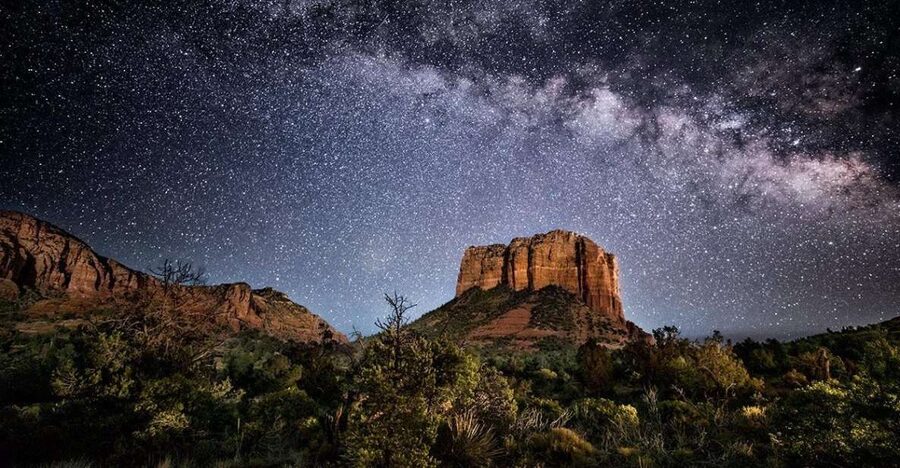
- 3rd-generation night vision goggles: See stars, satellites, distant lights, and moving objects that are hard to notice with the naked eye.
- Small groups of four: The current format is designed so each person can use a goggle instead of sharing.
- One hour after sunset: The short session works well in cold weather, but it gives you limited time if the sky is cloudy or activity is slow.
- Guide-led sky watching: Tom and other guides explain constellations, aircraft, galaxies, Sedona stories, and unidentified objects.
- Changing meeting time: The tour starts after sunset, and the exact time changes every other week. You receive details by text.
- Weather matters: Cloud cover can lead to cancellation, so keep your plans flexible.
What this Sedona UFO tour is really like
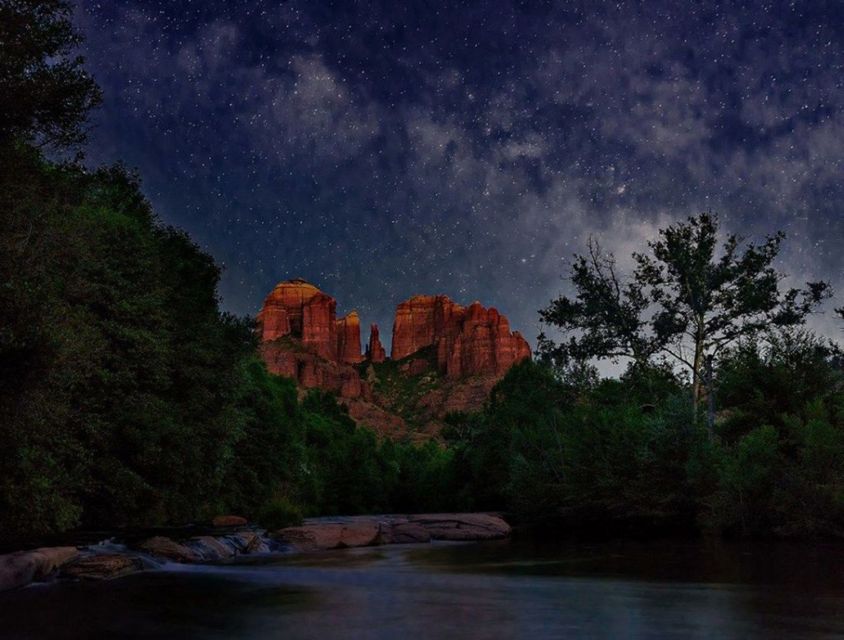
This is not a long drive through the red rocks or a hike to a remote overlook. It is a compact, stationary sky-watching session after sunset. You meet your guide at a location sent by text, settle in with a small group, and look upward first without equipment.
That opening matters. Sedona’s night sky can be impressive on its own, and you get a useful point of comparison before the goggles come out. The naked eye shows familiar stars, bright planets, aircraft, and perhaps a shooting star. The night vision device changes the picture by amplifying faint light, making parts of the sky appear much busier.
Your guide then helps you track what you are seeing. The focus is not only on UFOs. A good session can include constellations, galaxies, satellites, Starlink trains, shooting stars, and aircraft. The guide also points out lights that appear to flash, brighten, dim, move in unusual ways, or slip behind the mountains.
That mix is the heart of the experience. You are not simply handed binoculars and told to look around. The guide supplies context and encourages you to decide what you think each object might be. The tone can be scientific in one moment and firmly UFO-oriented in the next, so you should arrive ready for both.
More Stargazing Tours in the USA:
- Small Group Big Island Twilight Volcano and Stargazing Tour
★ 5.0 · 1,619 reviews - Griffith Observatory Hike: Guided Tour through Griffith Park
★ 5.0 · 1,020 reviews - Sedona Stargazing Tours LLC
★ 4.5 · 881 reviews
The opening sky check before the goggles
The first stage is the simplest: look at the sky with your own eyes. This lets you notice how much darkness hides from ordinary vision. You might catch satellites or shooting stars this way, as one session did when Starlink was visible without magnification.
The guide may use a laser or tablet to point out features overhead. Past guides have explained constellations and galaxies, helped distinguish normal aircraft, and offered background on Sedona’s UFO lore. That guidance is useful because night skies can feel confusing at first. Without help, a moving light may be a plane, satellite, drone, planet, or something you cannot identify.
You should not expect a formal astronomy lecture. The hour is built around active watching, conversation, and the chance to spot unusual movement. If you love strict scientific labeling, some of the UFO claims may feel loose. If you enjoy open-ended questions and stories about unexplained objects, that uncertainty is part of the fun.
Seeing the sky through military night vision
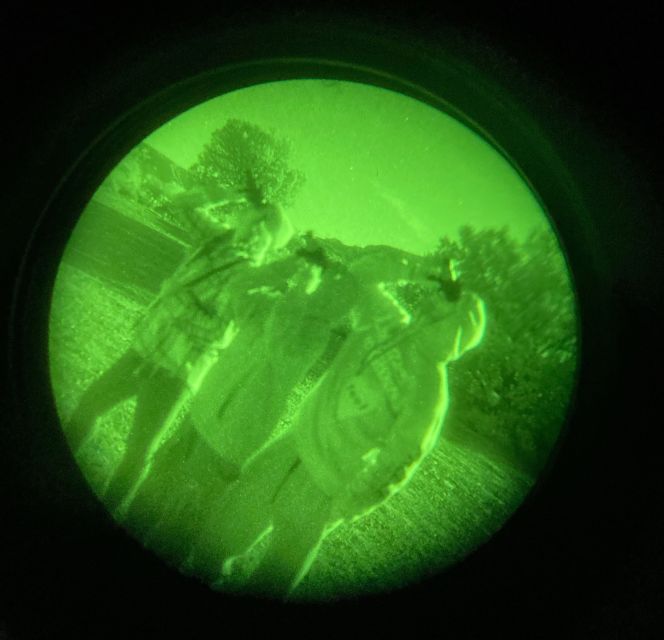
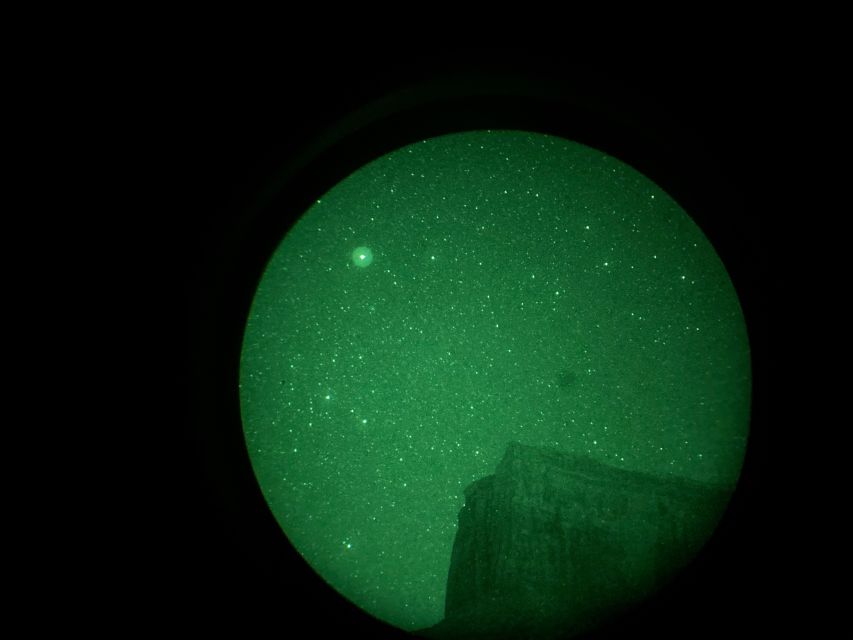
The goggles are the main reason to book. In ordinary darkness, much of the sky appears empty. Through night vision, faint stars and light sources become easier to see, and moving objects can seem to appear from nowhere.
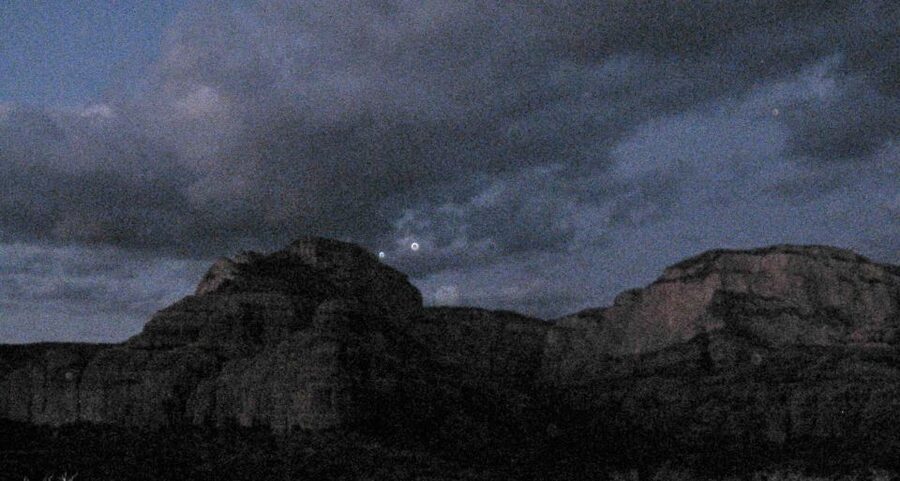
The effect can be startling. Several past sessions included lights that flashed, changed apparent size, brightened, faded, or moved across the sky in formations. Some objects were likely satellites or aircraft, while others were left unexplained. The equipment does not prove that every strange light is extraterrestrial, but it does show you how much activity your eyes normally miss.
The current description says you do not have to share a goggle and that the price is per goggle rather than per person. This is important because older experiences included shared equipment, and one group had to pass a single set among four people despite expecting two. Confirm the current arrangement when you book, especially if your group includes four people.
A green laser may help the guide direct your attention to a moving point. That saves time, since you do not have to search the whole sky alone. Still, the experience is not guaranteed to produce a dramatic sighting every few minutes. The goggles reveal more light, but clouds, wind, moonlight, and the timing of visible objects all affect the evening.
Why the guide matters so much
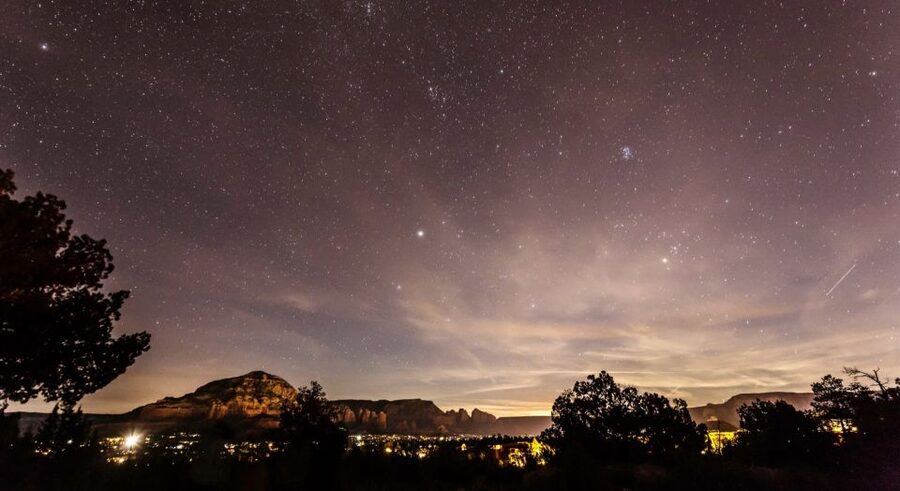
The guide can make or break a one-hour tour. Tom received especially strong praise for being personable, entertaining, and deeply interested in the subject. Mike was described as combining practical sky knowledge with UFO material, while John helped explain what the group was seeing and added historical context about Sedona.
That range tells you what to expect from the presentation. You will get more than a silent equipment demonstration. The guide tracks the sky, explains what may be a regular aircraft or satellite, points out stars, and tells stories about unexplained sightings.
The best part is the guide’s ability to keep the hour moving. Looking at a dark sky can become passive if nobody tells you where to look. A lively guide gives you a reason to shift your attention, check the goggles again, and compare what you see with the naked eye.
The UFO subject is handled as entertainment and personal interpretation rather than a settled scientific conclusion. Some guides lean into alien theories. Others appear to provide more astronomy and equipment context. If you are skeptical, you can still enjoy the goggles and the night sky without accepting every explanation.
Same sky over the USA, a different way to watch it:
- Miami: Frost Museum of Science and Planetarium Entry Ticket
★ 4.5 · 429 reviews - Griffith Observatory Insider Tour
★ 4.5 · 306 reviews - LA: Griffith Observatory Insider Tour
★ 4.5 · 287 reviews - The Original Sedona UFO and Stargazing Night Tour
★ 4.5 · 269 reviews
Group size, setting, and comfort
The group is limited to four people, which is a strong feature for this kind of activity. A smaller group means less waiting and more room for questions. It also helps the guide respond when one person spots something unusual and needs help finding it again.
The setting may not feel like a grand wilderness lookout. One past session took place in a parking lot, with cars and occasional people causing distractions. Another group found that the meeting area was close to its accommodation rather than far outside town. That can be convenient, but it also means you should not book this expecting a remote, silent viewing platform.
Cold is a bigger concern than many people expect. The tour takes place after sunset, and even a comfortable day in Sedona can turn chilly once you are standing still. Bring warm clothing. A past guide supplied blankets when wind made the evening colder than expected, but you should dress properly rather than depend on that.
Smoking, food, and drinks are not allowed. Pickup and drop-off are not included, so you need to arrange your own way to the meeting point. The exact place and start time are sent by text the day before, and the schedule changes every other week because the tour begins after sunset.
Weather, moonlight, and the odds of seeing something
Clouds are the biggest practical risk. The tour may be canceled if the sky is too cloudy, and even partial cloud cover can block the view. One past session began with clouds but improved later, while another received a lower rating because cloud cover limited the experience.
If you have flexibility, aim for the darkest sky you can get. One useful tip is to choose a night near the new moon, when moonlight is less likely to wash out faint stars. This does not guarantee a UFO sighting, but it can improve ordinary stargazing and the view through night vision equipment.
The hour may include shooting stars, satellites, or Starlink. Those are worth watching even if you reject the UFO label. The goggles can show a greater number of light sources than you would see normally, and that alone can be a memorable lesson in how much is moving above Sedona.
Still, no guide can promise a particular object. The tour sells the chance to search, not a guaranteed close encounter. That distinction is worth keeping in mind when judging the price.
Is $160 a fair price for one hour?
At $160 per person, this is expensive for a one-hour activity. You are paying for specialized night vision equipment, a guide, and a very small group rather than for transportation, a meal, or a long excursion.
The value depends on your interest. If you have always wanted to try military-style night vision, the goggles may justify the cost. They make the experience different from a standard stargazing walk and allow you to see faint stars and moving lights in a new way.
If your main goal is basic astronomy, you may find the price harder to defend. The session is short, there is no pickup, and clouds can reduce the payoff. A family of four pays the full listed rate, with no lower child price noted. That can make this a costly choice for parents, even when everyone enjoys it.
There is also a pricing detail to clarify. The activity information gives a rate of $160 per person, while the description says the price is per goggle and that each person receives a goggle without sharing. Confirm exactly how your booking will be charged and how many goggles your group will receive before you finalize plans.
Who will enjoy this most?
I would recommend it to you if you enjoy unusual evening activities, UFO stories, sky watching, and hands-on equipment. It suits couples looking for something different, small groups with a shared curiosity, and visitors who want more than another daytime red-rock outing.
It can also work for a skeptic. You can treat the hour as a night vision demonstration and decide for yourself whether a moving object is a satellite, aircraft, optical effect, or something unknown. The guide’s explanations give you more to think about than simply staring into darkness.
Families can have fun here, but the price deserves careful thought. The short duration is helpful for children who may get cold or restless, yet the lack of a child discount makes the total high. Warm clothes are essential for everyone.
This is not the best choice if you want a quiet, formal astronomy program or a remote natural setting. It is also a poor fit if clouds are forecast and your schedule leaves no room for a cancellation or rescheduled plan.
Booking details that affect your plans
You can cancel up to 24 hours in advance for a full refund, and the reserve-now, pay-later option keeps your schedule flexible. The exact start time changes every other week, so do not assume the time shown when you first begin planning will remain the same.
Contact the provider on the day of the tour for the exact meeting time, even after receiving the earlier text. Since pickup and drop-off are not included, leave enough time to reach the meeting point on your own.
The tour is conducted in English. Ask any equipment or meeting-point questions before the evening begins, since the one-hour format leaves little room for confusion once the group starts scanning the sky.
Should you book the Sedona UFO and Stargazing Tour?
Book it if specialized night vision gear and unexplained lights sound more exciting than a conventional astronomy talk. The small group, lively guides, and chance to see satellites, shooting stars, Starlink, and other moving objects give the hour real character.
Skip it if $160 feels high for a short, weather-dependent activity, or if you want a remote viewpoint and a strictly scientific presentation. For the best chance of enjoying it, choose a clear, dark night, bring serious warm layers, confirm the goggle arrangement, and treat UFO sightings as an invitation to look closely rather than a promise of proof.
FAQ
Where does the Sedona UFO and Stargazing Tour meet?
The guide sends you a text with the exact meeting time and location. The meeting details can change because the tour starts after sunset and the schedule changes every other week.
How long does the tour last?
The tour lasts one hour.
What time does the tour begin?
It begins after sunset. The exact start time changes every other week, so contact the activity provider on the day of the tour for confirmation.
How many people can join the group?
The group is limited to four participants.
Are night vision goggles provided?
Yes. The experience includes 3rd-generation military night vision goggles for searching the sky.
Do participants have to share a goggle?
The current information says you do not have to share a goggle and that the price is per goggle. Because older arrangements involved sharing, confirm the equipment setup when booking.
What might I see during the tour?
You might see stars, satellites, Starlink, shooting stars, aircraft, and lights described as unexplained or unidentified. Sightings depend on the sky and conditions.
What should I bring?
Bring warm clothing. The tour takes place after sunset, and it can feel cold, especially with wind.
Can the tour be canceled because of weather?
Yes. The tour may be canceled if the weather is too cloudy.
Is transportation included?
No. Pickup and drop-off are not included.
What is the cancellation policy?
You can cancel up to 24 hours in advance for a full refund. You can also reserve now and pay later, according to the activity terms.
Fresh listings near the USA
- Boulder: Guided Astronomy Tour★ 4.7 · 11 reviews
- 1-Day Grand Canyon Tour from Las Vegas: Stargazing & Sunrise★ 3.6 · 3 reviews
- Private Stargazing – Sequoia National Park★ 4.5 · 14 reviews
- Private Tour of Griffith Observatory★ 4.5 · 58 reviews
- Milky Way Photography in Arches National Park★ 4.0 · 4 reviews
- Professional Stargazing in Moab★ 3.5 · 3 reviews
- Haleakala Sunset and Astronomy Tour★ 5.0 · 33 reviews
- Haleakala Sunset and Stargazing Audio Tour★ 4.0 · 10 reviews
Sedona Stargazing, side by side.


The Original Sedona UFO and Stargazing Night Tour
Read our review →
The Night Sky Star Story, Galaxy, and Sedona Story Tour
Read our review →
Sedona Dark Sky Sunset & Night Hike With a Private Guide
Read our review →Lists this night appears in