
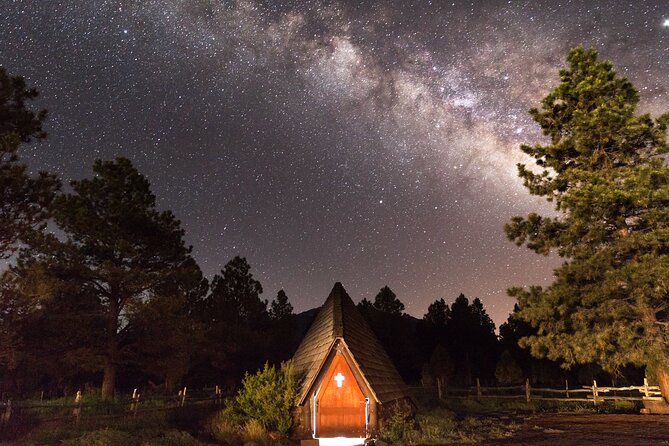
REVIEW · USA STARGAZING
Ultimate Flagstaff Stargazing Experience
Flagstaff’s dark night sky is the star here, but the technology makes the experience far more rewarding than simply looking upward and hoping your eyes adjust. Evan Thibodeau uses an 8-inch Celestron 8SE telescope and a Stellina mobile astrophotography machine to show you planets, the moon, galaxies, and nebulas in live images.
I like the small group limit of 10, which gives the evening a personal feel, and I like the simple comforts: chairs and hot chocolate or tea. The main thing to consider is the weather. Clouds can cancel the outing, and the 8:00 pm start may feel late for young children.
Key points to know before booking
- Live views of deep space: Stellina and the Celestron telescope let you see more than the naked-eye sky.
- A personal two-hour session: The group is limited to 10 people, so you should have time to ask questions.
- Comfort is built in: Chairs, hot chocolate, and tea make the wait between views easier.
- Evan Thibodeau leads the experience: His enthusiasm covers stars, planets, galaxies, zodiac subjects, and constellations.
- Photos under the stars are included: You and your group can have a record of the evening.
- Weather matters: Poor conditions can lead to a new date or a full refund.
Why Flagstaff is a smart place for stargazing
Flagstaff is a natural setting for an evening under the stars, and this experience makes use of that setting without asking you to bring your own gear or learn complicated telescope controls. You meet at 2900 N Fort Valley Road at 8:00 pm, then spend about two hours looking at the night sky.
The appeal is not only the number of stars. It is the chance to connect those pinpoints of light with actual objects and ideas. A guide can help you understand what you are looking at, then use equipment to bring distant objects into view. That changes the experience from a quiet hour outdoors into a guided lesson with something to see at each stage.
You should arrive ready for a night outside. The supplied information does not give a detailed temperature guide or clothing list, so use your own judgment for Flagstaff’s evening conditions. Chairs are provided, which helps, but you will still want to dress for the weather and wear practical shoes.
More Stargazing Tours in the USA:
- Small Group Big Island Twilight Volcano and Stargazing Tour
★ 5.0 · 1,619 reviews - Griffith Observatory Hike: Guided Tour through Griffith Park
★ 5.0 · 1,020 reviews - Sedona Stargazing Tours LLC
★ 4.5 · 881 reviews
Meeting Evan at 8:00 pm
The tour begins at 2900 N Fort Valley Road, Flagstaff, Arizona. The activity ends at the same meeting point, so you do not need to arrange a second pickup location afterward.
There is no transportation included. You are responsible for getting to the meeting point, and a mobile ticket is used for the booking. Confirmation arrives at the time of booking, making the basic planning simple.
The 8:00 pm start gives you a proper nighttime setting rather than a twilight introduction. That matters because the darker the sky becomes, the more useful the telescopes and live imaging should be. The tradeoff is obvious: families with small children may find the timing difficult, especially because the session lasts around two hours.
Getting comfortable before the sky show
Once the session begins, chairs give you a place to sit while you wait for the next viewing opportunity. That sounds like a small detail, but it makes a real difference during stargazing. You can look up without standing in one position for the entire evening.
Hot chocolate and tea are also included. These drinks do not transform the activity, but they make a cool night more pleasant and give the experience a relaxed pace. You are not being rushed from one telescope view to another.
The small group size is another practical strength. With no more than 10 people, you should have a better chance to hear the guide and ask questions than you would in a large outdoor group. It also helps the evening feel more like a private lesson than a crowd gathered around equipment.
Using the Celestron 8SE telescope
The 8-inch Celestron 8SE telescope is the traditional viewing tool for the evening. You use it to look at planets, the moon, and other visible objects selected by the guide.
A computerized telescope is useful for two reasons. First, it can help locate objects that are difficult to find by sight alone. Second, it allows the guide to move between different targets during a short session. You do not have to know the night sky in advance or spend time learning how to aim the telescope.
The experience is likely to be especially useful if you are new to astronomy. You can ask basic questions without needing to prepare beforehand. If you already know your constellations and planets, you may appreciate the chance to see familiar objects through a larger instrument and compare them with what you can see unaided.
Remember that telescope viewing is not the same as looking at a polished space photograph. The exact view can depend on conditions and the object being shown. The value here is having the equipment and guide to help you find and understand what is overhead.
Same sky over the USA, a different way to watch it:
- Miami: Frost Museum of Science and Planetarium Entry Ticket
★ 4.5 · 429 reviews - Griffith Observatory Insider Tour
★ 4.5 · 306 reviews - LA: Griffith Observatory Insider Tour
★ 4.5 · 287 reviews - The Original Sedona UFO and Stargazing Night Tour
★ 4.5 · 269 reviews
Seeing galaxies and nebulas through Stellina
The Stellina mobile astrophotography machine adds a different layer to the evening. Instead of relying only on the eyepiece, you can see live imaging of deep space objects such as galaxies and nebulas.
This is one of the most interesting features for people who want more than moon and planet viewing. Galaxies and nebulas are far beyond the casual naked-eye experience, and live imaging gives you a way to see them during your own session.
The wording live imaging matters. You are not simply being shown a printed space picture with no connection to the evening. The system is used as part of the session, alongside the telescope, to present distant objects while the guide explains what you are seeing.
For someone new to astronomy, this can make a huge difference. A faint point of light may not mean much at first. When the equipment reveals structure or a larger form, the scale of the universe becomes easier to grasp. You can also ask Evan to explain the object rather than trying to identify it from a phone app.
Evan’s approach to the night sky
Evan Thibodeau leads the tour, and the experience depends heavily on his ability to make the subject approachable. His enthusiasm covers stars, planets, galaxies, zodiac topics, and constellations, so the discussion is not limited to operating the machines.
That broad range is useful because people arrive with different interests. You might care most about planets, while someone else wants to understand the zodiac or learn the names of constellations. A guide who can move between those subjects helps the group stay involved.
The available feedback gives Evan’s enthusiasm particular weight. His energy about the sky is described as contagious, and that is important in an activity where patience and curiosity matter. Stargazing is not a fast-moving attraction. A lively guide can help you stay interested while the equipment is set up, adjusted, or pointed toward a new object.
At the same time, this is still an outdoor astronomy session, not a formal planetarium presentation. The experience is best for you if you like asking questions and spending time with a subject. If you want a short, highly produced show with constant visual effects, this may feel slower.
Photos under the stars
The tour includes photos of you and your group under the night sky. This gives the evening a personal souvenir rather than leaving you with only memories of telescope views.
The photos are especially useful because ordinary phone cameras often struggle with dark outdoor scenes. The supplied details do not promise a specific number of photos, delivery method, or editing style, so you should not book this expecting a professional portrait package.
Still, it is a thoughtful addition. You can focus on the sky while Evan handles the opportunity to capture the group. The photos also help distinguish this from simply driving somewhere dark and looking upward on your own.
Is $85 a fair price?
The price is $85 per person. I see reasonable value here if you want equipment, instruction, refreshments, seating, and group photos in one two-hour experience.
You are paying for more than access to a dark outdoor location. The package includes tripods, telescopes, the Celestron 8SE, Stellina live imaging, chairs, hot drinks, and a guide. If you tried to recreate the same evening alone, you would need to supply the location, equipment, astronomy knowledge, and patience.
The value is strongest for first-time stargazers, couples, families with older children, and anyone curious about galaxies or nebulas. It may be less appealing if you already own quality astronomy equipment and know how to use it. In that case, the guide and access to a different setup may still be worthwhile, but the included gear is less of a benefit.
The small group limit also supports the price. A maximum of 10 people is not a private tour, but it is compact enough to keep questions and telescope time manageable. If the session were much larger, the same price would feel harder to justify.
Weather, timing, and practical limits
Good weather is required. If poor weather cancels the experience, you are offered another date or a full refund. The same applies if the minimum number of participants is not reached.
You can cancel for a full refund up to 24 hours before the start time. Changes or cancellations made less than 24 hours before the experience are not accepted, and the local time controls the cutoff.
Service animals are allowed, and most people can participate. The stated maximum is 10 people. The details do not describe the precise terrain, restroom access, or temperature conditions, so you should confirm any special needs before booking.
Because this is an outdoor nighttime activity, your comfort will depend partly on preparation. Bring clothing suited to the forecast, and remember that chairs are included but transportation is not. The meeting point and return point are the same, which keeps the evening straightforward once you arrive.
Who should book this Flagstaff stargazing experience?
I would recommend it to you if you want a guided introduction to astronomy without buying equipment or studying a star chart first. The combination of a computerized telescope and Stellina makes it suitable for beginners, while the range of subjects gives experienced sky watchers something to discuss.
It is also a good choice for a small family group, provided everyone can manage an 8:00 pm start and two hours outdoors. Couples and friends should appreciate the hot drinks, chairs, small group size, and photos.
You may want to skip it if you dislike nighttime outdoor activities, need a daytime schedule, or expect guaranteed views of a particular planet or galaxy. The exact objects available can depend on conditions, and bad weather can cancel the session.
Should you book it?
Book this tour if you want a personal, equipment-rich introduction to the Flagstaff night sky. The strongest reasons are Evan’s energetic teaching style, the maximum group size of 10, and the chance to see live images of galaxies and nebulas rather than only stars and the moon.
At $85, the price makes sense for the included telescope access, guide, drinks, seating, and photos. Just plan around the weather and late start. If those conditions suit you, this is a practical way to turn a dark Flagstaff evening into a focused look at the universe.
FAQ
Where does the stargazing experience begin?
It begins at 2900 N Fort Valley Road, Flagstaff, Arizona 86001.
What time does the tour start?
The experience starts at 8:00 pm.
How long does the stargazing tour last?
It lasts approximately two hours.
Where does the activity end?
The activity ends back at the meeting point.
How many people can join the tour?
The tour has a maximum of 10 participants.
Who leads the experience?
Evan Thibodeau is the experience provider and guide.
What equipment is included?
The experience includes tripods, telescopes, an 8-inch Celestron 8SE telescope, and a Stellina mobile astrophotography machine.
Are drinks and chairs provided?
Yes. Hot chocolate, tea, and chairs are included.
What happens if the weather is poor?
If poor weather cancels the experience, you are offered a different date or a full refund.
Fresh listings near the USA
- Stargazing and Milky Way Portrait in Capitol Reef National Park★ 4.5 · 13 reviews
- Temecula Wine Country Stargazing Tour★ 5.0 · 2 reviews
- Astronomy and Stargazing Tour in Utah★ 5.0 · 8 reviews
- Sunset Sedona Sacred Places -gourmet picnic dinner and stargazing★ 5.0 · 12 reviews
- Sedona UFO/Stargazing Tour (price per goggle not per person)★ 4.5 · 47 reviews
- Sedona Night Hike and Stargazing★ 5.0 · 7 reviews
- Stargazing Tour with Telescopes and Video Astronomy in Sedona★ 5.0 · 40 reviews
- PRIVATE Sedona Jeep Tour 4X4 Stargazing Tour at Night★ 4.5 · 11 reviews
USA Stargazing, side by side.
Small Group Big Island Twilight Volcano and Stargazing Tour
Read our review →
Griffith Observatory Hike: Guided Tour through Griffith Park
Read our review →
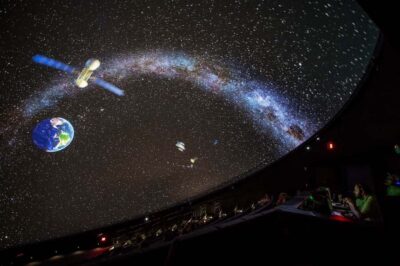
Frost Museum of Science and Planetarium Entry Ticket
Read our review →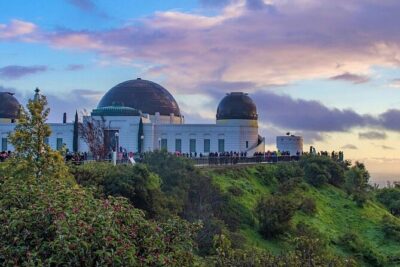

The Original Sedona UFO and Stargazing Night Tour
Read our review →
The Night Sky Star Story, Galaxy, and Sedona Story Tour
Read our review →Lists this night appears in