
REVIEW · USA STARGAZING
Mauna Kea Stargazing Experience + Photos
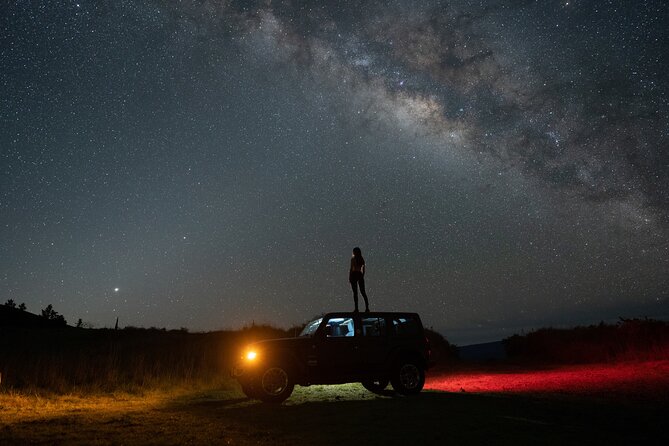
The best part of this Big Island outing is the combination of serious astronomy and personal photographs. Instead of joining a large crowd at the usual visitor-center viewing area, you meet at a quieter spot on Mauna Kea or Mauna Loa, where the guides choose the time and location to limit moonlight, headlights, and cloud cover.
I like the careful work behind the evening, especially the smart telescope that brings objects such as Andromeda and the Orion Nebula closer, and the dedicated photographer who takes Milky Way portraits for your group. The main drawback is practical: you drive yourself to a dark, cold mountain meeting point, and the $299 price will feel steep if you want only a quick look at the stars.
Key things to know before booking
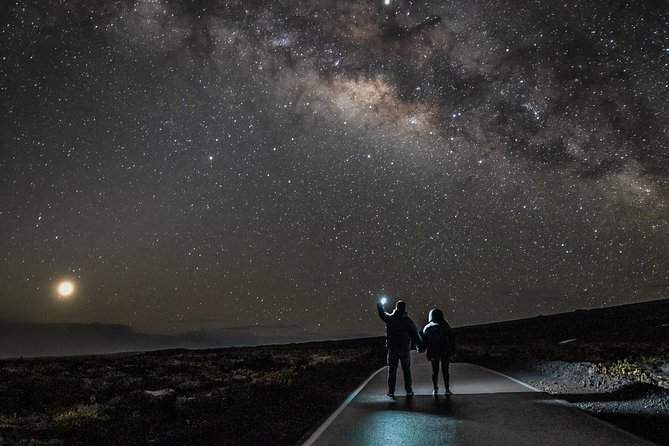
- A real stargazing guarantee: If clouds block the stars, you receive a full refund rather than simply being asked to accept a poor night.
- Two guides serve different purposes: Astronomer Dylan handles the sky talk and telescope, while the astro-photographer creates portraits and night-sky images.
- The free photos are medium resolution: They work well for social media, but larger files or the full collection may cost extra.
- Expect real mountain cold: Temperatures can reach about 30 F. Parkas, blankets, and hand warmers help, but bring your own hat and gloves.
- You must drive yourself: There is no hotel pickup. The final road can be dark, narrow, curving, and uncomfortable for anyone uneasy with mountain driving.
- The evening is quiet by design: Groups are limited to 30 people, and the chosen locations aim to avoid the traffic and headlights found at busier viewing areas.
Why this night sky experience feels different
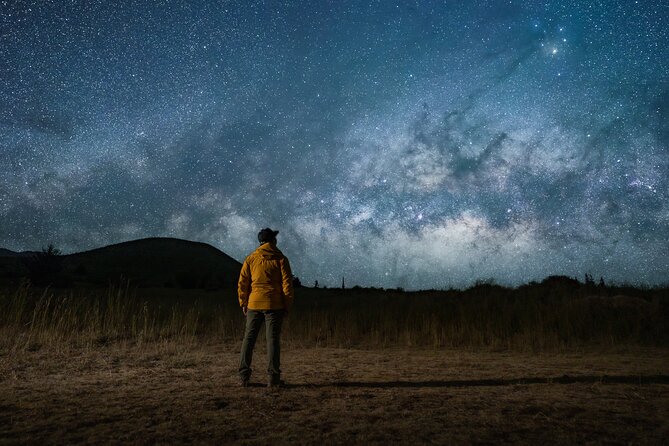
Mauna Kea is famous for astronomy because its high, dry setting can offer remarkably clear skies. You do not need to visit an observatory summit to enjoy the night. In fact, after sunset, tours operate at lower locations because summit access is restricted by safety rules and land-management regulations.
Epic Tours uses remote sites on Mauna Kea or Mauna Loa rather than relying on the crowded Onizuka Visitor Center area. That choice matters. At a busy public viewing site, headlights, nearby conversations, and groups arriving late can break your focus. Here, the goal is a darker, quieter setting with fewer distractions.
The exact location can change. When weather shifts, the team may move the meeting point to find clearer skies. That can be useful, but it also means you need to pay close attention to texts and emails before leaving your hotel. Past communication has been praised by some people and criticized by others, so I would save the company’s latest instructions and confirm the final map pin before driving up.
More Stargazing Tours in the USA:
- Small Group Big Island Twilight Volcano and Stargazing Tour
★ 5.0 · 1,619 reviews - Griffith Observatory Hike: Guided Tour through Griffith Park
★ 5.0 · 1,020 reviews - Sedona Stargazing Tours LLC
★ 4.5 · 881 reviews
Reaching Puʻu Huluhulu after dark
The meeting point is the Puʻu Huluhulu cinder cone parking lot. You do not get hotel transportation, and the road becomes more demanding as you climb. The final stretch has been described as a dark, narrow, single-lane mountain road with limited room for cars coming in opposite directions.
This is not a good place to arrive casually in a small rental car after a long day if you dislike night driving. Take the road slowly, keep your headlights on, and allow extra time. The tour information asks you to wear pants and closed-toed shoes, which is sensible even before the cold arrives.
The team may move the meeting point between Mauna Kea and Mauna Loa. That can improve your chance of finding clear skies, but it adds one more reason to check your messages shortly before departure. A last-minute change is manageable when the directions are clear, but stressful if you are already on the road.
There is no formal sightseeing stop before the stars come out. You arrive, park, and walk or settle into the prepared viewing area. The experience is built around sitting outdoors, listening, looking upward, and asking questions rather than moving from one attraction to another.
A 90-minute to two-hour astronomy session
The advertised experience lasts about two hours, while the core guided session is described as 90 minutes. In practice, plan on roughly 90 minutes to two hours at the site. The talk can run longer when the group is engaged and asking questions, so do not schedule a tight dinner reservation immediately afterward.
The night usually begins with chairs, parkas, and blankets ready for you. The staff may also provide hand warmers and, depending on the evening, hot coffee, cocoa, or tea. These touches are not the reason to book the tour, but they matter when you are sitting still in mountain air.
Dylan is one of the astronomers who leads the program. His style, based on the supplied details, mixes astronomy with humor, traditional sky stories, current discoveries, and answers to broad questions about planets, galaxies, black holes, relativity, and other space topics. You do not need prior astronomy knowledge. You can ask simple questions, and the format leaves room for curiosity rather than forcing you through a fixed lecture.
A green laser pointer helps identify stars and constellations. The guide may point out familiar patterns first, then connect them to larger ideas about the universe. If you already know the main constellations, the discussion can move into astrophysics and telescope imaging. If you are new to the subject, you can simply learn how to read the sky.
The quiet setting is a major part of the appeal. You are not merely looking at a star chart on a screen. You are sitting outside in the cold, with a wide sky overhead, while the guide explains what you are seeing. That makes the evening feel more personal than a short stop at a public lookout.
What the Celestron Origin smart telescope shows you
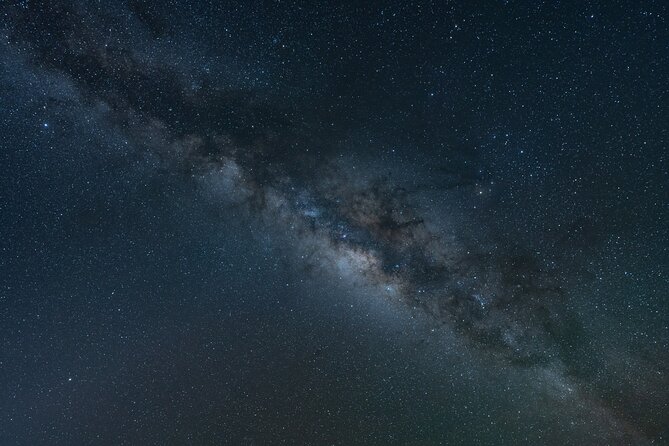
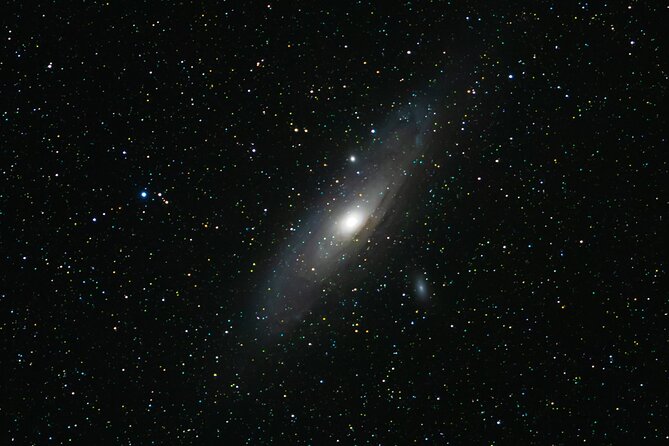
The Celestron Origin smart telescope is used for live views of deep-sky objects. The guide can bring galaxies, nebulae, and star clusters into view, including objects such as the Andromeda Galaxy, the Orion Nebula, and the Horsehead Nebula when conditions and timing cooperate.
It is important to understand what this means. You are not looking through the biggest professional observatory instrument on Mauna Kea. The smart telescope uses imaging technology to collect and display more detail than your eyes could see unaided. One dissatisfied account described it as a camera with a zoom lens, which points to a real distinction: this is a modern electronic viewing system, not a traditional eyepiece-only telescope.
That is not automatically a flaw. The system can show color, shape, and structure that would be difficult to see with the naked eye. It also gives the guide a practical way to share celestial objects with a group. Still, if your dream is a classic observatory experience with each person taking a turn at a massive eyepiece, this tour may not match that expectation.
Your own phone may capture more than you expect in the clear, cold air, but do not count on getting professional results without the tour’s equipment. The included images are one of the main reasons people book this particular outing.
Same sky over the USA, a different way to watch it:
- Miami: Frost Museum of Science and Planetarium Entry Ticket
★ 4.5 · 429 reviews - Griffith Observatory Insider Tour
★ 4.5 · 306 reviews - LA: Griffith Observatory Insider Tour
★ 4.5 · 287 reviews - The Original Sedona UFO and Stargazing Night Tour
★ 4.5 · 269 reviews
Milky Way portraits and the photo upgrade question
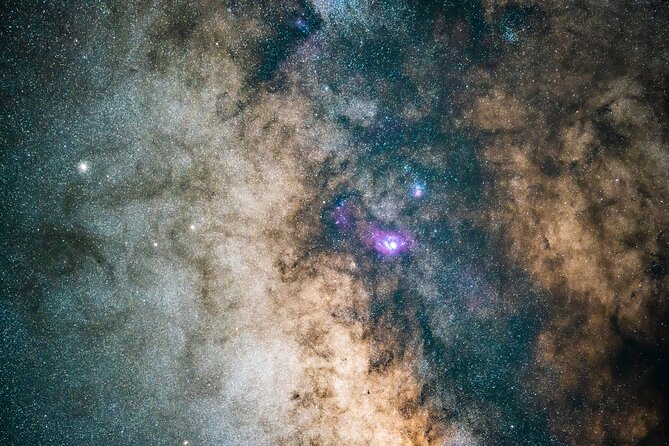
An astro-photographer works alongside the astronomer. That division of labor is useful. One person can keep explaining the sky while another takes portraits, adjusts people into position, and works with the dark setting.
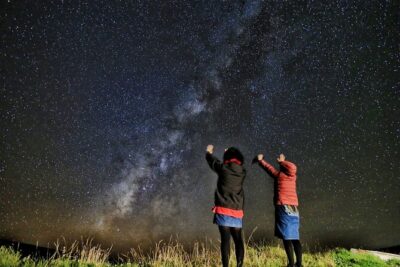
You receive complimentary medium-resolution photos. The photographer takes private group portraits, and the supplied information says there is no limit on the number of photos captured during the evening. A well-made portrait with the Milky Way behind you is a stronger souvenir than a generic mountain snapshot, especially when the sky is clear enough to show the galaxy.
Set your expectations correctly. Medium-resolution files are generally intended for phones, online sharing, and modest prints. They may not satisfy you if you want a large wall print or extensive editing. The company’s responses give different prices for larger files, including a $99 full collection and a $200 upgrade mentioned in another account. Confirm the current upgrade cost before you go.
Also confirm how the images will be delivered and how the team identifies your group. One person had difficulty receiving the photos after the outing and said no name or ticket number had been collected. This may not happen, but it is an easy problem to prevent. Before leaving, ask how to access the files, make sure the photographer has your name or contact details, and check that the delivery address is correct.
Cold, darkness, and physical demands
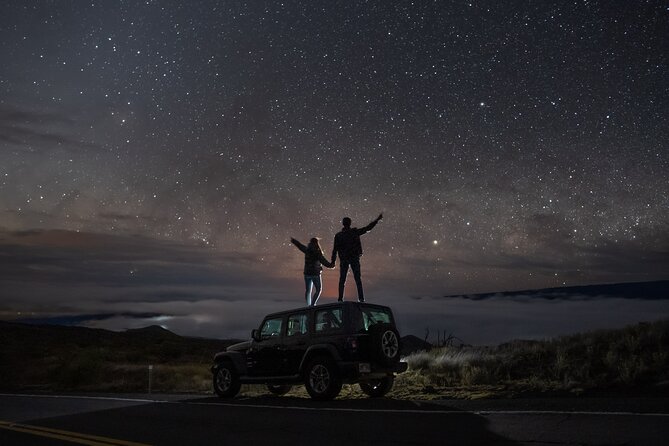
The temperature can reach about 30 F. Even when the forecast looks comfortable near the coast, mountain conditions can feel much colder once you are sitting still. Wear thermal layers, long pants, a warm hat, gloves, and sturdy closed-toed shoes. The supplied parkas have hoods and pockets, and blankets or hand warmers may be available, but do not treat those as a complete winter wardrobe.
The dark adds another challenge. You walk and move around in low light, then sit for much of the session. The tour is not recommended for people with mobility restrictions, serious back or heart problems, hearing problems, or other significant medical conditions. Anyone who is pregnant should discuss the plan with a doctor first. Children must be accompanied by an adult.
This is also not the right choice if you expect a warm, polished indoor activity. You are outdoors in changing weather, and the tour operates in all weather conditions unless poor conditions make the sky unusable or the activity unsafe. The company’s guarantee protects you financially when clouds prevent stargazing, but it cannot guarantee a perfect sky on every scheduled night.
Is $299 a fair price?
At $299 per person, this is an expensive evening activity. You are paying for more than a chair and a view: an astronomer, a smart telescope, an astro-photographer, parkas, blankets, and included medium-resolution photos. The remote location and small-group approach also have value if you strongly dislike crowded viewing areas.
The price makes more sense for couples, families celebrating something special, or anyone who wants both astronomy and a professional-style portrait. It makes less sense if you can happily lie outside with a free phone app and your own blanket. The basic act of looking at stars costs nothing, and a public viewing area may satisfy a budget-minded visitor.
You should also compare what other companies include. Some competing tours offer transportation, while this one does not. At the same price, a ride from the coast may be worth more to you than private photos. On the other hand, this company’s full-refund stargazing promise and dedicated photographer may justify the higher cost for someone who wants a more carefully produced evening.
The included photos improve the value, but only if you are content with medium-resolution files. If you plan to buy the high-resolution collection, add that possible charge to your budget before deciding.
Who will enjoy this most
I would choose this outing if you want a calm night outdoors, enjoy asking questions, and care about coming home with a memorable image. It suits couples, families with older children, and solo visitors who enjoy learning in a small group. The guides’ humor and willingness to answer wide-ranging questions help keep the session from feeling like a dry lecture.
It is especially appealing if you have already seen a basic sunset viewpoint and want something more focused. The combination of a remote site, live telescope views, and Milky Way portraits gives the evening a clear purpose.
I would skip it if you dislike cold, dark mountain roads, or sitting outdoors for a long period. I would also look elsewhere if hotel pickup is essential, if you have mobility concerns, or if your main goal is access to a major observatory summit. This is not a summit observatory tour, and it should not be sold to yourself as one.
Cancellation, weather, and timing tips
You can cancel for a full refund up to 24 hours before the start time. Changes made inside that 24-hour window are not accepted, and late cancellations are not refunded.
Poor weather can lead to a cancellation, a new date, or a full refund. The same applies if the minimum number of participants is not reached. Since the team may adjust the location to chase clearer skies, keep your phone available on the day of the tour and avoid planning an important late-night commitment afterward.
The activity can include up to 30 people, though the remote setup is intended to avoid the crowds found at busier sites. Ask questions early if you have concerns about the meeting point, photo delivery, or upgrade costs. Clear communication before you leave the coast will make the evening much easier.
Should you book the Mauna Kea stargazing experience?
Book it if you want astronomy, telescope viewing, and personal night-sky photos in one evening, and you are comfortable driving yourself into a cold, dark mountain setting. The guides, especially astronomer Dylan, are a major part of the appeal, and the stargazing guarantee reduces the risk of paying for a completely clouded-out night.
Skip it if you want transportation, a warm indoor venue, or a low-cost star talk. The $299 fee is hard to defend for a visitor who only wants to point out constellations. For the right person, though, the quiet location, smart telescope, expert-led discussion, and Milky Way portraits can make this one of the Big Island’s more memorable nighttime activities.
FAQ
Where does the Mauna Kea stargazing experience meet?
The listed meeting point is the Puʻu Huluhulu cinder cone parking lot on the Island of Hawaii. The exact location can change between remote areas on Mauna Kea and Mauna Loa, so check the final instructions before leaving.
Does the tour include hotel pickup?
No. You must arrange your own transportation to and from the meeting point.
How long does the stargazing session last?
Plan on about 90 minutes to two hours. The astronomy talk may run longer when the group is asking questions.
What happens if clouds block the stars?
If poor weather prevents stargazing, you can receive a full refund or be offered another date, according to the cancellation terms.
Are photos included in the price?
Yes. Medium-resolution photos are included. Optional upgrades for larger or full-resolution files are available, so confirm the current price before the tour.
What should I wear?
Wear long pants, closed-toed shoes, warm layers, gloves, and a hat. Parka jackets are provided, but temperatures can reach about 30 F.
Is the activity suitable for everyone?
No. It is not recommended for people with mobility restrictions, serious back or heart problems, hearing problems, or other serious medical conditions. Children must have an adult with them, and pregnant people should consult a doctor beforehand.
Fresh listings near the USA
- Boulder: Guided Astronomy Tour★ 4.7 · 11 reviews
- 1-Day Grand Canyon Tour from Las Vegas: Stargazing & Sunrise★ 3.6 · 3 reviews
- Milky Way Photography in Arches National Park★ 4.0 · 4 reviews
- Professional Stargazing in Moab★ 3.5 · 3 reviews
- Private Stargazing – Sequoia National Park★ 4.5 · 14 reviews
- Private Tour of Griffith Observatory★ 4.5 · 58 reviews
- Haleakala Sunset and Astronomy Tour★ 5.0 · 33 reviews
- Haleakala Sunset and Stargazing Audio Tour★ 4.0 · 10 reviews
USA Stargazing, side by side.
Small Group Big Island Twilight Volcano and Stargazing Tour
Read our review →
Griffith Observatory Hike: Guided Tour through Griffith Park
Read our review →
Frost Museum of Science and Planetarium Entry Ticket
Read our review →

The Original Sedona UFO and Stargazing Night Tour
Read our review →
The Night Sky Star Story, Galaxy, and Sedona Story Tour
Read our review →
Lists this night appears in