
REVIEW · USA STARGAZING
Monument Valley: Stargazing Tour
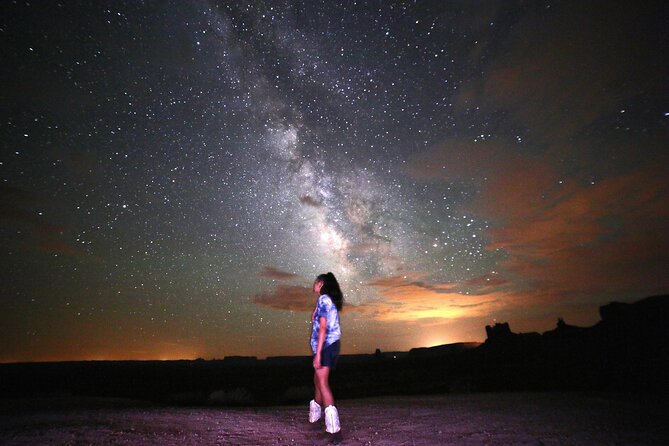
At night, Monument Valley becomes a different place. Moonlight picks out the sandstone towers, stars fill the dark sky, and familiar views such as Forrest Gump Hill take on a quiet, almost dreamlike quality. This 150-minute stargazing tour combines scenic stops, telescope viewing, and practical help with night photography.
I like two things here. First, your guide does more than point at stars. You learn how to set up your camera, and guides such as Sabrina, Comisita, Comasheena, and Cheryl have helped visitors capture the Milky Way. Second, the tour closes with a traditional musical performance, along with Navajo stories about the sky and local traditions.
The main drawback is the ride. You travel over rough ground in an open-air safari-style vehicle when conditions allow, and one passenger found the Jeep rattled quite a bit. Cold nights can also be genuinely cold, though blankets may be provided.
Key points at a glance
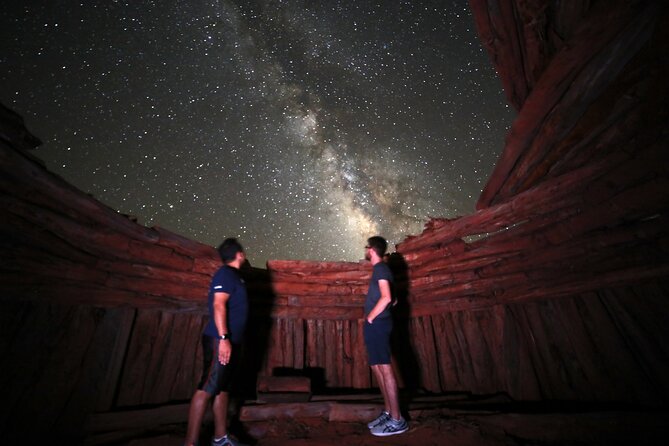
- Three or four dark-sky stops: Possible viewpoints include Forrest Gump Hill and Teardrop Arch, with the exact route shaped by conditions and photography needs.
- Hands-on camera help: Your guide can show you settings for night photos instead of leaving you to guess in the dark.
- Telescope viewing: You get the chance to see the night sky through a telescope, with narration in English.
- Small groups: The open-air vehicle holds up to 12 people, while the enclosed SUV holds up to 7.
- A Navajo cultural finish: The evening ends with traditional music, and guides share stories about Navajo traditions and star names.
- Important time-zone detail: The tour uses Utah time, one hour ahead of Arizona from March through November.
Why Monument Valley looks different after dark
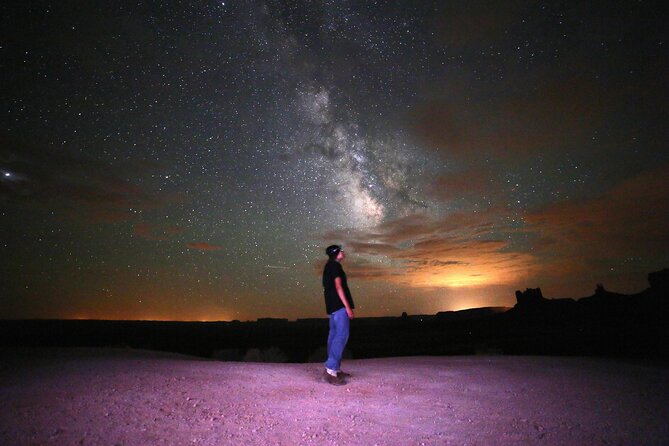
Most people know Monument Valley from its daylight silhouettes: red buttes, broad horizons, and the famous road view made familiar by films. At night, the focus shifts from color to shape. Moonlight outlines the rock formations, while the stars give the sky most of the attention.
That change is the real reason to book this tour. You are not simply looking at the same view several hours later. Your guide takes you to places chosen for their night views, and the dark makes the valley feel quieter and less staged.
The tour is offered when the moon and stars are at their brightest, which helps with memorable photographs. This also means the night sky is not left entirely to chance. Still, astronomy depends on conditions, so you should come for the full setting, not only for one perfect Milky Way image.
More Stargazing Tours in the USA:
- Small Group Big Island Twilight Volcano and Stargazing Tour
★ 5.0 · 1,619 reviews - Griffith Observatory Hike: Guided Tour through Griffith Park
★ 5.0 · 1,020 reviews - Sedona Stargazing Tours LLC
★ 4.5 · 881 reviews
Meeting your guide at The View Hotel
Pickup is at the Navajo loading area in front of the lobby of The View Hotel, on Indian Rte 42 in Oljato-Monument Valley. Wait outside. Your driver will not come inside the hotel, so do not settle into the lobby and expect someone to find you there.
Time deserves special care. The tour operates on Utah time, also called Mountain Daylight Time. From March through November, Utah is one hour ahead of Arizona. If you are coming from Arizona, plan to leave one hour earlier than you might first think.
The meeting point is useful if you are staying at The View Hotel, but it also gives you a clear place to organize your evening if you are based elsewhere in Monument Valley. The operator is Monument Valley Tribal Tours, and you should look for one of its guides at the Navajo loading area.
The ride through Monument Valley after sunset
Transportation is included, and the vehicle is part of the character of the outing. In warm weather, the tour uses an open-air safari-style vehicle with space for up to 12 passengers. In cold or hot weather, an enclosed SUV is used, with a maximum of 7 people.
The open vehicle offers a better sense of the night air and a wider view of the sky. It also leaves you more exposed to wind and cold. On a chilly March night, one guide handed out blankets, which made the ride more comfortable, but you should still bring warm layers.
Expect rough terrain. The vehicle travels over uneven ground to reach the best viewing places, and the ride may rattle. This is not a smooth hotel shuttle or a paved sightseeing loop. The rough route helps reach quieter viewpoints, but it can be uncomfortable for some people.
Because of the terrain, the tour is not suitable for infants aged one year or younger or for women more than five months pregnant. If you have trouble with bumpy rides, keep that limitation in mind before paying.
Three or four stops chosen for the night
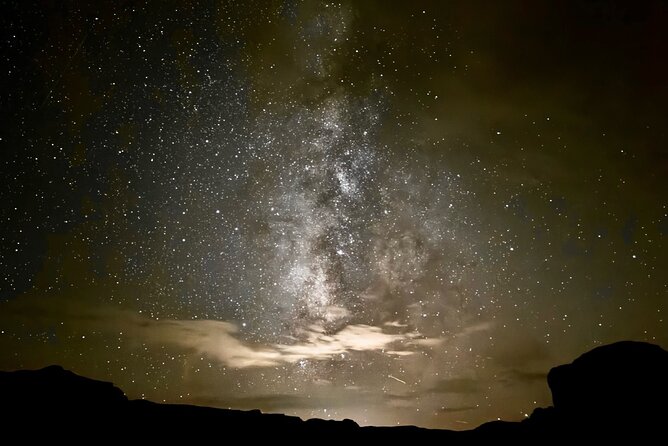
The route includes three or four stops, depending in part on the group’s photography experience. That is a useful arrangement. A group that needs more time with camera settings may spend longer at one place, while a confident photography group may move more quickly.
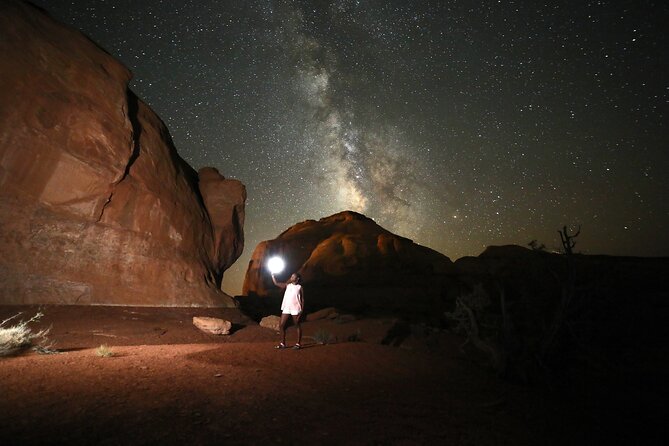
Possible stops include Forrest Gump Hill and Teardrop Arch. Forrest Gump Hill offers one of the best-known views toward the valley, but at night the familiar sight is stripped down to moonlit rock and open sky. It is a strong place for a wide photograph that includes both the formations and the stars.
Teardrop Arch gives you a different kind of frame. Natural rock openings can help place the sky inside the image, and the arch adds a clear foreground shape. Your guide can help you work out where to place the camera and how to keep the stars visible.
The exact stops are not promised, and that is sensible. Moon position, weather, group needs, and access can shape the route. The point is not to collect a fixed list of landmarks. It is to find the best available views for that particular night.
At each stop, your guide provides narration and helps you notice details that are easy to miss in darkness. Guides have also shared stories about Navajo traditions and the names given to stars. That cultural context gives the sky a local meaning instead of turning the evening into a purely technical photography lesson.
Same sky over the USA, a different way to watch it:
- Miami: Frost Museum of Science and Planetarium Entry Ticket
★ 4.5 · 429 reviews - Griffith Observatory Insider Tour
★ 4.5 · 306 reviews - LA: Griffith Observatory Insider Tour
★ 4.5 · 287 reviews - The Original Sedona UFO and Stargazing Night Tour
★ 4.5 · 269 reviews
Using a telescope and learning night photography
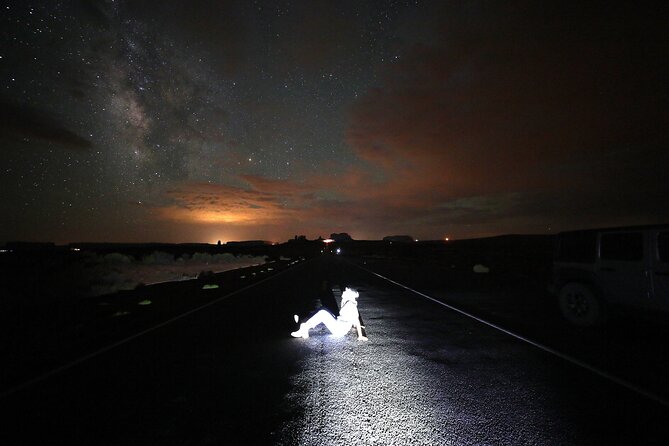
The telescope is included, and your guide explains how to use it. This gives the tour a clear purpose beyond taking pictures. You can look at the sky directly through the instrument, then step back and see the larger view over Monument Valley.
The photography instruction may be the most useful part for many people. Night photography is not intuitive. You need to change camera settings, hold the camera steady, and give the sensor enough time to record stars. The guides help you work through those choices on location.
Sabrina was praised for patiently teaching camera use, and Comisita made sure the group understood the settings well enough to use them later. Cheryl was also singled out for helping create memorable night-sky photos. These details matter because a short explanation from someone working beside you can save a great deal of trial and error.
You do not need to arrive as a serious photographer. The setting is suitable for beginners who want one strong Milky Way image, as well as more experienced photographers looking for a foreground of Monument Valley rock. Bring your camera if photography matters to you, but remember that the tour is still worthwhile if you mainly want to watch the sky.
The instructions are not a substitute for a full photography course. Group size, darkness, and the time at each stop limit how much one guide can teach each person. Still, hands-on help is far more useful than a generic list of camera settings.
Navajo stories and the closing musical performance
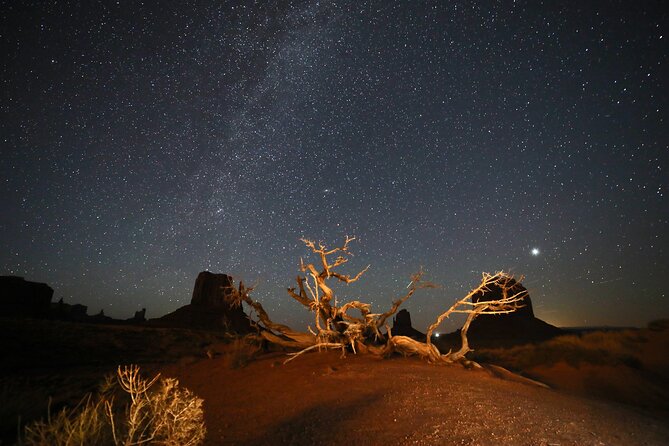
The cultural element gives the evening its strongest sense of place. Guides share stories about Navajo traditions and the stars, connecting what you see overhead with the people whose homeland surrounds you.
At the end, your guide performs traditional music. The performance is not a large stage show. It is a personal closing moment after the ride and telescope viewing, and its smaller scale suits the quiet setting.
Several guides have made this part especially memorable. Sabrina finished with a prayer song, while other guides have shared personal stories and explanations of Navajo star traditions. The exact guide and performance will vary, but the activity includes a traditional musical performance rather than treating culture as a quick introduction at the start.
I appreciate that the music comes after the viewpoints. You first see the formations and sky, then have time to listen and reflect. It makes the end of the tour feel connected to the place rather than tacked on as a separate attraction.
Is $109 a fair price?
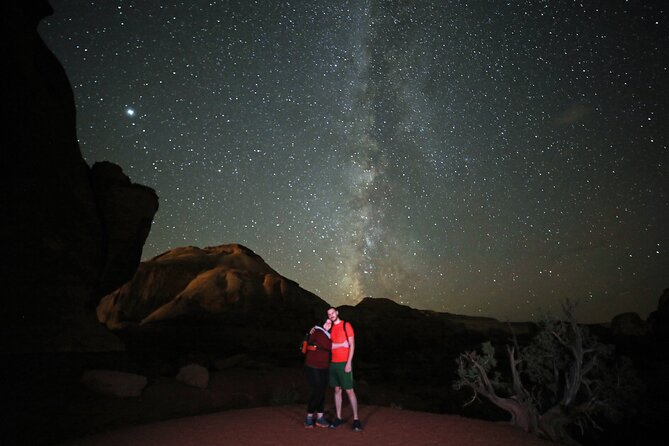
The cost is $109 per person, with 6 percent tax and 3 percent operational fees already included. You must also pay the Monument Valley Tribal Park entry fee, listed as $8 per person, so include that extra amount in your budget.
The value depends on what you would otherwise arrange yourself. If you already own a telescope, know your camera settings, and have access to a good night viewpoint, you may prefer a self-guided evening. But most visitors will not know the best places to position themselves after dark, and driving unfamiliar rough roads at night is not ideal.
The price pays for transport, a guide, telescope use, narration, scenic stops, photography instruction, and the closing music. It is not simply an admission ticket to look at stars. The small group also matters. A maximum of 12 people in the open vehicle, or 7 in the enclosed SUV, gives the guide a reasonable chance to help with cameras.
I would call it good value for photographers, first-time visitors, and anyone who wants a guided cultural experience rather than a quick viewpoint stop. It is less compelling if you only want a short look at the stars and do not care about the telescope, stories, or camera help.
What to bring and how to prepare
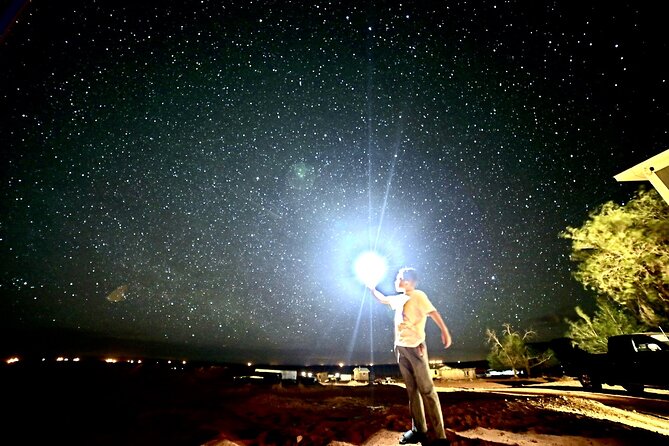
The formal packing advice lists sunglasses, which may seem odd for a night tour. They are still useful around bright daylight in Monument Valley, especially if you are spending the day in the sun before the evening activity.
For the tour itself, bring warm clothing when temperatures may drop. Blankets have been provided on cold outings, but you should not rely on that alone. The open-air vehicle can feel much colder once it is moving.
A camera is worth bringing if you want help with night photography. A phone may work for some shots, but the guides’ instruction is especially useful with a camera that allows manual settings.
Allow extra time for the meeting point and check the Utah time carefully. The tour lasts 150 minutes, but your evening plan should also allow for pickup, the ride back, and the possibility that rough roads slow the journey.
Free cancellation is available up to 24 hours before departure for a full refund, and you can reserve now and pay later. That flexibility is useful in Monument Valley, where weather and road conditions can affect plans.
Who should book this night tour?
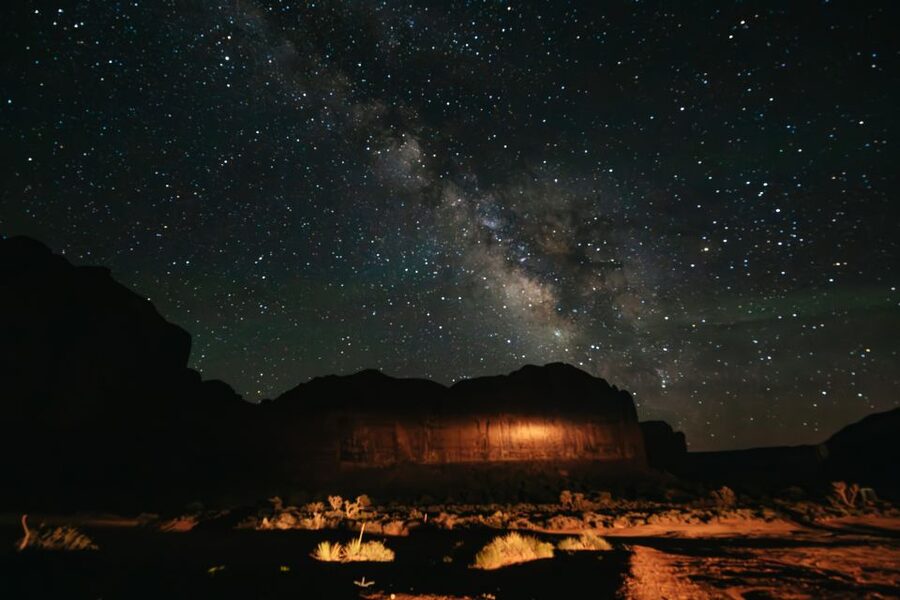
I would recommend it to anyone who wants Monument Valley in a quieter mood. It suits couples, small groups, beginner photographers, and people who want to hear Navajo stories alongside their sightseeing.
It is also a good choice for visitors who have already seen the valley by day. The moonlit formations and star-filled sky offer a fresh way to see a place you may think you already know.
Think twice if you dislike rough rides, feel uncomfortable in open vehicles, or need a smooth and highly predictable schedule. The terrain is part of the route, and the final stops can change with conditions and the group’s needs.
Should you book it?
Book this tour if you want more than a dark-sky lookout. The telescope, practical camera guidance, Navajo star stories, and traditional music give the evening several layers, while the small group keeps it personal.
Skip it if your main goal is a quick, inexpensive look at the Milky Way or if you cannot handle bumpy roads. For most people who want a memorable night in Monument Valley, the $109 price is reasonable, especially when you value local guidance and help getting a photograph you could not easily make alone.
FAQ
Where does the Monument Valley stargazing tour meet?
Meet in front of the lobby of The View Hotel, at the Navajo loading area on Indian Rte 42 in Oljato-Monument Valley, Arizona. The driver will not come inside the hotel.
How long does the tour last?
The tour lasts 150 minutes, or two and a half hours.
What time zone does the tour use?
The tour operates on Utah time, or Mountain Daylight Time. From March through November, Utah is one hour ahead of Arizona.
How many people can join the tour?
The open-air safari-style vehicle holds up to 12 passengers. In cold or hot weather, the enclosed SUV holds a maximum of 7 people.
Is the Monument Valley Tribal Park entry fee included?
No. The Tribal Park entry fee is not included and costs $8 per person.
Does the tour include a telescope?
Yes. Telescope use and narration are included, and your guide explains how to use the telescope.
Can the guide help with night photography?
Yes. Your guide can show you camera settings and offer practical help for taking photographs of the stars and Monument Valley at night.
Is the tour suitable for young infants or pregnant women?
The tour is not suitable for infants aged one year or younger or for women who are more than five months pregnant because of the rough terrain.
Can I cancel the tour for a refund?
Yes. You can cancel up to 24 hours in advance for a full refund. You can also reserve now and pay later.
Fresh listings near the USA
- Stargazing and Milky Way Portrait in Capitol Reef National Park★ 4.5 · 13 reviews
- Temecula Wine Country Stargazing Tour★ 5.0 · 2 reviews
- Astronomy and Stargazing Tour in Utah★ 5.0 · 8 reviews
- Sunset Sedona Sacred Places -gourmet picnic dinner and stargazing★ 5.0 · 12 reviews
- Sedona UFO/Stargazing Tour (price per goggle not per person)★ 4.5 · 47 reviews
- Sedona Night Hike and Stargazing★ 5.0 · 7 reviews
- Stargazing Tour with Telescopes and Video Astronomy in Sedona★ 5.0 · 40 reviews
- PRIVATE Sedona Jeep Tour 4X4 Stargazing Tour at Night★ 4.5 · 11 reviews
USA Stargazing, side by side.
Small Group Big Island Twilight Volcano and Stargazing Tour
Read our review →
Griffith Observatory Hike: Guided Tour through Griffith Park
Read our review →
Frost Museum of Science and Planetarium Entry Ticket
Read our review →
The Original Sedona UFO and Stargazing Night Tour
Read our review →
The Night Sky Star Story, Galaxy, and Sedona Story Tour
Read our review →Lists this night appears in